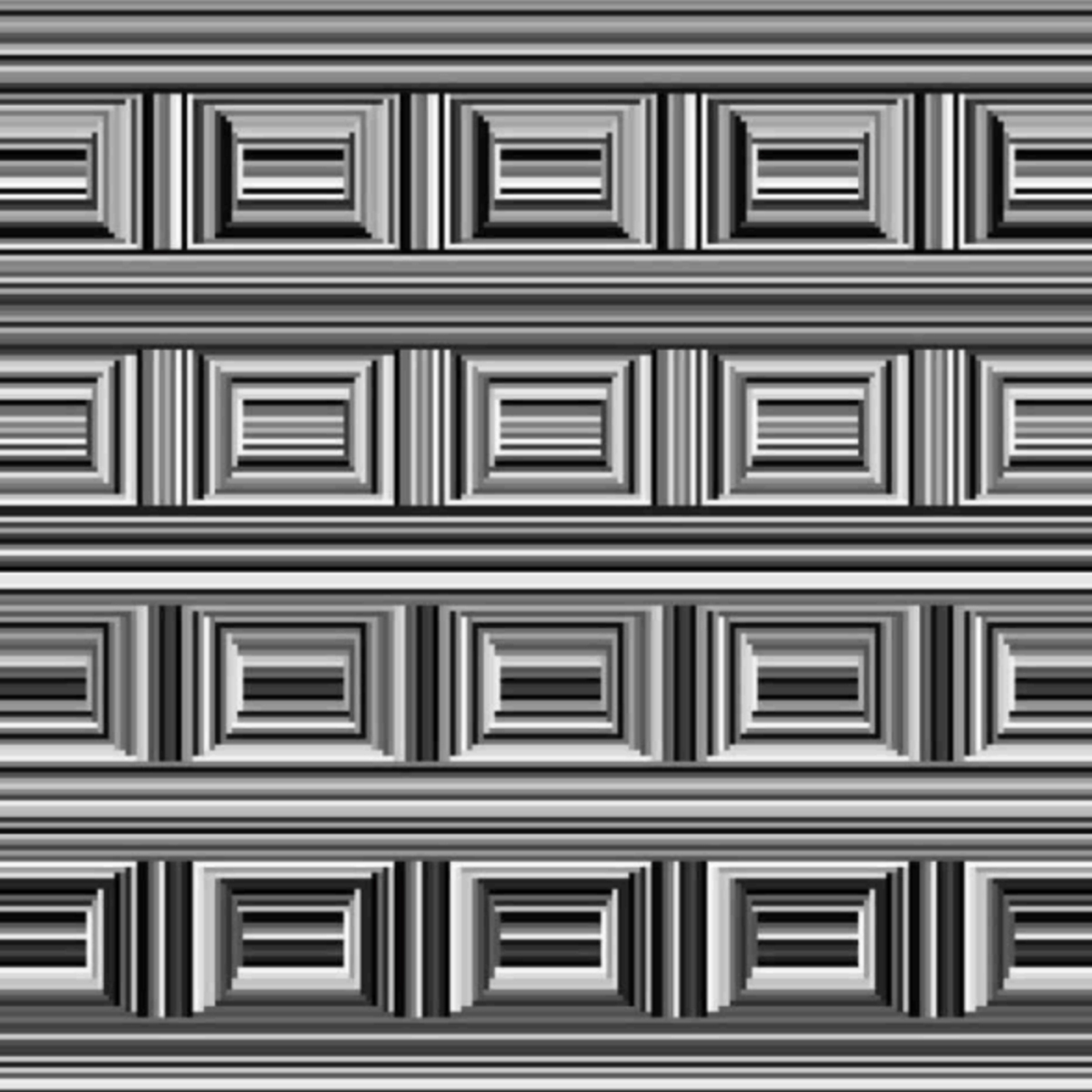
Himba people from rural Namibia can see right through optical illusions that trick people from the United States and United Kingdom. Even when there’s no “right” or “wrong” way to interpret an image, what Himba people see is often vastly different from what people see in industrialized societies, a new preprint suggests. That could mean people’s vision is fundamentally shaped by the environments they’re raised in—an old but controversial idea that runs counter to the way human perception is often studied.
For example, when presented with a grid of line segments that can be seen as either rectangles or circles—an optical illusion known as the Coffer illusion—people from the U.S. and U.K. almost always see rectangles first, and they often struggle to see circles. The researchers suspect this is because they are surrounded by rectangular architecture, an idea known as the carpentered world hypothesis. In contrast, the traditional villages of Himba people are composed of round huts surrounding a circular livestock corral. People from these villages almost always see circles first, and about half don’t see rectangles even when prompted.
“I’m surprised that you can’t see the round ones,” says Uapwanawa Muhenije, a Himba woman from a village in northern Namibia, speaking through an interpreter over a Zoom interview. “I wonder how you can’t see them.” Muhenije didn’t participate in the research because her village is less remote than those in the study, and it includes rectangular as well as circular buildings. She sees both shapes in the Coffer illusion easily.
SIGN UP FOR THE AWARD-WINNING SCIENCEADVISER NEWSLETTER
Although the study found dramatic differences in how people see four illusions, “the one experiment that’s going to overwhelm people is this Coffer,” says Jules Davidoff, a psychologist at the University of London who was not involved in the study. “There are other striking cultural differences in perception, but the one that they’ve produced here is a real humdinger.” The findings were published as a preprint on the PsyArXiv in February and updated this week.
Scientists have been documenting differences in how people around the world see optical illusions for more than a century. But past examples all rely on just three basic types of illusions, and scientists can’t agree about what they mean. Some have dismissed the cultural differences as products of “high-level” processes such as attention that are layered on top of a deeper, universal visual system. Others think deeper processes are also shaped by experience, while still others reject the whole concept that vision happens in hierarchical layers.
And although many anthropologists and psychologists have long accepted that culture and environment play some role in vision, the significance has been slow to spread among vision scientists, who rarely include people from other societies in their research, says Joseph Henrich, an evolutionary social scientist at Harvard University who wasn’t involved in the new study (although three of the authors are former members of his lab).
Ivan Kroupin and Michael Muthukrishna, psychologists at the London School of Economics, have waded into this contentious field with six illusions, five of which had never been used in cross-cultural research before. Most of the images they chose aren’t affected by conscious attention, making them more likely to involve parts of the visual system often assumed to be universal.
They showed these images to people from three different settings: the US and U.K., which represent industrialized Western environments; the rural Himba villages in Namibia; and a semiurban Namibian town. Participants in the U.S. and the U.K. provided their answers through an online survey. In Namibia, Kroupin guided people through the questions in person, working from a field site that he directs with co-author Helen E. Davis, an anthropologist at Arizona State University.
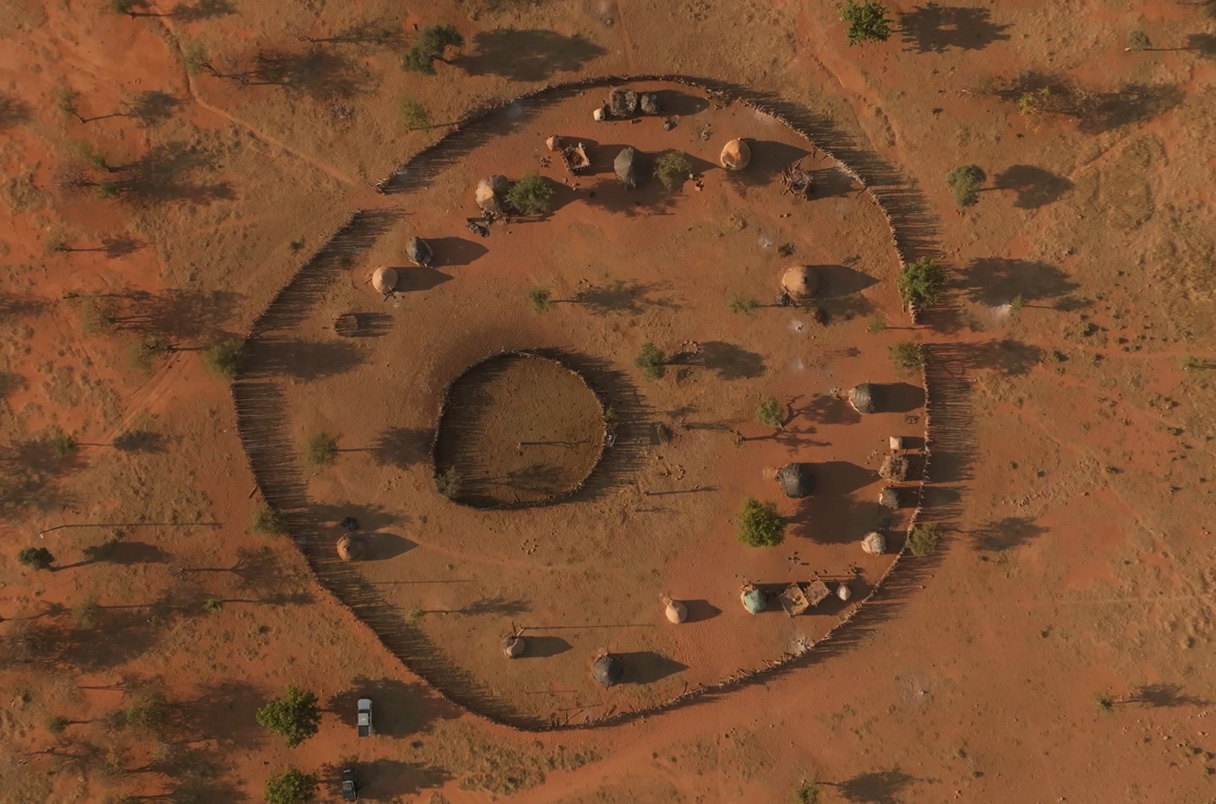
For four of the study’s six illusions, what the Himba saw was overwhelmingly different from what people from the U.S. and U.K. saw, with people from the Namibian town falling somewhere in between. For example, one image featured wavy lines that look like zigzags, whereas another had parallel lines that appear slanted. Most Himba villagers saw both sets of lines as they really are, not falling for the pattern and shading elements that trick most people from industrialized societies. And for the Coffer illusion, a full 97% of U.S. and U.K. participants saw rectangles first. In the Himba villages, however, 96% of people saw circles first.
Davidoff notes the preprint doesn’t directly tease out the mechanisms behind the illusions and how cultural differences affect those processes, which Kroupin says he and his colleagues plan to address in follow-up research. But even now, the study highlights the importance of taking culture and environment into account when studying how the mind works, Henrich says. Otherwise, researchers risk mislabeling things as universal human features when in fact they are side effects of the researchers’ own culture—a culture that is unusual by global and historical standards.
Muthukrishna adds that although it’s important to learn what humans have in common, the differences matter, too. “It shows the importance of diversity,” he says. “If you’re trying to get a full picture of the world, you want to have some people in the room who see circles where you only see rectangles.”
Support nonprofit science journalism
Sophisticated, trustworthy reporting about science has never been more important. As part of the AAAS mission, Science has built a global award-winning network of reporters and editors that independently cover the most important developments in research and policy.
Your tax-deductible contribution plays a critical role in sustaining this effort.
Loading...