CLEVELAND — Chronic pain can make walking, sleeping and even time with family a struggle. Nearly one in four American adults live with it, and for some, traditional treatments don't bring enough relief.
A technology that has been around for decades now helps a much wider range of patients.
Dr. Trishul Kapoor, a spine specialist at Cleveland Clinic, says spinal cord stimulation has been used for about 20 years and has changed remarkably over the past five.
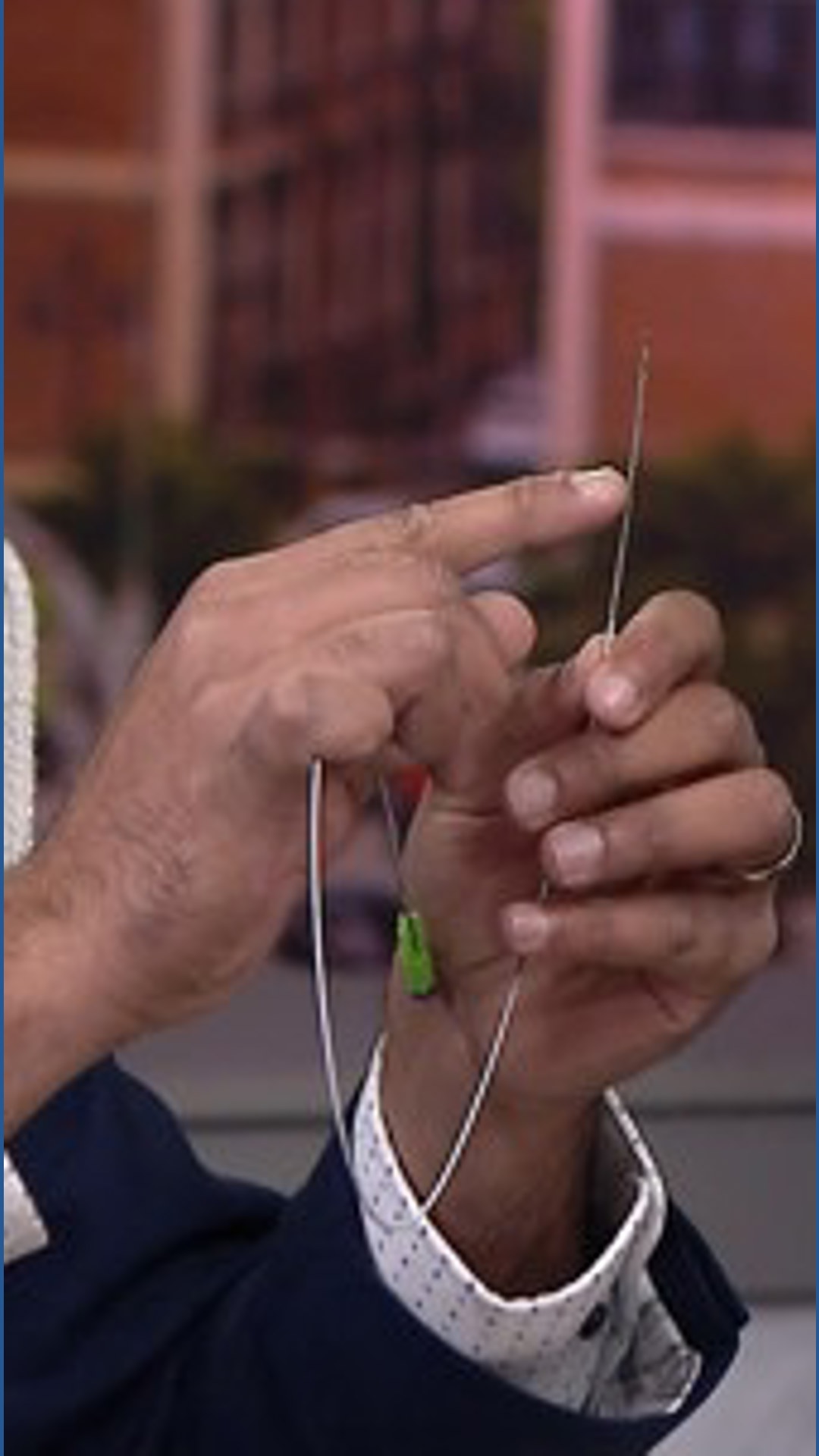
"The way it works is using a very small wire, which we call a lead, and sending small electrical signals to essentially in some way, shape or form block the signals of pain from going to the brain," he said.
How It Works
Many people know TENS units, which you can buy at a drugstore. They work through patches placed on the skin over the leg, back or another painful area. Spinal cord stimulation is different. It's implanted, and getting it is a process.
The lead has several contacts spaced along the wire, and Kapoor says that's "where all the magic really happens." Doctors can program the electrical current to move between contacts and reach different levels, and the device can also sense signals.
Patients start with a trial. During the trial, they wear the battery outside the body. If the trial works, doctors implant a small battery.
Not Just After Surgery Anymore
Doctors traditionally used spinal cord stimulation for patients who had back surgery, sometimes followed by a revision, and had no surgical options left. Kapoor says the approach to back pain is changing. Spine surgeons now rely more on data to decide who needs surgery, and "it's not always that we have to jump right to back surgery." Spinal cord stimulation is becoming an option before a patient is eligible for surgery.
It's also being used for more conditions, including:
- Back pain in people who haven't had surgery
- Radiculopathy
- Spinal stenosis
- Complex regional pain syndrome (CRPS)
- Occipital neuralgia
- Peripheral neuropathy, including diabetic peripheral neuropathy
Help for Diabetic Nerve Pain
In diabetic peripheral neuropathy, chronic inflammation and high blood sugar damage the nerve endings in the hands and feet over time, causing constant burning pain. Kapoor says clinical trials of spinal cord stimulation for this pain had promising results, and the U.S. Food and Drug Administration cleared the device for this use.
There are limits. The system can target only one half of the body, so it can't cover everything. Kapoor says pain is a network in the brain connected to emotions, trauma, background and environment. Spinal cord stimulation works best when the pain has a clear physical cause and is paired with cognitive behavioral therapy.
People with diabetes can also face a higher risk of infection and of wounds reopening. Kapoor says doctors need to get the diabetes under control first before using the device to manage pain.
Tips for Traveling With Back Pain
With travel season here, long drives and flights can be hard on people with back pain. Kapoor, who travels often himself, says planning is key:
- Know how long you'll be flying and what you can tolerate. Choose a nonstop or a route with a layover based on that.
- Choose your seat carefully. Extra legroom or an exit row can help, and an upgrade may be worth it.
- Pay attention to your posture, and bring a pillow to support your back or neck.
- Wear comfortable shoes.
And one tip many people overlook: "The number one thing I tell patients is don't sit on your wallet, you know, that's one of the biggest things that gets missed."