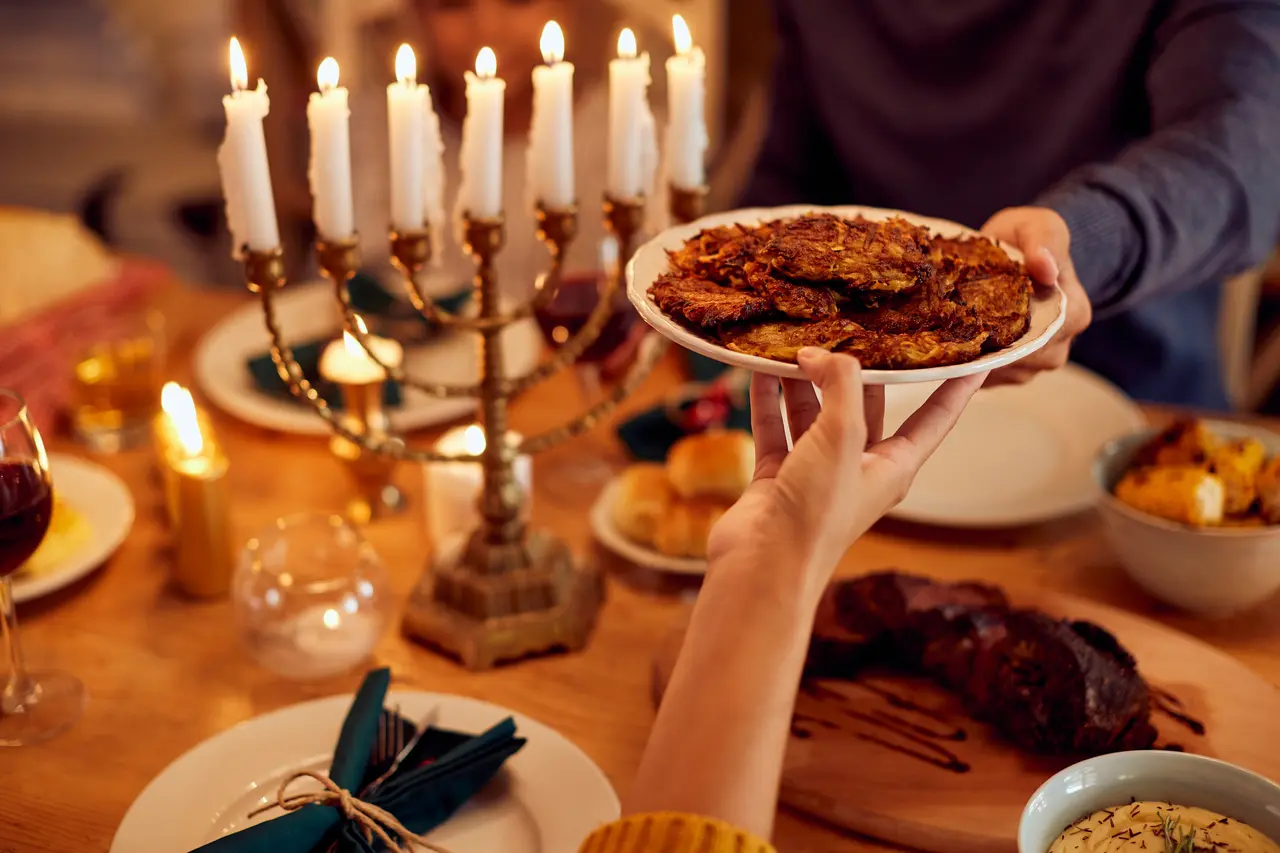
With Hanukkah under way, here’s a recipe for latkes, a delicious Jewish potato delight perfect for celebrating with family and friends
For anyone who doesn’t know what a latke is, in simple terms it’s the Jewish equivalent of a hash brown, but, in my opinion anyway, way more delicious. If you haven't tried a latke before, I suggest you immediately put down your tools and seek one out, be it served with smoked salmon and sour cream, covered in cinnamon and sugar, or simply on its own, greasy and delicious.
"If you haven't tried a latke before, I suggest you immediately put down your tools and seek one out"
It’s a pretty simple thing to make, but, having been around for hundreds of years, there are lots of minor variations, each claiming superiority: some use a mix of chicken fat, some vegetable oil to fry; some use flour where others use breadcrumbs; some even add a carrot for extra sweetness.
Having tried all manner of recipes, I’ve settled on a fairly classic option, with a few practical decisions along the way.
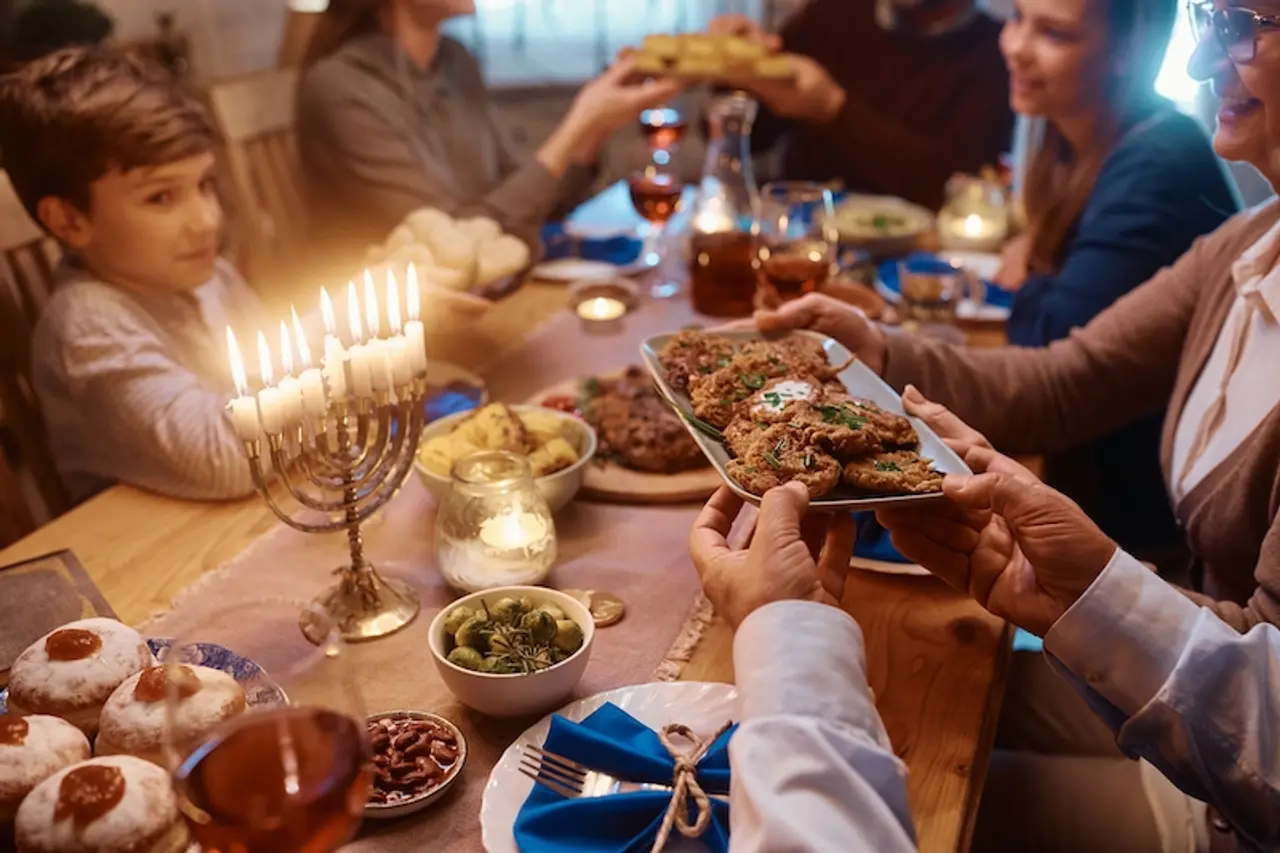
You'll want to invite some people around to share your latkes with!
Some things to know before you start
Latke party
An entire batch of latkes is a dangerous thing to have in your kitchen by yourself, as you’ll almost definitely need to try one immediately, and then proceed to eat the whole lot. So, I’d recommend inviting a little party round for these treats.
Oil and fat
Vegetable oil is a more amenable frying oil of choice, allowing vegetarians and meat-eaters alike to enjoy, with little compromise on taste.
However, if you happen to have a bit of chicken fat laying around, and you’re not fussed about the vegetarians, you can add a couple of spoonfuls to your vegetable oil for a little extra umph.
Matzo meal and crumb varieties
The classic latke I know and love is made with matzo meal, a coarse crumb made from matza crackers. You can find this easily in the kosher section of your local supermarket. The kids these days have started using panko breadcrumbs instead, which does make the latkes slightly lighter on the inside, versus the slightly denser matzo meal.
"The kids these days have started using panko breadcrumbs instead"
But to be honest, whatever dry breadcrumbs you have in your cupboard will work a treat, especially if you’re eating them hot. The difference only really becomes more obvious after they’ve cooled completely, with finer crumbs making a tighter mixture, and a more irregular crumb, like panko, making it looser and therefore airier.
You could also just use flour as a binder instead, which will make the latke a bit stodgier, but still super tasty.
Experimenting
Once you’ve got the main recipe down, you can start experimenting, adding a root vegetable of your choice perhaps, a little cheese, or some chilli for a kick.
"Once you’ve got the main recipe down, you can start experimenting"
Joshua Weisman inspired me to add some kimchee, and serve with sriracha, which I would highly recommend, if you’re a fan of kimchee.
Why not experiment with different flavours?
Without further ado, here’s my easy-to-follow, very delicious classic latke recipe for you.
Ingredients
- 650g Maris Piper or King Edward potatoes
- Half a medium onion
- 1 large egg
- 35g Matzo meal (or other breadcrumbs)
- Half a teaspoon of salt
- Generous grind of pepper
Method
Peel and grate your potatoes. Then place in either a cheese cloth or a thin tea towel and, over a bowl, squeeze out as much liquid as possible. Don’t throw this away! Leave the liquid to rest for a few minutes while you get on with the rest of your mixture.
In a large bowl, grate the onion, and add your potatoes, along with the matzo meal, salt and pepper.
After a few minutes, the potato liquid will have separated, and at the bottom of the bowl, you’ll find your very own potato starch, which will help with binding the latkes together. Drain away the water, and crack the egg into the potato starch, whisking together thoroughly.
Add the starch-egg mixture to the potatoes and mix thoroughly. This is best done with your hands to ensure everything is evenly combined.
Leave the mixture for a couple of minutes to allow the matzo meal to soak up all the moisture. In the meantime, coat a large frying pan with a generous amount of oil, about one centimetre deep.
Before you begin frying, make sure you’ve got a cooling rack set up, with some kitchen towel or a tray underneath, because you want to drain the latkes as soon as they come out of the pan to avoid sogginess.
- Once the oil is at a medium-high heat, make a small ball of mixture in your hand, and squeeze out any excess liquid before placing in the pan and flattening it into a patty. Repeat with as many will fit in the pan and leave to fry for about two minutes on either side, until golden and crispy. Place on your rack and immediately sprinkle a little salt on top. Repeat with the rest of your mixture.
To serve: These are perfectly tasty all by themselves, particularly if you’re eating them straight after cooking! But they’re also the perfect base for any flavour combinations. Classics include:
Apple sauce and sour cream (I know it sounds weird, but just try it first and come back to me)
Smoked salmon, crème fresh and dill
Dipped in sugar and cinnamon
Some genius told me recently that they add a latke to a salt beef bagel, with heaps of sauerkraut and gherkins. Yum.
Keep up with the top stories from Reader's Digest by subscribing to our weekly newsletter