Viktoriya Skorikova / Getty Images
The food you eat can have a major impact on the state of your gut health, but it’s not the treats you occasionally indulge in that will have the biggest effect. Instead, it’s the meals and snacks you eat on repeat, week after week, that make all the difference.
That’s why we asked Stephanie Moleski, MD, a gastroenterologist at Jefferson Health, in Philadelphia, what she eats each week to support optimal gut health.
*This interview has been edited and condensed for clarity and length.
Q: What do you eat every week to prioritize your gut health?
Moleski: Every week I make sure to incorporate a lot of fiber into my diet. I like to have variety, too, with many different fruits, vegetables, and whole grains. I also include protein to keep me going, because I work pretty hard and I have a busy schedule.
I usually start every morning with a smoothie with a healthy protein powder and fresh fruit. I like wild blueberries because they have a lot of antioxidants and good fiber. A smoothie is healthy and easy for me because I commute to work and I start really early.
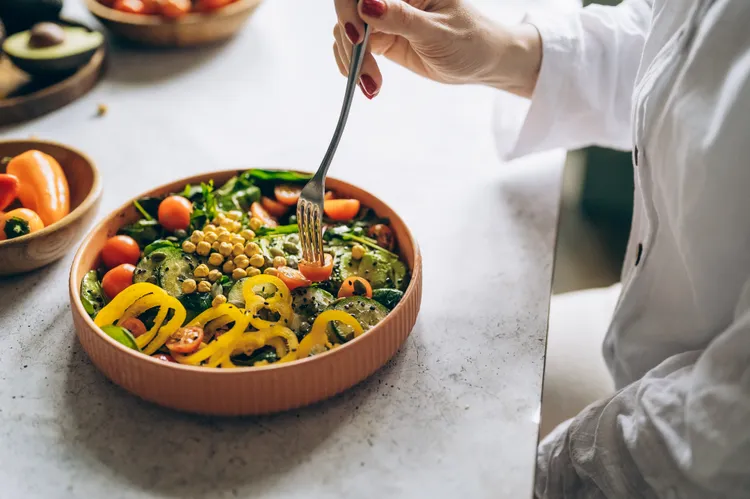
For lunch I try to get a salad in. That way I know I’m getting some good fiber and variety. I like to put different colors on my plate whenever I can. For lunch today, for example, I had a spinach salad with apples, delicata squash, purple sweet potatoes, quinoa, and chicken. So lots of good fiber and some protein, too.
Dinner has to be family-friendly, for my kids. I have teenage boys, so I definitely try to keep it high in protein for them. I always make sure we get some vegetables in, too. So it’s usually a lean protein, like chicken or fish. Sometimes red meat, but we try to limit that. And then definitely some vegetables every night and some carbs, too, like rice, quinoa, or a piece of bread.
Q: Do you snack or have dessert?
Moleski: I sometimes get hungry in the late mornings, so I’ll often snack on mixed nuts. I try to avoid anything processed. And then I like a little afternoon sweet treat sometimes, so I’ll have a little bit of dark chocolate to satisfy my sweet tooth. I also drink only water or coffee.
Q: Do you ever go out to eat?
Moleski: Dining out is a good social outlet for a lot of people, and I certainly do it with friends and family every now and then. I tend to pick healthier options when I can, just so I feel well.
I love Italian food, so I’ll often get a good pasta dish with a little protein, some veggies, and a nice tomato sauce. When I do go out, I never order a big, rich chocolate dessert, because chocolate at night before bed will give me heartburn if I ate too much for dinner.
Q: How does your overall diet help you maintain good gut health?
Moleski: All the fruits and vegetables and fiber I consume are really helpful because most fiber is prebiotic, and prebiotics help support the healthy bacteria in the gut. Having enough fiber helps with a healthy gut microbiome, and it also helps to keep bowels regular, so you don’t have to worry about things like constipation or bloating. It’s also really important to stay hydrated, especially when you eat a lot of fiber, so I try to be really good about my water intake.
My diet works well for me, but every diet has to be individualized. I’m lucky enough not to struggle with too many GI symptoms. But people who have certain GI disorders, like celiac disease, for instance, need to be cognizant of that and need to be on a more specialized diet.