Key Takeaways
- Eating a veggie-packed salad with your pizza adds fiber, helps stabilize blood sugar, and makes you feel fuller faster.
- Choosing a whole-wheat crust and healthy toppings like fiber-rich vegetables or lean protein can help create a more balanced meal.
- Adding lean protein, such as chicken or tofu, to your plate slows digestion and reduces blood sugar spikes.
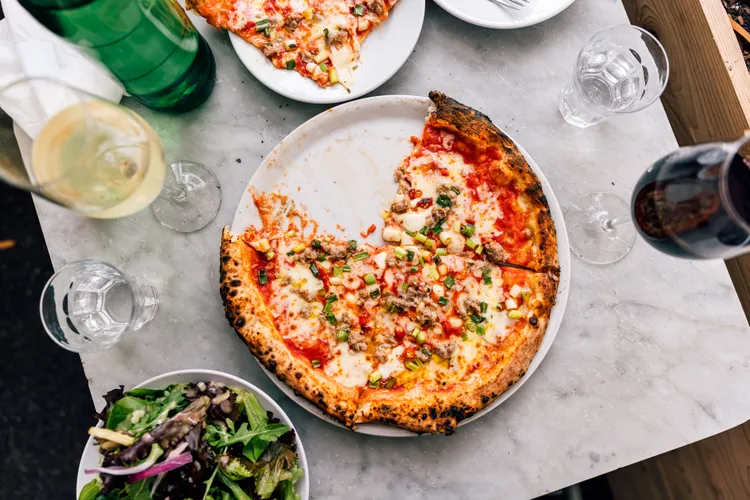
Most people will agree that indulging in a few slices of pizza every now and then is a worthwhile treat, but those who are concerned about managing their blood sugar may want to pair their pizza with specific foods to help prevent spikes.
Why Pizza Can Cause Blood Sugar Spikes
The main component in pizza that will impact blood sugar is the crust, said Knubian J. Gatlin, MS, RDN, a wellness dietitian at Houston Methodist Sugar Land Hospital. Pizza crust is typically made from white flour and is therefore a refined carbohydrate, which can cause a rapid spike in blood sugar.
However, pizza does contain fat and some protein from the cheese, as well as any toppings you may add, so Gatlin said this will cause blood sugar to rise more slowly than if you ate a carb-rich food on its own, such as plain bread.
“The biggest factor in your blood sugar response will be the amount of pizza eaten at any one time,” he noted, explaining that eating a reasonable portion should be the focus when indulging in pizza.
Still, there are other healthy choices you can make beyond portion size. Choosing pizza with a whole-wheat crust would increase the fiber content, resulting in more stable blood sugar, while opting for healthy toppings and sides would have an even greater impact.
“To balance the impact of pizza on blood glucose, we want to pair it with a fiber-rich food and potentially consider incorporating lean protein,” said Dara Ford, PhD, RD, program director of the Master of Science in Nutrition Education at American University.
1. Green Salad
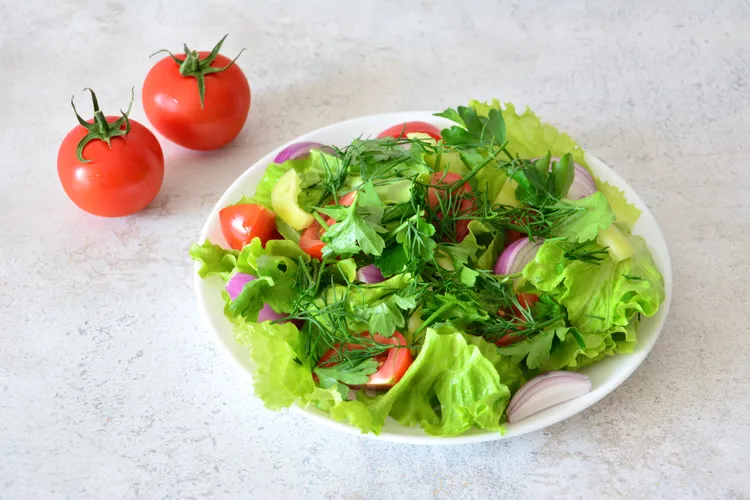
Eating a veggie-packed salad alongside your pizza can help stabilize your blood sugar, Ford said. Salads add fiber to your plate, which helps slow the rate at which glucose enters your bloodstream. Eating a salad on the side will also help you feel fuller faster, so you’ll eat less pizza. As an added bonus, vegetables, especially dark leafy greens, are rich in vitamins and minerals.
For the healthiest option, Ford suggests opting for a leafy green salad filled with a variety of vegetables and topped with a heart-healthy, olive oil-based vinaigrette.
“Adding a side salad can help balance the plate, add fiber, and support steadier blood sugar levels,” Gatlin said.
2. Roasted Vegetables
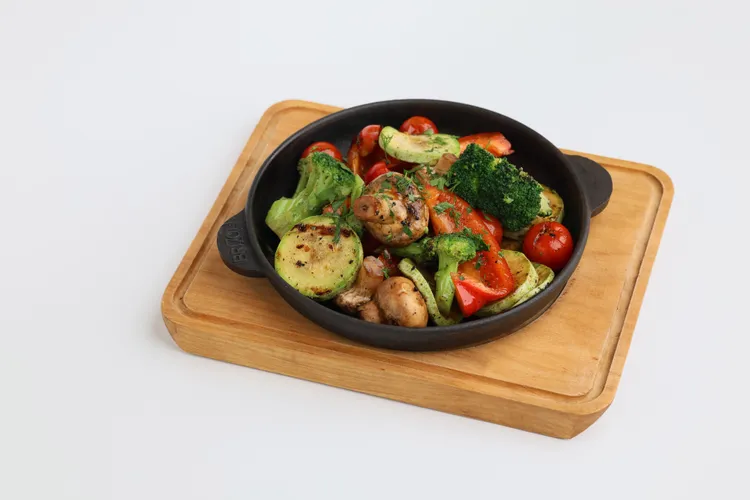
Similarly to salad, adding a side of roasted vegetables can help create a more balanced meal when eating pizza, Ford said. Opt for non-starchy veggies such as broccoli, zucchini, or bell peppers. If roasting them, be sure to use a heart-healthy oil such as olive or avocado oil, or choose an oil-free option and steam your vegetables.
And to really reap the benefits of adding veggies to your plate, Gatlin suggests eating them first. “This can help with fullness and slowing the digestion and absorption of carbohydrates from the pizza,” he said.
3. Lean Protein
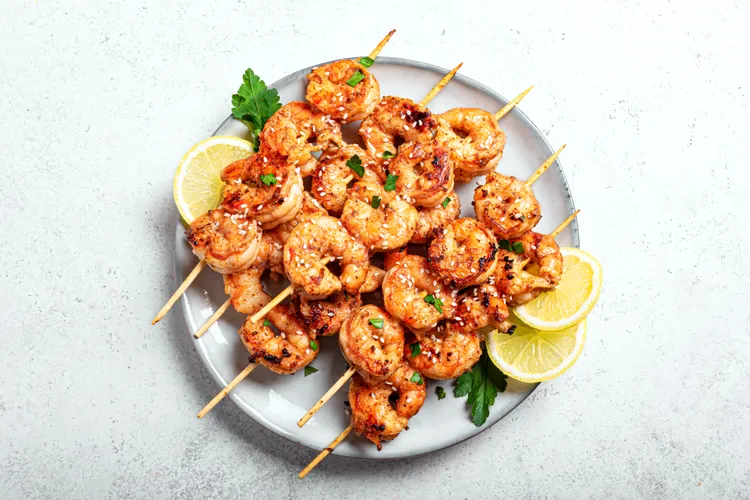
In addition to fiber, adding protein to your plate will help reduce blood sugar spikes by slowing how quickly you digest and absorb carbs. Ideally, add both fiber and protein to truly balance the meal and create the slowest possible release of glucose into the bloodstream, Ford said.
When choosing what protein to add, she suggests opting for those without additional saturated fat, such as lean chicken, tofu, or shrimp.
4. Healthy Toppings
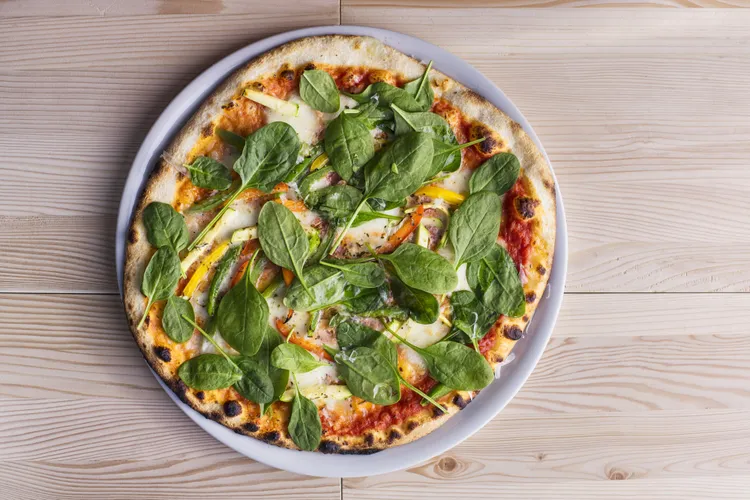
Carefully choosing healthy toppings for your pizza can help create a more balanced meal without adding any sides, resulting in more stable blood sugar levels, Gatlin said.
This includes fiber-rich vegetables such as artichokes, onions, tomatoes, sun-dried tomatoes, bell peppers, jalapeños, spinach, broccoli, and mushrooms. You can also add lean protein, such as ground chicken, grilled chicken, or turkey.
Toppings like pepperoni, sausage, or ham can also add protein, but they’re often processed and higher in sodium and saturated fat, Gatlin said.
While toppings can provide some additional fiber and protein, the portion will be small, so Gatlin said adding healthy sides is the most effective way to balance your meal and manage your blood sugar levels.