Genre fans rejoice! Chattanooga Film Festival is back for its 13th year in 2026 with a killer lineup and once again offering audiences both in-person and virtual options. After having its World Premiere at SXSW this spring, the horror comedy anthology Grind is playing CFF 2026 opening weekend.
From a screenplay by Brea Grant (Torn Hearts, 12 Hour Shift) and Ed Dougherty (MLM) and segments directed by Grant, Dougherty, and Chelsea Stardust (Satanic Panic), Grind features four interwoven stories that parody the gig economy, hustle culture, and the evils of late-stage capitalism.
The anthology follows weary everyday people juggling side hustles just to survive, while going up against greedy oligarchs, and cleverly uses dark humor and bloody practical effects to portray a world much like our current economic nightmare.
Bloody Disgusting had the pleasure of chatting with Brea Grant and Ed Dougherty about the socioeconomic commentary in Grind, casting Barbara Crampton as a villain, and DIY filmmaking.
Bloody Disgusting: Every segment in this anthology feels relatable because people are actually struggling to survive in the gig economy right now. How did the two of you come up with the idea of creating Grind?
Brea Grant: Like you said, we were trying to come up with a cool idea that seemed relevant right now. The thing that everyone we know is talking about is the economy, the lack of work, and the nightmare hellscape that is late-stage capitalism. It felt like the right time to write something that really featured that as the main horror. As the main thing that people were scared of, this world sort of came to us over the course of a couple of years.
Ed Dougherty: We wanted to make a hit film, and we said, “Let’s make a horror anthology, that’s the most marketable thing there is.” [laughs]
BG: [laughs] Definitely not!
BD: I love anthologies!
ED: We do, too. We feel like it’s kind of an undervalued form of horror film, but it’s a hard sell.
BG: People told us not to make it. They said, “Don’t make an anthology. It’s too hard to sell.” But we did it anyway.
BD: I guess I’m just one of those weirdos who likes anthologies and watches them all.
ED: We believe that there are a lot of weirdos like you out there. It seems like every good horror anthology has a long life, but it’s just getting over the initial hump that’s difficult.
BD: Chelsea Stardust directed some of the segments with the two of you and serves as a producer. How did she first get involved with this project?
BG: The project has a long history. We shot the first segment, which is about multi-level marketing, a couple of years ago. We had decided we wanted to make a full anthology, but it took us about a year after shooting that initial segment to shoot the rest of the movie. When we did that, we knew we needed to bring on a producer aside from Ed and me, since we were directing the bulk of the movie, so that was how she came on board. I’ve been friends with her for a long time, and the one thing I know about her as a friend is that she is very organized, so it felt like a good fit. I just called her one day and said, “Would you want to produce these three segments that we have left to shoot of Grind?” and she came on board.
BD: There are some fun cameos in Grind, but we have to talk about Barbara Crampton. She’s so good as a villainess. Why did you want her for this role, and what was it like working with her on this film?
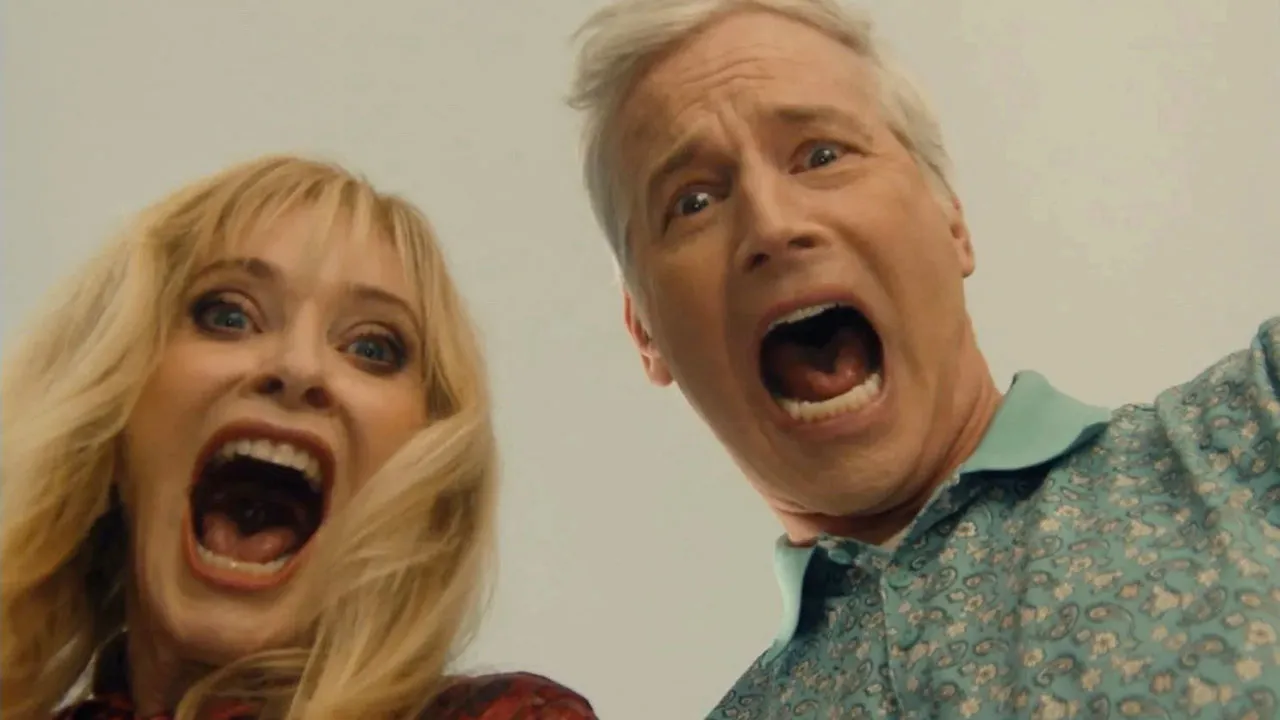
BG: She’s in her villain era, which is so fun. [laughs] Obviously, we’re huge Barbara Crampton fans, and when we were making MLM, it was a smaller part of the movie that we knew we needed to call on people who could do a good job but were also friendly to us [laughs]. I’m friends with Barbara Crampton, and we’ve done three movies together before this. So, it felt like someone within our reach, but could also really draw a horror crowd. She has a huge fanbase, and she’s also super supportive of all the projects that she’s been in, so that was also really exciting. She’s a great actress, and she’s super funny. I think a lot of these horror actresses, especially those who came up in the eighties and nineties, weren’t given an opportunity to be funny. I think she was ready to jump on an opportunity that was different than what she was used to; it’s not running around and screaming. She is a cult leader, and she is quite funny in it. She just takes the comedy so well and seriously, and she does such an amazing job with it. She has a scene across from Rob Huebel, who is obviously a comedy master, and I feel like the two of them together were hilarious. It’s been fun to watch Barbara go from these iconic roles to a different kind of role at this point in her career. We’re super happy to be a part of that.
ED: And she loves the movie and has been so supportive. Every time she posts about it, I’m like, “I can’t believe this. This is amazing.”
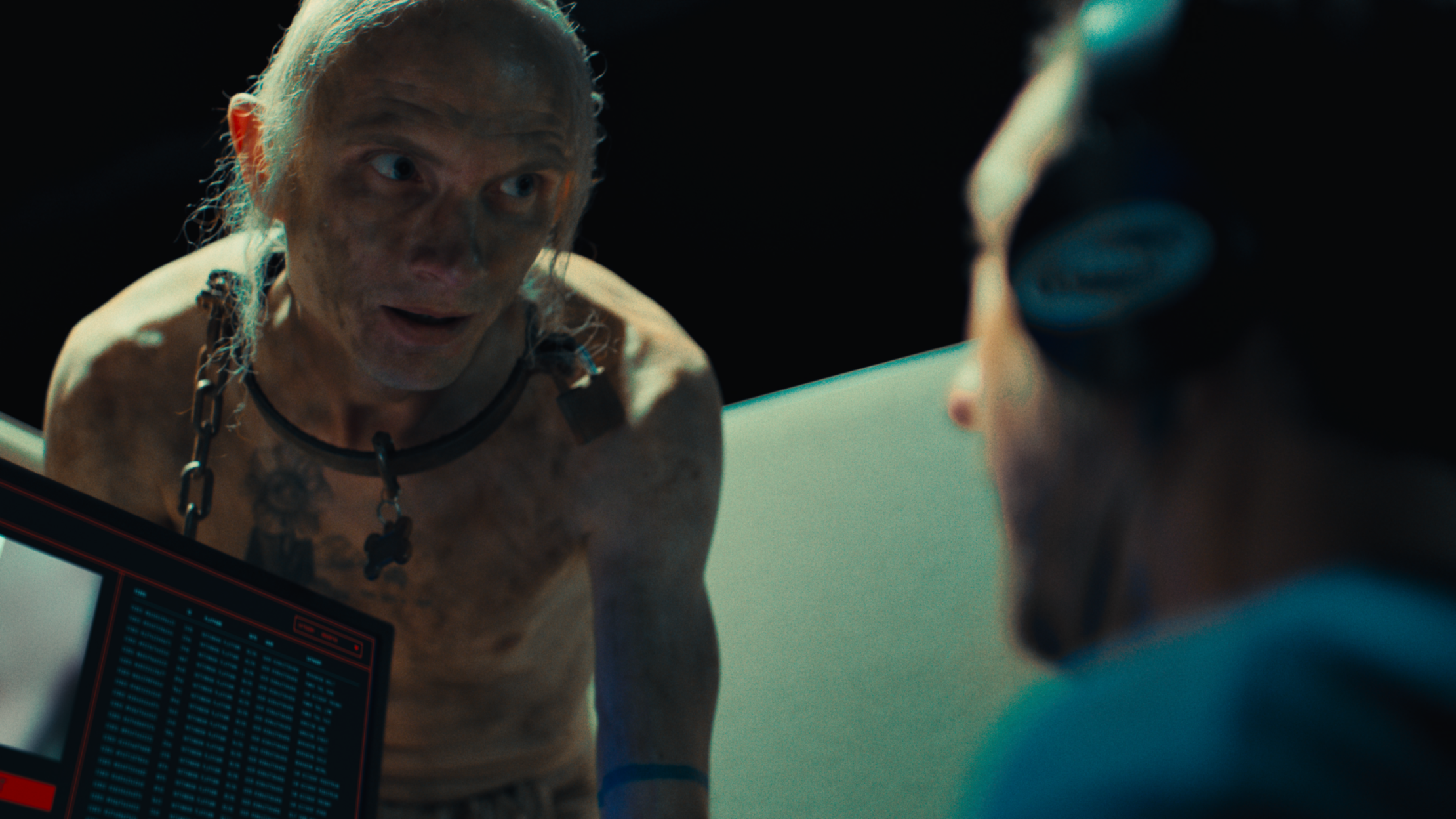
BD: This is an accurate parody of the current socioeconomic situation in this country, as well as our obsession with online culture. It repeatedly asks the question, “What are you willing to do to make money,” in a world with wealth inequality and evil oligarchs. It’s fun, and it’s a horror movie, but it’s thought-provoking. What do you hope audiences take away from Grind, besides having a good time?
ED: I read every review and every Letterboxd review; Brea does not. So, I’ve seen it all. I’ve seen some reviews that say, “Good movie but doesn’t propose a solution.” I think we do propose a solution, which is that the power of unions and organizing is the only way that we will be able to fight back against oligarchs. I do think that is the message of the film. Organizing is the only way to defeat these villains. I do think we have a lot to say in the film. I’d want someone to say, “Man, I’ve never seen a horror anthology that had a political message before.” [laughs]
BG: I think the other thing is that what is currently happening is that we live in a world in which people kind of feel alone in this. They’re like, “Well, I’m doing bad, “or “I’m having trouble paying my rent.” We wanted to hang a lantern on the fact that this is happening to everyone, that wealth disparity is at an all-time high. We’re pointing out to people that you aren’t in this alone; you’re not the only person doing side hustles. Every filmmaker friend I have is working a side job of some sort at this point, and that is just in Los Angeles. Outside of this city, I think things are more dire. I think it was about infusing some politics into something that could make people realize that they aren’t alone and that there are ways of fighting back and fighting the system that has been set up against them.
ED: I think the tone of the movie, which is darkly comedic, also really matches the tone of life right now. Everything seems almost at a parody level as far as the disconnect between oligarchs and trying to make a living and reality. The absurdist nature of the film kind of captures the real tone of life.
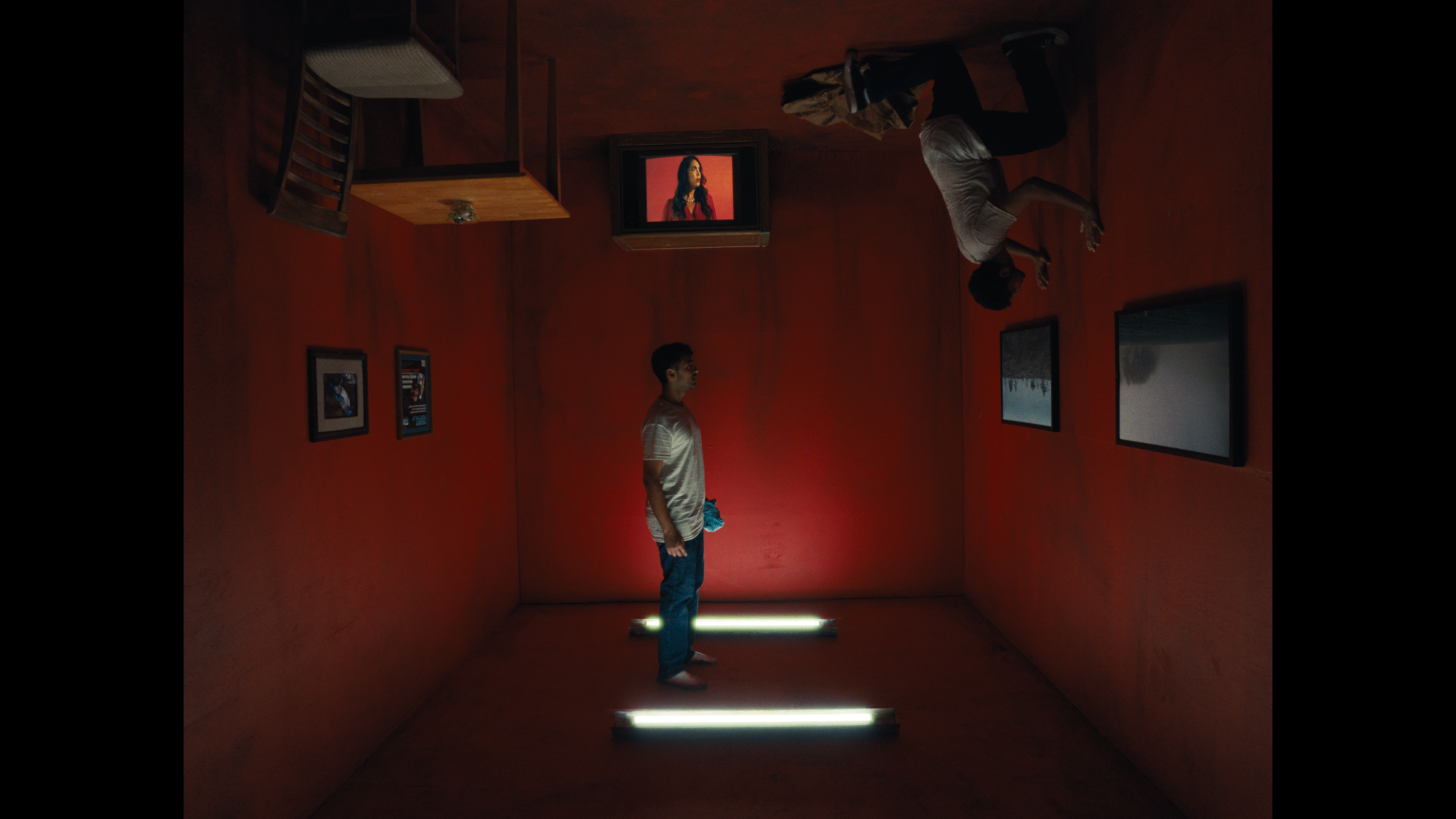
BD: There are some cool creature effects and makeup effects in this movie. Can you talk a little bit about the practical effects and makeup?
ED: I think especially because of the message of the film, which is pushing back against the current hellscape we’re in, we wanted to use as many practical effects as possible. We used matte paintings, miniatures, and practical creature effects. I’m always afraid of the matte painting because we used the old school matte painter, but they do look a little AI. I heard someone make a noise behind me during one of the shots, and I was like, “I hope that noise wasn’t them using AI because that’s a matte painting.” [laughs] There’s also the fact that it’s pretty DIY. It’s a film that we financed ourselves and shot in our houses as much as possible. We wanted the whole thing to feel handmade and very tactile.
BG: We’re old school horror fans, so we love seeing practical effects. The practical stuff is really fun for us. It’s the stuff that we think is actually cool. [laughs] So, practical stuff made the most sense for us. We both grew up in the punk scene in the nineties, and I think it just kind of comes naturally to us to try to do things ourselves. And we both work on projects for big companies, with smaller companies, but always for other people, so trying to do something ourselves to see what that felt like was also part of the experiment of Grind.
ED: This was our chance to do everything we wanted our way.
‘Night After Night’ First Poster Teases Mind-Bending Sci-Fi Thriller 
‘Bloody Bites’ Season 18 Premieres Today With ‘The Blue Diamond’ Starring Barbara Crampton 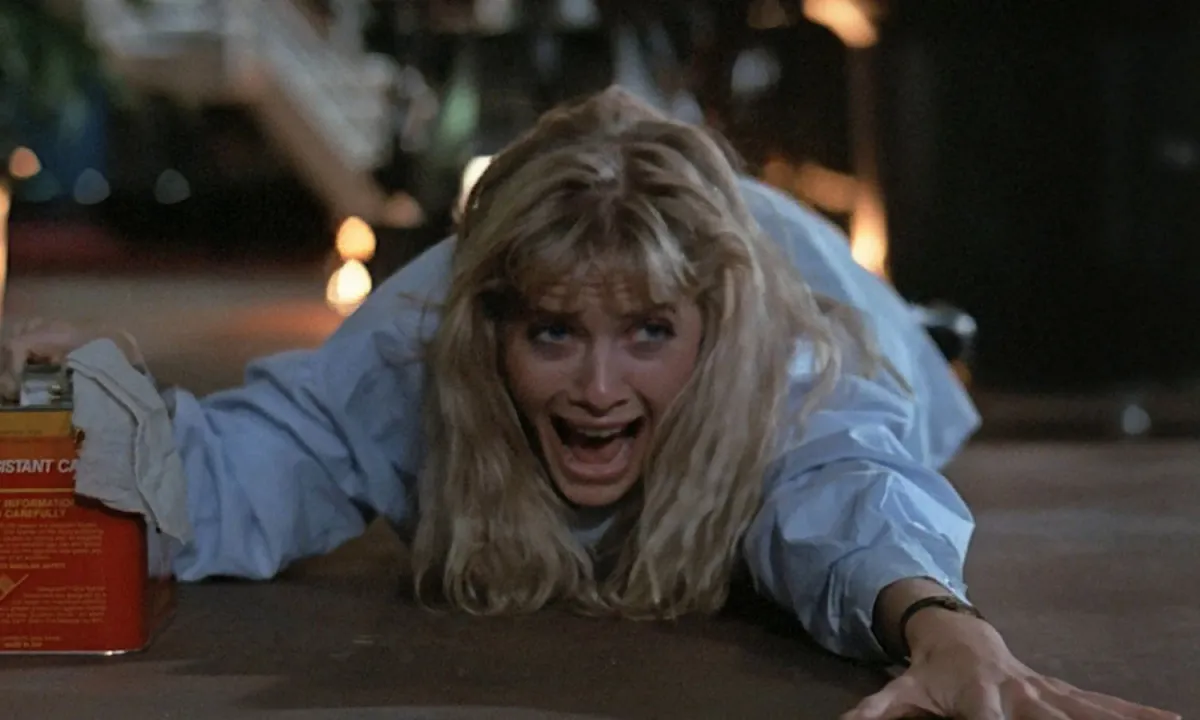
‘Chopping Mall’s Barbara Crampton & Russell Todd Reunite in Vampire Film ‘Bad Blood’
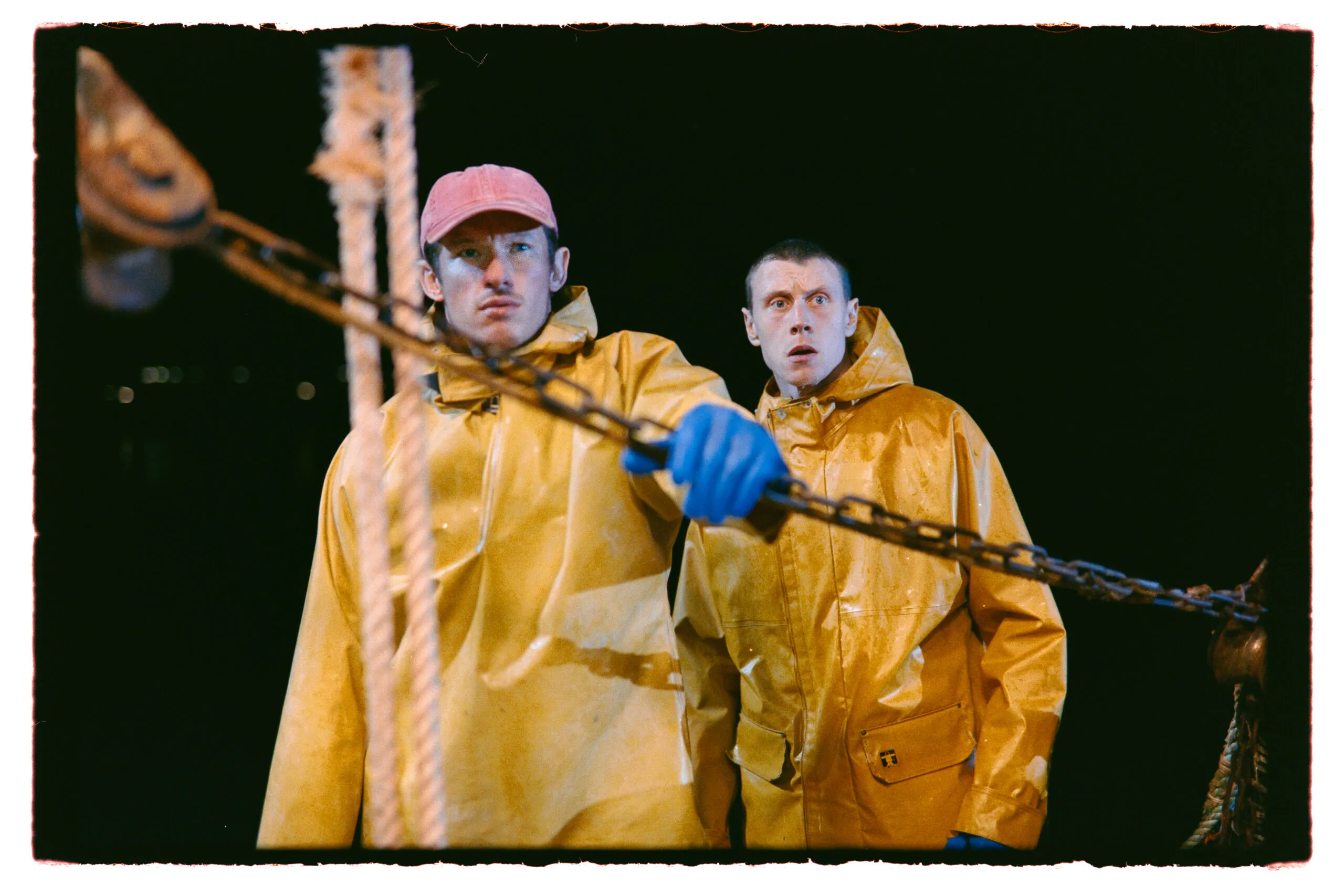
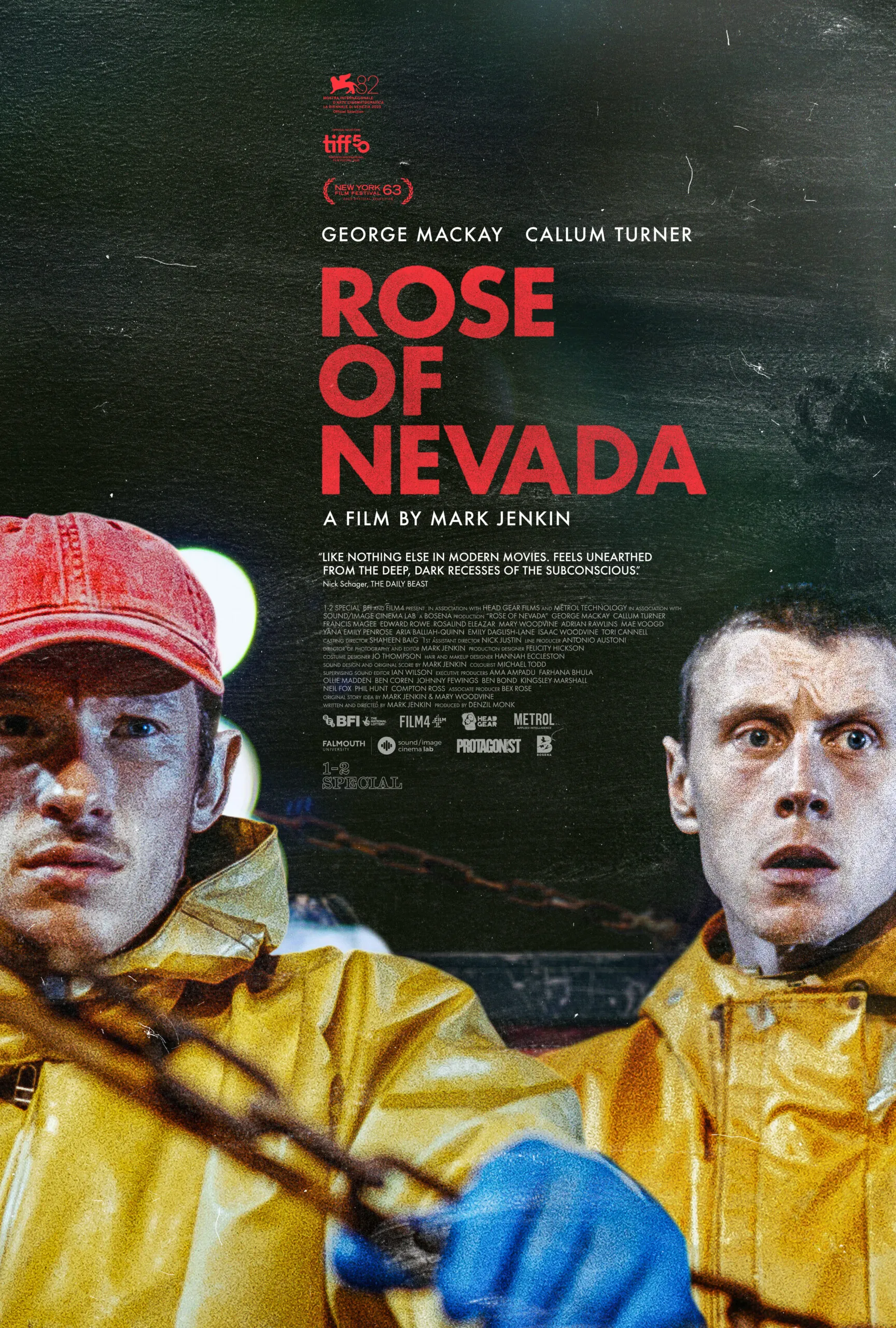
Nothing is the same when two crewmates return to shore in Rose of Nevada, the latest by Enys Men filmmaker Mark Jenkin.
Time and reality blur for stars George Mackay (Wolf, 1917) and Callum Turner (Green Room, “Neuromancer”) in the hallucinatory time travel mystery releasing in New York and Los Angeles theaters on June 19, 2026.
But this isn’t your standard time travel movie.
Rose of Nevada bends time and genre in its exploration of Cornish identity and community, upending the lives of Nick (MacKay) and Liam (Turner). There’s a listless, dreamy quality to the time travel, and for inspired reason: Jenkin approaches it like a haunting.
While time travel was on his mind early in the writing process, Jenkin’s partner and collaborator asked a question that unlocked Rose of Nevada and inspired the filmmaker.
Jenkin explains, “I remember saying to Mary [Woodvine], my partner, who’s in the film, I said to her, ‘God, it really seems like I’ve fallen into this thing of either making films about ghosts or films about time travel,’ and then she said to me, ‘Yeah, but aren’t all ghost stories just time travel films, and aren’t all time travel films just ghost stories?’ And then I thought, ‘Oh, great. So I’m not making two types of films. I’m actually always making one type of film.’ But that was ultimately liberating because I thought there’s a nice gap or a crossover in the perception of genres, there’s a lot of room to play and to be free within that.”
“Once I’d abandoned the idea that I was going to master quantum physics in any academic sense,” the filmmaker continues, “It was incredibly freeing because I thought, ‘Well, I can just set my own rules here,’ and it really doesn’t matter what the rules are as long as you stick to them. You can’t bend them for the sake of the plot or for the sake of a character arc or something. You have to establish those rules upfront and stick to them, which made me really think I’ve got to limit the time travel element. This film can’t be about time travel.“
Bearing the brunt of the time travel disruption is Mackay’s Nick, a man struggling to support his family before the ill-fated voyage upends his entire world. It’s the type of role that was an easy yes for the actor, simply because of the filmmaker behind it.
“I saw Bait at the cinema when it was first out a few years ago and was so struck by it,” Mackay tells BD. “I just hadn’t seen a film like it. I want to work with the best directors. I want to work with the best directors and people who have a singular vision. As an actor, the process of work is almost my biggest draw, as well as what a story’s saying, but I think you learn by doing, and if I can do my bit in as many different ways as possible. The physicality and the discipline of Mark’s filmmaking, how that is so entwined in the DNA of the film, and therefore in the way that I work within it, that was the biggest draw. I’m just a fan of Mark’s. I was just very pleased to be involved.”
That reflects in Rose of Nevada‘s unique casting; Mackay initially was eyed for Liam.
“When I first got the call to meet Mark at the audition stage,” Mackay said, “We didn’t wind up reading scenes, but they said, ‘There’s a project. There are two roles in it that you could be right for, and Mark is leaning towards you for Liam.’ So, I had a look at Liam, Callum’s role, and had my interpretation of the script ready to talk about it and what I thought that character was, who he was, and how I’m thinking about how I might inhabit that or what I saw in him. And when we met, we didn’t talk about the film at all. We spoke about everything else. But following that meeting, I got the message, said, ‘Mark would like you to be part of the film, but he thinks you’re definitely more of a Nick,’ which I think I just may be a complete sheep because I went, ‘Of course I’m Nick.’
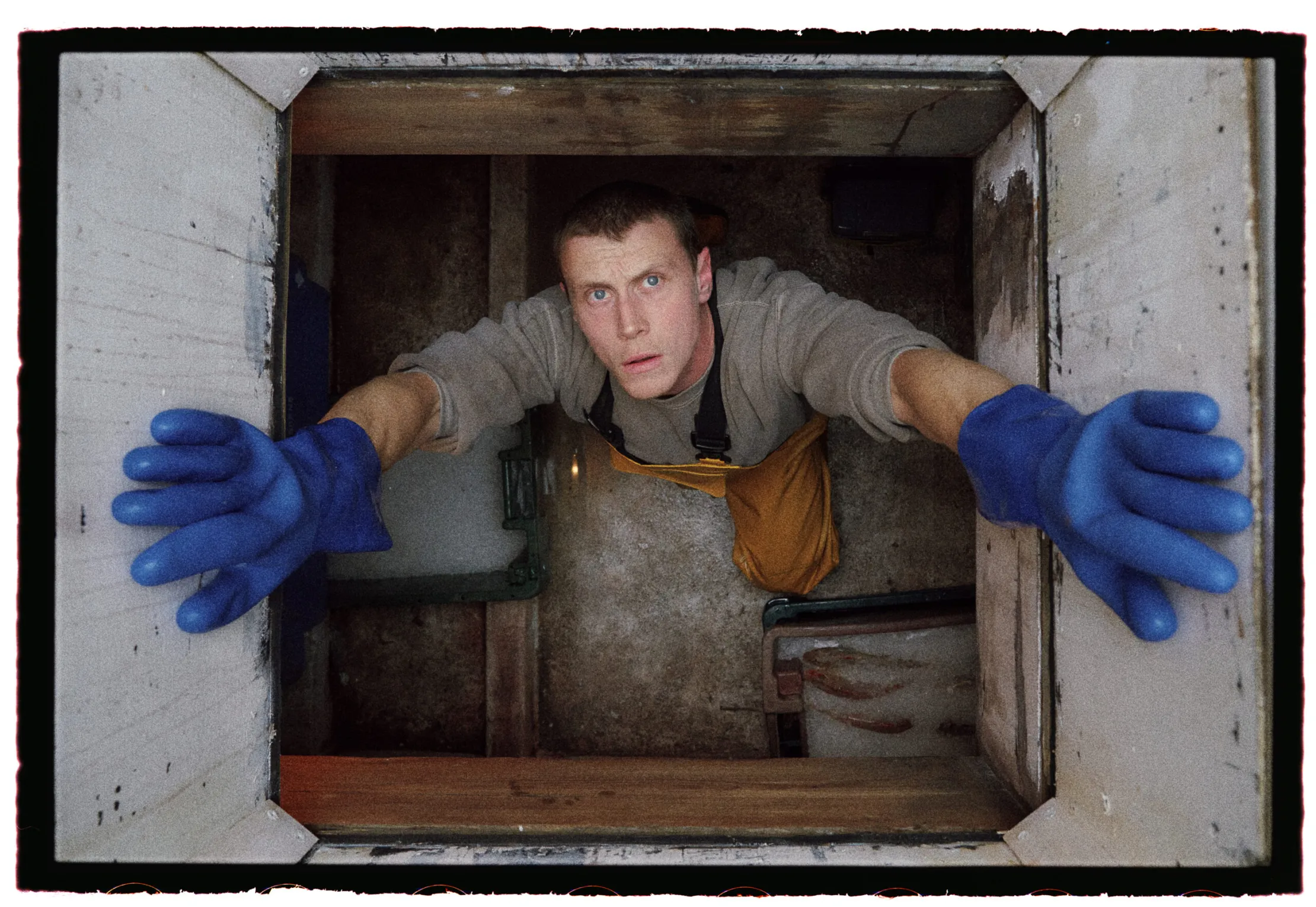
Mackay continued, “But it’s funny, I do have in my own life, I just started a family, and so much of my last few years of being has been trying to figure that balance and what that means and how you navigate that. So with family being at its core and all the kind of conundrums that come with staying level with that, that rang true. So I felt like I understood objectively, I have my interpretations of what both men mean to each other and within the story, but then once I was playing Nick, I just became about a very present focus on who he was and what his situation was. What I liked about him is that he’s a very straightforward bloke. In the best possible way, he’s quite a simple man. It’s just he’s in an extraordinary situation.”
Jenkin wrote Rose of Nevada during the pandemic lockdown that had forced a halt in production on Enys Men. He’d return to rewrite once Enys Men had been completed, creating overlap between films. “They are even more in conversation than you’d think because the first draft of Rose of Nevada was before I’d made Enys Men, and then everything I learned through the making of Enys Men, I fed into Rose of Nevada. But also the reaction to Enys Men, all the critics and writers and audience members who are telling me what Enys Men was about. I’m always the last to realize what I’ve done, I think like most filmmakers. You don’t really know what you’ve made a film about until the audience tells you. I was able to feed that into Rose of Nevada and also scale it up a little bit. So, yeah, in some ways it predates Enys Men, and in some ways it follows on from it,” he said.
Jenkin’s latest caps what’s unofficially been dubbed his Cornish trilogy, a moniker that initially surprised the filmmaker, but he’s come to embrace it. A recent revisit of Bait made it even clearer. “I can now understand why people are linking the three films together. I’d forgotten how linked they are, which is amazing, really, considering the first draft of Bait was written in 1999. So, most of my adult life has been one way or another making this trilogy. I am quite looking forward to starting the next chapter.”