Chapter 24 of the Gospel of Luke opens with the women arriving at the tomb of Christ early on Easter Sunday morning to finish the anointing of his body that they hadn’t had time to complete before the Sabbath. Luke records that the women found the stone removed and Christ’s body missing. While puzzling over this turn of events, there suddenly appear “two men ... in dazzling apparel” (v. 4).
“Why do you seek the living among the dead?” the men ask. They remind the women that “the son of man must be delivered into the hands of sinful men, and be crucified, and on the third day rise” (Luke 24:5, 7). Hearing this, the women race back to the apostles to report the news.
The scene then shifts to two of the disciples walking to Emmaus. We often focus on where the disciples were heading and overlook where they were coming from: they were leaving Jerusalem, and it wasn’t because they were scared of continuing persecution. Luke specifically tells us they were “sad” (24:17). The disciples meet the risen Christ, whom they don’t immediately recognize, and tell him:
“Moreover, some women of our company amazed us. They were at the tomb early in the morning and did not find his body; and they came back saying that they had even seen a vision of angels, who said that he was alive. Some of those who were with us went to the tomb, and found it just as the women had said; but him they did not see” (vv. 22-24).
These disciples had received the report of Jesus’ resurrection from the women, and they evidently did not believe it. They were abandoning the apostles, who were back in Jerusalem, in the same way the apostles had abandoned Christ when he was arrested in the Garden of Gethsemane.
Modern deniers of the historical authenticity of the Resurrection sometimes claim that it was nothing more than Christ living on in the hearts of his disciples. The disciples, deniers say, experienced a surge of “Easter faith,” not a realization that Jesus really had risen from the dead. But these disciples headed toward Emmaus didn’t believe the women who came back with the report of Jesus’ resurrection. They still thought he was dead and apparently were ready to go back to their prior lives. “We had hoped that he was the one to redeem Israel” (v. 21), they tell the unrecognized Jesus, but now they no longer seem to have that hope.
It is only when the disciples finally see Jesus for themselves, when they sit down to a meal with him and receive bread from him, that they finally recognize that he really is alive. What do they do? They immediately race back to Jerusalem to tell the apostles (vv. 28-33).
Then Luke shifts to the scene in the upper room, where everyone is gathered and sharing their experiences of seeing the risen Christ. Christ appears to them again. This time he asks for food and eats it in front of them, proving he is not a ghost but is resurrected in soul and in body (vv. 36-43).
After that, Christ gives them a version of the Great Commission, telling the disciples that he will send them out into the world (v. 47). But they first must stay together in Jerusalem “until you are clothed with power from on high” (v. 49), an allusion to Pentecost and the arrival of the Holy Spirit. Christ then leads them out to Bethany and ascends into heaven. The disciples return together to Jerusalem “with great joy, and were continually in the temple blessing God” (vv. 50-53).
Unbelief scatters the disciples of Christ, and faith brings them together. The women who first received news of the Resurrection returned to the apostles to tell them. After Jesus appeared to them, the disciples who had headed toward Emmaus immediately turned around and rejoined Christ’s followers in Jerusalem. Jesus led the group gathered in the upper room out to Bethany but told them to stay together until the arrival of the Holy Spirit. Only once the Holy Spirit arrived, and the Church was born on the feast of Pentecost, could the followers of Christ head out again into the world and proclaim the good news of Christ.
It was the historical reality of the Resurrection that brought together the disciples of Christ on that first Easter Sunday. If Christ hadn’t truly risen from the dead, those disciples likely would not have stayed together for lesser reasons, such as affection for each other or the desire to be part of a larger community. No, they would have simply wandered away and back to their former, quiet lives. Instead they went out to the whole world to proclaim the resurrected Christ and to be persecuted, often at the cost of their own lives.
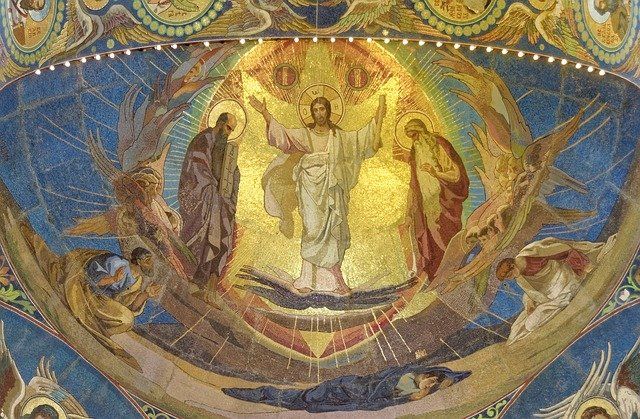
(Image: Resurrection, Pixabay.)