When Lee Litz found the newborn’s body abandoned in a South Dakota ditch in late February, 1981, there was one detail of the horrific scene that he’d never forget and would recount to the Washington Post nearly forty years later: the tracks of frozen tears on the tiny boy’s cheeks.
“To see a child thrown away … how could someone do that?” he asked.
On what would have been Baby Andrew’s thirty-eighth birthday, police interviewed their prime suspect: Theresa Bentaas, identified as the baby’s mother through DNA and genetic genealogy. She told police that she had kept the pregnancy secret and gave birth alone in her apartment before driving to the ditch where the child was found. Bentaas has since been arrested for the crime.
The same day Bentaas was arrested, feminist activist Jill Filipovic reacted to the news that a man in Alabama, Ryan Magers, successfully petitioned to represent his unborn child in a lawsuit against both the clinic where the child was aborted and the manufacturer of the pill used in the abortion process. In denouncing an Alabama probate court’s decision to allow the case to proceed—based on a recently passed personhood amendment to the state’s constitution—Filipovic digressed into a philosophical discussion of when motherhood begins:
There are a lot of ways to become a mother, and birth doesn’t have to be the line. Certainly women who lose very wanted pregnancies, which they tended to and cared for and nurtured out of deep love and desire, may claim the title; certainly women who didn’t give birth themselves but adopted, loved and raised their children are mothers; certainly women who did give birth but surrendered a child to someone else out of devotion to their child and hope that their baby would be better cradled in another’s arms are mothers, too. Motherhood is a relationship; it relates to pregnancy, but pregnancy is not all it is. It is, fundamentally, about intention and action, of doing the work of nurturance and cultivation, of offering someone small and vulnerable a specific kind of love and dedication.
If we look closely at Filipovic’s argument, she seems to be saying that a woman becomes a mother when she decides she wants to be a mother. If a woman loses a “wanted pregnancy,” she’s a mother—of what, it’s not certain, since Filipovic ends her piece by claiming that Ryan Magers’s unborn child was “a non-existent embryo.” Women who adopt children count as mothers, in Filipovic’s opinion, as do women who place their children for adoption.
But what if we extended Filipovic’s rationale to the South Dakota case? Would Theresa Bentaas be considered Baby Andrew’s mother?
Even though police established a biological connection between Bentaas and the baby, she didn’t want to believe that the child was hers: “She said she had seen the news coverage in 1981 about the baby’s funeral, attended by about fifty strangers, but that she did not want to believe that was her baby. She was ‘in denial,’ she told police.”
Did Bentaas’s refusal to accept that the baby was hers—even after reportedly confessing to police that she’d abandoned her baby in the same spot—mean she really wasn’t the mother of the dead child?
To some extent, we must concede that language evolves. The words we use to describe relationships between persons can be terms of art, understood by theologians and philosophers to have a precise meaning within those frames of reference. St. Thomas Aquinas, for example, in arguing for the Blessed Virgin’s motherhood of Christ, gave two conditions for establishing motherhood—giving birth to a living being:
Christ’s body was not brought down from heaven, as the heretic Valentine maintained, but was taken from the Virgin Mother, and formed from her purest blood. And this is all that is required for motherhood, as has been made clear above. ... [W]hen inanimate things are made from some matter, the relationship of motherhood and sonship does not follow from this, but only in the generation of living things, which is properly called nativity.
Aquinas stated that this minimum test is “all that is required for motherhood,” leaving open the possibility for other conditions in which a person may become a mother—including those offered by Filipovic. This evolution of language is helpful, and by it we can acknowledge the motherhood of women whose children died before birth, of women who never gave birth but adopted children, and of women who placed their children for adoption. But, in a sense, these definitions of motherhood build on the primal definition offered by Aquinas: that motherhood is the generation of living beings.
Does defining when motherhood begins matter all that much? Or, as with the case of Baby Andrew, does it matter only insofar as it establishes an individual person’s responsibility for the care of a dependent human person?
St. John Paul II, in his Letter to Families, noted that a person’s genealogy is far more than just the biological data that connects him to other human persons. Our dignity as human persons is rooted, first and foremost, in our origin with God, who made us in his own image and likeness:
Human fatherhood and motherhood are rooted in biology, yet at the same time transcend it. ... When a new person is born of the conjugal union of the two, he brings with him into the world a particular image and likeness of God himself: the genealogy of the person is inscribed in the very biology of generation (9).
John Paul reaffirmed Vatican II’s declaration that the human person is “the only creature on earth whom God willed for its own sake” (citing Gaudium et Spes 24). And it is that divine design that each and every one of us are willed into being by God for our own sake—not for the sake of anyone or anything else, including our parents—that is at the root of the Church defense of the dignity of all human life from conception to natural death.
Jill Filipovic, though, claimed that “motherhood is … fundamentally, about intention and action.” In other words, motherhood is about what a woman believes and does. But in reality, nothing she believed or did could make her a mother without the objective existence of her child. And nothing she believed or did could make her child—newly conceived or newly born—anything less than a human being with inherent dignity and an inviolable right to life.
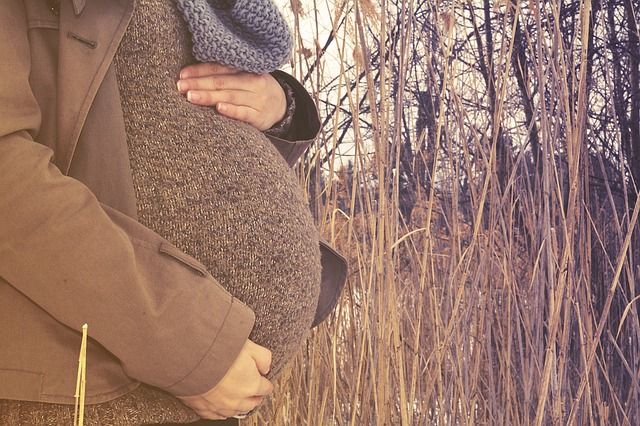
(Image: Pregnant woman, Pixabay.)