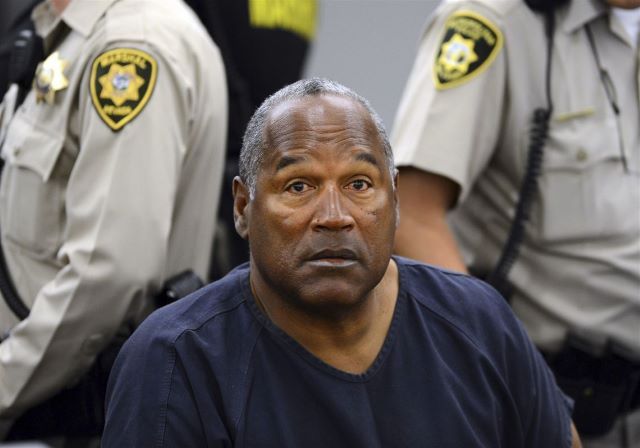
As news of the death of O. J. Simpson broke a month ago, my social media newsfeed began to fill with reactions from friends and strangers. I wrote a quick reaction of my own: “Thirty years to the year. All I find myself capable of wishing for O. J. is that he was ready to meet God.”
It’s the response I feel to every such story, of every famous criminal and villain as their lives end. It puzzles even some of my friends.
God? What about the victims? Shouldn’t I wish Simpson was ready for the possibility of meeting them? The first doesn’t necessarily exclude the second, but the questions did get me to thinking about what kind of justice might be left to be meted out to someone like O. J. Simpson.
He died without penance
The families of Nicole Brown Simpson and Ronald Goldman, who won civil judgments against Simpson, may yet have recourse in getting those judgments honored.
David Cook, Fred Goldman’s attorney, told People that the civil judgment was renewed in 2022 and that the amount owed, including interest, is now $114 million. Simpson, Cook observed, “died without penance.... He did not want to give a dime, a nickel to Fred, never, anything, never.”
Penance is usually understood to be a religious concept, binding only on adherents. More broadly though, penance can be any act undertaken to make restitution for harms committed.
Museums returning stolen art to the families of Shoah victims, or appropriated artifacts to their countries of origin, might be said to be engaging in penance. If those responsible for handling Simpson’s estate honor the judgments on his behalf, perhaps Simpson will finally make some small restitution to the Brown and Goldman families for their unfathomable losses.
Too little, too late, many would say. No amount of money can ever compensate families for the loss of their loved ones. But we aren’t part of that process. All that is left to us is to decide how we’ll remember O. J. Simpson.
Simpson was born into poverty after World War II, a time of great prosperity for many of his peers. As a child, he suffered from rickets, a disease ordinarily caused by vitamin-D deficiency. Despite having to wear leg braces, he learned to run, and running would become his ticket out of the projects.
Success brought Simpson many material advantages, but not a stable personal life. In the decades before the murders, he went through divorce, the death of an infant daughter, and brushes with the law.
He may have been acquitted of double murder in 1995, but he spent the rest of his life running from the fallout of those murders—including a nine-year stretch in prison for crimes arising from that fallout. He may never have served a day in prison for murder, but he served a life sentence of a different sort.
How can we pity him?
Yet how can we pity him? How can those of us who watched on television as the “not guilty” verdicts were read, who saw him smirk and pump his fists in jubilation, feel any kind of sorrow for him now?
He didn’t directly harm us or our loved ones, but his story had a profound impact on us—on everything from victims’ rights advocacy to race relations to how the media covers criminal cases. We weren’t his victims, but we didn’t escape unscathed.
Corrie ten Boom, a survivor of the Ravensbrück concentration camp, once told of meeting a former guard—a man she vividly remembered, but who didn’t remember her. When he stuck out his hand to shake hers, she was faced with a choice: shake that hand, or ignore it?
Offer grace, or withhold it? Live with the bitterness of the past, or move forward in freedom? Ultimately, Miss Ten Boom chose to take the hand offered, to extend forgiveness even though it was the last thing she wanted to grant a man she held responsible for her sister’s death.
We can’t change Simpson’s story and he can no longer change his fate. But we still have the power to choose how we view him. We can continue to revile his memory, but what good will that do?
Or we can pity the man who managed to run free from poverty, to rise to glory as a gifted athlete… only to be ensnared in a vicious circle of greed, jealousy, and violence that cost two innocent people their lives and cost him the respect and stature he’d worked so hard to achieve.
Grant him grace
O. J. Simpson’s family, in announcing his death, asked for grace. Another religious concept, and usually asked of God, not one’s fellow human beings. To ask for grace, in this context, is simply to ask for kindness, for withholding further judgment now that their loved one is dead.
We can choose to extend that grace or not. The choice we make won’t affect Simpson’s story, but it could affect our story. Granting grace won’t change his fate, but it may shape our character.
(Image: O. J. Simpson at an evidentiary hearing in Clark County District Court in Las Vegas in 2013, Associated Press.)