Interest in witchcraft and occult practices is on the rise. Movies and TV shows feature witches, ghosts, vampires, and werewolves. Bookstores are filled with not just depictions of fantasy worlds in which these creatures exist but also with how-to manuals for casting spells or discovering your inner goddess. There are groups on social media for practitioners of the occult and national conventions for devotees.
But do you know what witches actually believe and how they practice it? Do you know what the Church teaches on witchcraft and the occult? Do you know what to do if you’ve been involved in witchcraft and want to return to the Church?
Witchcraft and occult activity have been around for hundreds—possibly thousands—of years. When people live in uncertain times, they begin to worry that God does not hear their prayers, and so they seek other ways of gaining the knowledge they feel they need to take control of their lives. Recourse to witchcraft and the occult is, primarily, a sign of despair of the goodness of God. As the Catholic Encyclopedia put it, advocates of magic, “despairing to move the Deity by supplication, seek the desired result by evoking powers ordinarily reserved to the Deity.”
In responding to the claims of witchcraft and the occult, it is important not to give in to fear or to attribute to practitioners more power than they have. They are ordinary people leading ordinary lives, and, in many cases, they hope to find in these practices the means to make the world a better place. It is our task as Christians to be ready with the information and assistance that can help them find a safe path to the peace and union with the divine that they crave.
The practice of witchcraft
Witchcraft is a methodology that includes, among other things, casting spells, divining hidden events, and invoking and worshiping gods and goddesses. Spells are the common means by which a person practices sorcery. Generally speaking, someone who engages in sorcery does so in order to create a change in his personal circumstances, in others, or in the world around him.
In her book Witchcraft on a Shoestring, Deborah Blake explains the act of magic in her attempt to help readers understand that they don’t need expensive tools to practice it:
Witches believe in magick [sic]: the power to change the world around us through the focused application of will and energy. Without this belief, our words would have no power, and that wand would simply be a piece of wood.
With belief, however, comes ... ability to tap in to the energy of the universe and manipulate reality—not necessarily in drastic and dramatic ways (although that can happen, too) but mostly by giving the world a nudge in the right direction.
Unlike sacramentals such as holy water or rosary beads, which Catholics use with the faith and hope that God may freely choose to act through the objects to give us certain graces, sorcery involves a witch using various tools to channel energy and will to affect the desired change. It is an attempt to harness spiritual power for one’s own purposes.
Divining hidden events involves seeking knowledge of past, present, or future events, either through one’s own power or by invoking pagan gods or goddesses. Diane Smith, author of Wicca and Witchcraft for Dummies, writes:
Divination is an attempt to receive unknown information about the past, present, or future. The process requires two steps. A person: uses a tool or method (tarot cards, for example) to produce symbols; and interprets the symbols in a way that is meaningful to his life.
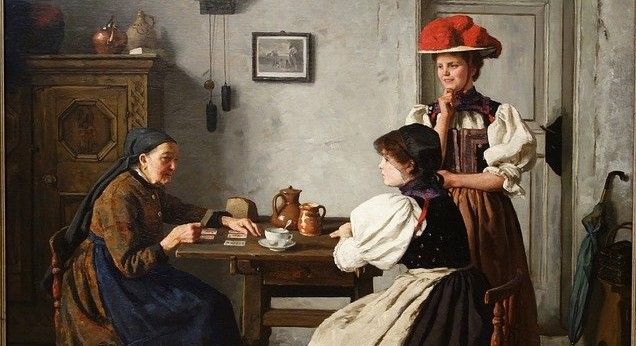
Tarot cards, Smith’s example, are one means witches use for divination. Other divination tools include runes, mirrors or glass balls, reflective water, astrology charts, tea leaves, and the palm of the hand. The common principle behind all of these methods is to find patterns and then to interpret from those patterns the information the practitioner seeks.
Invoking deities
Invoking and worshiping gods and goddesses involves identifying pagan deities to whom one feels attracted and then venerating them and seeking their aid. It is common for a witch to have a personal “pantheon” of such deities, many of the pantheons being based on ancient European mythologies (e.g., Greek, Roman, Celtic, Norse). Depending on a witch’s ethnic background or personal preferences, he might also invoke deities from Africa, Asia, or the indigenous tribes of the Americas.
The interactions practitioners have with these deities are not merely fantasy or imaginary play. Some report vivid dreams or trances in which they are brought into contact with the spirits they have been invoking or worshiping. For example, high priestess Phyllis Curott tells the story, in her book Witch Crafting, of someone she knew (witches are extremely circumspect about sharing the identities of fellow practitioners) who once dreamed of “being prey” of a monstrous creature. In the dream, the creature captured this person.
Currott reports that her friend awoke “deeply transformed” by the dream because he believed that the creature felt “tremendous love” for him. He eventually became a Wiccan priest. It should be noted, though, that even teachers of paganism have warned against granting uncritical belief to the spirits they contact.
Carl McColman, a former pagan practitioner who reverted to Christianity, wrote in The Complete Idiot’s Guide to Paganism, “Don’t automatically believe everything you hear [when in conversation with spirits]. Just because a spirit says something doesn’t make it so.”
Church teaching on the occult
The primary source of doctrinal teaching from the Church on witchcraft and its associated practices can be found in the Catechism of the Catholic Church in its treatment of the commandment “You shall have no other gods before me.” The primary temptation that can lead people into witchcraft is identified as a desire for control over the future.
Although healthy provision for the future is commended as an act of responsibility, Christians are warned that they cannot know the future unless God chooses to reveal it:
God can reveal the future to his prophets or to other saints. Still, a sound Christian attitude consists in putting oneself confidently into the hands of Providence for whatever concerns the future and giving up all unhealthy curiosity about it. Improvidence, however, can constitute a lack of responsibility (CCC 2115).
All of the methods used by pagan practitioners in their attempts to reveal and to control the past, present, and future, or to reveal hidden knowledge, are condemned by the Church because they are offenses against our obligations to serve the one true God and him alone (CCC 2116).
Much of the practice of witchcraft involves invoking spirits to aid the petitioner. Whether the person is seeking his own benefit or is attempting to help another, the Church issues grave warnings against invoking the aid of spirits, both because such invocations are contrary to “true religion” (meaning those practices of worship that connect us to the one true God) and because such practices involve attempting to gain power over another (whether it is the spirits being summoned or the human person one seeks to assist). If the goal is to cause harm to another, the evil of the occult practices is compounded (CCC 2117).
It should be noted that most pagan practitioners don’t consciously seek to cause harm by their invocation of spirits or their attempts to influence outcomes. Pagan manuals will caution that permission should be sought and granted before casting a spell for someone else’s benefit. Pagans also often warn against attempting to inflict harm, often on the grounds that the harm sought will return to the person attempting to harm another. Even so, the Church’s prohibition of occult practices applies even when a good outcome is sought.
If you are involved
What if you have been involved in practicing witchcraft? What can you do to return to the Church? First of all, remember that there is always hope. The Church always desires to reconcile you to God. Here are some suggestions.
The practice of witchcraft qualifies as grave matter—seriously immoral activity. For grave matter to become mortal sin, two additional conditions must be met: full knowledge and deliberate consent (CCC 1857). With regard to witchcraft, you are not guilty of a mortal sin if you did not have full knowledge of the sinfulness of the action or if you did not consent to the action.
For example, if you did not know that playing with a scrying mirror constitutes occult activity, you have not mortally sinned in doing so. If you found out that someone cast a spell for your benefit, but you had no knowledge that this person was going to act in this way, you are not culpable for that person’s actions.
If you have chosen to take part in some occult activity but had mitigating circumstances that diminish culpability, you might not be guilty of a mortal sin (a sin that destroys one’s relationship with God), but you might be culpable for a venial sin (a sin that harms one’s relationship with God and opens the person to the possibility of sinning more gravely).
For example, let’s say that you and some friends are drinking socially one evening. Someone suggests pulling out a Ouija board, and you agree to play along. In such a situation, you might not be guilty of a mortal sin if the alcohol that you drank influenced your judgment without your having realized it, or if you were subjected to unjust peer pressure.
Is witchcraft a sin?
Insofar as witchcraft is concerned, participation in an occult activity becomes a mortal sin when you have full knowledge that the activity is forbidden and freely consent to participate anyway. For example, if you indulge your curiosity about the occult until it becomes serious study, and then, knowing full well what the Church teaches about the occult, you decide entirely of your own free will to participate in an occult ritual—either alone or with others—you have committed a mortal sin.
The Church requires sacramental confession of mortal sins (CCC 1457). Even when a sin is merely venial, the Church strongly recommends sacramental of confession (CCC 1458), especially of those venial sins that have the potential to draw the soul into mortal sins. The first step you must take after committing a sin, whether venial or mortal, is to repent.
If the sin is venial, you can pray an act of contrition and go to the Eucharist, because participation in the Eucharist wipes away venial sins (CCC 1394). If the sin is mortal, you should pray an act of contrition immediately, go to confession at the next opportunity, and perform the penance the priest assigns.
If you have been involved in occult activity to the extent that you have accumulated books and occult paraphernalia, I urge you to remove these occult influences from your life. Even if the materials were expensive or could have non-occult uses (theoretically, a ritual knife or cloth could be put to other uses), keeping these items can create temptations to continue engaging in occult activity.
Some Christian experts recommend not merely discarding but destroying such materials. Whether to do so is a question you can pose to your confessor. In some cases, it might be helpful to enlist a priest’s help in purging these materials from your life.
If you are finding it difficult to get rid of items you have collected over a long period, you might ask your priest if you can bring him the items to dispose of for you. You might also ask him to bless your home, both for the graces such a house blessing can offer and as a ritual means of rededicating your life and your home to God.
It may have warped you
Finally, remember that your experience with the occult does not necessarily mean that you have become an expert. Be wary of offering advice to other people based on your experiences. Those experiences, rather than qualifying you to counsel others on the dangers of the occult, may instead have compromised your objectivity in being able to discern between what constitutes occult activity and what does not.
If someone who knows about your history asks for your advice or opinion, it may be prudent to direct your inquirer to a knowledgeable individual who can answer that person’s concerns more objectively than might be possible for you.
Legend has it that when St. Boniface (c. 675–754), missionary to the Germans, learned that those to whom he preached could not entirely give up their pagan ways—some still took part in pagan sacrifices, and others refused to give up their magical practices—he decided to prove to them the power of the one true God.
He took an ax to a huge tree held sacred by the local pagans. He had barely begun the task when the tree miraculously fell. In thanksgiving, St. Boniface used the wood to build a church.
Whenever you are tempted to put trust in superstitions or personal intuition, or in any occult practice, ask St. Boniface for the courage to set aside the idols of your own making, to root them out of your heart and life, and to offer instead your life to the one true God.
SIDEBAR
A Magickal Primer
The casting of spells ordinarily involves using magical tools to channel the practitioner’s will. (The witch might prefer to call it his “energy” rather than his will.) Spells usually consist of a material object, ritual words, and the intention of the practitioner. Since there tends to be a high failure rate for spells—especially spells that require manipulating the will of others, such as love spells—some witches will claim that getting desired results depends on more than following the instructions in a spell book.
Phyllis Curott writes, “The real power that makes a spell work dwells with you, and surrounds you: it’s the power of your connection to the sacred. The real secret of successful spellcasting, as with all magic, is your connection to divinity, within and without” (Witch Crafting).
This “connection” to a deity is reminiscent of the faith in God that Christians believe is necessary for grace to be received through sacramentals. But there is still the focus on the self and what it can do by its own power. There is also idolatry, given that this “connection” is not to the one true God but to false gods and goddesses.
Witches who practice with others usually form covens (also called “circles”). Covens tend to be small in size. Though some may last for years, others can be far less enduring. Sometimes groups fall apart entirely, and sometimes individual practitioners within a coven “hive off” to start their own new covens, perhaps because of personality conflicts or because a practitioner feels ready to lead a group of his own.
Covens are highly individualistic. Although some may engage in more controversial practices, such as ritual sexual intercourse, many do not. It would be a mistake to assume that you can know what goes on in any particular coven because of stories you’ve heard about other covens, especially since most covens tend to be secretive about their own practices.
The major holidays witches observe are called sabbats and mark the progression of the Earth’s yearly cycle around the sun. These sabbats also follow the life cycle of a lord and lady who are not necessarily bound to a specific god and goddess but can be represented by gods and goddesses in a pagan’s personal pantheon. In addition to the sabbats, which follow a solar cycle, most witches also observe the moon cycles, called esbats.
Most witches do their “magickal work” on altars, either set up for group use with a coven or set up for personal use in solitary practice. Use of an altar does not necessarily mean that the witch is engaging in sacrifice. There is no evidence to suggest that modern witches sacrifice either animals or humans in their religious rituals. They do offer gifts to their chosen deities at their altars in rituals that are somewhat reminiscent of Catholic liturgies, such as the ritual commonly known as “Cakes and Wine.”
Secrecy is a major factor in the practice of witchcraft. Practitioners go to great lengths to hide their involvement in witchcraft from anyone with whom they do not believe it is safe to share that information.
It is considered a major breach of trust to reveal the identities of fellow practitioners, to such an extent that sometimes practitioners are known to each other only by their chosen “witch names” (usually drawn from mythological gods, particularly those the witch has chosen as a personal pantheon).
Many witches have a sense of extreme possessiveness about their witchcraft tools. These tools are believed to be infused with the witch’s “energy,” and witches often believe that the “energy” will be diluted if others touch or use their tools. While it may seem understandable for a witch to expect to be asked permission to touch his belongings, it is not always readily apparent to outsiders what a witch considers to be the tools of his practice. Witchcraft tools can include decorative brooms, ordinary kitchen pots or utensils, clothing and jewelry, and even pet animals who are considered to be “familiars” (assistants in magical practice).
(Image: "At the Fortune Teller's" by Alma Erdmann, Pixabay.)