Lana Priatna/Getty Images
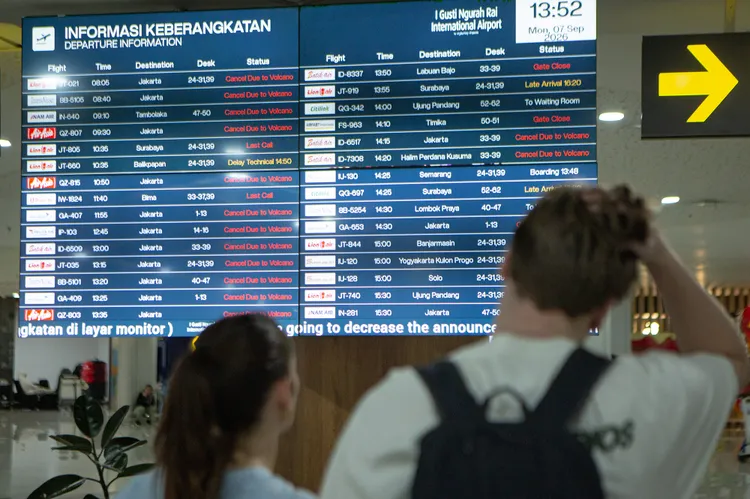
Indonesia reopened several airports on Tuesday after they were forced to close over the weekend following a volcanic eruption that spewed ash and lava across the region.
Jakarta’s Soekarno–Hatta International Airport (CGK) was once again up and running after carrying out “comprehensive inspections and cleaning,” according to the airport. Flight operations were being “managed gradually and in a measured manner, taking into account operational conditions on the ground.”
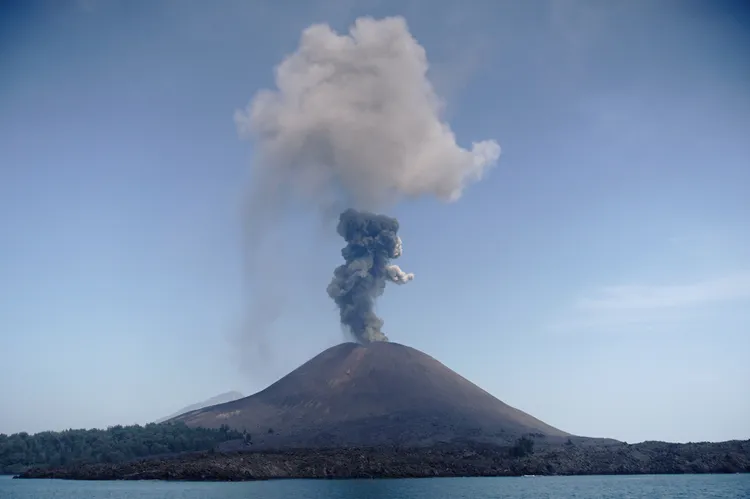
The disruptions were caused by the eruption of Mount Anak Krakatau, which sits on the Sunda Strait between the islands of Java and Sumatra. The volcano erupted for 25 straight hours beginning late Friday night before finally coming to a stop, the Jakarta Globe reported. Tourists, climbers, and the general public have been advised not to come within about 2 miles of the volcano.
Indonesia’s Geological Agency of the Ministry of Energy and Mineral Resources maintains a Level III alert and noted seismic activity suggests another significant eruption could occur in the near future.
“The main potential hazards include the ejection of hot rocks and heavy ash rain, as well as the potential for lava flows if eruptions continue,” the agency’s head, Lana Saria, said in a statement.
The volcanic eruption left about 340,000 travelers stranded in Indonesia and disrupted nearly 3,000 flights, Reuters reported. Seven airports, including two serving the Indonesian capital of Jakarta, were forced to suspend operations for two days as ash from the eruption spewed thousands of meters into the air, leaving stranded passengers no choice but to wait it out.
Ferdi Awed/Getty Images
Lava from the eruption bathed the sky in red, sending up towers of ash as high as 20,000 feet on one side of the volcano and 50,000 feet on the other, the BBC reported. Sulphur- and silica-laden ash from these types of eruptions can damage plane engines and reduce visibility, making it dangerous to attempt to fly through it.
Local officials grounded planes long enough for airport crews to clear runways and taxiways and for carriers to prepare their fleets.
Anak Krakatau is just one of many active volcanoes in Indonesia, which straddles the “Pacific Ring of Fire,” a highly seismically active zone where different plates on the Earth’s crust meet to create a large number of earthquakes and volcanic eruptions. This area is home to an estimated 452 active volcanoes, representing about 75 percent of all active volcanoes on Earth, the BBC noted.
The volcano continues to experience smaller eruptions, with the latest occurring on Sunday evening.