
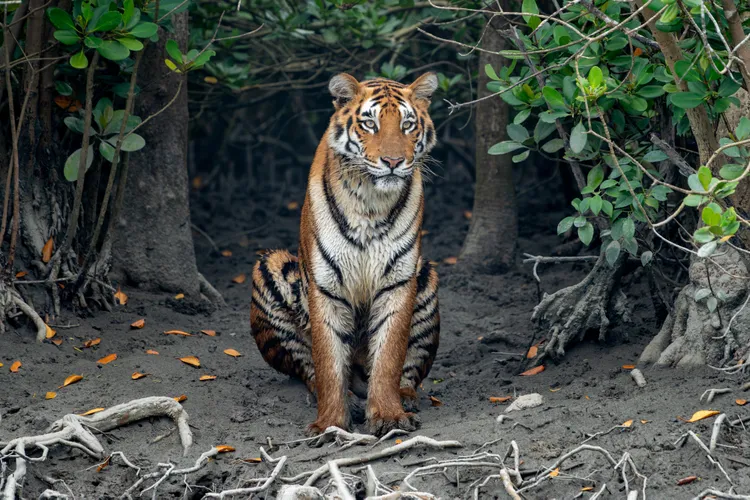
The world’s largest mangrove forest is one of the rare places in the world where mass tourism has yet to take hold. The Sundarbans, a dense swath of swampland straddling India and Bangladesh, sits in the Bay of Bengal where the Ganges meets the Brahmaputra and Meghna Rivers.
Covering thousands of square miles, it’s a place where time slows down. Traditional homes are still fashioned from wood and thatch. Silence is punctuated by the singing of birds and the occasional roar of a motorboat. Centuries-old ruins are hidden among the foliage, and fresh crab, shrimp, fish, and organically grown produce are on the menu.
The forest is named for the Sundari mangrove tree, one of hundreds of varieties of plants here. Around 300 varieties of birds and more than 100 species of fish have been spotted in this area, which is also home to the rare saltwater crocodile and a few dozen varieties of snakes. And it’s the only mangrove forest in India where it’s possible to see Bengal tigers.
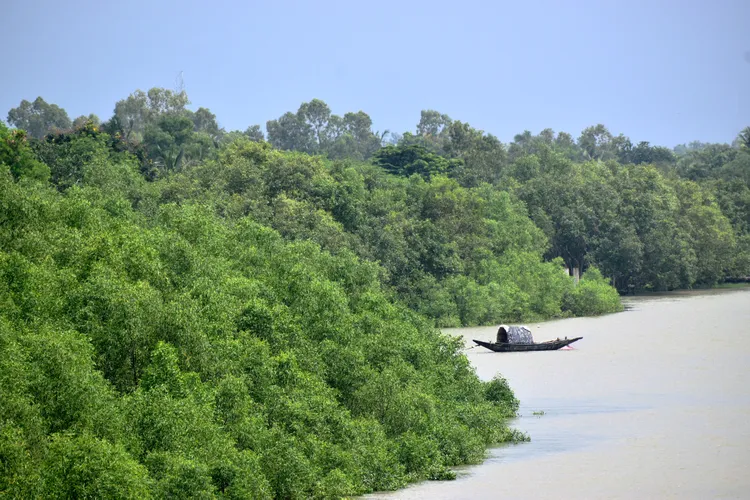
The vast Sundarbans ecosystem stretches across both India and Bangladesh, with about 40 percent falling within India, and travelers can explore it from either country. The two sides have different gateways, regulations, and tourism infrastructure, so deciding where to enter is an important first step in planning a trip. On the Indian side, it’s possible to visit from Kolkata, the capital of West Bengal, on a day trip, though an overnight or multi-day stay allows considerably more time to explore. Depending on traffic and the departure point, the drive from Kolkata to the region’s boat launches takes roughly two to three hours; from there, boats are the primary way to venture into the protected mangrove landscape and its maze of tidal waterways. Visiting from Dhaka, the capital of Bangladesh, requires a longer journey, making a day trip impractical and a multi-day itinerary the better option.
There’s no long list of sights to tick off. Instead, slow down on a birdwatching tour with Sundarban EcoTourism to look for kingfishers, herons, and the rare masked finfoot, an endangered aquatic species that looks a bit like a duck. Or spot dolphins poking their heads above the surface of the Ganges on a day tour with the Greater Sundarbans EcoTourism Society. The company also offers the chance to join a group of fishermen assisted by the best-trained otters in the world—a practice that has been used for generations in these parts.
If you prefer more cultural experiences, you can watch Indigenous communities perform traditional dances and then shop for handmade embroidery, art, and locally made handicrafts on a village tour with Sundarban Matla Tourism. Or Tours and Trips Bangladesh can help plan a guided visit to the mouals, a group of local honey hunters who have ventured to the western edge of the mangroves for centuries to source honey.
If the area seems familiar, it could be because author Salman Rushdie’s Booker Prize–winning novel Midnight’s Children was partially set among these tidal waterways, mudflats, and tiny islands. The Sundarbans were also the subject of Amitav Ghosh’s novel The Hungry Tide.
Accommodations here are limited, but there are a handful of boutique eco-resorts, government-run tourist lodges, and jungle camps to choose from. The Sundarban Tiger Camp and Jhore Jole Jongole are two of the area’s top-rated options, but for a more unique experience, consider booking a two- to three-night sailing on a simple houseboat through a local travel agency like Sundarban Mondal Travels. Because waterways are the primary way to explore the mangrove landscape, houseboats offer the best chance to explore the Sundarbans’ nooks and crannies and wake up to the sounds of nature.
On the Bangladesh side, the local forest department enforces a ban on tourism, fishing, and agricultural activities in the Sundarbans from June 1 through the end of August, the area’s rainy season. The restrictions are aimed at wildlife preservation and apply to fishermen, woodcutters, and honey collectors as well as tourism operators.
Visit between November and February for the most pleasant temperatures and best wildlife-spotting opportunities. November brings Rash Mela, a full-moon festival celebrating the love of the Hindu deities Krishna and Radha. Around January, communities also celebrate Bonbibi Mela, honoring Bonbibi, the guardian spirit of the Sundarbans who is revered by both Hindus and Muslims. The festivities offer travelers a chance to experience local religious traditions alongside folk music, handicrafts, and food stalls.