
With Derek Cianfrance, I'm always chasing the high of The Place Beyond the Pines. Granted, it's been a modest sample size ever since. Still, I'm left with the same itch after Roofman.
Cianfrance's zany yet soulful "based on a real story" flick is consistently watchable. Jeffrey Manchester is a modern-day and self-serving Robin Hood, except with more guns and department store squatting. The screenplay, co-written by Kirt Gunn, explores clashing themes of patriarchal nobility and misguided values with a sentimental touch. Cianfrance, known for more serious and troubled fare, favors lighthearted larceny and romantic distractions. Should we spare sympathy for "victimless crimes" in pursuit of the American dream? Therein lies the question at the core of Roofman.
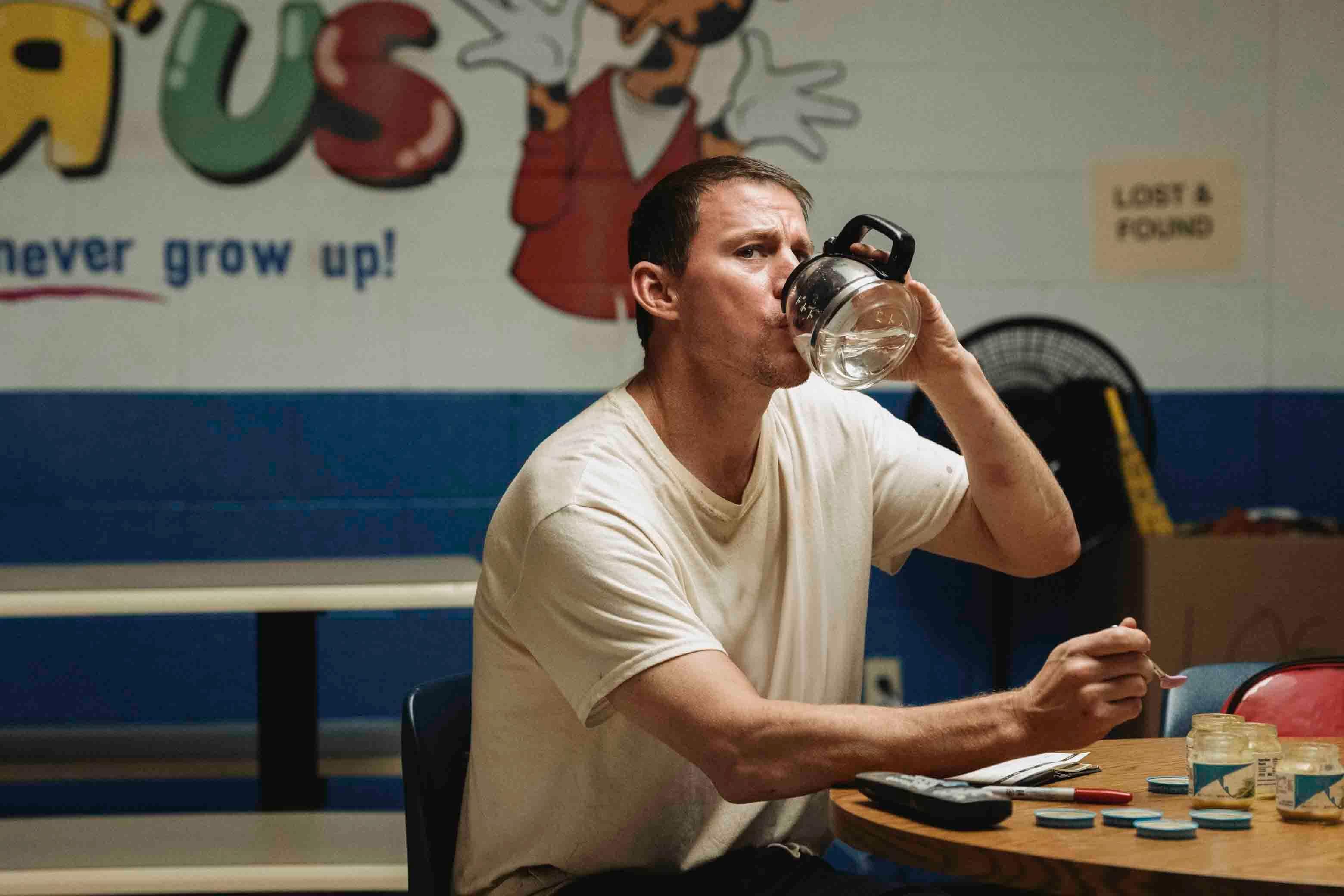
Channing Tatum stars as Jeffrey Manchester, a beleaguered, former United States Army Reserve veteran and proud father who's sunk into poverty. Through a series of avoidable and unfortunate choices, Jeffrey finds himself in prison after politely robbing some 45 fast food restaurants (McDonald's, Burger King, KFC). But Jeffrey's an observant and genial fellow, traits that help him escape incarceration. On the lam, Jeffrey has no choice but to await the return of his military friend-slash-contact Steve (LaKeith Stanfield)—so he holes up inside a Toys "R" Us, living in the dead space behind a sizable bicycle display.
It's a bizarre true tale, but not an especially ridiculous adaptation. Cianfrance Hollywoodizes a robbery spree and the events that later unfold, yet Roofman is often a cutesy, albeit skin-deep drama. It's no Logan Lucky or Arizona. Jeffrey's textbook parental adoration paints a sappy portrait of a misguided felon, portrayed in the Hallmark rom-com relationship he nurtures with single mother Leigh Wainscott (Kirsten Dunst). Cianfrance's protagonist is charming, thoughtful, and devoted to his loved ones, but these qualities become his most destructive traits in a country where middle-class doldrums give way to dangerous delusions about wealthy lifestyles filled with shiny, hollow things.
Central to the narrative is Jeffrey's desire to feel loved and come home to the perfect family—something he ruins. Tatum's performance is rife with conflict; the '60s sitcom dad who brims with corniness gives way to a balaclava-wearing thief by night. It's overwhelmingly lovable to see Jeffrey care so deeply about his biological children and Leigh's kiddos, but his exaggerated actions don’t always fit Cianfrance's vision as intended. Everything about Roofman is on the brighter side, from Christopher Bear's warm score that dances on clouds to Tatum's caricature of a man-child who can't adapt to modern conventions. Commentary about Jeffrey's post-service troubles or the police's inability to capture their fugitive is brushed under a rug, while Tatum becomes this cartoonish "Father of the Year" farce that never settles into the film's weightless tone.
That's not to say Roofman should be devastatingly dark—that wouldn't even be true, based on shown interviews with Jeffrey's real victims. It's more about reconciling with Cianfrance's choices, and how Roofman feels both schmaltzy and insincere given the stepped-back approach. Andrij Parekh's 35mm cinematography opts for an "authentic" grittiness that doesn't match Jeffrey's almost Pleasantville antics. There's undoubtedly humor to mine from Jeffrey's months-long stay at a Toys "R" Us, which a bare-assed and soapy Tatum delivers, but Cianfrance and Gunn never cement a cinematic direction for Roofman. Scenes drift forward, stuck in the perspective of Jeffrey's alternate universe where he's some down-on-his-luck do-gooder in search of his happy ending. The film tiptoes through its highs and lows, which undercuts both the humanity and heaviness at the heart of Jeffrey's follies.
However, Tatum's an actor who fills the screen and makes the most of his opportunities. That's what makes Jeffrey's teary glances at his daughter or bumbling drifter who sleeps under Spider-Man sheets easy to accept. It's not always a role that suits him, but the softer, sillier sanctuary of a parent that emerges (Jeffrey Manchester’s public persona) lets Tatum shine. The further leanings into cartoonish “Dad Mode” leave Tatum looking a bit more imaginary, wholly dictated by Cianfrance's vision. There's a distance created between Jeffrey and the audience that forces Tatum to win us back, albeit by slim margins.
Truthfully, I enjoy the idea of Roofman more than its execution. However, the supporting cast keeps spirits high, like Ben Mendelsohn's delightful role as a jeans-wearing, wife-guy pastor who sings to his congregation. Peter Dinklage is the unchecked store manager with an ego that's way too big, while Stanfield acts as an audience proxy, raising his eyebrows at Jeffrey's exploits. There's not as much for Juno Temple or Emory Cohen to accomplish in less prominent parts, while Dunst shines as the glowing yet hesitant single mother counterpart to Tatum's too-good-to-be-true partner. She keeps wheels greased throughout the story's sputters, ensuring the film never stalls.
Roofman is … fine. Given the laurels of all involved, that's a disappointment. But, as a Friday night movie choice? It's a hokey and wholesome examination of everyday American woes. Perhaps Cianfrance loads the film's plate with too many themes, because a few are served lukewarm, yet the entire experience endures. Does the runtime drag, and do Cianfrance's choices always pay off? Yes and no. That said, starpower and technique ultimately persevere. Don't worry, be happy—a mantra that Jeffrey acknowledges too late, but the film adopts for better and worse.
Rating: 3 out of 5