The mountaineering community is rallying around a citizen-science initiative to track the growing phenomenon of “pink snow.”
Robin Kodner was buying a new bike in Bellingham, Washington, last year when the cashier did a double take. “Wait,” he said. “Are you the snow algae lady?!”
Kodner never imagined that her fascination with an ancient single-cell organism would bring her any sort of celebrity. But when the Western Washington University biologist launched The Living Snow Project in 2018, her call for volunteers to collect data from remote mountaintops instantly captured the enthusiasm of the backcountry community.
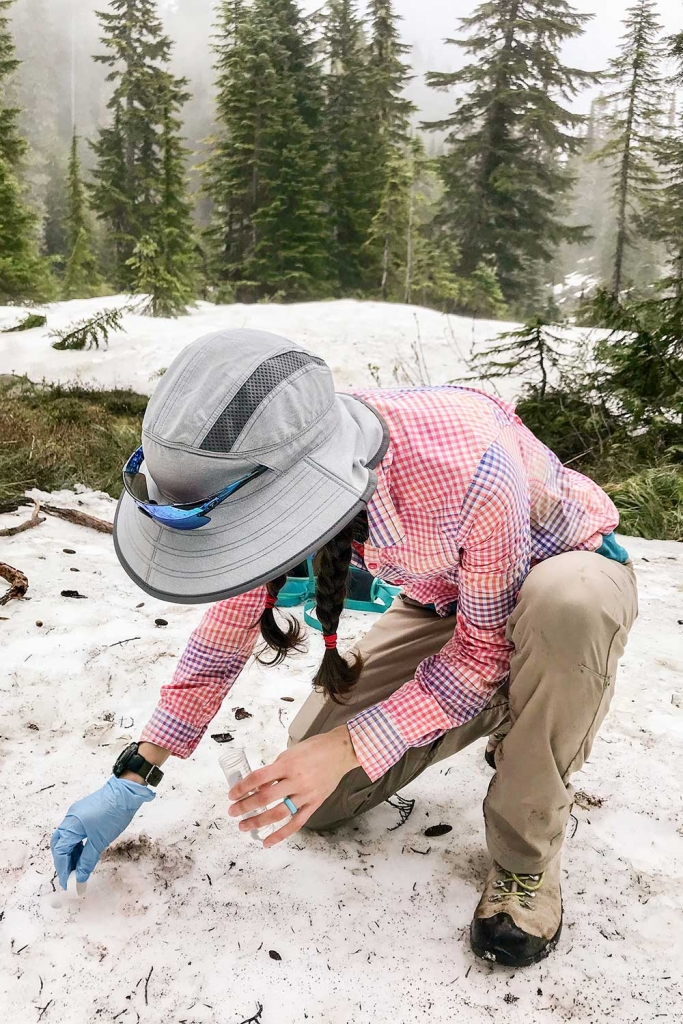
Within 10 minutes of making her first post on Instagram, Kodner received over 100 applications to participate. Two years later, hundreds more have joined in.
It’s easier to fall in love with algae than you might imagine. In the ongoing drama of life on earth, algae play a starring role, while we Homo sapiens, by comparison, have so far only managed a brief and disastrous cameo.
Algae evolved photosynthesis long before plants even existed, some 2.5 billion years ago, thereby oxygenating the atmosphere. Today, ocean algae are responsible for half the photosynthesis that currently takes place on earth. They can also take partial credit for kicking off the Anthropocene era. Much of the petroleum extracted by oil and gas companies today was formed from the biomass of long-dead algae, compacted into the seabeds of ancient oceans. They may soon steal the show yet again: ocean algae sequester massive amounts of carbon, and scientists are now looking to them as a potential key tool in the fight against climate change.
Kodner was so transfixed by algae’s outsized influence on our biosphere, she did her Ph.D. dissertation at Harvard University on the deep evolutionary history of algae. She also wanted to find a way to improve our understanding of how the planet is changing: “I wanted my work to be contributing to something.” Using the new tools of DNA sequencing, she started to revisit previously unanswerable questions about how these microbial communities are responding and evolving with respect to climate change.
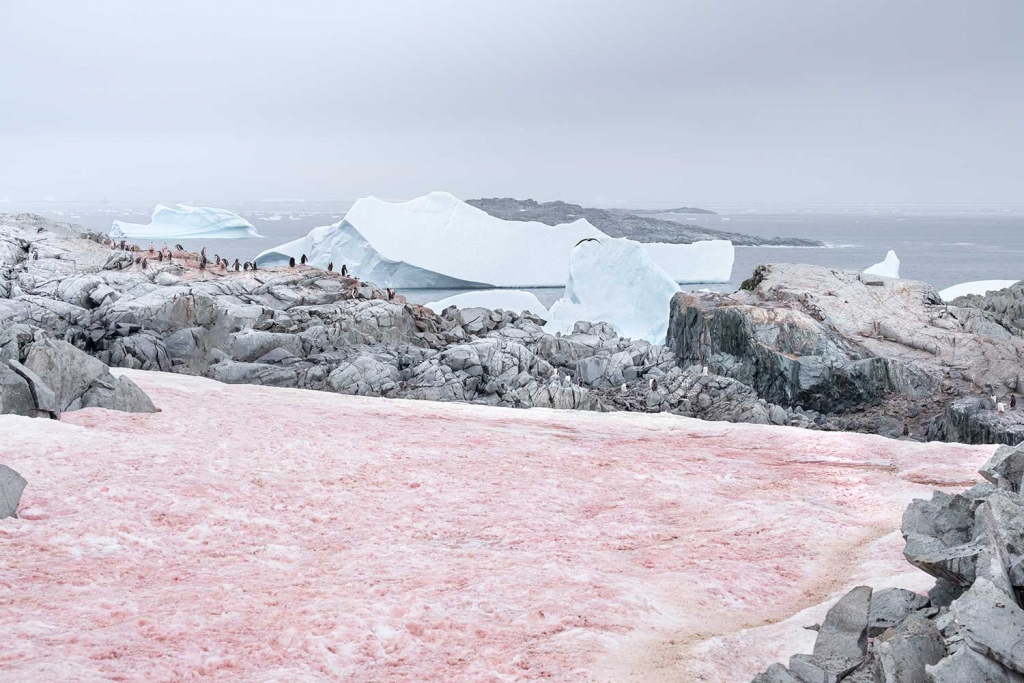
Snow algae need liquid water as part of their life cycle, so they bloom when the snow starts to melt. In so doing, they darken the snow’s surface and increase the amount of solar radiation that’s absorbed, prompting further snowmelt.
Algae have lived in snow for hundreds of millions of years, but global warming is throwing the balance out of whack, Kodner explains: increasing the rate of melt increases the bloom, which creates a positive feedback loop that accelerates the whole process.