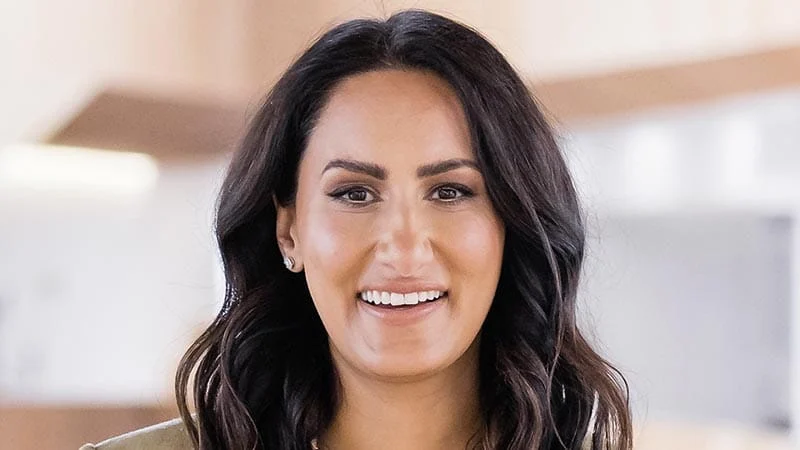
Dhillon-Chattha is Medscape’s choice for Nurse Practitioner (NP) of the Month, a new feature that recognizes NPs who have made a significant difference in their communities and developed innovative ways to advance nursing practice.
“I knew I was going to be a leader within healthcare and within nursing. I’m very much a zero-to-one kind of person vs a zero-to-two person, meaning I enjoy building and have always gravitated toward building new solutions through technology,” said Pritma Dhillon-Chattha, DNP, MHA, RN, co-founder and CEO of Lavender, the largest telehealth psychiatry and therapy practice founded and delivered by nurses.
Lavender — her third start-up in healthcare — is a testament to the role that nurses play in providing holistic patient care.
“Nurses bring a unique lens to mental health care because they are trained in the model of whole person care,” said Dhillon-Chattha. “This means taking into account the communities where patients live, their socioeconomic status, their cultural and ethnic backgrounds, and other medical symptoms they’re experiencing and what it all means for their mental health.”
Innovation At the Forefront
Lavender is an idea that came to fruition at an opportune time: the start of the pandemic. Dhillon-Chattha explained that she and co-founder Brighid Gannon, DNP, PMHNP-BC, knew there would be a significant increase in the demand for mental health care and that not only were telepsychiatry services few and far between but accessible psychiatric care was practically nonexistent, with waiting lists as long as 3-6 months.
Expediency was key. Lavender went from ideation to implementation in 45 days and was launched in May 2020. Services are available to adult patients (aged > 18 years) in 47 US states.
Dhillon-Chattha noted several factors that set it apart from other telehealth psychiatry and mental health platforms.
We felt it was important to ensure that NPs are used to their full scope of practice.
Pritma Dhillon-Chattha, DNP, MHA, RN
“We made a few key decisions in 2020 that differentiated us,” said Dhillon-Chattha. “One was that we would take insurance; it was the only way that we could increase access to care. Today, 90% of our clients are insured, and we are in network with all of the major insurance plans plus Medicare.”
She added that although Lavender collaborates with all types of mental health practitioners, she and Gannon made a deliberate decision to have care delivered exclusively by psychiatric NPs.
“We felt it was important to ensure that NPs are used to their full scope of practice,” said Dhillon-Chattha. “This does not mean that there is no collaboration but that as partners, physicians are leveraged to treat more complex patient care.”
“Lastly, we provided both therapy and psychiatry in one visit, which was atypical at the time. Our NPs provide medical evaluation, assessment, and therapy in a single visit, which saves time and money and supports continuity of care and better outcomes,” said Dhillon-Chattha.
An Algorithm for Changing Mental Health
Lavender embodies Dhillon-Chattha’s zero-to-one philosophy. Patients are matched to therapists using an algorithmic intake tool or can reach out to staff for assistance; currently, the company has a team of 170 NPs to ensure that demands, preferences, and needs are met, for example, if a patient is seeking a practitioner of a certain sex or ethnicity or a specific modality such as cognitive-behavioral therapy.
Therapists use measurement-based care tools at the beginning of and throughout care, so management is proactive and responsive, especially for pharmacologic therapy, which is tapered or changed as necessary. An entire team of registered nurse case managers supports patients between visits and responds to emergencies as they arise.
Lavender will soon expand services into all 50 states and is preparing to open doors next year to Medicaid patients as well. They are also exploring ways to increase access to severe mental illness care.
But Dhillon-Chattha is still building. She said she is an open (play)book and isn’t interested in holding onto the secrets of her success.
“The more providers, the more practices we have, the more access there is. I want to share my secrets because it is better for everyone, but I also want to keep giving credit to the people behind the scenes — the unsung heroes that are enabling care and doing the equally heavy lifting,” she said.