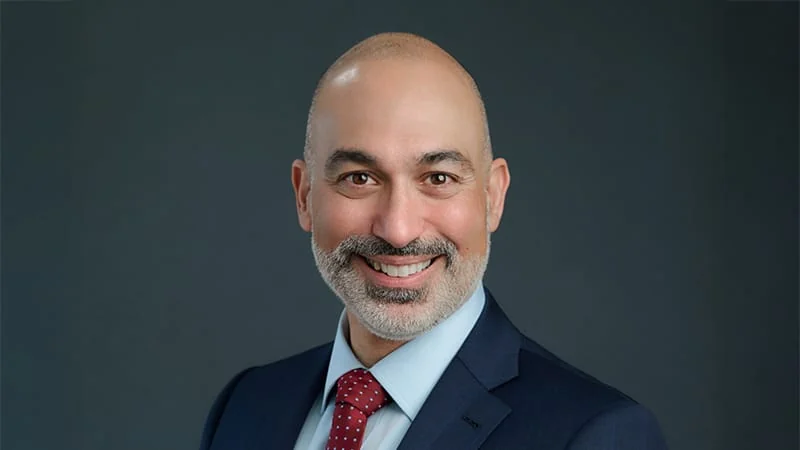
Ferrara is Medscape’s Nurse Practitioner of the Month, an ongoing feature recognizing nurse practitioners (NPs) who have made a significant difference in their communities and developed innovative ways to advance nursing practice.
“It really comes down to trying to fix a system that I feel is not working as intended for the people it’s designed for,” said Stephen Ferrara, DNP, RN, FNP-BC, CEO and founder of AI + Nurse Academy, an educational platform offering NPs a foundation in AI.
No stranger to overcoming challenges, Ferrara said that within the first 3-5 years of clinical practice, he realized there were things he was educated and prepared to do as an NP that state law didn’t allow him to do. One example was perform licensing physicals on individuals who were pursuing a barber career.
“That’s when I turned my attention to try to overcome [barriers], such as full practice authority laws in nursing,” he said.
- AI literacy for NPs/RNs emphasized; generative AI use requires foundational training.
- Human-in-the-loop model stressed; clinician retains final judgment and liability.
- LLMs may miss cultural, socioeconomic, ethnic data; output may misfit individual patients.
- Responsible AI use framed as potential to improve access, personalization, and outcomes.
- 60-min CME module + peer community offered; accredited 1 CE hour.
Ferrara has since used these roadblocks as fuel to make significant inroads in the field. As president and immediate past president of the American Association of Nurse Practitioners, he advocated for the Improving Care and Access to Nurses Act so NPs can practice to the top of their license and education. He moved from assistant to full professor of nursing at Columbia University in New York City, and as associate dean of clinical affairs and chief clinical officer for the ColumbiaDoctors Nurse Practitioner Group, he expanded services to include house calls and integrated mental health services, achieving Patient-Centered Medical Home recognition.
Before retiring from his Columbia appointments earlier this year, Ferrara also served as inaugural associate dean of AI, spearheading strategy and programs to ensure nurses gained foundational AI literacy.
In October 2025, he launched AI + Nurse Academy.
“The main goal is to expose every nurse to what generative AI is, what it means for their practice, and prompt them to consider how they are going to integrate AI thoughtfully into their clinical practice moving forward,” said Ferrara.
When asked what thoughtful integration looked like, he explained that he wanted NPs and registered nurses (RNs) to understand where AI makes mistakes and how it can affect patient outcomes.
“In nursing school, I was taught that at the end of the day, it’s your license to lose. If you’re adopting a tool, it’s your clinical judgment that’s on the line,” said Ferrara. “Regardless of whether you choose or are told by administrators to use this tool, you need to be aware of the liability.”
Keeping NPs in the Loop
Currently, AI + Nurse Academy offers NPs and RNs a 60-minute continuing medical education module; upon completion, users receive a certificate of completion and one accredited hour of continuing education. They can also join a community of peers to ask questions, share concerns, and exchange experiences.
“Responsible use” is the company’s guiding principle.
“There’s this concept within the AI world of keeping the human or clinician in the loop, meaning AI doesn’t make any decisions without a human or clinician reviewing it,” said Ferrara.
He explained why nurses need to understand the fallibility of large language models (LLMs).
“We know that these models are trained and fed massive amounts of data,” he said, emphasizing flaws in the research LLMs rely on, such as the lack of robust cultural, socioeconomic, and ethnic studies in certain patient populations.
“If AI is providing a recommendation, is that recommendation pertinent for my patient? I want to make sure that the human being that is in between AI and the patient is able to discern all of this, and understand what they’re doing,” he said.
Ferrara is cautiously optimistic.
“It’s my core belief that AI can potentially make me a better clinician because if I have rapid access to information and the ability to personalize it to patients I’m seeing, that’s a good thing,” he said.
“But it’s not magic. As clinicians, we’re ingrained to do no harm. How can we make sure AI is working to better anticipate things and patients rather than spewing all of this stuff that isn’t necessarily helpful?” said Ferrara.
It starts with a basic framework and AI literacy and, ideally, ends with improved patient outcomes. NPs determine what happens in between.
Ferrara reported receiving profits from AI + Nurse Academy.
Liz Scherer is an independent health/medical journalist with a focus on the US, Canadian, and European health outcomes and policy.