
Have you ever had watery eyes during a migraine attack? Increased tear production was traditionally considered a symptom of allergies, sinus problems, and cluster headache … but rarely associated with migraine.
Contemporary research, however, suggests that many people with migraine get watery eyes with their attacks, too.
Can Migraine Cause Watery Eyes?
Migraine attacks can cause watery eyes and other symptoms called cranial autonomic symptoms (CAS).
“Cranial” refers to the 12 branches of paired nerves that come directly from the brain, including nerves that reach the head and face.
“Autonomic” means that these nerves are part of the autonomic nervous system, the network of nerves that controls functions that run without your conscious attention (like breathing, heart rate, digestion, and more).
Although watery eyes and other CAS may not be the most frequent or well-known migraine symptoms, they’re more common than you might think. In a study of 904 people with migraine published in 2021, researchers found that 56.2 percent of participants with episodic migraine and 70 percent of people with chronic migraine had at least one CAS.
The most common CAS were eye redness (36 percent) and tearing or watery eyes (21 percent).
Why Migraine Can Make Your Eyes Water
You can blame the trigeminal nerve for making your eyes water during a migraine attack. When this major nerve bundle gets overstimulated during a migraine attack, it sends pain signals to the brain and can set off “alarm” signals in its branches, which reach most of the head and face.
One of those trigeminal nerve branches is the ophthalmic nerve, which contains sensory nerves that connect to the clear surface of the eye (cornea) and the glands that produce tears (lacrimal glands).
If the alarm signals overstimulate the ophthalmic branch and reach the smaller nerves connected to the tear glands and cornea, the autonomic nerves along that pathway do what they’re supposed to do when they get an alert message — increase tear production to protect the eyes, even if the alert is a false alarm triggered by a migraine attack.
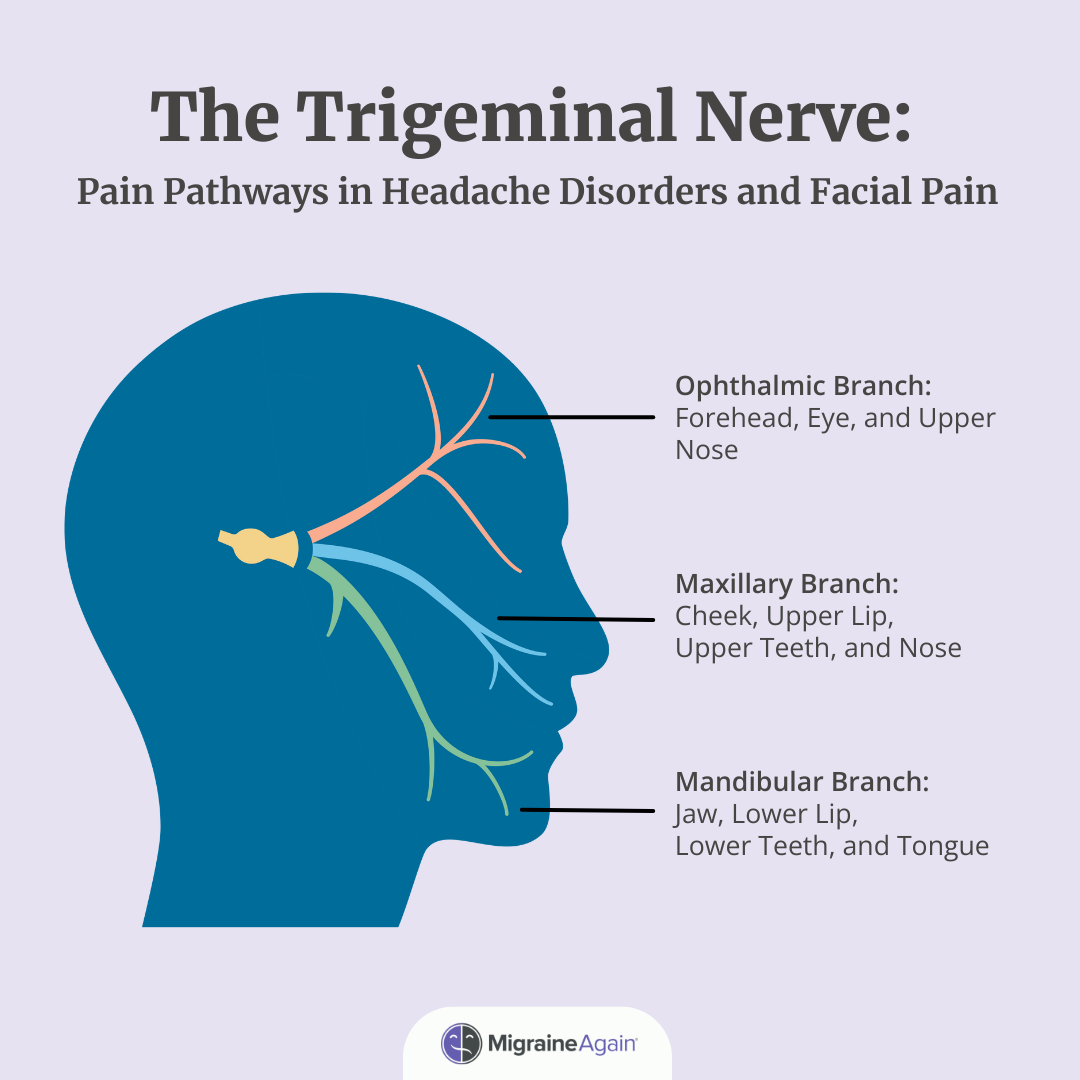
The trigeminal nerve is a major player in the migraine inflammatory process.
Migraine Again
Migraine attack symptoms vary widely from person to person, and even from one attack to the other in the same person. Experts don’t know all the specifics about the reasons some patients get CAS with migraine attacks while others don’t, but the variation in symptoms is common across the migraine spectrum.
Other Eye Symptoms That Can Happen During a Migraine Attack
Watery eyes aren’t the only eye-related symptoms you might experience during a migraine attack. You might notice cranial autonomic symptoms like pain or pressure behind the eyes or red eyes. Other symptoms that affect the eyes, like visual aura, light sensitivity, and blurred vision are triggered by migraine-related changes in the brain instead of cranial autonomic nerves.
Migraine vs. Cluster Headache With Watery Eyes
Excess tear production is strongly associated with cluster headache and other rare headache types known as trigeminal autonomic cephalalgias (TACs). That association is so strong that it tends to overshadow the presence of cranial autonomic symptoms in migraine attacks.
“While everyone thinks that autonomic symptoms only occur with the trigeminal autonomic cephalalgias, migraine has frequent autonomic symptoms too,” says Kathleen Digre, MD, professor emerita of neurology and ophthalmology at the University of Utah in Salt Lake City and former director of the university’s division of headache and neuro-ophthalmology. “That means that anywhere between 15 to 35 percent will have conjunctival injection, or tearing in 11 to 70 percent.”
Although both migraine disease and cluster headache disease can cause disabling headaches, there are other symptoms that help healthcare providers and patients tell the difference between these attacks:
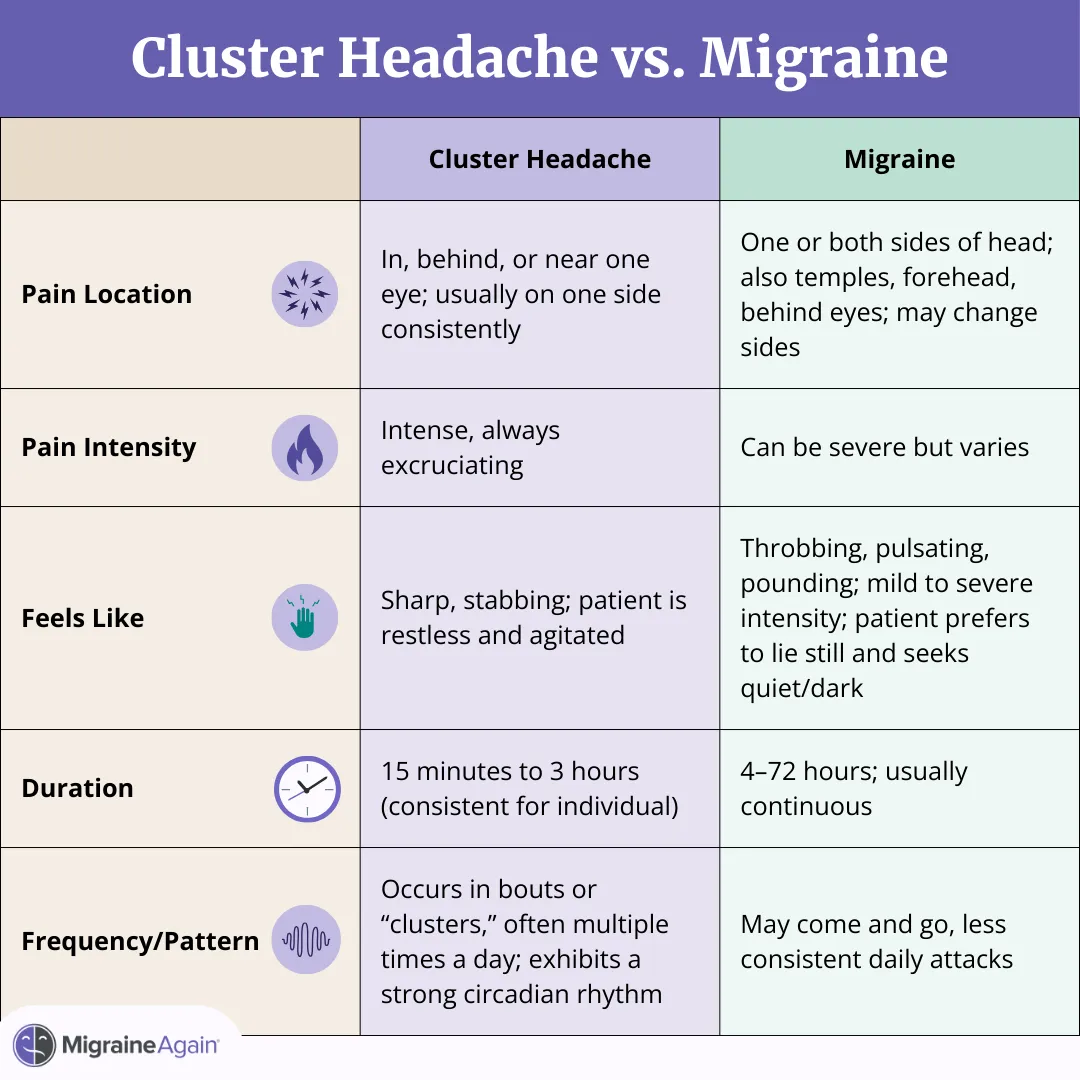
While both cluster headache and migraine involve the trigeminal nerve and severe head pain, they differ in timing, symptoms, and treatment approaches.
Symptoms like watery eyes are not always clear-cut signs that a patient is having one kind of headache attack versus another.
“While [autonomic symptoms in] the TACs are unilateral (usually), migraine is likely to be bilateral autonomic features but can be unilateral,” says Dr. Digre. “The understanding about how the autonomic nervous system is involved in migraine is extremely important and underappreciated!”
If you or your healthcare provider would like more information about distinguishing cluster headache from migraine and other headache types, the Association of Migraine Disorders has a guide to help clinicians diagnose cluster headache.
Migraine and Sinus Symptoms: Why They’re Often Confused
It’s easy for patients to mistake cranial autonomic symptoms like watery eyes, sinus pressure, and nasal congestion as signs of “sinus headache” instead of migraine.
Because the connection between CAS and migraine wasn’t well known in the past, many healthcare providers may have made the same mistake. Not only does that mistake delay proper diagnosis and treatment for migraine (which can get worse if undertreated), but it can lead to unnecessary medications and surgeries.
But in the mid-2000s, multiple specialists in neurology and otolaryngology (ear/nose/throat medicine) began to suspect that most sinus headaches might be migraine attacks, especially in patients who didn’t have fever or purulent nasal discharge (the kind that indicates active infection).
An Arizona neurologist placed an ad in a local newspaper offering free screening to people with “sinus headache.” The practice screened the first 100 adults who responded with the International Headache Society’s 2004 diagnostic criteria for migraine.
The result: 86 percent of those patients were diagnosed with migraine (with or without aura) or probable migraine!
Around the same time, a larger study involving nearly 3,000 patients at several hundred primary care sites in the United States had strikingly similar results: 80 percent of patients who thought they had “sinus headache” met the diagnostic criteria for migraine, while another 8 percent met the criteria for probable migraine.
To complicate things even more, there’s also a strong bidirectional relationship between migraine and allergies. This means that having migraine increases the likelihood of having allergies, and that having allergies increases the likelihood of having migraine.
If you have allergies and migraine, distinguishing a sinus headache from a migraine attack with watery eyes and other CAS might be tricky. Using a smartphone app to track your migraine symptoms will help you spot the details so you can use the right treatments at the right time.
Dry Eye Syndrome and Migraine
Watery eyes with migraine attacks may also be a sign of dry eye disease, in which the eyes don’t produce enough tears. Studies suggest that people with migraine are at least 20 percent more likely to have dry eye disease than people without migraine.
Experts believe that both migraine and dry eye disease can trigger excess tear production as an autonomic reflex, but that these tears lack the lubricating ingredients that tell the sensory nerves that everything’s okay.
Digre was a lead investigator in a study suggesting that reductions in nerve fiber density and length in nerves connected to the cornea were more significant in patients with dry eye disease who also had migraine, especially chronic migraine.
It’s still unclear whether changes in nerve fibers lead to migraine and dry eye or if those conditions lead to structural changes in nerve fibers, but Digre has advice for people who deal with migraine and dry eye.
“First, be aware of your own symptoms of migraine,” says Digre. “If you have dry eye, it can be treated with preservative-free tears, and your ophthalmologist can help if this isn’t enough. Also, be assured that the autonomic features that accompany migraine are normal.”
Other Causes of Headache With Watery Eyes
A headache with watery eyes might indicate one or more conditions:
- Migraine
- Cluster headache
- Trigeminal autonomic cephalalgias
- Sinus infection
- Allergies
- Dry eye disease or eye irritation
For more information on the specific headache diagnoses and their symptoms, the National Headache Foundation has a helpful chart.
How to Treat Migraine With Eye Symptoms
To treat a migraine attack with bothersome eye symptoms, the best thing you can do is to treat the entire migraine attack with the right treatments:
- Triptans
- Medications that block calcitonin gene-related peptide (CGRP)
- Nonsteroidal anti-inflammatory drugs (NSAIDs)
- Preventive medications
Some lifestyle changes can help you reduce the number and severity of your migraine attacks (and the bothersome symptoms that accompany them):
- Good sleep hygiene
- Better hydration
- Trigger management
If you have allergies or dry eye disease, staying on top of those conditions regularly may help you reduce the impact of watery eyes or other CAS during migraine attacks.
When to See a Doctor
Most of the time, a migraine attack with watery eyes isn’t an emergency. Some symptoms, however, are signs that you may be dealing with a condition that requires immediate medical care. Contact your healthcare provider immediately if you experience:
- A sudden severe headache
- Vision loss
- Sudden eyelid drooping
- New headaches that appear after age 50
- Worsening symptom pattern
- Severe increase in tears
- Sudden, severe eye pain
“If red eyes, tearing, eye pain is severe, see an ophthalmologist,” urges Digre. “There can be other causes of this: for example, angle-closure glaucoma, an infection, cavernous sinus thrombosis, or a fistula causing red eye and tearing.”
Frequently Asked Questions
Why Do My Eyes Water During a Migraine?
Migraine activates the trigeminal nerve and autonomic nervous system, which can stimulate tear glands and produce watery eyes.
Is Watery Eye a Migraine Symptom?
It can be. Watery eyes are considered a cranial autonomic symptom and may occur in migraine attacks.
Are Watery Eyes More Common With Cluster Headaches?
Yes. Watery eyes occur in about 90 percent of cluster headache cases and are one of the hallmark symptoms.
Can Sinus Headaches Cause Watery Eyes?
Yes, but many headaches thought to be sinus headaches are actually migraine.
Why Is Only One Eye Watering During a Migraine?
Migraine symptoms often occur on one side of the head or more strongly on one side than the other, so tearing may affect the eye on the same side as the pain.
Final Thoughts
Watery eyes and other cranial autonomic symptoms are normal symptoms that can occur with a migraine attack, although they’re far more common in other kinds of headache disorders.
The watery eyes and sinus pressure often lead people to mistake migraine attacks for “sinus headaches,” but there’s substantial evidence that most “sinus headaches” are migraine attacks.
People with conditions like allergies or dry eye disease may be more vulnerable to watery eyes along with migraine attacks, but the symptom can affect anyone with migraine.
Watery eyes triggered by migraine attacks should resolve when you treat the migraine attack, but if the eye symptoms are sudden, severe, or involve vision loss, contact your healthcare provider immediately.