
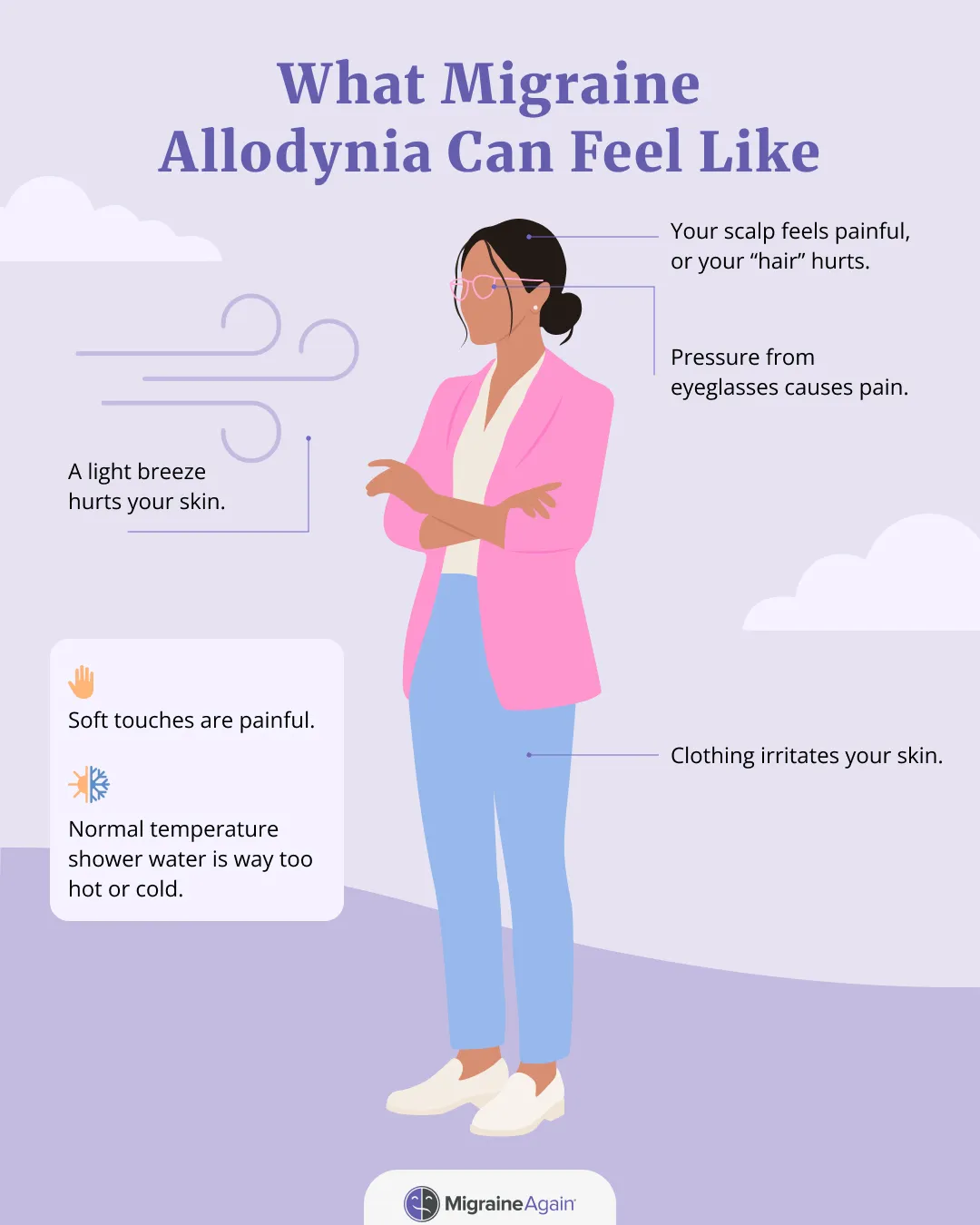
When you have a migraine attack, does it ever hurt to put your hair in a ponytail or wear your eyeglasses? Does the sensation of your favorite sweater next to your skin suddenly feel awful?
These are examples of allodynia, or sensitivity to touch, a symptom common to migraine disease and several other conditions. Allodynia is not only a frequent symptom of migraine but also an important clue about the severity and progression of migraine disease.
What Is Migraine Allodynia? (When Touch Causes Pain)
Allodynia is defined as a painful sensation after a light touch from something that shouldn’t normally provoke pain. Studies suggest that allodynia affects between 65 and 80 percent of people with migraine, as well as many people with conditions like fibromyalgia, diabetic neuropathic pain, irritable bowel syndrome (IBS), and myalgic encephalomyelitis/chronic fatigue syndrome (ME/CFS).
The 3 Types of Allodynia in Migraine
There are three types of allodynia, defined by the sensations they produce:
- Tactile, or cutaneous (static), allodynia occurs with sustained pressure or contact without movement. If you find your favorite pillowcase feels awful against your skin during a migraine attack, or the ponytail you wear frequently hurts, you’re experiencing cutaneous allodynia.
- Mechanical (dynamic) allodynia occurs when something moves across your skin. If combing your hair hurts during a migraine attack, if fabric brushing against your skin is suddenly painful, or the feeling of water hitting your skin in the shower causes pain, you’re experiencing mechanical or dynamic allodynia.
- Thermal allodynia is a painful reaction to moderate temperature changes that you usually tolerate without discomfort. If the sensation of the water hitting your skin in the shower doesn’t hurt but your favorite warm water setting suddenly feels too hot, that’s an example of thermal allodynia.
What Causes Touch Sensitivity During Migraine Attacks?
If you experience sensitivity to touch during a migraine attack, you’re not overreacting — your nervous system is!
Migraine disease is a complex neurological condition in which your nervous system is hypersensitive to stimuli that wouldn’t bother most other people. Those overreactions trigger chain reactions along the entire nervous system, from peripheral nerves to multiple parts of your brain, causing the pain, nausea, and sensory sensitivity of migraine attacks. Allodynia isn’t something you control consciously; it’s another symptom of migraine disease.
Allodynia Is a Telltale Sign of Migraine Progression
The Role of Central Sensitization
If you have migraine attacks infrequently, your nervous system usually resets to “regular” mode afterward, and you won’t notice any unusual pain or sensitivity in between. If you have frequent migraine attacks, however, your nervous system may have trouble resetting itself to regular mode once one ends.
Your brain and nerve pathways can get stuck in a cycle of hypersensitivity and overreaction, lowering the threshold of stimulation needed to trigger migraine activity. This process is called “central sensitization.”
Central sensitization is also associated with several other medical conditions, including fibromyalgia, IBS, endometriosis, interstitial cystitis, ME/CFS, and anxiety and depression. These conditions are often comorbid with migraine, which means they tend to occur at higher rates in people with migraine than in people without migraine.
The correlation between migraine and these other conditions doesn’t mean that one condition causes any of the others, but it suggests that central sensitization’s role in many conditions deserves more study.
Episodic to Chronic Migraine Transition
Experts don’t yet understand why allodynia occurs in some patients. “We don’t fully understand why some people develop allodynia and others don’t,” says Andrea Dias Murphy, NP, a provider specializing in headache medicine in the Hartford, Connecticut, area. “Genetics may play a role, as with migraine itself.”
The science is clear, however, that the presence of allodynia is a major clinical predictor of disease escalation from episodic migraine to chronic migraine.
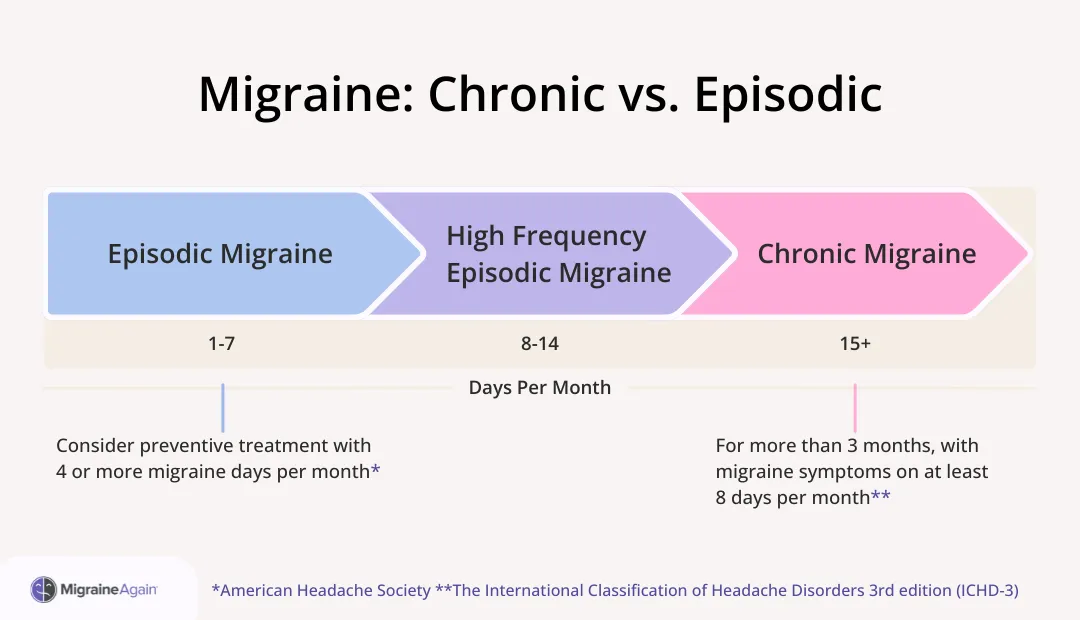
Chronic migraine is defined by having a headache on 15 or more days per month, with at least 8 of those days including migraine symptoms, for over 3 months.
“Allodynia is more likely to develop in people with migraine if their attacks are frequent and severe, as measured by pain intensity and number of associated symptoms, like nausea and sensitivity to light and sound,” says Richard B. Lipton, MD, professor and vice chair of the neurology department at Albert Einstein College of Medicine in the Bronx, New York, and director of the Montefiore Headache Center.
“Allodynia is more likely in people who also have anxiety or depression and who have other pain disorders of all kinds,” Dr. Lipton adds.
Another red flag is inadequate response to migraine medications. “In clinical practice, I find that allodynia often complicates migraine. These patients may be less responsive to first-line treatments and often require multiple therapies to achieve adequate control,” says Murphy. (If you have migraine with allodynia and have trouble getting relief, consider working with a headache specialist.)
How to Treat and Prevent Migraine Allodynia
If you’re concerned about allodynia, check out the Allodynia Symptom Checklist (ASC-12) that Lipton developed. “People can figure out whether or not they have allodynia, print the questionnaire, and bring it to a doctor’s appointment,” says Lipton.
Record the details about your allodynia symptoms in your headache diary app, too, including when they occur and how long they last. “In people with episodic migraine, allodynia often develops a couple of hours into an attack,” says Lipton. “In people with chronic migraine, allodynia can occur between attacks in the interictal period.”
You and your healthcare provider can use this information to identify your best treatment regimen.
Treat Your Migraine Attacks Early
One of the best ways to manage allodynia symptoms is to treat the migraine attacks that cause them.
- First, treat attacks promptly. “Once the pain pathways are activated, migraine can become harder to treat,” says Murphy. “This is why I emphasize treating attacks early, before allodynia develops.” Use your acute medications within the first one to two hours of the migraine attack for best results. Emerging evidence suggests that acute medications called gepants may stop a migraine attack before it starts in people who have consistent, predictable prodrome symptoms like yawning, neck stiffness, or heightened light sensitivity. If you have predictable prodrome symptoms and use gepants for acute treatment, try this approach and record what happens.
- Next, beware of medication adaptation headache or MAH (sometimes called medication overuse headache or rebound headache). Frequent use of acute treatments like triptans, nonsteroidal anti-inflammatory drugs, opioids, or over-the-counter treatments containing caffeine can increase your risk of central sensitization and medication adaptation headache, leading to more pain, more severe symptoms such as allodynia, and reduced response to treatments.
- Try acute treatments that are not associated with MAH, including:
- Gepants
- Neuromodulation devices
- Nerve blocks
- Anti-nausea treatment
Leverage Preventive Treatments
Preventive migraine treatments can reduce the frequency and severity of migraine attacks, raising your threshold for future attacks and symptoms like allodynia.
“Several preventive treatments have been shown to work in people with migraine and allodynia,” says Lipton. “OnabotulinumtoxinA (Botox) and CGRP-targeted preventive medications have been shown to reduce allodynia in clinical trials.”
A study published in 2023 of CGRP monoclonal antibodies (mAbs) contained a fascinating finding about allodynia. More than 700 patients in Italy with high-frequency episodic migraine or chronic migraine and histories of multiple preventive treatment failures were given CGRP mAbs. About two-thirds of patients had a reduction of 50 percent or greater in monthly migraine days (MMDs) or monthly headache days (MHDs) after 12 weeks, the typical period for a clinical trial.
A third of those patients had no response to CGRP mAbs after 12 weeks, but just over half of those nonresponders became responders between 13 and 24 weeks. The most intriguing part: Those late responders tended to have allodynia at higher rates than those who responded within 12 weeks, and the biggest clue that CGRP mAbs were beginning to work was the reduction/reversal of allodynia symptoms!
The study suggests that a significant number of migraine patients may be late responders and achieve worthwhile results with longer trials of CGRP mAbs. It also reinforces the strategy of treating migraine to treat allodynia.
Prioritize Comfort and Self-Care During Attacks
Allodynia adds an extra layer of misery to your migraine attacks. Loose, soft clothing and allodynia-friendly pillowcases may help you reduce the pain of tactile stimulation. We asked Migraine Again readers on social media for their tips on staying as comfortable as possible when touch hurts. Several said they have allodynia all the time and had little relief, but others shared their coping tips:
I use a toddler pillow scrunched behind my neck to help support it. That way, I can sit up and keep my head from touching the back of whatever chair I’m in without having to hold myself straight upright all the time. It is more common for me to have allodynia than to not. — Rienne S.
Peppermint essential oil (full strength) droppered all over my head helps quite a lot. My house and I smell like peppermint most of the time, but oh well! The gel-filled cold hats help too, but I only use those at home. — Kathie M.
Wrapping my head in heat when I can helps a bit, but I can’t really do that everywhere, or as often as needed. My neurologist prescribed lidocaine gel, which can occasionally help take the edge off but, again, I can’t always apply it everywhere, or as often as needed. I do like the headache hat ... the gel-like hat that slips over my head and over my eyes. I like it both heated and cold and will often fall asleep with it on. The pressure alone feels good. — Rebecca B.
I’m always adjusting/adapting to skin sensitivity, the heat of the room or my body or the weather, weight of jewelry or clothing, etc. Clothes on. Clothes off. Repeat. Sometimes I just lie flat in bed unless the wrinkles in the bedding bother me, too. (It’s not always this bad, but when it is bad it’s usually more often in the winter and it’s never any surprise.) — Jakye O.
Above all, you know your body better than anyone else. Do what feels best when battling allodynia, be as kind to yourself as possible, and leverage self-care.
Final Thoughts
Allodynia is a painful sensation that occurs from a tactile stimulus that isn’t typically painful, such as brushing your hair or wearing eyeglasses. Allodynia is a common symptom of migraine disease. Its presence is associated with a neurological phenomenon called central sensitization, which signals an escalation and worsening of migraine.
Using the right acute medications promptly at the onset of a migraine attack can reduce allodynia symptoms or stop them before they start. Several preventive treatments reduce allodynia symptoms and may even reverse central sensitization. If you have migraine and experience allodynia, talk to your healthcare provider about a comprehensive treatment plan to reduce the number and severity of migraine attacks, improve allodynia and other symptoms, and give you more pain-free days.