
Migraine disease is a complex neurological condition with so many variations that there’s no single treatment that’s safe or effective for everyone. That’s why, despite all the recent advances in migraine treatment, many people still don’t get enough relief.
When headache specialists work with patients who haven’t had good results from other treatments, one medication they may recommend is memantine (Namenda), a drug used to treat Alzheimer’s disease. If other preventive treatments haven’t given you worthwhile relief, memantine might be an option to bring up with your headache specialist.
What Is Memantine (Namenda)?
Memantine was approved by the U.S. Food and Drug Administration (FDA) under the brand name Namenda in 2003 to treat dementia in patients with Alzheimer’s disease. Generic versions were approved starting in 2010.
Memantine belongs to a class of drugs called N-methyl-D-aspartate (NMDA) receptor antagonists, which block the action of a major neurotransmitter called glutamate.
Glutamate is versatile, performing a variety of tasks like carrying messages between nerve cells involved in learning and memory, regulating sleep-wake cycles, and transmitting pain signals. Glutamate can do all of these jobs because it connects with four different kinds of receptors around the brain.
[1]
When there’s too much glutamate, however, it overexcites the NMDA-specific receptors on nerve cells, damaging those cells and contributing to Alzheimer’s disease and other neurological conditions. Memantine counteracts the excessive glutamate activity on NMDA receptors without blocking the neurotransmitter’s other important work.
[2]
Can Memantine Prevent Migraine?
A headache specialist might consider memantine for a patient who has not had success with migraine-specific preventive treatments. Experts believe memantine reduces the frequency and severity of migraine attacks by limiting glutamate’s ability to overexcite the brain.
“Memantine blocks part of the glutamate pathway (NMDA receptors), and glutamate is a neurotransmitter involved in the hyperexcitable migraine brain,” says Andrea Murphy, NP, a headache specialist at the Headache Care Center in Connecticut.
“This pathway is thought to play a role in cortical spreading depression, which is linked to migraine aura, as well as overactive pain signaling,” Murphy explains. “By blocking this pathway, memantine may reduce migraine aura and decrease migraine pain sensitivity.”
Prescribing medications for conditions beyond those approved by the FDA is called off-label prescribing. It’s an accepted practice among headache specialists, whose patients often have the most complex cases requiring “outside-the-box” approaches.
Evidence suggests that memantine may prevent migraine attacks by counteracting excessive glutamate activity at several points in the migraine process:
- High concentrations of NMDA receptors can be found in parts of the brain active in migraine, such as the trigeminal nucleus caudalis, trigeminal ganglion, and thalamus.
- Researchers believe glutamate has a complex relationship with calcitonin gene-related peptide (CGRP), a significant driver of migraine attacks and the target of several new, successful acute and preventive treatments. Inhibiting excessive glutamate may reduce the expression of CGRP.[3]
- In addition to glutamate’s role in the symptoms of migraine aura, it’s also believed to contribute to central sensitization, in which the central regions of the brain get overexcited by migraine signals but can’t “power down” to normal after an attack.[4] Experts suspect that central sensitization is one of the factors that leads to chronic migraine.
What Do the Clinical Trials Say?
A recent randomized, double-blind, controlled trial found that memantine is comparable to sodium valproate (Depakote), an anti-seizure medication considered a first-line treatment for migraine prevention. Twenty-seven patients at a healthcare facility in Mexico took trial medication daily for 12 weeks, either 20 milligrams (mg) of memantine or 500 mg of sodium valproate. Participants taking memantine had a mean reduction in headache days of 4.21, compared with 4.5 for those in the sodium valproate group.
[5]
A study published in 2024 compared the results of 38 clinical trials of memantine conducted between 2004 and 2023, with a combined total of more than 13,000 participants. Researchers performed a network meta-analysis, a complex type of analysis that measures the relative effectiveness of medications that weren’t all tested head-to-head.
Out of 12 preventive treatments included in the meta-analysis, memantine proved to be the second-most-effective drug at cutting down how often migraine attacks occur; it knocked 0.83 days off a patient’s monthly migraine count compared with placebo.
Memantine also scored well in two other important measures for successful migraine prevention: It was the most likely treatment to reduce headache days by at least 50 percent, and the fewest patients withdrew from studies because of adverse side effects.
[6]
(Study authors noted that several trials included only small numbers of participants, which may have impacted the results regardless of the trials’ overall quality and validity.)
Memantine for Post-Traumatic Brain Injury Headache
There is also some evidence for the use of memantine for post-concussion headache relief. A study published in 2025 compared treatment with memantine with a placebo and found that headache frequency was significantly reduced in the memantine group after six months.
[7]
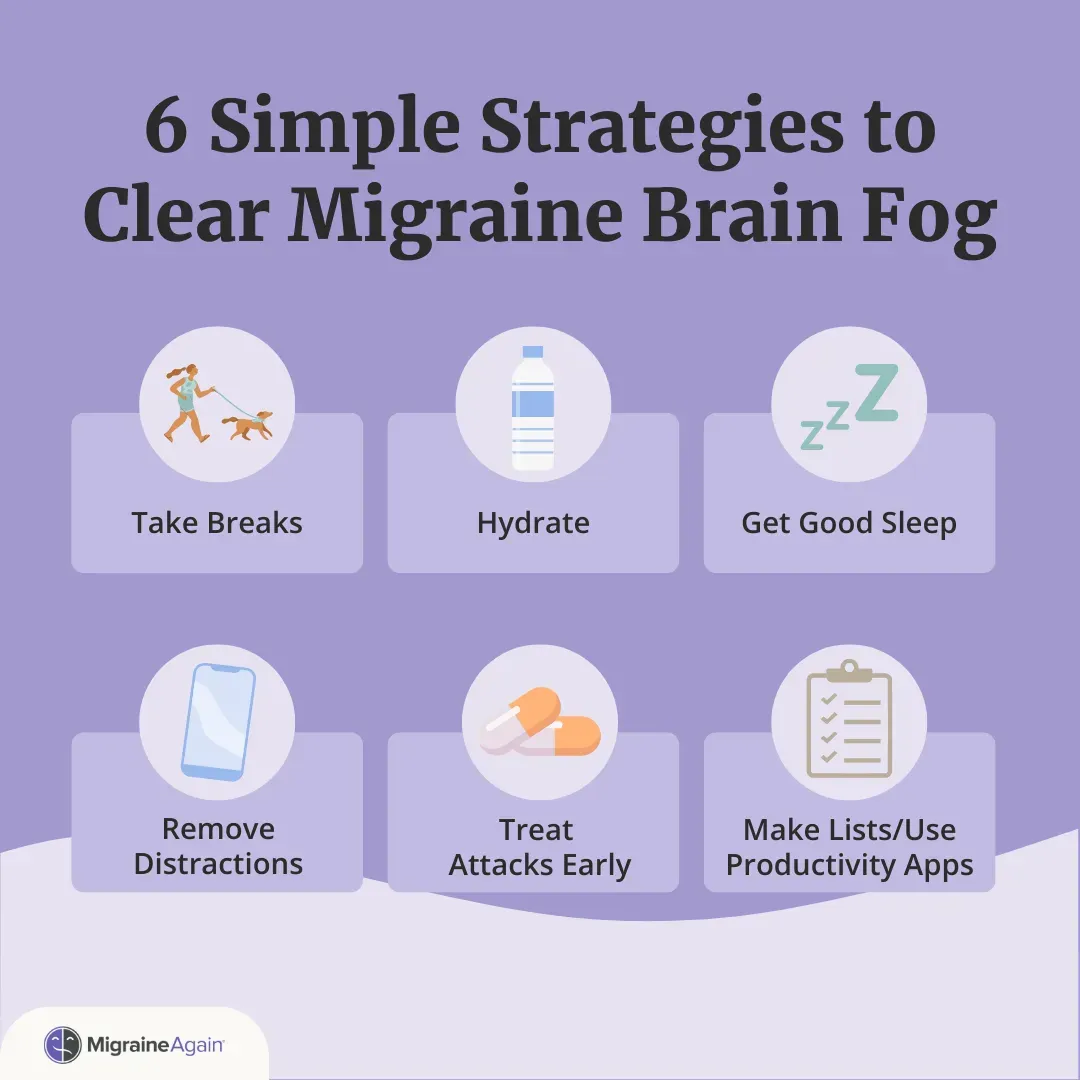
Can Memantine Reduce Migraine Brain Fog?
If memantine helps with dementia symptoms, could it help with migraine-related brain fog?
The short answer: Experts don’t know for sure, but there’s good reason to think memantine may help some migraine patients with brain fog.
“I’d consider [memantine] for patients with refractory migraine who have failed first- and second-line preventives, particularly those with frequent aura or significant cognitive symptoms from migraine such as brain fog and memory difficulty,” says Murphy.
Although cognitive impairment is rarely an end point measured in clinical trials for migraine prevention, we know that effective migraine prevention tends to reduce the severity of symptoms across the board, including brain fog.
Given memantine’s success in treating dementia symptoms, it’s reasonable to think the drug may hit a “sweet spot” for some patients who find cognitive and memory symptoms particularly vexing.
If you’ve ever wondered whether migraine-related brain fog is an early warning sign of dementia, you can stop worrying. A study published in 2020 showed no difference in age-related cognitive decline between people with migraine and people without migraine.
[8]
What to Expect When Taking Namenda for Migraine
Memantine is available in tablet form at 5 mg and 10 mg per dose. The extended-release formula comes in capsules at 7 mg, 14 mg, 21 mg, and 28 mg per dose.
In clinical trials of memantine for migraine prevention, the most common starting doses were either 5 mg or 10 mg once per day. Trial participants usually titrated up to 10 mg or 20 mg per day after one to four weeks until they got a therapeutic response.
Memantine reaches peak concentration approximately three to seven hours after dosing and has a half-life of about 60 to 80 hours.
[9]
Knowing the half-life of a medication (the time it takes for your body to metabolize and eliminate half of the dose) can help you and your healthcare provider understand the medication’s effects on you and the best ways to titrate your medication dosage up or down as needed.
Side Effects
The most common side effects reported for memantine include dizziness, headache, confusion, diarrhea, and constipation. Most patients and clinical trial participants reported side effects as mild and tolerable.
Although memantine is generally safe and well tolerated, there are reports of rare but serious side effects, including:
- Significant neurological symptoms like hallucinations, confusion, aggressive behavior, seizures, or cerebrovascular events
- Cardiovascular events like myocardial infarction, heart rhythm disruptions, or heart failure
- Serious liver or kidney problems
- Respiratory infections
How Long Does Memantine Take to Work?
Although everyone responds to medications differently, clinical trial participants who benefited from memantine reported their best results in the second and third months of the trial. Headache specialists usually recommend that you stay on a new preventive medication for at least three months to gauge its effectiveness, unless you have intolerable side effects.
Community Experiences With Memantine
When we asked members of the Migraine Again community about their experiences with memantine, they reported a variety of results:
I have taken it for the last two years. It works pretty well for me and has no side effects. — Tiffany R.
I take it, and it helps! No side effects. — Kay G.
On it right now after starting it in August. I think it has made a difference. — Sarah P.
I was on it for a while. It worked fairly well for prevention, but the breakthrough migraines were far worse than what I was having before. — Heather C.
Yes. It helps, but not enough to be my only preventative. No side effects. — Barbara A.
It didn't work for me, but it helped me focus with my aphasia immensely! Studies show it does help some with migraine!!! — Terry K.
No relief, and no side effects. — Tara H.
It didn’t help my migraines at all. — Beth M.
Did nothing for me. — Nicole Marie M.
Is Memantine Right for You?
If you haven’t had enough relief from your current migraine treatments, is memantine a good option for you? That’s a decision for you and your healthcare provider to make together, considering your entire health history and other medications, but here are some situations where it might be right for you.
Other Preventives Have Failed
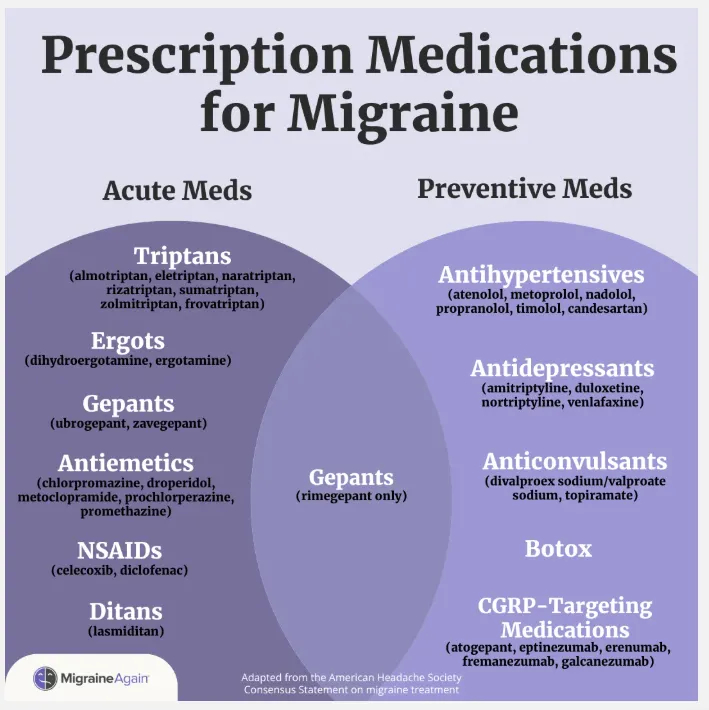
Memantine is usually considered a “last-line” medication for migraine prevention. That means that headache specialists suggest it only after you’ve tried other first-line treatments (like tricyclic antidepressants, beta-blockers, and CGRP antagonists). If you haven’t had good results with other preventive treatments or can’t use them safely, memantine might be worth trying.
Affordability
Generic versions of memantine are far more affordable than newer, migraine-specific preventive treatments. That’s a big help whether you’re trying to get insurance to approve coverage or paying out-of-pocket. (Online drug discount services showed the cost for a 30-day supply of 10 mg memantine tablets to be about $6 per bottle).
[10]
Usage in Combination With Other Treatments
Memantine might be an effective component of combination therapy or “layering,” the use of multiple preventive treatments to treat patients whose migraine disease doesn’t respond sufficiently to a single preventive.
“Layering prevention with different mechanisms is the future of migraine care,” says Murphy. “The pathophysiology is driven by multiple overlapping pathways, and we will likely continue identifying new targets as research evolves.”
If you’ve felt like giving up after repeated treatment failures, don’t give up yet! Headache specialists have had surprising success creating individualized combination treatment plans using medications (including memantine), neuromodulation devices, and more.
Final Thoughts
Originally developed to treat dementia symptoms, memantine is a medication prescribed for migraine prevention in patients who have had poor results with first-line preventive medications. Experts believe that memantine reduces the frequency and severity of migraine attacks by blocking excessive levels of glutamate on specific receptors in the brain. Memantine is generally safe, well tolerated, and may be especially helpful in select patients as part of a combination or layered prevention therapy approach.