
The week before your menstrual period starts can be unpleasant enough with mood swings, bloating, gut problems, food cravings, insomnia, and more. Now you have a headache, too?
Many people experience migraine attacks before their period thanks to a drop in estrogen and other changes before your period begins. Understanding how hormonal cycles can trigger headaches can help you take charge of your health and feel better.
Why Do Headaches and Migraine Attacks Happen Before Your Period?
You may be more vulnerable to headaches and migraine attacks in the few days before your period starts thanks to several changes in your body during the late luteal phase of your menstrual cycle:
- Sharp drops in estrogen and progesterone can lower your threshold to migraine attacks. Experts believe estrogen influences activity in the nervous system in several ways, including the way your blood vessels react to stimuli.[1]
- Hormonal changes also affect serotonin, a neurotransmitter involved in migraine.[2]
- The sudden changes in hormones may stimulate the release of hormone-like lipids called prostaglandins, which contribute to painful, heavy periods. The trigeminal pain pathways that play critical roles in migraine attacks are loaded with prostaglandins and their receptors. Prostaglandin release may make those pathways extra sensitive and stimulate the release of inflammatory neuropeptides, another double whammy for headache-prone brains.[3]
To add insult to injury, migraine attacks around menstruation can feel worse than headaches occurring at other times in your menstrual cycle.
“Studies suggest that menstrual migraine can be more severe and have more associated nausea and sometimes doesn’t respond as well to acute treatment,” says Jessica Ailani, MD, director of MedStar Georgetown Headache Center in Washington, DC. “The attacks also can last longer, coming and going for several days.”
These attacks may include more intense pain and greater impairment (like nausea, vomiting, and heightened sensitivity to light, sound, smell, and touch).
[4]
What Happens in the Brain Before the Pain Starts
Although experts don’t yet know all of the mechanisms involved, emerging evidence suggests that the migraine attack process begins deep in the brain before the onset of pain. Recent imaging and other studies suggest that the initiation of a migraine attack involves coordinated functional alterations within hypothalamic–brain stem circuits.
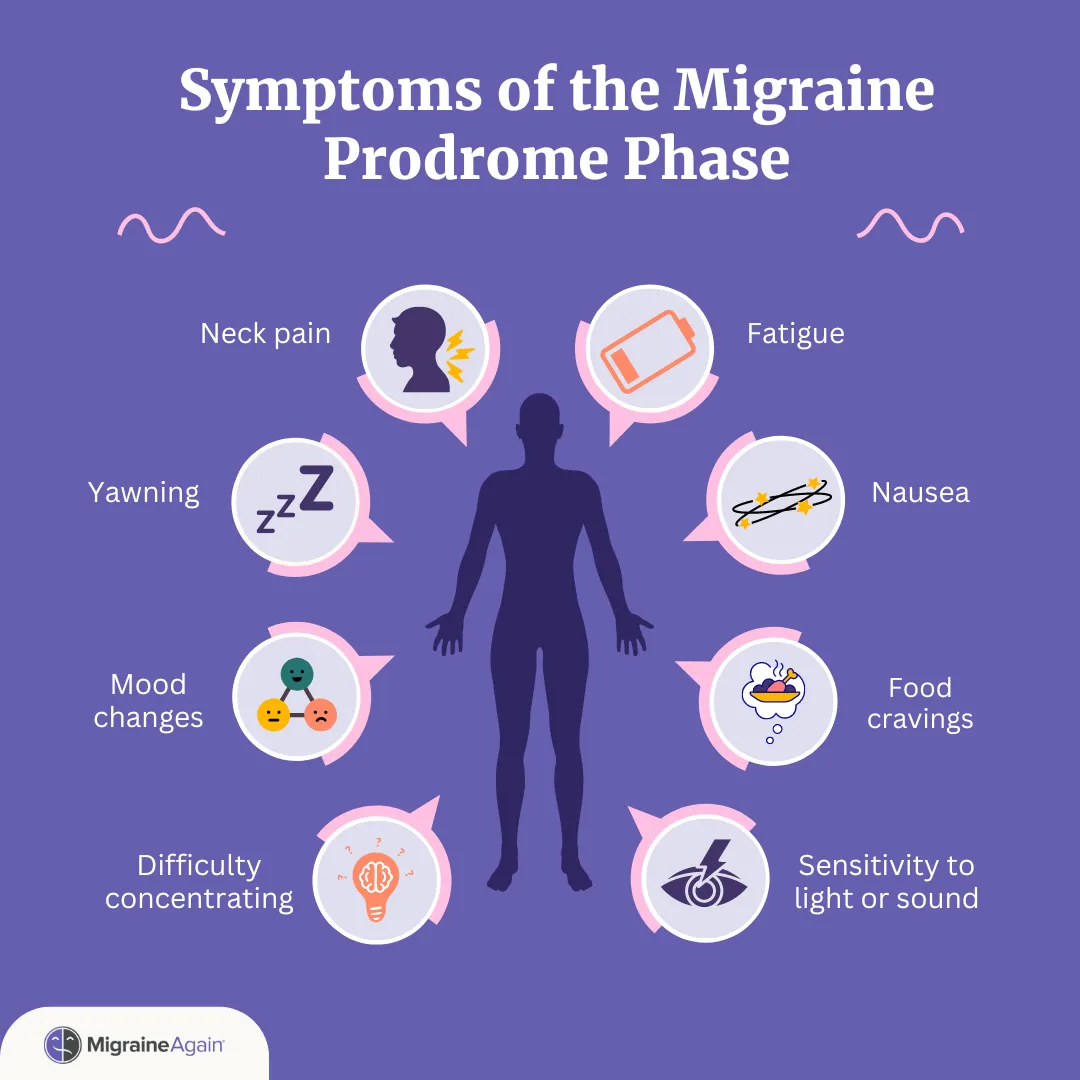
When these circuits act up, they trigger changes downstream in sensory processing and pain pathways. These changes explain the common prodrome or premonitory symptoms that you get a few hours to days before a migraine attack hits: thirst, urination changes, fatigue, yawning, cravings, sleep changes, neck discomfort, and more.
[5]
When Do Premenstrual Headaches Start?
Premenstrual headaches usually start two days before menstrual bleeding begins and may continue through the first three days of menstruation. Premenstrual migraine attacks may be classified differently depending on whether you get migraine attacks at other times of the month:
- If you get migraine attacks only within that window of time, you have menstrual migraine.
- If you get migraine attacks at other times of the month but have more frequent or severe attacks within that window of time, you have menstrually related migraine.
Are Headaches Before Your Period Normal?
Headaches before your period are normal, especially if you have premenstrual syndrome (PMS) or menstrual migraine, but that doesn’t mean you have to “just live with” severe, disabling headaches that won’t quit.
Let’s look at what experts say about recognizing the warning signs that a headache is approaching and what you can do to prevent them or treat them effectively.
Premonitory Symptoms: Early Signs a Headache Is Coming
For some people, the “headache before the period” is actually the pain phase of a migraine attack that began in the brain before the pain. Many people with migraine experience premonitory or prodrome symptoms up to a day or two before the pain starts, such as fatigue, difficulty concentrating, neck stiffness or neck pain, yawning, dizziness, and light and/or sound sensitivity.
The early neurological changes of the migraine attack process are believed to trigger these symptoms, as well as the aura phase for people who experience aura symptoms.
Treatments May Work Better if Used Early
The good news: Premonitory symptoms can help you prepare for and treat your migraine attack more effectively.
In 2024, researchers published a closer look at results of the 2023 PRODROME study of electronic headache diary data from over 900 participants with migraine. Those patients reported nearly 5,000 qualifying prodrome events — with about 4 out of 5 participants consistently reporting headache attacks within one to six hours following those prodrome symptoms.
[6]
Is It a Tension Headache or a Migraine Attack?
If you frequently get headaches right before your period, you’re likely experiencing migraine attacks. Pre-period headaches are a sign that your symptoms are related to hormonal fluctuations.
Even if you don’t experience tell-tale migraine symptoms like sensitivity to light or nausea along with your pre-period headache, migraine-specific treatments are your best bet for getting relief.
[7]
What Helps a Headache Before Your Period?
If you’re struggling with headaches right before your period, here are some things to try for relief.
Over-the-Counter Relief
- Over-the-counter medications like nonsteroidal anti-inflammatory drugs (NSAIDs) and combination medications including aspirin, acetaminophen, and caffeine
- Nonprescription complementary therapy and lifestyle options like yoga, meditation, and acupuncture
Prescription Options for Migraine
Prescription options for acute migraine relief can be used for menstrual migraine, including:
- Triptans
- Gepants
- Combination medication formulas, like NSAIDs with triptans or NSAIDs with dihydroergotamine
- Certain anti-nausea medications
Read our complete guide to menstrual migraine treatment and prevention to learn more about which options may be best for you.
How to Prevent Headaches Before Your Period
Preventive treatments for migraine can reduce the number and severity of your attacks and make attacks easier to treat with acute medications. If your regular prevention routine isn’t working as well on menstrual migraine or menstrually related migraine, consider these options for extra pre-period migraine prevention:
- “Mini-prevention” is the practice of taking certain medications on specific days during the hormonal fluctuations right before your period starts, when your migraine threshold is more vulnerable. Medications include NSAIDs or long-acting triptans.
- Supplements like magnesium glycinate or vitamin E can be used all month long or, for mini-prevention, used for one week prior to menstruation and continued for one week after.
- Paying extra attention to lifestyle changes before your period can help, too. Think about improving sleep hygiene habits, increasing stress-reducing practices and exercise, and if possible, rescheduling stressful events and activities to times when hormonal fluctuations are less likely to make them feel worse.
Can Birth Control Make It Better or Worse?
Hormonal birth control options for people with migraine are complicated — so talk to your healthcare provider about your medical history, risks, and options!
Birth control options containing estrogen and progesterone may smooth out hormonal swings that worsen migraine attacks in some patients, especially in low-dose formulas used continuously (without “breaks” to allow bleeding). On the other hand, estrogen can increase the risk of blood clots and stroke in people with migraine, especially those who smoke and have frequent aura symptoms.
Emerging science suggests that this risk of stroke is far lower for patients than earlier assumed, thanks to the lower doses of estrogen now common in hormonal birth control and a more rigorous look at the data, but you and your healthcare providers should assess your risks carefully.
Progesterone-only birth control (such as the “mini-pill” or certain intrauterine devices) doesn’t carry the same risk of stroke, but it is not advised for people with risks for breast cancer or certain liver conditions.
Could It Be Pregnancy?
There’s also the possibility that hormonally influenced headaches are signs of pregnancy. Hormone shifts in early pregnancy can trigger headache, especially for people using fertility treatments.
If you’re using fertility treatments, you and your healthcare team will have clear answers right away, but whether or not fertility treatment is a factor, be aware that early pregnancy hormones can trigger headaches around the time you’d expect a premenstrual headache.
When to See a Doctor
Even those of us used to dealing with headache disorders occasionally have the need for a visit to a doctor when we get bad attacks. If you get any of these symptoms, however, see your doctor ASAP:
- It feels like the worst headache of your life.
- The headache goes from zero to severe rapidly, far faster than your typical headaches.
- You have a new headache pattern or new, escalating symptoms.
- You experience neurological symptoms, like muscle weakness (especially on one side of the body), difficulty talking, or confusion.
- A headache begins right after a head injury; even seemingly “mild” head injuries can have serious consequences.
If your headaches are one-sided with prominent eye tearing or nasal congestion, severe restlessness, and occur in repeated short attacks, ask your healthcare provider about cluster headache, a serious headache disorder that needs special treatment.
How to Track Hormonal Headaches
One excellent tool you can use to track hormonal headaches and refine your personal migraine-spotting radar is a headache diary app for your smartphone. These apps make it easy for you to record information about symptoms, potential triggers, hormonal patterns, and outcomes as they happen. With the click of a button, they can create comprehensive reports that you and your healthcare providers can use to fine-tune your treatment plan.
Final Thoughts
Many women experience migraine attacks before their monthly periods. Menstrually related migraine attacks can be more difficult to treat than attacks not influenced by hormones.
There are several over-the-counter and prescription medications for treating and preventing headaches related to a period. Recognizing the early signs that a migraine attack has begun gives you an opportunity to treat the attack early, offering you the best chance for relief.
Lisa Smith
Lisa Smith is a writer and patient advocate from Massachusetts. Her experiences with a decade of chronic migraine inspired her advocacy work, including a new career narrating professional medical education material. In addition to Migraine Again, she has written for the Association of Migraine Disorders and the National Migraine and Headache Awareness Month websites.