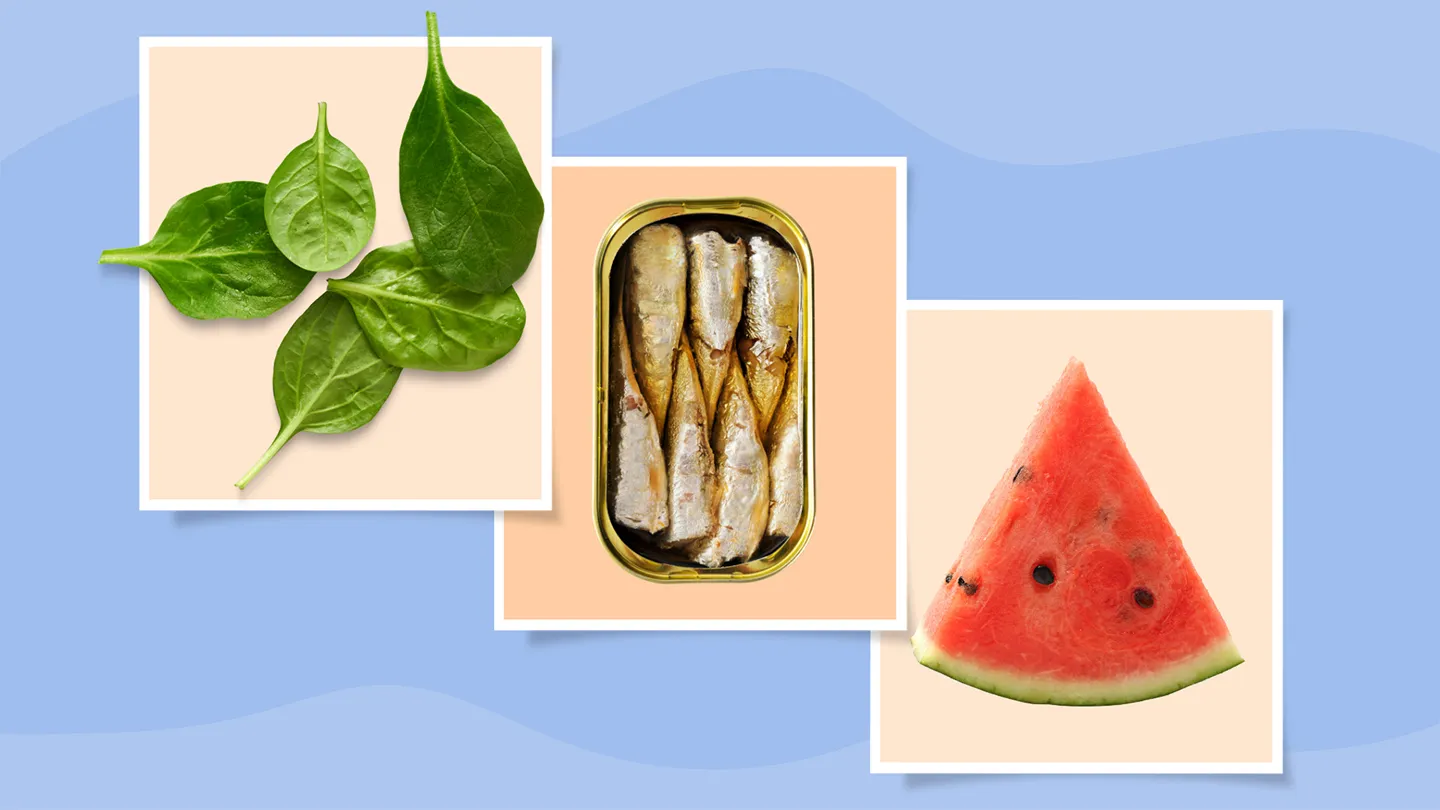
People with migraine are always looking for ways to prevent attacks, including using nondrug approaches like dietary changes. There’s lots of advice about avoiding common food triggers, such as red wine or artificial sweeteners, but what if you could stop saying “no” to foods so often and start saying “yes” to foods that can help prevent migraine?
Diets rich in several nutrients can help reduce the frequency and severity of your attacks. Here’s what we know about the best foods for migraine, how they work, and how you can work them into your diet.
How Diet Can Affect Migraine
Incorporating migraine-friendly foods into your diet is one tool in the migraine prevention toolkit alongside medications, neuromodulation devices, supplements, and other lifestyle changes.
“There are many more ways that diet can be therapeutic as opposed to triggering for migraine,” says Robert Bonakdar, MD, a certified headache specialist and integrative medicine expert with the Scripps Center for Integrative Medicine in San Diego. “This concept in general can be helpful in ‘de-villainizing’ nutrition and diet. ... Looking at nutrition as a foundation support first and foremost is a positive way to view it.”
That’s the approach author and blogger Alicia Wolf uses. When Wolf had to leave her job because of disabling vestibular migraine symptoms, she began creating and publishing migraine-friendly recipes online in her blog, The Dizzy Cook. Wolf has also written two cookbooks, including one co-authored by a headache specialist. In her interview at the 2023 Migraine World Summit, she talked about her philosophy.
“A migraine diet should be more about embracing the foods you can have, learning to cook with new spices that you may not have used before,” said Wolf. “And really just changing your mindset to embrace, ‘OK, I'm going to focus on my health right now and eat these things that are great for my brain health.’”
In general, fresher foods with less processing and fewer additives are more likely to be migraine safe and migraine friendly. Of course, everyone has different tastes/aversions and different resources, like food availability, money, transportation, food storage, and time/stamina to cook regularly (especially if you have high-frequency episodic or chronic migraine; the more headache days you have, the less stamina you have for cooking).
Finding a migraine-friendly eating plan that works for you may require some trial and error, but gradually working the following foods into your regular meal rotation is an easy place to start.
Omega-3-Rich Foods
How they help: A diet rich in omega-3 fatty acids can reduce the frequency and severity of migraine attacks, according to a study published in 2021.
Researchers believe that the optimum balance of omega-3 and omega-6 fatty acids helps regulate pain signaling on nerve cells, which may raise your migraine threshold.
Foods rich in omega-3s:
Magnesium-Rich Foods
Foods rich in magnesium: Although magnesium supplements are popular among people with migraine, you can also boost your magnesium intake with:
- Dark leafy greens like spinach and Swiss chard
- Pumpkin and chia seeds
- Nuts like almonds, cashews, and peanuts (also peanut butter)
- Legumes like black beans and edamame
- Avocados
- Dark chocolate (chocolate was long considered a likely food trigger, but experts now believe a chocolate craving is a premonitory sign that an attack is coming)
Anti-Inflammatory Foods
How they help: Experts believe that inflammation plays a role in the migraine process, especially in people with chronic migraine. By incorporating more anti-inflammatory foods into your diet, you may be able to reduce overall inflammation (believed to be higher in people with migraine than people without) and raise the threshold against that inflammatory response.
- Fruits and vegetables
- Whole grains
- Nuts
- Legumes
- Extra-virgin olive oil
- Fish and seafood
Foods High in Fiber
While the exact mechanisms aren’t clear, experts believe that increasing fiber creates a healthier gut biome and reduces inflammation, regulates blood sugar spikes and dips, and prevents constipation (a common problem for people with migraine!).
Dietary fiber may be soluble (dissolves or partially dissolves in water) or insoluble (doesn’t dissolve in water); a mixture of both is best from a variety of foods.
Foods rich in soluble fiber:
- Whole grains like oats and barley
- Beans
- Peas
- Fruits like apples, avocados, bananas, and citrus
Foods rich in insoluble fiber:
- Breads and other foods made with whole-wheat flour
- Wheat bran
- Nuts
- Beans
- Vegetables like cauliflower, potatoes, and green beans
Hydrating Foods and Drinks
How they help: You might be tired of people telling you to “drink more water,” but staying well hydrated is a fundamental step in dealing with migraine. Migraine brains are especially sensitive to dehydration.
Foods to boost hydration include:
- Water — keep that water bottle nearby, sip throughout the day, and refill frequently
- Juices, seltzers, teas (especially without caffeine)
- Fruits and vegetables — many have high water content and are easy to incorporate into refreshing treats like this smoothie recipe (which is also full of migraine-friendly nutrients!)
What About Keto and Low-Histamine Diets?
Both the ketogenic diet and the low-histamine diet have at least modest evidence that they improve migraine for some patients. Unlike this migraine-friendly-foods approach, however, the keto and low-histamine diets are highly restrictive, difficult to maintain, and may be unsafe or unsuitable for some patients.
If you’re interested in trying these plans or other restrictive diets, talk to your healthcare provider and a licensed nutrition specialist to see if they’re safe and appropriate for you.
A Gentle Reminder About Migraine Causes vs. Triggers
Migraine is a complex neurological condition caused largely by multiple genetic factors that make the brain hypersensitive to stimuli or “triggers.” Things like food, poor sleep, stress, weather changes, flickering lights, and other everyday factors may trigger migraine attacks in people with migraine disease, but they do not cause migraine disease.
Some people with migraine get great results with dietary changes. Others, however, struggle no matter what they eat or don’t eat, what medications they take, how much they meditate, or anything else they try. Nobody deserves migraine, but we think you deserve safe, reliable information about all the treatments and tools that can give you the chance for more pain-free days.
Developing a Migraine-Friendly Meal Plan
The first step in developing a migraine-friendly meal plan is planning to eat at regular times!
“We know that simple but profound steps such as meal consistency and hydration are steps that are often overlooked but can by themselves have a profound ability to reduce migraine frequency and intensity,” says Dr. Bonakdar.
Next, focus on adding one or two types of migraine-friendly foods into your diet instead of eliminating lots of things or trying to do everything at once.
“I have seen improvement just with increasing fiber or omega-3 intake, as we know that most Americans have a suboptimal intake, and higher intake has been shown to reduce migraine burden,” says Bonakdar. “These are some initial steps which can go a long way before having to restrict much.”
Bonakdar and Wolf both recommend working with a nutritionist, especially if you’re trying an elimination diet to determine if you have specific food triggers or if you have comorbid conditions that might benefit from identifying problematic foods.
“In general, I think the more complex or difficult the dietary advice, the more so it should be discussed and guided by the healthcare team to make sure that patients are well supported in their dietary pursuits,” says Bonakdar.
“I think that after a therapeutic diet is started … and hopefully with the guidance of a diet specialist, then we can begin to tease out if more specialized dietary approaches, such as gluten-free, low FODMAP, etc., are needed,” Bonakdar recommends.
“The traditional elimination diet … is only meant to be done for a short amount of time and then you reintroduce foods,” said Wolf about the differences between her first book, The Dizzy Cook, and her second, The Mediterranean Migraine Diet. “But this Mediterranean diet is more about how to eat for long-term brain health, especially if you discover you have certain triggers through the elimination process. So, it'll be kind of the next step for people if they want a long-term way of eating or if they think elimination is not right for them, this book could be helpful for that.” (You can see Wolf’s recipes at TheDizzyCook.com.)
Tips and Tricks From the Community for Increasing Your Migraine-Friendly Food Intake
Migraine makes everything more difficult, including planning and preparing food, but these tips and tricks can help.
Wolf said she keeps her go-to ingredients handy in the fridge and freezer to mix and match on demand. “I always keep frozen rice in my fridge, especially frozen brown rice or some quinoa in there that I can just microwave really, really easy in like three minutes, toss together some greens or put them in the oven for a little bit.”
A vacuum food saver is another way to keep go-to ingredients on hand (I personally use this method). Vacuum sealers are available at mass retailers and websites at several price points (and so are precut freezer bags already sealed at one end). You can make big batches of your favorite recipes or staples like brown rice and save individual portions in vacuum-sealed bags in the freezer without risking freezer burn.
Many of the tips our Migraine Again readers offer are about eating frequently and being prepared:
Eat regularly with slow-release carbs. I find fluctuations/drops trigger me rather than specific foods. — Jaime S.
Way more frequent smaller meals. — Lisa N.
I think it is most important not to skip meals. Do not be hungry. When I go out, I always have a little something in my pocketbook, ‘just in case’. — Linda H.
Eat 10-15mg of protein within an hour of waking in the morning. This is advice from my neurologist at the Centre for Headache. 1/2 cup of cottage cheese or 2 eggs does the trick for me. — Gina M.
Consistency. If you don't eat breakfast normally then don't pick it up all of a sudden. And don’t skip meals. Eat at the same relative time every day. The amount of food you eat aka amount of calories ... — Maxwell D.
Migraine Prevention Considerations
Including the best foods for migraine in your diet is only one tool in the migraine prevention toolkit. We use the acronym “SEEDS” to describe the good habits that help you live better with migraine:
Sleep — getting sufficient sleep on a regular schedule
Exercise — getting gentle exercise regularly
Eat — eating a healthy diet and staying hydrated
Diary — tracking migraine symptoms
Stress — managing a common migraine trigger
If you have more than four headache days a month despite adopting these lifestyle habits, talk to your healthcare provider about preventive treatments for migraine. (It’s not a sign that you “failed” at anything if you need help from your healthcare team! Different people with migraine need different combinations of habits, medical treatment, and more to get their best results.)
Main Points
- Foods that may help with migraine prevention have high levels of nutrients like omega-3 fatty acids, magnesium, antioxidants and other anti-inflammatory ingredients, and fiber; hydrating foods might help, too. They’re common ingredients in popular healthful eating plans like the DASH diet and Mediterranean diet.
- Although elimination diets and restrictive eating plans help some people with migraine, they are often difficult to maintain and may not be effective, safe, or appropriate for everyone. Adding migraine-friendly foods to your diet is a good “first step” that may give you worthwhile results you can maintain more easily.
- Eating regularly and staying hydrated are the two most important steps in any migraine-friendly diet.
- If you have comorbid conditions or any concerns about what eating plans might be safe or effective for you, talk to your healthcare provider and a licensed nutrition specialist.
- Changing your diet is only one tool for getting more control over migraine. Many people with migraine need different combinations of acute medications, preventive medications, dietary changes, and other lifestyle adaptations to live their best lives with more pain-free days.