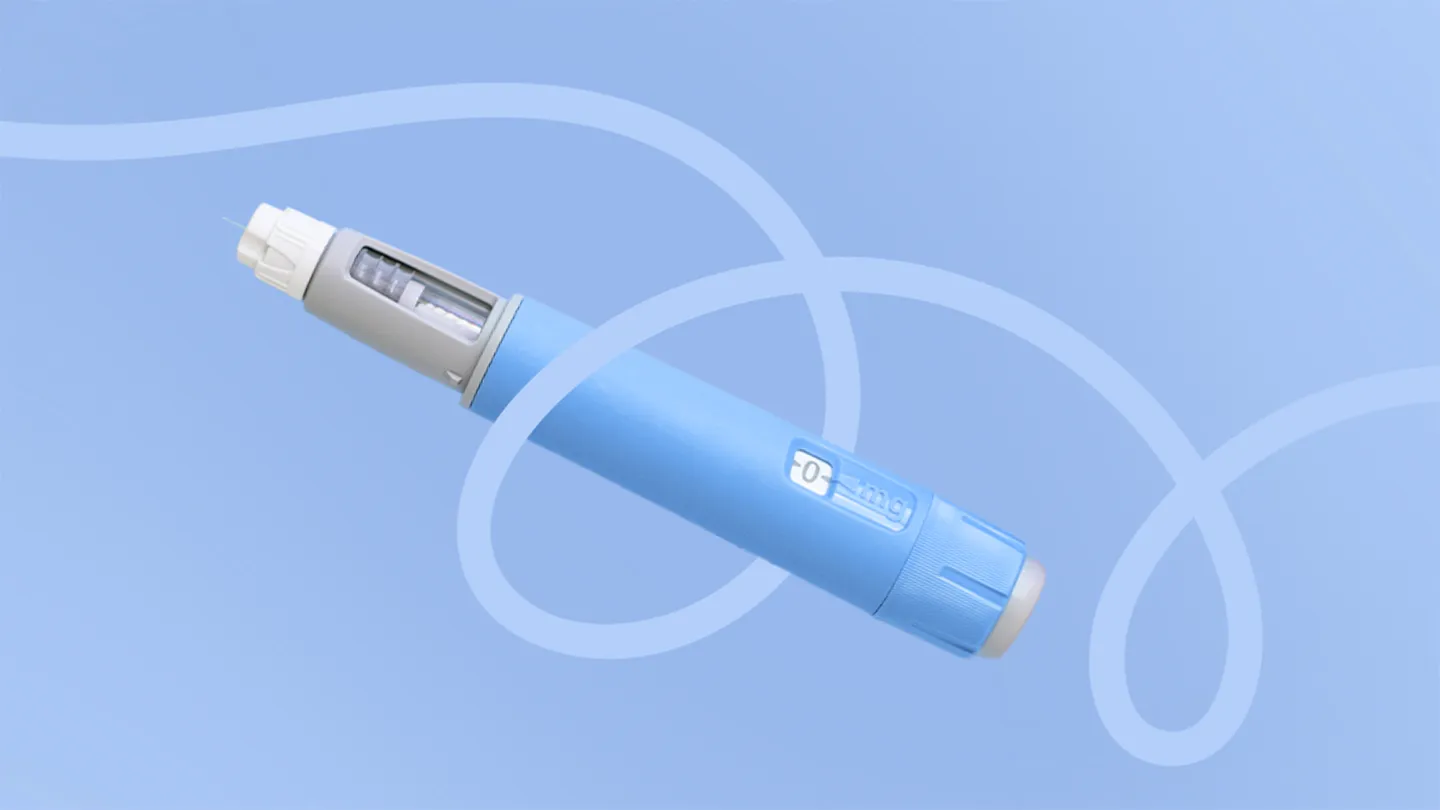
GLP-1 medications like semaglutide (Ozempic) and dulaglutide (Trulicity) were originally developed to help people with type 2 diabetes manage blood glucose levels, but they have become incredibly popular for weight loss.
Emerging evidence suggests that GLP-1 medications may also have unexpected benefits for people with a wide variety of unrelated conditions — including chronic migraine, according to a new study.
The U.S. Food and Drug Administration (FDA) approved GLP-1 drugs for blood glucose control and/or weight loss in people with obesity and type 2 diabetes, as well as control of cardiovascular conditions in overweight people with type 2 diabetes.
There are currently three GLP-1 receptor agonists on the market:
- Dulaglutide (Trulicity)
- Liraglutide (Victoza)
- Semaglutide (Ozempic, Rybelsus)
GLP-1 receptor agonists mimic the action of the hormone glucagon-like peptide 1. Your body produces GLP-1 in digestion, but it doesn’t last very long. GLP-1 medications increase insulin secretion, suppress glucagon release, slow down the digestive process, and reduce appetite.
Emerging evidence from real-world patient experiences and clinical studies suggests that GLP-1s may be effective in treating several conditions, including substance use disorders,, liver and kidney conditions, knee osteoarthritis, polycystic ovary syndrome, and neurodegenerative diseases like Parkinson’s and Alzheimer’s.
Now a new study suggests that people with chronic migraine may benefit from treatment with GLP-1s, too.
Researchers examined the records of approximately 22,000 people with chronic migraine, split equally between those who used GLP-1 receptor agonists and those who began using topiramate (Topamax) for migraine prevention during the same time frame. The two groups were matched for factors such as age, body mass index (BMI), prior use of other migraine treatments, and other health conditions.
Researchers discovered that the GLP-1 users were less likely than the topiramate users to require a variety of acute and preventive migraine treatments:
- The GLP-1 users were about 14 percent less likely to require hospitalization.
- The GLP-1 users were about 13 percent less likely to receive a nerve block procedure or a prescription for triptans.
- Those in the GLP-1 group were also less likely to start using another preventive treatment:
- Forty eight percent less likely to start valproate (Depakote)
- Forty two percent less likely to start calcitonin gene-related peptide (CGRP) monoclonal antibodies
- Twenty three percent less likely to start gepants for migraine prevention
It’s important to note that this was an observational study, which means that researchers did not interact with patients or intervene in their care.
The study demonstrates a correlation between GLP-1 use and improvements in chronic migraine — but it does not prove that GLP-1 use caused those improvements.
Experts don’t know exactly why there’s a correlation between GLP-1 medication use and improvement in migraine. GLP-1s might affect mechanisms in the migraine process in ways that researchers haven’t yet discovered.
Based on the current state of headache science, experts suspect that GLP-1s may benefit the migraine brain in several ways:
Inflammation
Blood Glucose
Some experts believe GLP-1s might impact migraine by managing metabolic factors. Insulin helps your body turn sugar from what you eat into energy your body can use, but eating meals high in sugar and simple carbohydrates can stimulate your body to produce extra insulin.
The extra insulin does its job too well, triggering a sharp drop in blood glucose called reactive hypoglycemia within a few hours of mealtime.
Experts know reactive hypoglycemia is a migraine trigger, even in people without diagnosed metabolic conditions. It’s possible that some migraine brains are as hypersensitive to subtle metabolic factors as they are to stimuli like weather, poor sleep, and stress.
Intracranial Pressure
A small study of 31 patients in Italy with obesity and chronic migraine who took the GLP-1 medication liraglutide reduced monthly headache days from about 20 to 11 during the 12-week trial.
While intracranial pressure may not affect every person with chronic migraine, the results of the study may prompt further research on the subject.
GLP-1 receptor agonist medications are not approved for treating migraine, but some healthcare providers have already noticed their potential among certain people with migraine.
“As an integrative medicine physician as well as someone who has consulted with thousands of patients with migraine, I am convinced that there are many more connections than we often recognize,” says Dr. Bonakdar, who has worked with migraine patients using GLP-1s.
He says that conditions commonly comorbid with migraine, which he calls “signatures,” may provide clues about which patients may benefit from GLP-1s.
“Some of the migraine signatures, such as chronic migraine with co-occurring pain, or migraine with prediabetes, may, in fact, be a perfect signature to use GLP-1s, given their ability to support these interconnected areas,” says Bonakdar.
GLP-1s are not approved by the FDA for migraine prevention, but healthcare providers are legally allowed to prescribe approved medications for “off-label” uses. Insurance companies may not cover the cost of GLP-1 drugs, however, unless you have a diagnosis of diabetes in your medical chart.
“GLP-1s can be a beneficial option in the right migraine scenario, but it takes appropriate planning, testing, and lifestyle change to make sure we maximize benefit and reduce potential harms,” says Bonakdar.
Here are some factors you should consider before talking to your healthcare provider about GLP-1s:
Working Across Specialties
Before you get a prescription for a GLP-1 medication, make sure you include all your healthcare providers in the decision.
That includes your primary care provider and specialists, such as neurologists, headache specialists, obesity medicine specialists, endocrinologists (who treat conditions affecting hormones and metabolism), ophthalmologists (who treat conditions affecting the eyes), and any other specialists you see to treat or monitor your health.
One specialist might be more attuned to your potential benefits or risks in that specialty than another provider, so for best results, get them all on board.
Contraindications and Cautions
GLP-1s can also cause an increased risk for:
- Pancreatitis or other problems with the pancreas
- Gallstones or other problems with the gallbladder
- Diabetic retinopathy or other problems with the retina
- Acute kidney injuries
- Significant gastrointestinal reactions, from nausea/vomiting to intestinal obstruction
- Extreme hypoglycemia
- Pulmonary aspiration during general anesthesia or deep sedation
- Depression or suicidal ideation
- Dehydration
- Hypersensitivity reactions
- Eating disorders such as anorexia
Diet and Exercise
GLP-1s can make you lose nutrients and muscle mass as well as excess weight.
“GLP-1s are well documented to reduce several nutrients that are protective of migraine, including vitamin B12, vitamin D, and iron,” says Bonakdar. “It is important to monitor these at baseline and periodically to confirm adequate levels.”
Loss of muscle mass (sarcopenia) is also a common result of GLP-1 use. “Unfortunately, this can be up to one-third of the total weight lost, which can reduce muscle stores and consequentially mitochondria, which are key organelles needed to protect against migraine and oxidative stress,” says Bonakdar.
“In this scenario, I always recommend a baseline and periodic BIA (bioelectrical impedance analysis) test … to evaluate baseline body composition to confirm patients are not sarcopenic at baseline or not losing too much muscle with GLP-1 therapy. … I also recommend other strategies, including resistance and strength training, adequate protein intake, and creatine supplementation to mitigate muscle loss, based on research in these areas,” says Bonakdar.
Monitoring for Side Effects
GLP-1s can affect organs and processes outside the scope of the healthcare provider who prescribes your GLP-1. When all your providers are involved, they can monitor you for progress and side effects in their specialties as needed. (One specialist might monitor you closely in the first few weeks for side effects that show up right away, but another might space out your appointments to monitor side effects that don’t show up until later.)
We asked Migraine Again readers on our Facebook page about their experiences with migraine and GLP-1 receptor agonist medications.
Some readers experienced significant migraine relief when they began GLP-1 treatment:
Yes, I’ve only had five migraine attacks in two years. My neurologist has eight patients with a similar outcome. — Erica L.
I cut out two of my three migraine prescriptions [after starting GLP-1s]. — Olivia C.
I have hemiplegic migraine, and I haven’t had a full-blown one in over three months since I have been on Mounjaro. — Kim B.
Some readers didn’t notice any change one way or the other:
No difference, but I am on Vyepti (infusion) so I couldn’t really tell. — Lana L.
It has not affected my migraines either way. — Anita R.
And some readers reported that their attacks got worse or developed new symptoms:
I never had a migraine until I started semaglutide. Now starting to wonder if that is part of the problem. I’m also in perimenopause, so I’m not sure. — Meghan M.
Final Thoughts
Early clinical evidence and real-world patient experiences suggest that GLP-1 drugs may reduce the burden of chronic migraine on certain patients. Although the intersection of metabolic health and migraine care is a promising new frontier, study in this area is still in its infancy.
Experts need much more clinical trial data before they can confirm the benefits, risks, and recommendations regarding which migraine patients should or should not use GLP-1s.
If you have migraine disease and one or more of the conditions for which GLP-1s are approved, talk to all of your healthcare providers to see if you’re a good candidate to try one. If you can try GLP-1s safely, you and your healthcare team can develop a personalized plan involving GLP-1s, migraine care, and regular monitoring to minimize side effects and maximize your chances for relief from chronic migraine.