
Nausea is one of the defining symptoms of a migraine attack — and the last thing you need when your head hurts and you’re oversensitive to light and sound! Anti-nausea medications can relieve the nausea and vomiting you get during a migraine attack, boost the effectiveness of your migraine medications, and in some cases work on the migraine attack itself.
Why Migraine Makes You Nauseated
Migraine attacks are complex neurological events, but they’re not limited to the brain and head. The “gut-brain axis” can play a significant role in migraine disease (and other conditions). The gut-brain axis consists of:
- Enteric Nervous System These are the autonomic nerves that keep your digestive system running without your conscious effort.
- Vagus Nerve This is a large nerve that runs from the brain to the large intestine, part of the parasympathetic nervous system that promotes “rest and digest” functions.
- Gut Microbiome These are the bacteria and other microorganisms that live in the gut, which produce neurotransmitters and other byproducts
When a migraine attack hits, your digestive system slows down. This creates gastric stasis or delayed stomach emptying, which contributes to migraine-related nausea. You could feel nauseated in any stage of the migraine attack, from premonitory phase to postdrome.
Some people with migraine-related nausea and/or vomiting find that their acute migraine medications relieve nausea along with other migraine symptoms. But for others, gastric statis may make acute migraine treatments less effective.
“You swallow your medicine and promptly vomit it up before the medication has had a chance to be absorbed,” says Andrew Charles, MD, professor of neurology at the David Geffen School of Medicine at UCLA, director of the UCLA Goldberg Migraine Program, and past president of the American Headache Society. “Even if you don’t vomit, you may not absorb an effective dose of medication if you’re nauseated.”
How do you deal with a migraine attack if nausea and vomiting interfere with your migraine treatments? One method is including anti-nausea medications in your migraine toolkit.
How Different Medications Treat Migraine Nausea
Antiemetics are medications that relieve nausea and vomiting. These drugs work by blocking or interfering with the gut-brain axis signals involved in nausea and vomiting. Evidence suggests that no single part of the brain or neurotransmitter is responsible for migraine-related nausea. This means that you and your healthcare provider may need to try more than one before you find the one that works best for you.
Prescription Antiemetics for Fast Migraine Nausea Relief
Common antiemetic drugs used to treat migraine-related nausea include:
Dopamine Antagonists
Dopamine antagonists block dopamine receptors in a part of the brain stem that initiates vomiting. They may be classified as antiemetics or antipsychotics, but regardless of the classification, they all have powerful anti-nausea effects. Dopamine antagonists include:
- Prochlorperazine (common brand name Compazine)
- Metoclopramide (Reglan)
- Chlorpromazine (Thorazine)
- Haloperidol (Haldol)
Studies suggest that prochlorperazine and metoclopramide are also effective acute migraine treatments.
Serotonin Antagonists
Serotonin antagonists help nausea by blocking the serotonin receptor 5-HT3, prevalent in the brain stem and the gut. They include drugs like:
- Ondansetron (Zofran)
- Granisetron (Kytril)
Antihistamines
Antihistamines block receptors for the H1 type of histamine that’s responsible for allergies but can contribute to nausea (especially related to motion sickness and vertigo). They include:
- Diphenhydramine (Benadryl)
- Meclizine (Dramamine)
- Promethazine (Phenergan)
Antiemetic medications come in several formulas, but oral tablets probably can’t help you if you have severe vomiting. Many of these antiemetics come in nasal sprays, suppositories, or injectable formulas and can be used at home.
Potential Antiemetic Side Effects and Safety Precautions
Side effects like drowsiness, dizziness, and dry mouth are common to antiemetic medications, regardless of type. Headache, fatigue, and constipation may also occur with serotonin antagonists.
Antiemetics also have less common but potentially serious side effects or risks that you should know about:
- Serotonin antagonists like ondansetron are contraindicated for patients who have liver disease, several cardiovascular conditions, or are at high risk for serotonin syndrome.
- Dopamine antagonists and promethazine can trigger a symptom called akathisia, an intense sense of restlessness. People experiencing akathisia may have a distressing and uncontrollable urge to move, usually involving the lower limbs. They can also trigger dystonia, distressing and uncomfortable muscle spasms or movements that patients can’t control.
How to Time Your Treatments for Maximum Effect
If you regularly experience nausea and/or vomiting with your migraine attacks, understanding your symptom patterns can help you take acute migraine medications and antiemetics at the optimum times for the best possible results.
“It is important to think about migraine-specific therapies as a treatment not just for headache, but also for nausea,” says Charles. “Healthcare providers use the triptans if they're effective in treating the pain of a person’s migraine attack as they can also treat the associated nausea and vomiting.”
If nausea and vomiting occur predictably when your migraine attack is well underway, try taking your acute migraine medications as soon as you feel the attack begin. Triptans are most effective at stopping the symptoms of migraine attacks when you take them in the first hour of an attack. An acute medication called ubrogepant (Ubrelvy) has been shown to stop migraine attacks in the premonitory phase for some patients who have clear prodrome symptoms.
Nausea-Proof Treatments
If your nausea and vomiting symptoms don’t have predictable timing or warning signs, talk to your healthcare provider. “If you have a hard time keeping your medicine down, talk to your doctor about other ways of taking it,” Charles recommends. “Have this conversation before your next migraine attack so you can be prepared to stop it before it gets out of hand.” You might benefit from using acute treatments and antiemetic medications that come in formulas you don’t have to swallow, like nasal sprays or injections.
Emergency Care Options
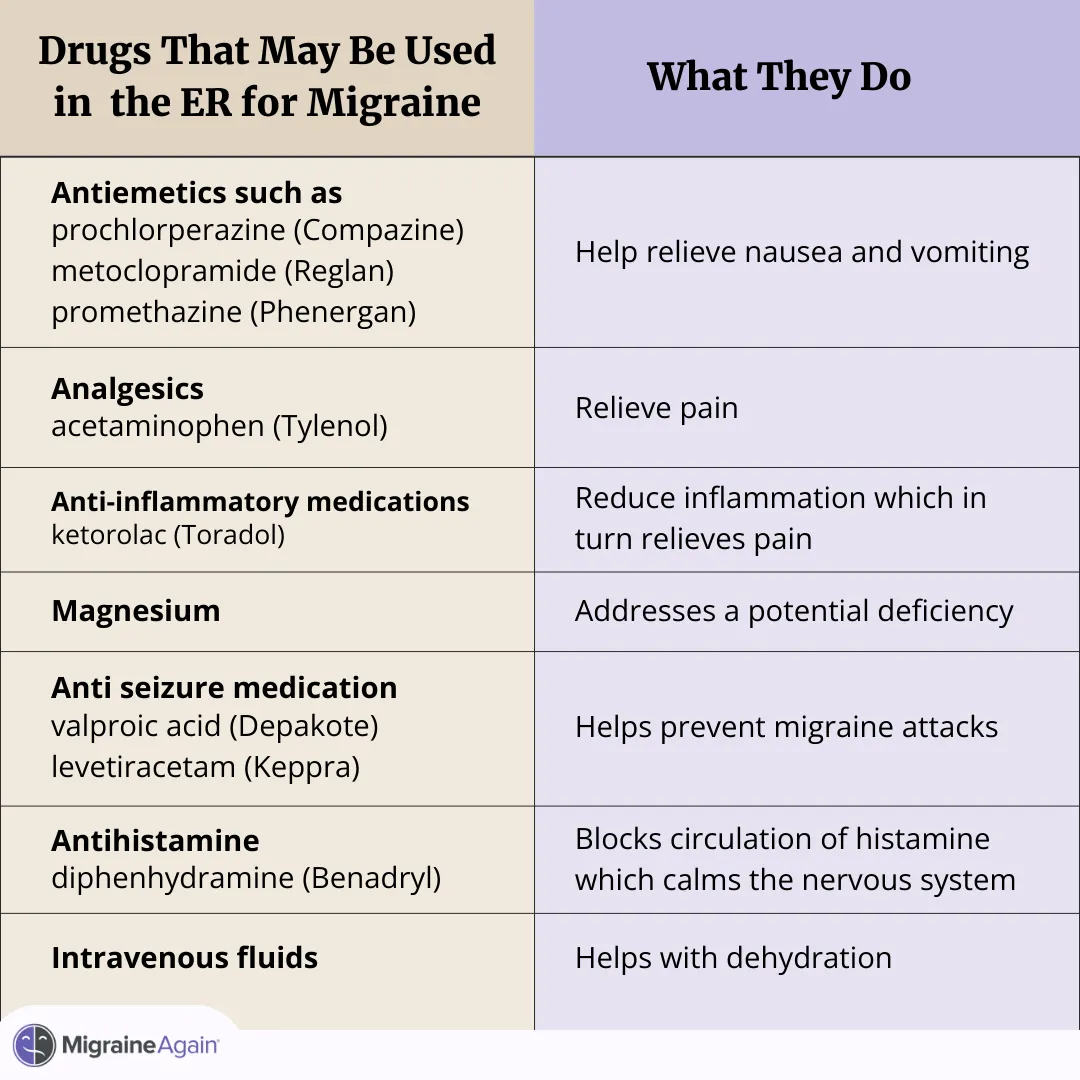
If you experience severe vomiting with a migraine attack, you may become dangerously dehydrated. Experts recommend you visit your local emergency department or urgent care center right away, where healthcare providers can give you an intravenous “migraine cocktail” with antiemetic medication to stop the vomiting and fluids to get you rehydrated safely.
Nondrug Nausea Relief
Prescription antinausea medications are the most powerful treatments for migraine-related nausea, but over-the-counter strategies can also help bring relief. Ginger and peppermint have been shown to help with nausea, and anti-nausea wristbands work on an acupressure point to relieve nausea.
Final Thoughts
Nausea and vomiting are extremely common symptoms of migraine attacks, thanks to the gut-brain axis, and they can be disabling. Antiemetics are medications that stop nausea and vomiting by acting on different parts of the nervous system that can trigger nausea. Antiemetics have different mechanisms of action and may have serious side effects, especially for people with certain contraindications, but they can provide significant help for people whose migraine attacks include nausea or vomiting.
Finally, Charles has this important advice for people with migraine and their healthcare providers.
“It is important to consider nausea and vomiting as a major cause of disability, to treat it aggressively, and not just live with it as a consequence of the attack,” says Charles. “While we hope that effective treatment of migraine with a migraine-specific therapy will treat the associated nausea, it may not. And if it doesn't, then using anti-nausea medications is something that can be quite helpful in reducing disability.”