
Urinary tract infections (UTIs) may be common and frustrating for many people, but the symptoms don’t always stay confined to the urinary tract. Even though headache is not the most common UTI symptom, UTIs can trigger migraine attacks or headaches through inflammation, dehydration, and more.
What Is a Urinary Tract Infection?
A urinary tract infection, or UTI, is an infection of one or more parts of the urinary system, which filters waste from the bloodstream and turns it into urine to be expelled from the body. The urinary system includes:
- Kidneys: Filter waste from the blood to produce urine
- Ureters: Long tubes that send urine out of the kidneys
- Bladder: Stores urine
- Urethra: Expels urine from the body
UTIs typically occur when bacteria enter the urethra and aren’t flushed out by urination. Most UTIs occur in the urethra (urethritis) or the bladder (cystitis), but they can spread upward to cause a serious infection of the kidneys (pyelonephritis).
UTI Symptoms
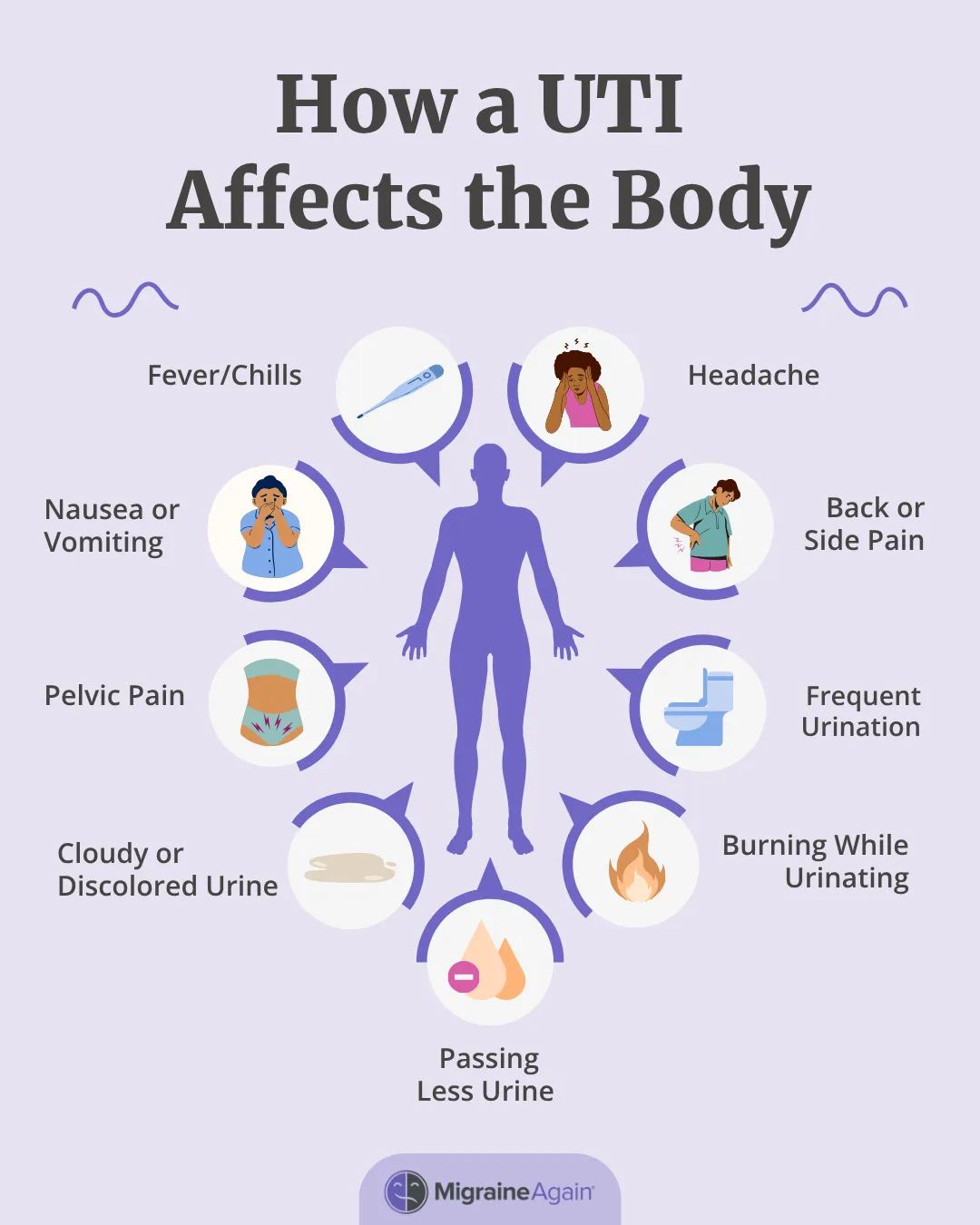
The most common symptoms of a UTI include:
- A burning sensation during urination
- Frequent urge to urinate but passing little urine
- Cloudy or bloody urine
- Pelvic area pain
More severe symptoms tend to indicate a serious infection that has spread beyond the bladder. They include:
- Fever
- Shaking and chills
- Nausea and/or vomiting
- Back or side pain
Women are more prone to UTIs than men because women have shorter urethras, but anyone can develop a UTI, including babies, children, and elderly adults. UTIs can cause changes in mental status in elderly adults that look like symptoms of dementia but go away when the infection is treated properly. (UTI-related delirium comes on suddenly within days, while dementia symptoms develop over months or years.)
Some people may be at greater risk of developing UTIs because of other health conditions, like perimenopause and menopause, constipation, dehydration, blockages in the urinary tract, congenital conditions, or a suppressed immune system.
Can a UTI Cause Headache or Migraine?
“Migraine is common, and migraine patients are susceptible to all sorts of triggers, including infection, including UTI,” says Mark Youssef, MD, an internist and headache medicine specialist in Cincinnati.
“Migraine likes a stable pattern — things like infections, which may alter sleep, hydration, activity, and medications used, can all increase the likelihood of headache,” says Dr. Youssef.
The most likely factors behind UTI-related headaches and migraine attacks:
Inflammation Infections can be indirect triggers of migraine attacks. When you have an infection, part of your body’s emergency response is the release of cytokines, messenger proteins that tell your immune system where the infection is and which immune cells should respond. Some cytokines tell the body to increase inflammation to attack the infection; others tell the body to decrease inflammation.
Research suggests that people with migraine disease have higher levels of pro-inflammatory cytokines than people without migraine disease. Although the exact mechanisms aren’t yet identified, experts suspect that inflammation around the nervous system plays a role in the migraine process.
Dehydration If you develop a UTI, you might find yourself urinating a lot and reducing your fluid intake. Dehydration is a common trigger of both tension-type headaches and migraine attacks. Frequent urination can also be a symptom of the prodrome or premonitory phase of a migraine attack, but prodrome urination doesn’t burn or sting the same way UTI urination does.
Sleep Disruption One reliable trigger of both migraine attacks and tension-type headaches is poor sleep. If the UTI-related urge to pee wakes you up several times a night, your head might be as unhappy as your urinary tract.
Headache vs. Migraine
Head pain is miserable no matter what kind it is, but there are important differences between tension-type headaches and migraine attacks. Is your headache a migraine attack? Take this quiz to find out!
How Are UTI Headaches Treated?
The most important thing you can do to treat a UTI-related headache or migraine attack is to treat the UTI. Antibiotics are the first-line treatment for UTIs. Proper treatment for the UTI should go a long way in resolving the associated headache. Finish the entire course of antibiotics even if you begin to feel better after a few days.
If the headache still won’t give up, you can treat the headache alongside the UTI the same way you would treat a headache without the UTI. Several OTC treatments and natural remedies should help with tension-type headaches.
If you have migraine disease, you may need to use migraine-specific treatments. (Although the usual acute migraine treatments should be safe to take alongside antibiotics, we recommend that you check with your healthcare provider or pharmacist when you get antibiotics to make sure there are no dangerous interactions.)
When a Headache With a UTI Could Signal Something More Serious
Most UTI-related head pain is merely uncomfortable, but a severe headache may be a sign that a UTI has spread past the bladder. Infections that spread up to the kidneys can cause permanent kidney damage or trigger sepsis, a life-threatening reaction to an infection.
If you experience these symptoms of an upper UTI (kidney infection) or sepsis, seek emergency medical care immediately:
- Severe headache
- Confusion
- High fever
- Vomiting
- Flank pain (pain in the sides between the rib cage and pelvis)
When to See a Doctor
Always see your healthcare provider right away if you suspect you have a UTI. Your healthcare provider can perform a urine culture and prescribe the appropriate antibiotics. Antibiotics are the first-line treatment for urinary tract infections.
Do not rely on cranberry juice or OTC treatments to treat a UTI. While cranberry juice and OTC treatments may provide temporary symptom relief, they can’t address the underlying infection. Using them instead of antibiotics puts you at risk of serious, even life-threatening conditions.
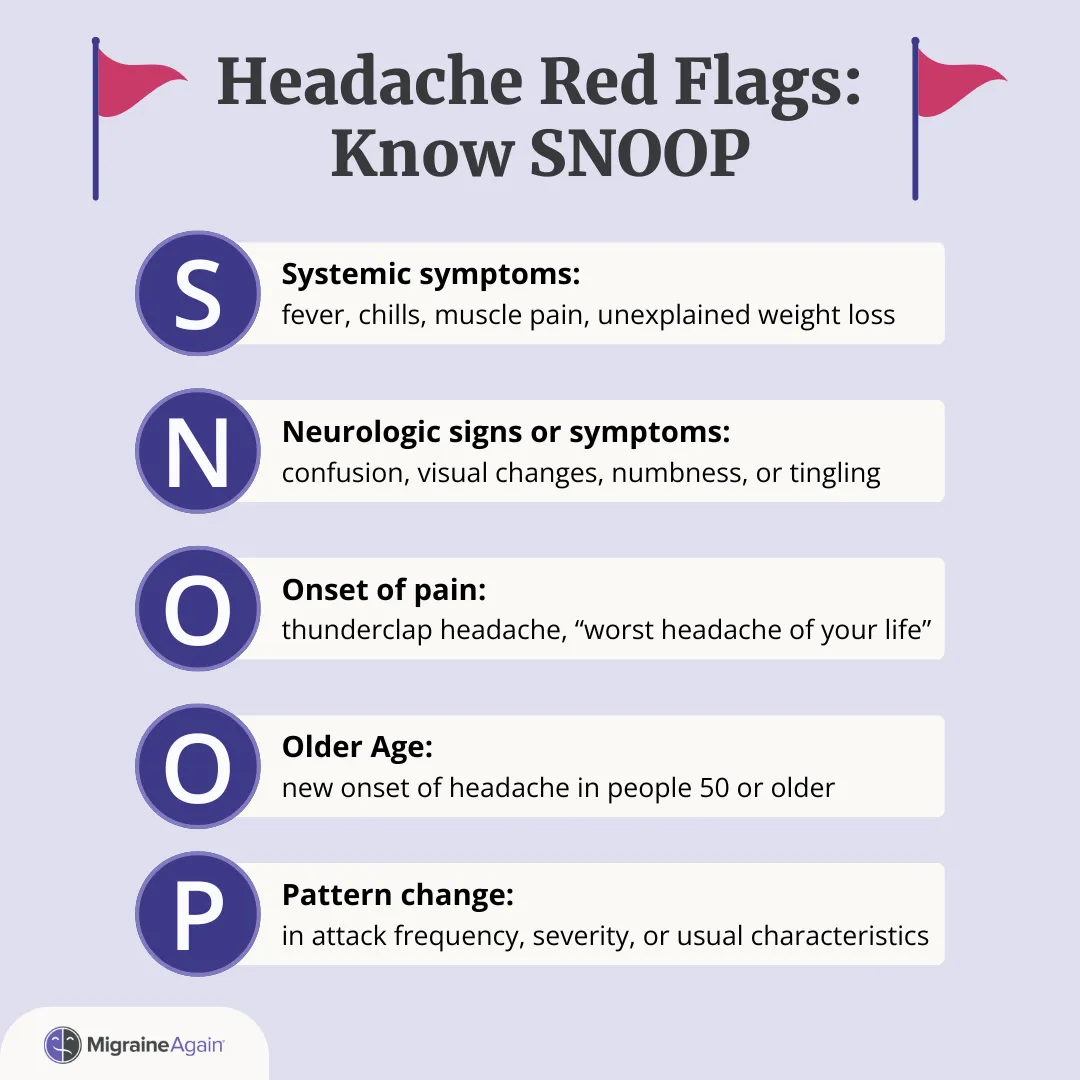
Seek medical care immediately if your symptoms get worse or you have new, troubling symptoms. “There are certainly red flags for infections and red flags for headaches. I wouldn’t say there are any specific red flags related to a headache attributed to UTI,” says Youssef. “Any red flags are worth bringing to medical attention — regardless of the presumed trigger.”
Final Thoughts
Urinary tract infections can trigger headaches or migraine attacks through inflammation associated with the body’s response to infections, dehydration, and sleep disruption.
If you suspect you have a UTI, the most important thing you should do is see your healthcare provider right away to get a prescription for an appropriate antibiotic. Headaches and migraine attacks associated with UTIs tend to go away when you treat the UTI. You may need your usual acute medications to treat the headache alongside the UTI.
If your headache worsens or you develop other severe symptoms, those can be signs the infection has spread and is potentially dangerous or life-threatening — seek medical care immediately.