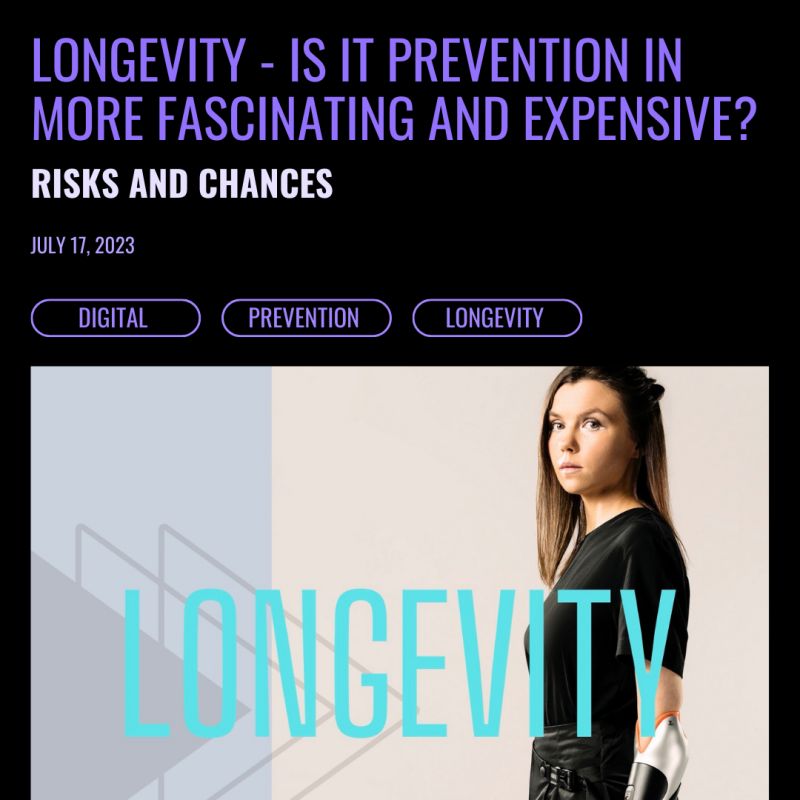
Longevity - extending human lifespan through science, technology, and lifestyle changes - is more than a fascination; it's a rapidly growing trend. The wealthy are investing heavily in longevity research and therapies, validating the adage that "health is wealth."
But what does this mean for prevention and healthcare systems? and where is the impact of digital solutions?
The focus on longevity encourages a shift from reactive treatments to proactive prevention and early detection. It can lead to therapies that prevent age-related diseases especially those like diabetes and heart disease, reducing strain on healthcare resources and improving individual quality of life.
Of course, this trend is not without its challenges. Fairness in distribution and potential socioeconomic impacts are real concerns that need addressing. But consider this hypothetical scenario: what if therapies developed as part of the longevity trend became standard preventive healthcare methods for all?
The power of longevity lies in its potential to transform our approach to healthcare, making disease prevention the rule, not the exception, and fostering longer, healthier lives for everyone. Here, digital solutions can make a significant impact. From wearables that monitor vital signs to AI algorithms that predict disease risk, technology is becoming our ally in health maintenance.
Sounds nearly perfect but what about the risks? Where are the challenges? What should we keep in mind regarding this trend?
Individuals such as Bryan Johnson are exploring various methods to improve health and longevity. The question we need to ask is, how can we leverage their groundbreaking discoveries and ensure they are universally accessible? Moreover, how can we strategize our approach to not just live longer, but spend a significant proportion of our lives in optimal health, a concept often referred to as 'healthspan'?
#Healthcare #Longevity #Prevention #Trends