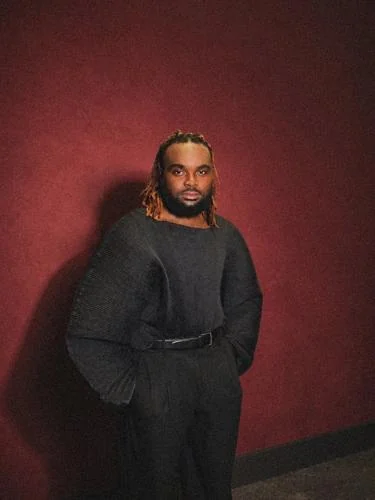
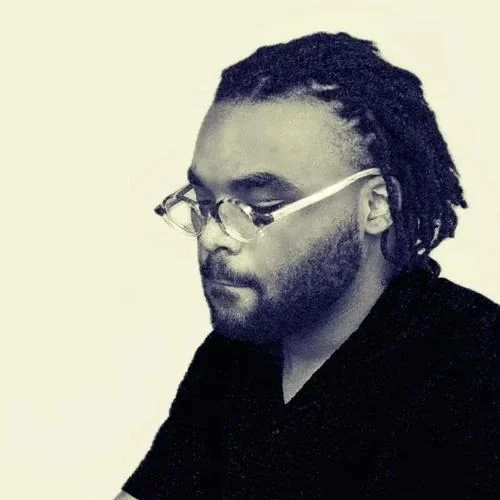
Tell people you make music, and they will finish the sentence for you. Rhyuhn has heard it his whole life.
“They’ll say, ‘Oh, so you make R&B and hip-hop music,’” the Philadelphia-born composer, pianist and producer said. “No, I actually make this rock music that I’m sure you could love.”
He makes that, too. And classical. And jazz.
Rhyuhn Green, who performs under his first name, played Mozart at Carnegie Hall at 12, has opened for Korn and Rob Zombie, and has been featured on NPR’s “Tiny Desk.” Now 20, he is deep into “Theory X,” a project he explained will fold opera, classical, jazz, hip-hop and R&B into one body of storytelling.
The central message is straightforward and reflects a truth that Black musicians have been expressing for a century: they have always been a part of every genre, the industry just hasn’t always admitted it.
“Philadelphia was such a unique place to grow up in and be around,” Rhyuhn stated. “There are so many incredible people, musicians and giants in the music industry that have come out of Philadelphia.”
His list runs from jazz piano great McCoy Tyner to the contemporary. “I’m inspired by even the contemporary greats Questlove (of The Roots),” he noted. “I love Questlove.”
Rhyuhn began his musical studies at age 2. He came up through the Philadelphia High School for the Creative and Performing Arts and the city’s Marian Anderson Young Artist Program, studied composition with William Dougherty, and worked in the jazz tradition with Ruth Naomi Floyd and Jamaaladeen Tacuma before heading to the Juilliard School as a Kovner Fellow.
“From a very young age, I started looking into how those different musicians can shape my music,” he said, “how I can be informed by their tradition but also make it uniquely my own.”
Rhyuhn’s most recent single, “Let the Light In,” began with a conversation and two words.
It was his first time meeting collaborator Declan Cashman. They sat down and talked about how each of them liked to work. Then Rhyuhn offered a starting point: “people” and “light.”
“I kind of went from there and shaped the vocal line and some of the words,” he said. “Then I just started to play something underneath it and found something that sounded good.”
The next day they were in the studio tracking vocals with a few more producers in the room. The record was built from the bottom up — first just Rhyuhn at the piano then chopped and reshaped in post-production.
“A lot of my practice is based around what I’m hearing in the record,” he said. “I like to change things and add something. Maybe I add a crescendo there. Maybe I add a decrescendo there. I really like to pay attention to how it sounds acoustically.”
The turning point came from an outside ear. Rhyuhn originally heard the song as a jazz record. One of his producers heard R&B. So Rhyuhn expanded the bass line, starting with an 808 and layering from there.
“I’m not usually a person who loves a good beat drop,” he said, “but that was a moment when I realized that it’s about hope. It’s about letting the light in. It’s about being kind to others.”
Listen for the arc. The song opens on what Rhyuhn calls “a very mysterious chord blend,” then gradually breaks open into something hopeful and joyous.
“I think that people in 2026, and in general, need hope now most,” he implies.
That same patience shapes how he works with other artists. Before he writes a note for someone, he wants to know who they are.
“I want to hear what they’ve done. I want to talk to them and get to know what they’re about first,” Rhyuhn said. This way, we can help each other communicate with the listener and get what we both want to hear.
Few people expect a young Black pianist from Philadelphia to name Rush among his favorites or to have shared bills with Korn and Rob Zombie. Rhyuhn finds that gap to be telling.
“Rock is one of those things that holds a special place in my heart,” he shared. “As Black people, we are the origins of rock. And rock has been, over the years, stripped from us and attributed to other people.”
He loves heavy metal and classic rock for the soul in it, and connecting with the Black artists who built the genre has been, in his words, “restorative.”
“I’m never associated with rock music, which is crazy,” he expressed, “because I started out with rock from a very, very young age.”
The same erasure follows him into the concert hall. Rhyuhn was 12 when he played Mozart at Carnegie Hall.
“Nobody ever looks at me and says, ‘Oh, this person played Mozart at Carnegie Hall at age 12,’” he said. “They always immediately jump to anything else but classical music.”
He knows the European roots of the form. He also knows the Black composers that the canon has kept in the footnotes.
“You look at musicians like Florence Price, the great African American composer. You look at William Grant Still. Many visionaries have made significant contributions to classical music, but their work often goes unnoticed due to their status as outsiders. And I’ve grappled with that a lot,” Rhyuhn said.
It is a lineage that runs straight through his hometown. Marian Anderson, the South Philadelphia contralto whose name is on the program that trained him, sang to 75,000 people at the Lincoln Memorial in 1939 after she was barred from Constitution Hall. Rhyuhn is carrying a version of that same fight onto the same stage.
He sees progress. “It’s gotten a little bit better,” he said. “I’ve seen more people playing at Carnegie Hall that are of color. A lot more younger people.”
Public school music programs have been cut across the country, and Rhyuhn has worked with students and parents long enough to see what that does. But he puts the first responsibility closer to the kitchen table.
“I believe it begins at home and at a young age,” he said. “It’s a hard task, but families need to start looking into other art forms and really just expanding what they think is possible.”
Too often, he said, parents steer children toward football or track because they don’t see music as a viable path.
“I see so many young students of color in Philadelphia, and they think it’s possible. They think it can’t happen to them, but it can,” Rhyuhn said. “If I can do it, they can do it. It is closer than many young people think.”
He is equally clear about the shortcut. A viral TikTok can make someone the next hit for a week, he said, but that is not a sustainable art form. “If you commit and expand your definition of legitimacy, you’ll find these things just as enjoyable and accessible.”
If “Let the Light In” was the track that defined him yesterday, Rhyuhn noted, the one that will define him is still coming.
“Theory X,” due in the spring, blends what he did on “Let the Light In” with his classical training, opera and everything in between. He points to Kendrick Lamar’s storytelling as a model, filtered through his rock and classical influences.
“I sincerely hope that the project creates an opportunity for others to see that things are not so binary,” Rhyuhn said. “It’s more than just making classical music, R&B music, or telling this story. “I want to tell an amalgamation of stories within just one record.”
His wish list is bigger than one album. He wants to put Kendrick Lamar and JAY-Z in a room with a full orchestra. He shared how he recently ran into singer SZA at a premiere and spoke with her about the same idea: getting artists back onstage and in the studio with live musicians, a practice he believes the industry has lost.
“I would love to see people working with orchestras,” he said, “and doing the things that they don’t expect us to do.”
Rhyuhn returned to Carnegie Hall, this time to premiere an original composition, on Tuesday. A tour is planned for next summer, with Philadelphia dates to be announced.
He wants the new music to do what “Let the Light In” set out to do, only bigger.
“I want people to understand each other,” he said, “and find solace in this new project.”