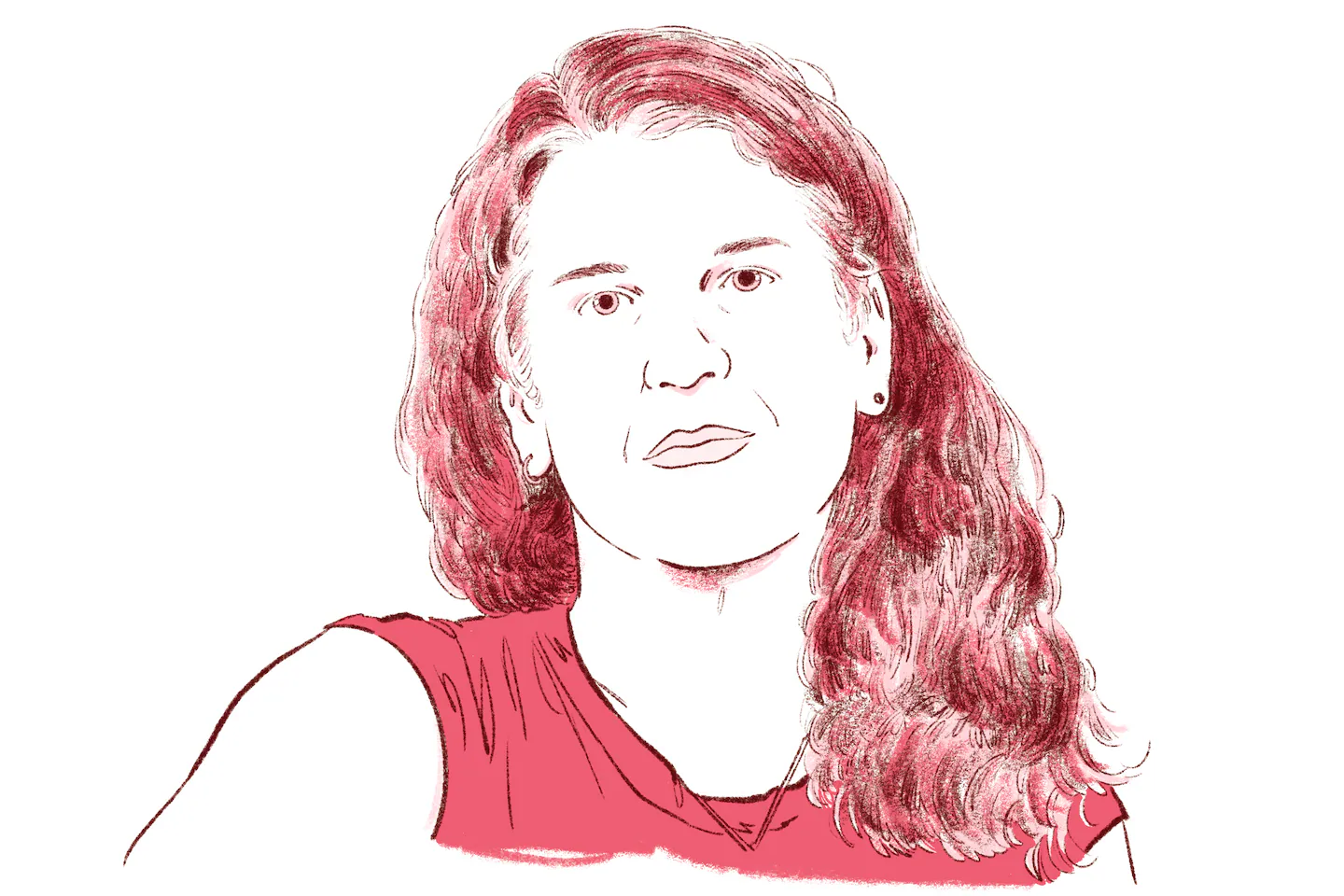
When Virginia Eubanks learned, via a disjointed and off-kilter email from her partner, J., that he had survived a violent physical attack, she wasn’t initially aware just how much her life was about to change. A marathon surgery to repair his battered face was only the first hurdle. Then came evidence of traumatic brain injury, escalating psychological fallout complicated by substance use, J.’s eventual diagnosis of PTSD, and seemingly endless struggles with insurance companies and other official sources of support.
As a journalist and scholar whose work often explores the bureaucratic state, Eubanks was now living the bleak scenario she’d often chronicled. Friends offered advice, all of it conflicting — “The choices were ride or die, like martyr yourself for love, or save yourself and leave him” — a binary Eubanks found unhelpful. Years into her caretaking journey, after being diagnosed with her own collateral PTSD, Eubanks took a class on kayak self-rescue. “And it didn’t dawn on me until I was driving home, like, ‘oh, I get what I’m doing!’” she says. There are a lot of ways to rescue someone, or yourself, she realized, and “there are transportable lessons from wildlife survival that I can use in caregiving.”
In “A Guide to Open Water Lifesaving” (Farrar, Straus and Giroux), Eubanks braids together her memoir of caregiving with a meditation on the techniques and philosophies she learned from lifeguards, forest rangers, and monks as she attempted to keep herself together while caring for her deeply loved, grievously wounded partner.
The book is Eubanks’s attempt to share what she’s learned, because if there’s one thing that’s abundantly true, she is hardly alone. According to the National Alliance for Caregiving and AARP, 59 million Americans are caring for adult loved ones, and this number will certainly rise as our population ages and society’s safety net frays. “I think it’s really important to be clear that care can be a beautiful part of the human experience,” Eubanks says. “But 56% of family caregivers feel like they didn’t have a choice in taking on the responsibility for care. And so there’s something happening.”
Writing about herself wasn’t in Eubanks’s comfort zone, but she says she persisted in part due to “that old Toni Morrison line, that if there’s a book in the world that you have to read and you can’t find it, then you must write it.” She hopes that readers will find the book a source of honest advice, hope, and heart, and that it can add to society’s awareness of the enormous burden on caregivers. “Perhaps, as caring kin, it is time to refuse the hero’s cape,” she writes. “Otherwise, the world will continue to rely on our heroism. The systems of support we all deserve will never be built.”
Virginia Eubanks will read at 7 p.m. Monday, August 31, at Harvard Book Store.
And a few more notes about books ...
Two important nonfiction titles that I think Globe readers will enjoy are coming September 1. One is “American Scoundrel” (Scribner), a new biography of Roy Cohn from Kai Bird and Susan Goldmark. The book’s subtitle — ”From Joseph McCarthy to Donald Trump” — neatly bookends the man’s professional journey, and as anyone who follows biography knows, Bird (along with Goldmark, his chief researcher and spouse) is among the best in the game. As we struggle to reckon with America’s current political ugliness, it seems to me that Cohn is an important strand of the DNA, worth understanding if we are to recover. And Wilbert L. Cooper’s “The Black Shield: An American Memoir of Family and Power” (Farrar, Straus and Giroux) blends the author’s deeply personal story as the child of Black police officers with his examination of crime, punishment, race, and policing in American history.
Kate Tuttle edits the Globe's Books section. You can reach her at kate.tuttle@globe.com