We urgently need your help. DAME reports the stories that need to be told, from perspectives that aren’t heard enough. In times of crisis it is even more critical that these voices are not overlooked, but COVID-19 has impacted our ability to keep publishing. Please support our mission by joining today to help us keep reporting.
When Leslie Jamison’s book of essays, The Empathy Exams, came out in 2014, it established her as one of the stars of a new wave of women writing nonfiction that felt urgently relevant. The essays blended personal writing and journalism; Jamison’s point of view was powerful and flexible, encompassing both an expansive humanity and a jeweler’s eye for the strange and unsettling. The title essay refers to one of Jamison’s graduate-school jobs, in which she tested medical students on their reactions to her simulated complaints.
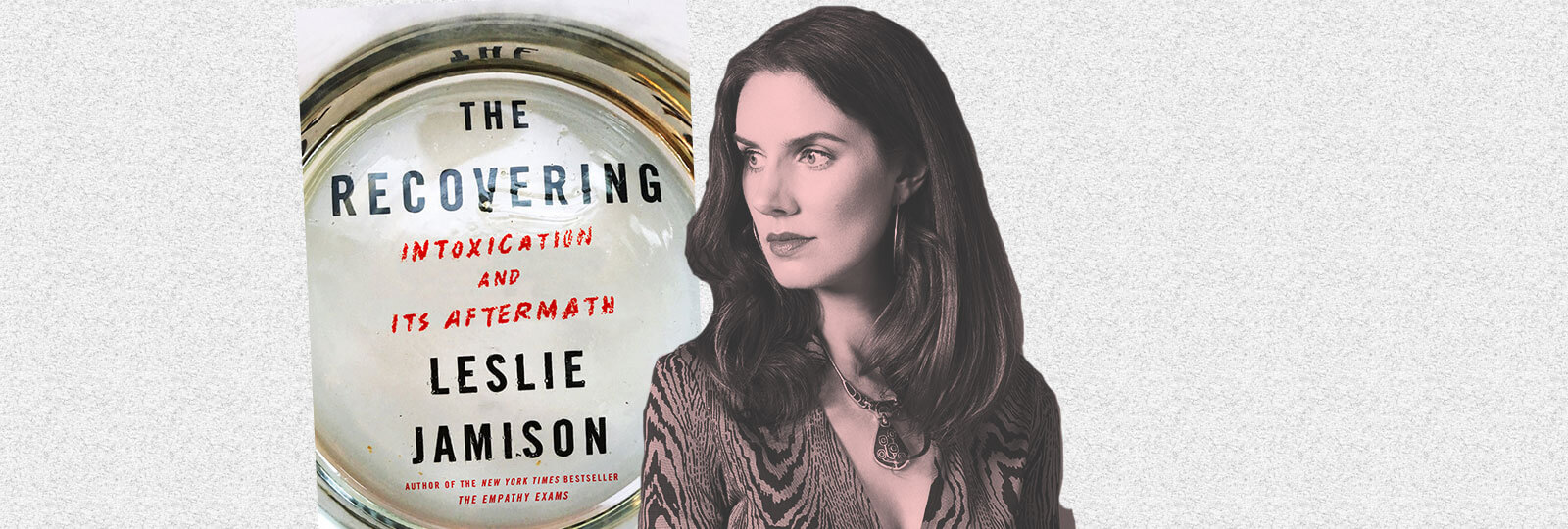
In her new book, the memoir The Recovering: Intoxication and Its Aftermath, Jamison writes about her alcoholism (as well as disordered eating and self-cutting), set against a backdrop of a largely successful academic and professional life: Harvard, Yale, the Iowa Writers Workshop. At more than 500 pages, it’s longer and more literary than the typical addiction memoir, although there are passages in it you could find in nearly any drunk’s tale, as when Jamison shares this memory: “A year after my first AA meeting, I found myself drunk in a bathroom stall in Mexicali, snorting coke off the flat top of the toilet-paper dispenser.”
And that’s partly the book’s point: There’s a sameness to the story of addiction, just as there’s a sameness to the struggle of being human. For a writer trained to value individuality as a necessary part of genius, it took the long slog of AA meetings, at which personal stories are valued not because they’re original, but because they’re not, for Jamison to begin recovering.
The Recovering is a deeply personal narrative—Jamison chronicles both the risky choices she made while drunk and the searing shame she felt afterward—but its range is far greater than mere memoir. Much like Andrew Solomon did in The Noonday Demon, his book about depression, Jamison portrays the context in which her own story takes place. She also draws on her doctoral dissertation, which looked at alcoholic writers and what happened to their work after they got sober (or failed to, in the cases of Elizabeth Bishop and Jean Rhys). The result is both an immersive story and a provocative meditation on addiction and recovery, and how they intersect with ideas about creativity. Above all, it’s a book about learning to tell a different kind of story, one that embraces the humility of sobriety.
Every contribution we get from readers like you allows us to keep reporting and keeps our content free and accessible for everyone. Our reporting digs deep into the important policies, issues, and cultural trends that matter most in these unprecedented times. Join now to help fund this important work.
Clad in jeans and flannel, baby strapped to her chest, Jamison is as formidably intelligent in person as on the page, but she’s also down-to-earth. We talked in the Brooklyn apartment she shares with her husband, step-daughter, and newborn daughter.
You seem so sane and mentally healthy, which is not always what I might have gathered from reading your work. And especially in this book, there’s a sense that you’ve worked on yourself, and that you were really a mess. Do you still sometimes think of yourself as a mess?
Yes! I think, even in times when I really felt like a mess, one of my responses to feeling like a mess is to try to exert control over whatever I can. So, externally my life might not have looked as messy as it felt inside. One of the things that one of my sponsors in recovery said to me was that I would get in my own way, because I only felt comfortable articulating my emotional life once I felt like I could say it in some kind of cogent way.
You mention that moment in the book, the idea that you couldn’t just spew it out, you had to make it a clean enough story to tell.
I think that’s always meant that I presented as more together than I felt, because the narrative that I’m providing about my internal life is more polished than what the internal life feels like. So I think there’s a little bit of the messiness inside, that looks like something else once it makes its way into the world.
I always think that I live in a pretty different way than I did a decade ago. I think that my life is more about showing up for daily living now than it was then. I don’t have as much time to be so interior, or having a nonstop dialogue with my own feelings. Not that I never had things to do. I’ve always had jobs, usually more than one job, but just having an emotional life now that includes a lot of caregiving, it doesn’t leave as much room for the state of falling apart as there maybe used to be room for.
But some of the people you talk about meeting in recovery were in caregiving situations and still were really active, fucked-up addicts, so caregiving doesn’t save you from that. But I’m interested in the difference between interiority and then facing out. Is that something you thought about before you were in recovery?
One quick thought on the caregiving: I think you’re absolutely right, it doesn’t save you from anything. And certainly there are many people, and many people who I think are fantastic and very loving parents, who were also actively using for parts of their kids’ lives. And I know that in some way they got through those years … I do think sometimes, God, what would it be like if I were still drinking now? It’s kind of impossible for me to fathom. I have no doubt that I would have made it work, but I would have resented every moment of it. With my stepdaughter, I would have resented every bedtime that went late, because I would have been thinking, she goes to bed at 9, and after that I can really let it go. Not that there aren’t non-alcoholic versions of that! But just for me, I think the presence of the child would have been this obstacle standing between me and surrender. So I think about that a lot, this alternate world in which I was trying to live that life and this one. And it’s mind-boggling.
In terms of interior and exterior, I think it’s something that I thought about my whole life, but there was a certain framework or language for it in recovery that really resonated. That logic can be operative even if you’re not explicitly narrating it as such, like, why does friendship mean so much to me? A friend can engage with your life, but a friend can also save you from yourself, by being like, here’s my problem, and then you’re in their landscape for awhile. That was always like a form of salvation in my life, even when it was just happening inside of relationships. I think my writing has also been interested in that toggling between exteriority and interiority.
Yes! Your work in this book and in Empathy Exams spans personal essay and reporting, and then you also have a novel. As a student of writing and as a writer, do you ever assign like different mind states to the different forms that you work in?
The pieces in Empathy Exams, because I wrote them between 2006 and 2012, straddle my own recovery. I think recovery is one substructure of that book that’s never named. Part of it is that I feel like recovery really informed my relationship to reporting, and made me both more interested in formalizing and structuring the way that I was going to engage with other people’s lives as part of my work, and also helped me feel more comfortable doing that. At this point in my life I don’t identify as a shy person, but I did for many, many years. To commune with another person, hold eye contact with another person—all of those things were major character struggles for me! And recovery, among other things, you just spend a lot of time holding other people’s words. I think that did become both part of my desire for my writing life, and also a kind of strengthened capacity in my writing life.
But also, on a more philosophical level, it’s interesting to me the way some readers and writers experience a real cognitive dissonance around writing that tries to hold both personal narrative and other lives. It’s almost like trying to do both at once can make the personal feel like this invasive plant or something, like it’s taking up too much room or invading where it’s not supposed to be. Almost in this way where it’s like writing that has a first-person eye and other lives in it can seem more narcissistic or self-absorbed than just a straight personal essay or memoir, because somehow it’s like colonizing somebody else’s life. And that’s an interesting thing to me, because I can see the logic of it, but also part of what I loved about recovery is that it proposed a model of a kind of space where there wasn’t an antagonistic relationship between telling your own story and genuinely engaging with other people’s stories. There was room for a bunch of different “I”s in this room and those “I”s telling their respective stories isn’t about self-absorption—it’s an offering to the room, and there’s not that sense of finite real estate.
It’s also not a competition, like the one you describe in Iowa, with people trying to impress each other, to prove how charming they are, or what a great storyteller. The kind of stories that get told, and the way they get told, in the meetings that you write about attending, seem to work in a more reciprocal way: Everybody else is listening to your story as a way of holding you. And yet, you refer more than once to the telling as a kind of service. I’m curious about the parallels between meetings and writing workshops.
Especially nonfiction writing workshops! I wasn’t in a lot of nonfiction writing workshops as a student, but now I teach only nonfiction workshops. I think that part of the reason that my workshops feel different from other people’s workshops has to do with my experience in meetings. Not that I get the two things confused—I don’t think of a workshop as primarily a therapeutic space, or a recovery space—but I’ve seen what can happen when you make a space feel safe. That value of safety, and making people feel like their stories can come into a room and be held with compassion and grace, is absolutely something I’ve seen in meetings that I want to make happen in my classroom as a teacher. And so I do think that there are real resonances there.
I think there are just some basic human truths—like, how exposed you are when you share some part of your life, and what that means for what productive feedback would look like. All that said, I don’t essentially think that the metrics of literary value apply in a recovery meeting, nor do I think that the complete permissiveness I would bring to a recovery meting is the most useful way to come into a workshop. I think that if you’re writing stories for a public audience, as literary works, there are evaluative metrics that make sense. But there’s definitely a conversation between those two spaces for me.
At one point in the book, you mention one of the recovering writers you cover writing down things he overheard in AA meetings. Not that you would betray the trust of a meeting or replay its stories. But is there something about meetings that feeds you as a writer?
Yes! One of the ways it feeds my writing is that reminder that—not to sound cheesy, but that there’s a story in everyone, or really a thousand stories in everyone. There’s kind of a perpetual critique of personal writing that can follow the line of “too many people think their stories are worth telling,” and I guess implied in that is that there are only a limited number of people with stories worth telling—
And the rest of you really need to shut up!
Exactly! And I deeply disagree. It’s not like any story that ever gets told is equally good. But within any experience there are infinitudes, and you go to a meeting and you see that process enacted. You see 30 strangers walk into a room and any one of those strangers is someone you could have seen on the street or in the grocery store, and you would have no idea what was going on inside of them. And then you hear them speak, and you get some glimpse of what’s going on inside of them. And I feel like watching that happen over and over again is just this reminder that feeds both the personal writer in me and the reporter in me. It feeds the part of me that writes about my own life because it’s like, you’re not saying there’s anything special about your life when you write about it, you’re saying you are like any of these people who have something to say, and you’re trying to figure out how to say it. And it feels the reportorial self, because it’s like, right, any subject that I come across, if I’m doing my job right, I can try to figure out where the stories are in them, because I know that there are stories in them.
I’m curious about the idea, especially among book critics, that a memoir needs to have really high stakes, like that personal writing isn’t worth reading unless the stories are really explosive. There was a piece about you recently in New York magazine called “Where’s the Train Wreck?”—what do you think about that criticism?
I think that question, Where’s the train wreck?, is one that the book itself wants to wrestle with. Not only in the context of the literary marketplace, where I provide this reading of James Frey that isn’t meant to excuse him, but more of a projection of my own sympathetic impulses onto him, particularly around that question of wanting your story to be bigger. It gets back to that disconnect between the internal mess and the external composure: Sometimes I wanted the external mess to look more like a one-to-one correspondence with what it felt like inside. I think that was one of the ways I made sense of my eating disorder, as an attempt to make concrete and physical and undeniable what just felt nebulous, a set of internal feelings. And certainly it was a self-consciousness that I brought to meeting. I assumed that I would be judged at meetings. I was so struck by the fact that there was very little sense of “you don’t belong here, you haven’t lost enough,” and more a real desire to see the ways in which certain kinds of pain and longing and craving could be resonant across very different lives.
A lot of the book draws from the work you did on your dissertation, all of these threads following the writers in recovery. Did you approach their stories with some terror that that could be you?
Yes. But it felt really important to have recovery stories not just that weren’t successful in terms of people struggling to stay sober, but also where somebody might stay sober but that didn’t mean that everything got better. One of the payoffs for the structural mind-fuck and difficulty of having so many different threads in this book was the idea that it was a structural solution to the problem of imposing a kind of single narrative onto recovery, because essentially I’d given myself 15 different stories that were going to play out rather than just one. And that’s just a way to illustrate that there are a thousand ways this can go. It felt important to stay true to that by showing some of the harder ways that it can go, too. There’s something that’s always frightening about seeing what depression can do, and that the same kind of mental tumult that took you to substances can kind of creep up and destroy you like 15 years after you thought you were done with them. I think that there’s something also kind of anchoring about that fear. Recovery logic asks you not to think of your story as a closed story. It’s still ongoing. Alcoholism is not behind you.
That’s why people always say they’re a recovering alcoholic, always recovering, never recovered.
Yeah, and it’s why this book is called that, in part. There’s something tonic and useful about seeing myself as being in the same woods as these people, even if I don’t feel in the midst of a depression now. Not to conflate our lives, but to sort of feel a certain amount of humility around not knowing exactly where things will go, and not assuming all of the hard parts are done. That humility does hold some fear in it, but there’s something helpful and grounding in it, too.
We urgently need your help!
Covid-19 has dramatically impacted our ability to keep publishing. DAME is 100% reader funded and without additional support, we can’t keep publishing. Become a member at DAME today to help us continue reporting and shining a light on the stories that need to be told, from perspectives that aren’t heard enough. Every dollar we receive from readers goes directly into funding our journalism. Please become a member today!
(If you liked this article and just want to make a one-time donation, you can do that here)

We urgently need your help. DAME reports the stories that need to be told, from perspectives that aren’t heard enough. In times of crisis it is even more critical that these voices are not overlooked, but COVID-19 has impacted our ability to keep publishing. Please support our mission by joining today to help us keep reporting.
Deborah Hill is a white mother of two Black children, now 14 and 12, who she and her husband adopted when they were babies. Her daughter, Lizelle, is South African and Levi, was born in the U.S. to Haitian and Kenyan birth parents. When Hill read reports about how Jennifer and Sarah Hart had beaten and starved their six adopted Black kids and then murdered them in a Thelma-and-Louise–style flight off a scenic cliff in California, she was horrified. And then she started hearing the negative comments from Black people about transracial adoptions.
“Naturally I find myself wanting to defend my life and choice,” Hill says. But she also has empathy for all the sentiments and anger expressed by Black folks. “There’s pain, anger, and historical trauma in the dissent. I see it, I understand their feelings about it being wrong. And yet I live it.”
Jordan Lindvall, an adoptive mother of Black twin 2-year-old sons had a similar response. She didn’t initially assume that the Hart case had anything to do with race.
“I saw [the Hart parents] as predators and monsters,” says Lindvall. “While I know how problematic it is, of course my heart cries ‘Not all white women’ when suspicion is raised about white women raising Black children. I don’t know how to appropriately negotiate validating the pain of the Black community and living my truth as a white woman with two Black sons whom I love, not in spite of their race, but for who they fully are.”
Every contribution we get from readers like you allows us to keep reporting and keeps our content free and accessible for everyone. Our reporting digs deep into the important policies, issues, and cultural trends that matter most in these unprecedented times. Join now to help fund this important work.
Hill and Lindvall were not alone in their feelings. I interviewed nearly a dozen white adoptive mothers of Black children who say they felt immense grief knowing that fellow parents could do such horrific things to children. And at the same time, they felt fear that other people would think they were capable of doing the same thing. These mothers wanted to scream: “I would never do that to my child! I’m not like Sarah and Jennifer Hart.”
Despite the overwhelming desire to distance themselves from abusive parents like the Harts, who would appear to have had a God complex and treated their kids not like family but like chattel, these mothers were able to move away from their defensive feelings and having the uncomfortable conversations about the role that race and white saviorism plays in transracial adoptions—and reckoning with their biases and their white privilege.
Bridget Adams-Brewer from Toledo, Ohio, whose adopted Black children are 2 and 4 says, “I was particularly upset to hear that these women hurt their adopted children, since the majority of adoptive parents travel a long and rough road to have the privilege of adopting.”
When she and her husband began the adoption process, they learned there were more children of color than white children waiting for permanent homes. They had always been open to the idea of adopting transracially because they live in a diverse neighborhood and have relatives from diverse backgrounds.
“I know it’s not ideal for Black children to be adopted by white parents,” says Adams-Brewer. “My kids need role models and racial mirrors more than Black children being raised by Black parents. There is a lot of extra work for multiracial families to do, and to deny or downplay that is dangerous,” she says.
For Adams-Brewer and her family, “extra work” means learning the basics on how to care for her children’s hair and skin and “doing everything we can to give our kids a better idea of who they are. We enjoy all of these things, so I hesitate to call it ‘work,’” says Adams-Brewer. “But we have relationships with birth families, we have friends of different races and are always looking to diversify our lives more. We make sure our kids’ books and media represent them. We attend cultural events, we join groups and organizations we are able to, we follow Black news and entertainment.”
Sarah Ryan, who resides in Chicago with her 11-year-old adopted Black daughter, says she was sure from the start that the Harts had intentionally driven their children off the cliff. “When I see white parents who appear to be serial adopters of kids of color homeschool and live in remote areas my antennae go up.”
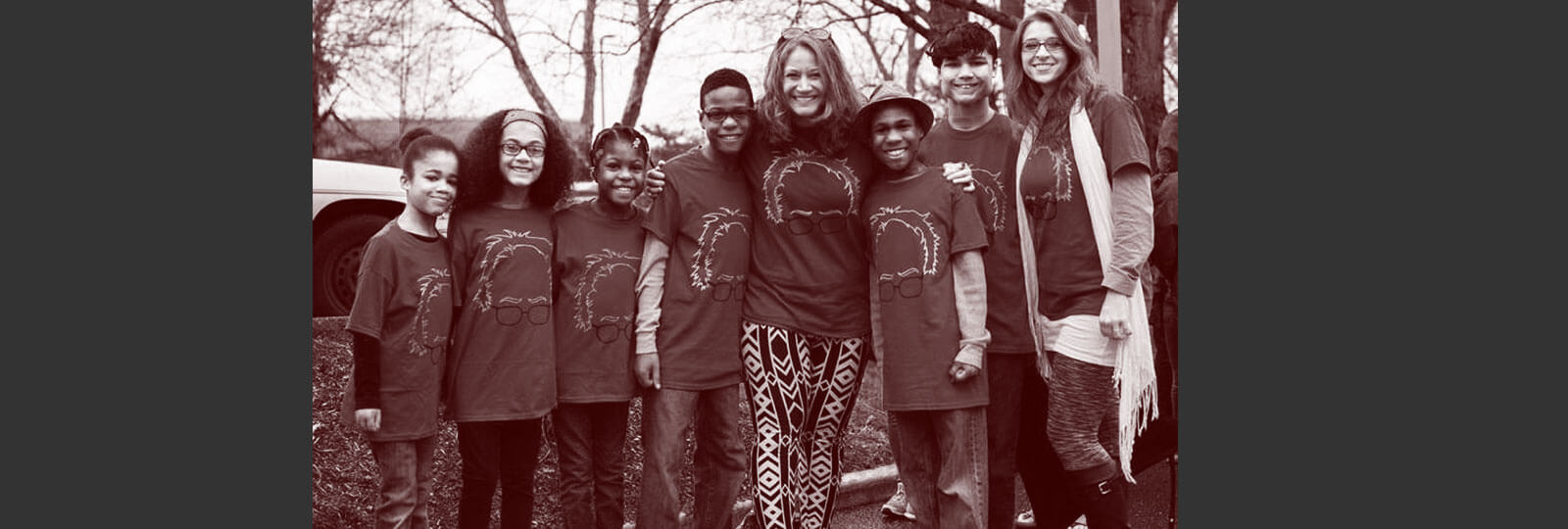
Unlike some press reports that seemed to give the Hart couple the benefit of the doubt, there were white adoptive mothers who recognized red flags. They didn’t like the way the couple bandied their children about, had them dressing in T-shirts that read “free hugs,” and had them photographed hugging abusive cops. They saw the couple’s virtue signaling not as acts of love, but of narcissism.
Some white mothers told me that there’s an assumption made when white families adopt Black children that they’re offering them something better, opportunities that the children ordinarily wouldn’t have, or that white people are inherently better parents. One white adoptive mother said to me that so many white people said to her when she and her wife adopted their Black son, “Oh, your baby is so lucky,” a fact that infuriated them.
Hill remembers that when she and her husband first decided to adopt they received packets of information from various agencies. “There was one that I immediately threw out because their logo was an image of the map of Africa with an eye and tears positioned over the map. I knew their attitude had to be one of ‘let’s save the African babies’ and it turned me off,” she says.
For Ryan, the most glaring examples of white saviors are Evangelical Christians who began adopting Black children in increasing numbers over the past decade. “These parents literally spoke of rescuing children from the bowels of Africa and saving them by bringing them into their homes. They feel that God has called upon them to adopt and they must do that in order to be his true followers. You can find these parents in every adoption Facebook group and their language describing their child is that of someone who just found a kitten being chased by a pack of wolves. In their mind, they are the hero of the story and the child should be grateful for the rest of their lives.”
Sarah Holt, is a lesbian adoptive mother of a 5-year-old daughter from Longmont, Colorado, and a firm supporter of transracial adoption. She’s been disturbed by the media coverage of the Hart tragedy. “I think the conversations and media coverage are lacking in depth and understanding of the issues here. It isn’t just race, it isn’t just the system, it isn’t just about the tropes, it isn’t just about white fragility, or Black suspicion. It is all that and more.”
At least some white parents seem to wear their transracial adoption as a status symbol, kind of like saying, “I’m above racism because I adopted Black children.” Of course not all examples of white saviorism have tragic outcomes. But it still plays a role in transracial adoption and we can’t ignore that these adoptions are a humanitarian necessity because this society has structured Black people out of our own adoption systems.
The presumption is that more Black people need to become foster and adoptive parents. What is rarely acknowledged is that Black people do foster and adopt Black children. We’ve been taking in and loving other people’s children since slavery. People fail to recognize and respect that Black people have long benefited from informal foster care via family, friends, church members and the like—set up specifically to keep Black children out of the racist system and at risk for white abuse. People on both sides of the color line often believe that Black children in foster care are there because their families abuse or neglect them, leaving them in need of rescue from white families. But the majority of Black children who end up in foster care are not victims of physical or sexual abuse, but of neglect due to poverty or drug abuse, or having an incarcerated parent. Poor Black children are more susceptible to state intrusion because they are frequently forced to interact with government agencies—e.g., if a family is receiving public assistance, they must allow state social workers to enter the home; families are more likely to visit public clinics and E.R.s instead of private doctors, if a parent is incarcerated, that parent risks having their parental rights terminated—so they’re more exposed to law enforcement and other agencies, which results in Black children being placed in the foster-care system more frequently. And because cost and long waiting times are a barrier, today’s formalized system is set up to make adopting damn near impossible, but it happens. On any given day, there are close to a half-million children in the foster care system. Only around 100,000 of these kids have a case plan for adoption, while the others are slated for reunification, emancipation, institutionalization, long-term foster care, or incarceration. Adoptive parents tend to want kids who uare under 10, with one sibling at the most, and with no or only minor special needs, among the 100,000 foster children available for adoption.
We cannot separate the dynamics of the Hart family tragedy from the realities of racism in this country. While transracial adoption always comes with certain considerations and risks, it’s not realistic to say that it doesn’t have the potential for value. White parents need to be vetted, and those who qualify and are adopting for the right reasons must do the work of learning cultural humility so that their child or children have the best chance of growing up healthy.
Sara Holt and other white mothers say they are committed to doing the extra work. “I have chosen to surround myself with people who understand or at least acknowledge the issues my child will face as she grows up in America. We do our best to constantly educate ourselves and make sure that my daughter is surrounded by people that, in her words, ‘look like her.’ Black people have a right to be suspicious. White people haven’t really done much to prove our trustworthiness historically or in the present.”
Adopting parents must acknowledge the truth of their whiteness and the complex realities of their child’s blackness, in the context of the ways these intertwine in our society. There are no easy answers and no shortcuts to solutions. But we must start by recognizing Black children as fully human and believing that their lives matter. There is no other way to save them.
“There is a way through this. I’m just not sure where it is,” Hill says. “I am so connected and in love with my children and I hope I am giving them the tools and skills to be able to discern how it is to be Black and proud of being Black in the world, and how to understand that not only are we together because of love … we are together because of imbalances in the world and the root evil of institutional racism which creates poverty and struggle.”
We urgently need your help!
Covid-19 has dramatically impacted our ability to keep publishing. DAME is 100% reader funded and without additional support, we can’t keep publishing. Become a member at DAME today to help us continue reporting and shining a light on the stories that need to be told, from perspectives that aren’t heard enough. Every dollar we receive from readers goes directly into funding our journalism. Please become a member today!
(If you liked this article and just want to make a one-time donation, you can do that here)
I’ll never forget the first time I saw a vagina—and it wasn’t my own.
I was about 10 or 11 years old, and I was hunting for buried treasure in my parents’ closet. This space was known to contain stashed-away, full-sugar candies (forbidden to me and my siblings, but I knew Dad had a sweet tooth), hidden Christmas and birthday presents, and loose change (it wasn’t stealing if I found it on the floor, I’d reasoned with my sneaky self). But this discovery—the vagina—came from a book.
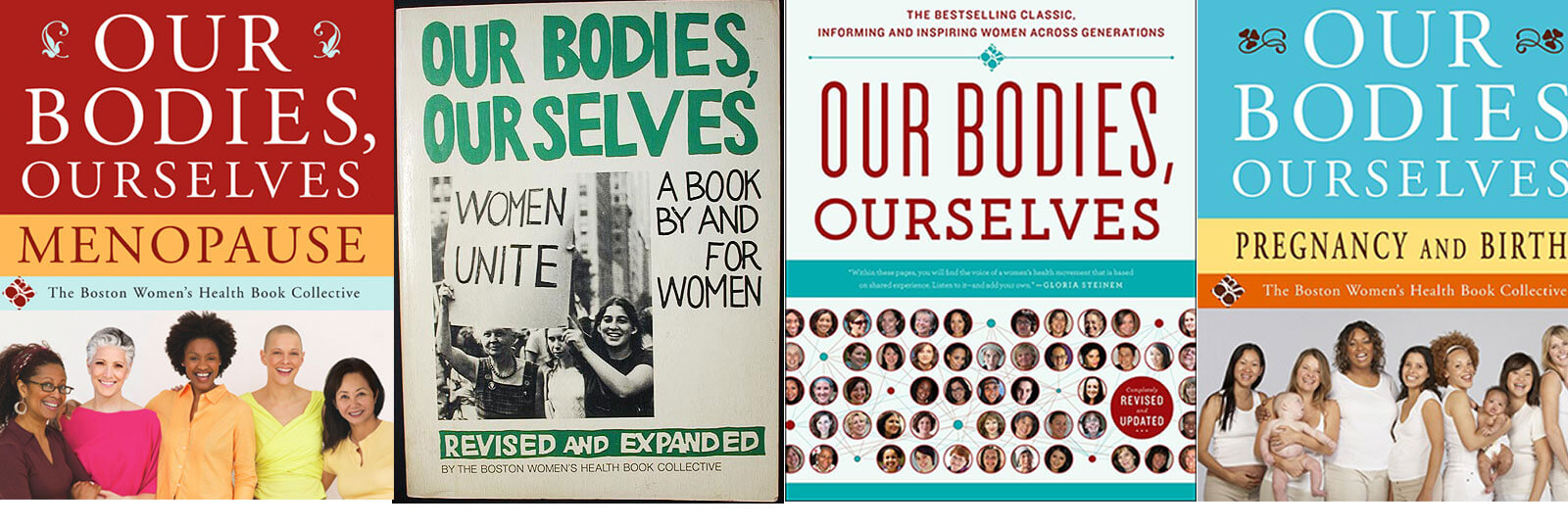
Tucked away on a hidden shelf behind my mother’s expansive collection of long, flowery dresses were two books that stopped me cold. The first, The Joy of Sex, made me blush. Oh my gaawd, my preteen mind thought, grossss! The cartoonish illustrations inside of men and women contorted in weird positions didn’t change my opinion much. After two flipped pages, I rolled my eyes and put it down. But the other book piqued my curiosity: Our Bodies, Ourselves. I opened it to a random page and there it was, a black-and-white drawing of a vagina, with folds and flaps, layers and depths I didn’t even know existed. Wait, I have one of these? I thought. And it’s on the inside? I was dumbfounded. I wish I hadn’t been.
Teaching children about sex and sexuality has always been a challenge, even for the most sexually liberal parents. My mother taught my sister and me about menstruation, consent, and condoms (which at the time I thought made great water balloons). But we hadn’t yet discussed the inner workings of women’s reproductive systems, or even reproduction itself. And this wasn’t entirely her fault. By the late 1980s, there were few resources for comprehensive, science-based sexual education for adults, let alone children. Our Bodies, Ourselves (OBOS) changed that. It served as a resource for adults to learn the language of sex and sexuality, and ideally, they’d pass it along to their children. But if they didn’t, we were going to find it anyway.
Every contribution we get from readers like you allows us to keep reporting and keeps our content free and accessible for everyone. Our reporting digs deep into the important policies, issues, and cultural trends that matter most in these unprecedented times. Join now to help fund this important work.
Whisper networks and sneaking around, spying on our parents’ most secret things, is how kids find out about everything. By the time I hit junior high school, all of my friends had found their parents’ stash of sex books—from Our Bodies, Ourselves and The Joy of Sex to Everything You Wanted to Know About Sex and The Kama Sutra—not to mention their immense stashes of VHS porn tapes and Playboy magazines. Before these off-limits discoveries, all we had were Judy Blume and V.C. Andrews books, which taught us about menstruation and masturbation, and gave us our first soft-core introductions to sex narratives. These books were passed around from big sisters and cousins and aunts to young tweens, hidden in backpacks and discussed after school, whispered about on three-way phone calls, read and re-read until the pages wore thin. Girls were obsessed with these books because they were about the only window into sexuality that we had.
Our Bodies, Ourselves (OBOS) turned modern sexual education on its head. And after 48 years and nine editions, it will cease publication. This news, announced last week as a consequence of the small nonprofit that publishes the updates running out of money, is terrible news for sexual literacy and public health. OBOS was a revelation in practical information. The idea for the manual, which covers everything from reproductive anatomy and intercourse to social influences on sexuality and “enthusiastic consent,” sprang from a women’s liberation meeting at Emmanuel College in Boston in 1969. During the conference, a panel of doctors listened with rapt attention as the women in attendance shared their stories and questions about sex and sexuality. The doctors, all of whom were women, formed a research alliance that led to the publication of a 193-page, stapled-together pamphlet entitled, “Women and Their Bodies.” It received immediate attention—and backlash—for its frank information about women’s anatomy, the broad spectrum of sexuality, and abortion, which was illegal at the time.
A year later, the name was changed to “Our Bodies, Ourselves” to emphasize choice and women’s autonomy, and Simon & Schuster published the first commercial edition in 1973, the same year Roe v. Wade made abortion a constitutional right.
Many parents in the 1970s and 1980s had at least the benefit of participating in the sexual revolution. Central to the pursuit of gender equality (or, let’s face it, at that point merely visibility) was liberating women from the chaste constraints of sex—typically only within marriage to men—that had been previously prescribed for them. Humans, of course, have always experimented with sexuality in ways that bucked the status quo: having sex with multiple partners, same-sex partners, and experimenting with sexual pleasure. Yet sex has consistently been talked about, and depicted in ways that stigmatizes it as taboo, rather than an essential function of the human experience. Even the most “liberated” parents in the 1970s—also credited as the “Golden Age of Porn”—still couldn’t bring themselves to have practical conversations about sex with their children. And worse, they had few places to turn for help.
While biology textbooks of the 1970s were slowly beginning to include more information about sexual anatomy—such as the fact that women have reproductive organs at all—and the invention of the birth control pill forced conversations about contraception, a culture of silence and shame around sex and sexuality persisted. The federal government was slow to provide funding for sex education, leaving it up to states to decide. And when the HIV/AIDS crisis emerged in the U.S. in the early 1980s and then quickly became a pandemic, the Reagan administration’s answer was to funnel taxpayer money almost exclusively into abstinence-only education. By the end of the George W. Bush administration, Congress had spent $1.5 billion on abstinence-only-until-marriage school programs. Today, only 23 states and the District of Columbia mandate some form of sex education in schools; of that number, only 18 require that contraception information be provided. Meanwhile, 37 states require that abstinence be part of the curriculum. The Trump administration is seeking to roll back the clock 50 years or so and focus primarily on abstinence-only education (not to mention reversing the Obamacare birth control mandate, and giving states the right to defund women’s reproductive health clinics).
The message to children in abstinence-only education—or when sex education is deliberately made unavailable—is clear: Sex is bad, your body is gross, and we don’t want to talk about it!
Our Bodies, Ourselves calls bullshit on this approach, which is why we need resources like it now more than ever. Each edition of OBOS, including its final one published in 2011, opens with a direct address to women and girls: Get to know your body! The first chapter includes practical information about what female sexual reproductive organs are, how they function, and the variation in their appearance. The book encourages readers to examine their genitals with a hand mirror, which every girl on the planet should be encouraged to do considering about half of adult-aged women don’t know the difference between their vulva and vagina. OBOS also delves into the mechanics of sexual arousal—reiterating repeatedly that masturbation and orgasms are not only natural but necessary for good health. The book spells out the different types of menstrual cycles and their side effects—something tampon ads have been getting wrong forever—and how, exactly, reproduction occurs.
Adults reading this lineup of facts today may not find anything revolutionary. But ask any fourth-grader in America where babies come from and you’ll likely be met with giggles, blushing, and complete ignorance. And that’s damaging to them, and to any hope of shifting the larger cultural narrative on sex and sexuality. The American Academy of Pediatrics recommends introducing fact-based sex education to children as young as 6, and according to Deborah Roffman, a teacher and author of Talk to Me First: Everything You Need to Know to Become Your Kids’ ‘Go-To’ Person About Sex, “If we’re not deliberately reaching out to kids by third grade, almost everything they learn after that is going to be remedial.”
America by and large still doesn’t talk to its young people about sex, and this silence and shame has been proven to contribute to higher rates of teen pregnancy, sexually transmitted diseases, and sexual violence, among other health risks. When countries take a practical, shame-free approach to sex-ed—like most countries in Europe, particularly The Netherlands, where sex-ed begins in kindergarten—the age of sexual activity goes up, unplanned pregnancies decrease, and young people have better overall health.
This transparency about anatomy and sexuality remains a revolutionary concept in America. There’s plenty of information these days—look no further than the Internet—but it’s nearly impossible for a child, a teenager, or even a young adult sometimes, to detect which information is accurate and science-based, and which is presented to serve an agenda. Much like Crisis Pregnancy Centers are deliberately packaged to confuse women seeking abortion services to visit their religious-backed, anti-choice clinics instead, abstinence-only rhetoric is couched in “sex-ed” speak online, in the media, and in our schools.
The messaging matters. Look at how the narrative shift during the American HIV/AIDS epidemic in the 1980s changed not only the stigma of the disease but medical research and the life expectancy of millions of people. When it became irrefutable that HIV/AIDS affected men, women, children, even the unborn, it went from being regarded by the American public “that gay disease” which was largely ignored, to a global crisis that demanded—and finally received—research dollars to study it, leading to medications that drastically extended and improved, and in many cases, saved people’s lives. But most importantly, public consciousness shifted. Safe sex became a topic on everyone’s tongue—from politicians to pop stars. Accurate, researched, true information is also the only thing that led scientists to discover the connection between Human Papillomavirus (HPV), the most common viral infection of the reproductive tract, and cervical cancer, which regularly claimed the lives of 270,000 women worldwide. But since the HPV vaccine was developed in 2006, infection rates have dropped by 90 percent.
What does all of this have to do with a book like Our Bodies, Ourselves? The stigmatizing of sex and sexuality—and women’s sexuality in particular—sustains global health crises, and accurate information is the only thing that can stop it. And given the noise of the digital- and social-media world in which we live, where those crying “fake news” are actually the perpetrators of untruths, young people need a resource removed from all of this. There are countless examples of how popular culture has let us down as a true reflection of the human condition. Female action heroes are celebrated as liberated soldiers crushing the patriarchy of the superhero genre, but there has yet to be one who doesn’t embody a glorified example of feminine sexuality, designed for the male gaze. Seemingly progressive sitcoms such as Modern Family contain jokes about men not understanding what a fallopian tube is—LOL, women’s bodies are so weird! Evocative music artists such as Beyoncé, Cardi B and Janelle Monáe receive critical acclaim for their intersectional feminist messaging in their music and videos, but inevitably are judged by the ways in which they use their female bodies.
Since the first edition of Our Bodies Ourselves, we have seen abortion and birth control legalized, only to witness access to each threatened more every single day. Members of the LGBTQ community have been given space to tell their stories and demystify much of the stigma surrounding non-cisgender heterosexual identity. Yet we have a Vice-President who preaches conversion therapy, and a president who does the bidding of homophobic conservative lobbyists by citing “religious liberty” as justification for his hateful, discriminatory executive orders to ban transgender troops, and rescind federal protection for workers discriminated against because of sex or sexual identity.
Despite our biggest gains, accurate information about sex and sexuality remains a controlled commodity. We owe it to the current and next generations of young people to give them proper media resources, allow them to discover them without shame, and to do so in private. It’s a real loss that Our Bodies, Ourselves is going out of print, but thankfully there are other trusted resources, such as the OBOS website (whose articles, often authored by doctors, mirror the book’s frank, informational tone); resource sites such as Pussypedia (a bilingual, comprehensive guide to female anatomy and sexuality), and Scarleteen (a teens-only forum that provides education and community resources in a private, confidential, shame-free setting); and an emerging group of teen-focused feminist media, such as Rookie, Teen Vogue, and Rantt, which answer questions about anal sex and sexual dysfunction under the guise of fashion and entertainment coverage, which undoubtedly boosts teens’ comfort level seeking out the content in the first place.
Normalizing curiosity about, and education of, sex and sexuality is the only way we can break the stigma that puts the population at higher risk of disease and unwanted pregnancy, contributes to social isolation and hate crimes, influences policy that claims ownership over women’s bodies, determines where research monies are allocated, and generally puts lives at risk.
The kids are going to be alright, but only if we give them access to information that might just save their lives.
We urgently need your help!
Covid-19 has dramatically impacted our ability to keep publishing. DAME is 100% reader funded and without additional support, we can’t keep publishing. Become a member at DAME today to help us continue reporting and shining a light on the stories that need to be told, from perspectives that aren’t heard enough. Every dollar we receive from readers goes directly into funding our journalism. Please become a member today!
(If you liked this article and just want to make a one-time donation, you can do that here)