[ This article was originally published on the ISLAMiCommentary website, which is now only available via the Wayback Machine. Here is a direct link to this article: https://web.archive.org/web/20141219050306/http://islamicommentary.org/2014/07/sally-howell-on-old-islam-in-detroit-book-q-a]
Column » ‘By the Book’ with JOSEPH PREVILLE and JULIE POUCHER HARBIN for ISLAMiCommentary on July 29, 2014:
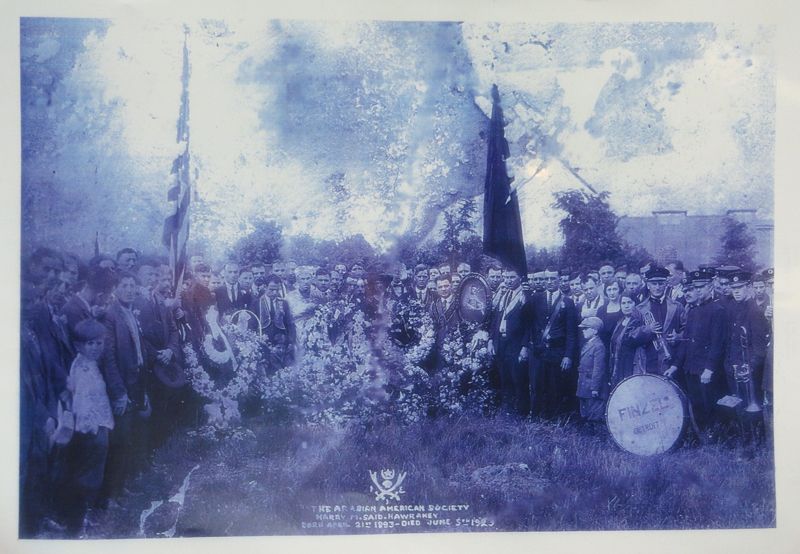
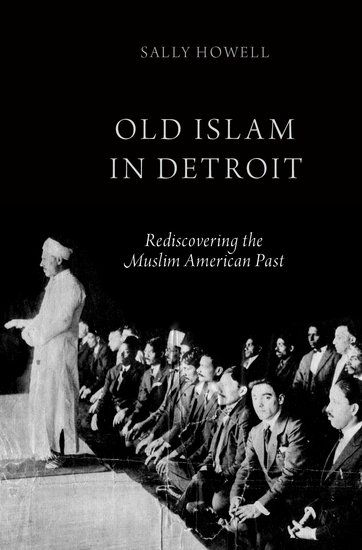
Muslims have a long and rich history in Greater Detroit, Michigan, but it has not been thoroughly documented – until now. Sally Howell brings this history to life in her new book out next month — Old Islam in Detroit: Rediscovering the Muslim American Past (Oxford University Press, 2014). In her book she intends to “lay groundwork for a new interpretation of the Muslim American past that makes sense of the tactical amnesias, persistent discontinuities, and narrative breaks that have kept crucial aspects of the history of Islam in America from being remembered and effectively understood.”
Sally Howell is Assistant Professor of History and Arab American Studies at the University of Michigan-Dearborn. Howell is an editor of Arab Detroit 9/11: Life in the Terror Decade (Wayne State University Press, 2011) and Citizenship and Crisis: Arab Detroit after 9/11 (Russell Sage Foundation Press, 2009). She is also a contributor to The Cambridge Companion to American Islam (Cambridge University Press, 2013), edited by Omid Safi and Juliane Hammer. Sally Howell discusses her new book in the exclusive interview.
How did you become interested in the early history of Muslims in Greater Detroit, Michigan?

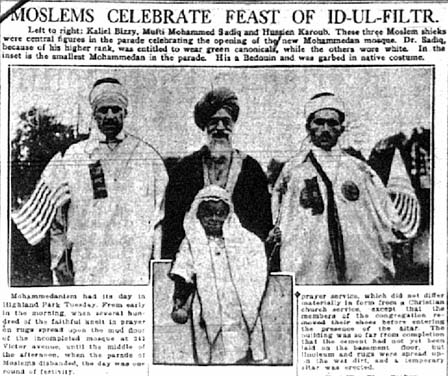
In 2004, when I first surveyed the city’s mosques, I was struck by the contrast between African American Muslims, who were eager to share their past, especially early narratives about the Nation of Islam, and the other Muslim groups in the city, mostly Arab and South Asian, who seemed not to know about their past or did not want to dwell on it, even though their history in Detroit went further back in time. Just a little detective work showed me that the presence of Muslims in Detroit in the early 20th century was rich indeed. The nation’s first purpose-built mosque opened in Highland Park in 1921, and the city was already well known as a center of Muslim American life and activism before WWI. Why do Muslims today know so little about this early period? That was the question that drove my initial interest, but I also became curious about why immigrant and Black American narratives seemed rarely to overlap, why some groups, like early African American Sunnis, were left out of the history altogether; and why the new, post-1965 immigration compelled a sort of “reset” in the way this past is remembered.
What drew Muslim immigrants to Detroit in the early twentieth century?
Detroit was a boom town in the first decades of the 20th century. Muslims were drawn here like everyone else, by the invention of the moving assembly line in Ford’s factories and the myriad opportunities the auto-driven economy created; foremost among them was the promise of a $5 work day. News of the mutual aid societies, anti-colonial political clubs, mosques, and other associations opened in the 1910s and 1920s by local Arabs, Turks, Kurds, Albanians, and Indians brought more Muslims to Detroit, especially religious leaders, missionaries, and those with spouses and children. African Americans from the Deep South also came to Detroit in this period and lived and worked alongside immigrant Muslims. The Nation of Islam was established here in the 1930s, and the Ahmadiyya and Sunni traditions also won Black converts.
What challenges did Detroit Muslims face in the early twentieth century? Are today’s Muslims in Detroit facing similar challenges?
Most Muslims were denied the right to immigrate and naturalize by the racial exclusions laws and immigration quotas put in place in the late 19th and early 20th century. For those who were allowed in, mostly those from the westernmost provinces of the Ottoman Empire, the challenges they faced involved figuring out how to practice Islam in a Christian-majority society. Each generation has needed to establish and sustain mosques, to raise their children as Muslims, to find suitable spouses, to identify and support religious leaders, and to explain Islam and make room for Islamic traditions in a society with deep-seated suspicions about the faith. Most of these goals are easier to accomplish in Detroit today because the region is now home to so many Muslims; to large, well-known Muslim enclaves; and to hundreds of Muslim businesses and institutions. Halal food is ubiquitous in the area; many public schools close for Islamic holidays; and Muslims are key players in the region’s political, economic, and cultural life. This robust visibility has its drawbacks, however, making Detroit’s Muslims vulnerable in the post-9/11 period in ways that would have been unimaginable in the past. In recent years they have faced intense harassment by Islamophobes and Qur’an-burners like Terry Jones, and they have been targeted by several federal agencies.
What role did Detroit Muslims play in shaping “Muslim American identity”?
A huge role. In the first place, the Nation of Islam was established in Detroit, and Detroit was the first American home of the Ahmadiyya movement. Over time, these groups led tens of thousands of African Americans toward more mainstream variants of Islam and introduced the faith and its American practice to millions more. Several of the nation’s first and oldest mosques were built in Detroit by Albanian, Turkish, Arab, and South Asian immigrants. North America’s first pan-Muslim association – the Federation of Islamic Associations of the US and Canada – was virtually led from Detroit in the 1950s-1980s. Together, Detroit’s Muslims developed a comfortable means of practicing Islam in the American Midwest, and they actively promoted this praxis nationwide. When the arrival of new immigrants began in 1965, Detroit’s established Muslim institutions welcomed them, but the newcomers were often deeply disturbed by the American Muslim identities and practices they encountered in Detroit.
What is the difference between “old Islam” and “new Islam” in Detroit?
This depends on whom you ask, and when. Islam, like many other religions, exists both in received textual forms and as a lived tradition. For many Muslims, the only legitimate form of religious praxis is the very oldest – that practiced by the Prophet Muhammad himself. For others, the example of the Prophet is used more as a metaphor. This adaptability has enabled Islam to travel widely. For individuals, the experience of migration to the West (like that of conversion to Islam), encourages a more intentional, reflexive focus on religion. Migrants/converts must learn to “do for self” things taken for granted in more established, Muslim-majority settings, and their means of doing so have shifted significantly over time. In Detroit, this process is complicated by the arrival of ever newer migrants/converts, who are caught between their own understandings of Islamic praxis and those of their predecessors in the city. Frequently, the newcomers see themselves as reformers. They argue that existing Muslim American praxis is weak, insufficient, and corrupt. The new praxis they promote (which is usually described as a return to prophetic tradition) is deployed against a seemingly old praxis (which is actually new in its American setting). In other words, when people criticize forms of Muslim belief and practice that have developed in Detroit over many decades, what they are actually criticizing is the reality and the possibility of an Americanized Islam. I hope my book illustrates that the (frequently painful) ruptures created by these encounters between already American Muslims and new American Muslims go much further back in time than the 1970s and are in fact enduring, transformative features of American Islam itself.
Who are some of these new groups, and where are they from? How did the newcomers’ disturbance manifest itself? Were there clashes or other impacts?
Prior to the liberalized immigration reforms of 1965, most of the newcomers were Yemeni, Palestinian, Lebanese, and Albanian, and they tended to settle near their co-ethnics. Since 1965, new Muslims have arrived from dozens of sending nations in Asia, Africa, and the Middle East. Many of these migrants were highly educated elites who entered the professions at the top of their field. Others came as refugees or unskilled laborers. Some groups came as intact families hoping to settle permanently in the US, while others came as “bachelor” populations who lived as frugally as they could in Detroit in order to support families elsewhere.
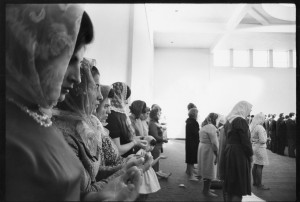
My book explores a variety of conflicts among new and more established Muslims, most notably in mosques where they wrestled for control of the institutions. Controversies arose over the visibility, leadership, and comportment of women in mosques, over when and how to celebrate religious holidays and observances, over the use of English in sermons, and over the use of mosque space for activities that seemed, on the surface, to be more social than religious in nature (like hosting weddings at the mosque or sock hops for Muslim youth groups). Among African Americans, the decade after Elijah Muhammad’s death in 1975 was also turbulent as Imam Warith Deen Muhammed led the Nation of Islam toward Sunni Islam, creating conflicts over religious authority that affected the entire community. In some cases, existing mosques were completely taken over by new immigrants or converts, with disputes over budgets and access to buildings decided in secular courts, but in most cases older mosques were successful at fending off the demands of the newcomers, at very gradually accommodating them, or at supporting new mosque development to allow for different styles of religious praxis.
Many of the Detroit mosques that were established in the late 1970s and early 1980s by newcomers who were critical of the older Muslim American mosques have today come to resemble the older mosques in many ways, most notably by encouraging the leadership, visibility, and participation of women, adapting their schedules to the American weekend, preaching and teaching in English as well as homeland languages, and by hosting more “social” activities such as athletic leagues, yoga classes, chess clubs, weddings and funerals. Very little of this sparks controversy today, but it was highly contested in the 1970s and 1980s. My book looks at how those contests played out, and I suggest that there is a cyclical quality to them. They recur; the issues are slightly different, but they are central to how people understand the relationship between things Muslim, things American, and things that can be (or cannot be) both.
Do you agree with Mucahit Bilici that Detroit, Michigan is a “microcosm of Islam in America”? (Finding Mecca in America, 2012)
Yes, absolutely. Bilici sees Muslim identity in Detroit as representative of the larger Muslim American experience, and he believes that Muslims elsewhere will eventually feel as at home in America as many in Detroit do. What Bilici doesn’t see – and he is not a historian, so I don’t fault him for this – is that the (un)comfortably American Islam he writes about is not new in Detroit. It is not new on the national stage either. It is certainly a product of the encounter between new immigrants and an American national context imbued with a complex mix of welcome, promise, and threat, but it is also the product of the encounter between new American Muslims and already established American Muslims who have interacted with each other for over a century, challenging and changing each other as they turn Detroit into a Muslim city. What is truly exciting about Detroit, today and in the past, is how new and sometimes unexpected understandings of Islam’s possibilities in America evolve out of this increasingly shared field of historical experience, community formation, and national belonging.
In “Competing for Muslims: New Strategies for Urban Renewal in Detroit,” (a chapter you wrote for the book, Islamophobia/Islamophilia: Rethinking the Politics of Enemy and Friend, edited by Andrew Shryock, Indiana University Press, 2010), you wrote about Muslims having turned around one of Detroit’s roughest neighborhoods in the 1980s, making streets safe, revitalizing housing markets, and attracting new business. Are Muslims still sought after in Detroit area neighborhoods for their positive contributions to urban renewal? Could this be a model for other blighted areas in the U.S.?
Michigan Governor Rick Snyder is eager to attract new immigrants to Detroit and other parts of the state to jumpstart the sort of revitalization and reinvestment I describe in that essay, and this is certainly happening where Muslims already make up a sizable percentage of the population – as in Dearborn, Dearborn Heights, and certain areas in Detroit, but it is premature to say it is happening in areas that are not already visibly Muslim. In fact, this is the subject of my current research. I’m trying to assess the economic and cultural impact of mosque development in the Detroit area, especially in municipalities that had little Muslim presence until recently. I’m also curious to see if any patterns exist between the civic participation of Muslims and the initial welcome their mosques receive by civic leaders and neighborhood associations. Even in a place like Metro Detroit, with such a long-standing and engaged Muslim presence, new mosques are sometimes met with vehement rejection. In some cases this hostility contributes to very introverted, vulnerable Muslim congregations, while in other cases it encourages just the opposite. Some mosque leaders meet this challenge by working overtime to be good neighbors and to find active partners with whom they can build long-lasting alliances.
What has been the relationship – from past to present – of the Detroit area’s various Muslim communities and other faith communities and ethnic groups with whom they have shared neighborhoods, including Bengalis, Poles, Albanians, Ukrainians, Mexicans, Irish, Greeks, Italians, and Jews?
This is difficult to answer, given how many different Muslim communities have lived in Detroit, going back to the late 19th century. In general, Muslims were not highly visible before the 1960s. They blended into the diverse, polyglot immigrant enclaves where they first settled. Non-Muslims who grew up in these enclaves usually saw the mosque as yet another immigrant, foreign-language religious institution among many. Several of the city’s early mosques, both Arab and Albanian, were actively engaged in ecumenical efforts by the 1950s, introducing Islam to others by speaking at churches, service clubs, and universities. Today, this ecumenical work has increased exponentially and is professionalized. Detroit’s mosques and Muslim advocacy groups are well known to Christian and Jewish interfaith activists, and vice versa. Again, this is new more in scale than in substance. In the book, I show how Muslim leaders in Detroit in the 1920s were called upon to resist hostile stereotypes about their faith and to explain themselves in relation to political crises involving Muslims overseas, such as the Armenian genocide, which was hotly debated in Detroit. The recent 9/11 attacks, which profoundly influenced Detroit’s Muslim institutions, triggered anti-Muslim rhetoric that was very similar to these much older discourses. Muslim responses to this rhetoric, then and now, are a vital aspect of citizenship politics. It is important to draw these historical connections. They reveal the complex terms on which Muslims have entered, altered, and have themselves been transformed by life in American society.
Joseph Richard Preville is an American writer living in Nizwa, Oman. His work has appeared in The Christian Science Monitor, San Francisco Chronicle, Harvard Divinity Bulletin, Tikkun, The Jerusalem Post, Muscat Daily, Turkey Agenda and Saudi Gazette. He is also a regular contributor to ISLAMiCommentary.
Julie Poucher Harbin is Editor of ISLAMiCommentary.
Learn More
Building Islam in Detroit, a project of the University of Michigan (of which Sally Howell is one of the curators) is cataloging the diversity of Detroit’s Muslim communities as well as documenting and reinterpreting their complex histories. Since April, 2004, the project’s key participants (originally a team of 10 faculty and graduate students) have visited more than 50 mosques. Together, we have explored the devotional forms (prayer, teaching, celebration, mourning), design vocabularies (iconography, building shapes and features), identity practices (Arabic instruction, outreach, print and electronic media, cultural and ecumenical programs), and historical narratives (life histories, migration and conversion accounts, and mosque histories) that make these collective spaces Muslim.
An initial version of the Building Islam in Detroit website proved immensely popular, and the pictures and mosque histories that appeared on the site have been downloaded and put to use on other websites around the world.
BIID has also produced a multimedia exhibition, Building Islam in Detroit: Foundations, Forms, Futures, which was shown at the University of Michigan in 2005 and Michigan State University in 2007. The exhibit was redesigned in 2007 and is now traveling to cultural centers and universities in Africa and Asia (see Exhibition).
To view the exhibition as it appeared in 2005, click here.
To view the current exhibition, click here.
—
This article was made possible (in part) by the Transcultural Islam Project, an initiative launched in 2011 by the Duke Islamic Studies Center — in partnership with the Carolina Center for the Study of the Middle East and Muslim Civilizations and the Oxford Centre for Islamic Studies — aimed at deepening understanding of Islam and Muslim communities. See www.islamicommentary.org/about and www.tirnscholars.org/about for more information. The Transcultural Islam Project is funded by a grant from the Carnegie Corporation of New York. The statements made and views expressed are solely the responsibility of the author(s).
Other web sites and print publications may re-publish this article as long as there is source attribution (author and ISLAMiCommentary) and a link back to ISLAMiCommentary.
Tags: 9/11, African American Muslims, Ahmadiyya, Albanian Americans, Arab Americans, Detroit, Elijah Muhammad, Federation of Islamic Associations of the US and Canada, Ford factory, Highland Park, Imam W. D. Mohammed, Indian Americans, Joseph Preville, Kurdish Americans, Lebanese Americans, Mucahit Bilici, Muslim history Detroit, Nation of Islam, Old Islam in Detroit: Rediscovering the muslim American Past, Oxford University Press, Palestinian Americans, Prophet Muhammad, Sally Howell, Sunni Islam, Turkish Americans, University of Michigan — Dearborn, US mosques, US Muslims, WW1, Yemeni Americans
Category: Americas, Asia, Books, By the Book, Eurasia, Europe, History and Anthropology, i-Comment, Middle East and North Africa, Muslim Life & Culture, Religion, Sub-Saharan, East, and West Africa