[ This article was originally published on the ISLAMiCommentary website, which is now only available via the Wayback Machine. Here is a direct link to this article: https://web.archive.org/web/20170214023954/https://islamicommentary.org/2015/10/unc-student-helps-syrians-seeking-asylum-in-france-an-eyewitness-account-by-unc-student/index.html ]
by PETER COOKE for ISLAMiCommentary on OCTOBER 20, 2015
curated and edited by Julie Poucher Harbin, Editor, ISLAMiCommentary
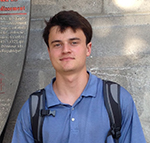
My first experience working face to face with refugees was last fall in Durham, with the University of North Carolina-Chapel Hill Injaz club. Meeting several Iraqi families and hearing their stories of survival and displacement inspired me to pursue a summer experience along the same line of work. I was fortunate enough to receive a grant to stay in France after a semester abroad, and work with Syrian refugees in Paris in a few different capacities.
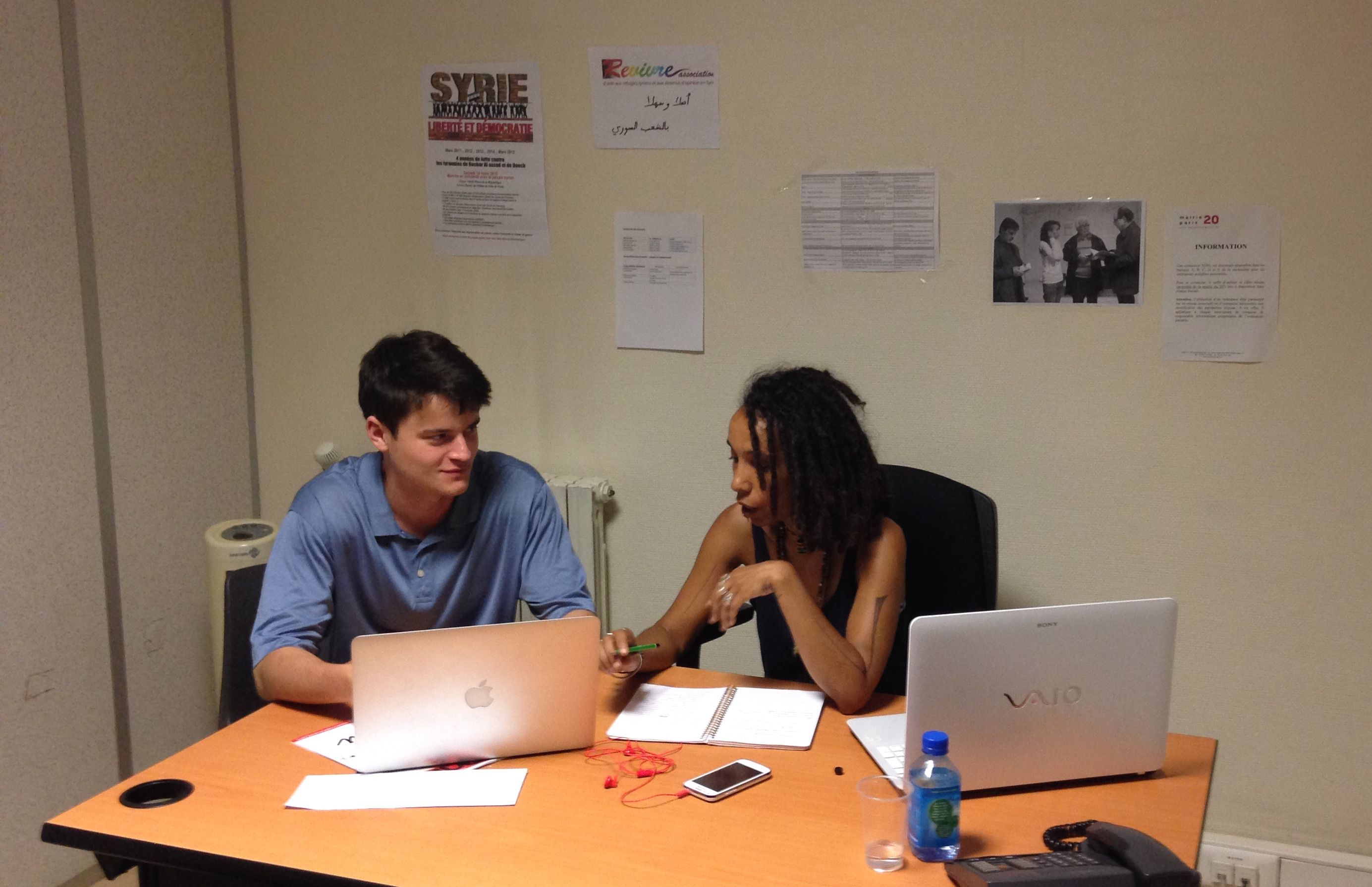
My time in Paris this summer was split between two main activities. The majority of my weekdays were spent working for a small NGO, Association Revivre, in Le Mairie, or city hall, in the 20th arrondissement of Paris, where Syrian asylum seekers of all backgrounds would come for advice and consultation on the asylum seeking process, with of course, the goal of receiving refugee status.
Due to my six years of studying of French and Arabic, I was able to assist in the office with explaining government paperwork and walking Syrians through the different steps of the asylum seeking process. Many of our clients knew little to no French, or had experienced very recent traumatic events preventing them from thinking and operating at full speed.
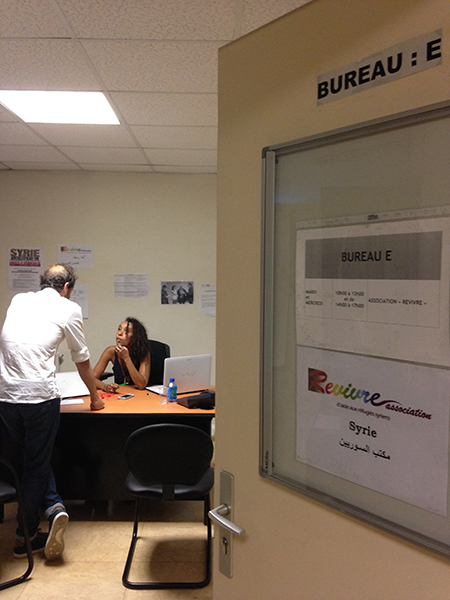
In addition to working in the office, I accompanied Syrians to local administrative offices such as the police office, the office for refugee protection, and the Court of Asylum Rights. While this arduous and tedious process to receive refugee status would take pages to explain, I would like to briefly highlight some major components that shed a light on the lack of preparation and effective organization of the French government (at least as far as I witnessed) in order to expedite and facilitate the process of accommodating refugees.
Before even beginning the mountains of paperwork, almost entirely in French, asylum seekers in France must receive a voucher, or récipissé form from the local police office. Many times I waited in line starting at six in the morning with Syrian first time asylum seekers for over five hours behind several hundred other people with the same goal. Two times, my client and I were rejected for not having a meeting scheduled, despite the fact that this requirement was never posted as official government policy.
After receiving the voucher form, French asylum seekers next have less than three weeks to write a fully typed out explanation of why they need asylum, and why they fear returning to their homes in Syria. This document is then circulated through a four-month review process, after which the asylum seeker is interviewed, or rather interrogated, to confirm that their responses to a provided translator align with the claims of persecution and threat in their written story.
This interview is then mulled over for another five to seven months before a verdict is given. Either ten years of refugee status, or one year, or nothing at all. In the case of complete rejection, which looked to me to happen all too often, one is allowed to appeal the ruling. This adds yet another complex set of bureaucratic steps after a full year drowning in paperwork and day-to-day struggles.
While these are just a few of the steps along the way to refugee status and the plethora of rights and liberties that come along with that title, there are countless other procedures the asylum seeker must attend to. One of the most obvious and challenging is finding a roof to live under. I heard many stories from applicants of overly crammed apartment complexes, with inhospitable landlords. Frequently Syrians resorted to sleeping with their families in the streets and parks of Paris.
Another aspect of my stay in Paris was to interview Syrian refugees from a variety of backgrounds. I wanted to find out more about the refugee experience in France. Some of the more interesting interviews were with journalists, ex-political prisoners, and one Free Syrian Army general. Each interview provided personal insight into the grim realities of the Syrian warzone as well as the challenges in escaping, migrating, and resettling in France.
One conversation I had that was particularly moving was with a former political prisoner, Omar, who is now a freelance journalist and Arabic teacher in Paris. I met Omar at a conference held by Souria Houria, an NGO run by Parisian Syrians, primarily focused on political activism and fundraising.
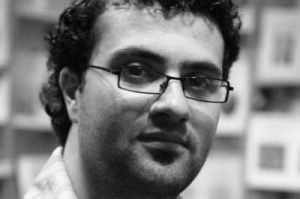
In the summer of 2014, Omar (a Syrian journalist) was captured by Syrian secret police in Damascus and subsequently placed in prison for two months, on charges that his articles were rebellious and against the regime. Twenty-five prisoners were stuffed in a room, according to Omar, approximately three to four square meters in size. This meant that not all the men could sit at one time, so they established a rotation between sitting and standing. Food was scarce, and not once was Omar or others told why they were being imprisoned. When he finally made it to a courtroom, he faced a judge who sat in front of a massive oil painting of Bashar al-Assad. The judge threatened Omar with worse consequences if he continued his political activism in Syria.
Omar said this judge knew everything — from his Facebook conversations, to phone calls, to alias’s he was writing under in underground revolutionary publications. This was a major theme in conversations I had throughout my summer with Syrian refugees — the sheer power and immensely detailed knowledge of the mukhabarat, or secret police, and the fear that was felt by many Syrians of expressing to coworkers, friends, and even family about any anti-regime sentiments.
Hearing other stories of torture, mutilation, and civilian massacre led me to ask each interviewee the question, “what can we, as foreign outsiders, do to help?” From the variety of responses I heard, two very common points emerged.
We, as aware and concerned citizens, must take action for the reform of the international refugee resettlement process. And most importantly, we must look beyond the tragic images of refugee-crammed trucks in Calais, France and dead children washed up on European shores. We must look to all sources of this immeasurable humanitarian crisis. While great international effort has shifted to targeting groups like al-Nusra and ISIS, the regime of Bashar al-Assad must also be held accountable for the violence and terror that has caused such human suffering.
Part of the above piece was adapted from the text of a paper that Peter Cooke presented at the “Truck 71: Europe and the Refugee Crisis” public forum held at Duke University on September 24, 2015, which was co-sponsored by the Duke Middle East Studies Center and ISLAMiCommentary. Cooke is a junior at the University of North Carolina-Chapel Hill, majoring in Arab Cultures and Premedical Studies, with a French minor. He will be sharing more stories of his interviews with Syrian refugees in the coming weeks.
—–
ISLAMiCommentary is a public scholarship forum that engages scholars, journalists, policymakers, advocates and artists in their fields of expertise. It is a key component of the Transcultural Islam Project; an initiative managed out of the Duke Islamic Studies Center in partnership with the Carolina Center for the Study of the Middle East and Muslim Civilizations (UNC-Chapel Hill). This article was made possible (in part) by a grant from Carnegie Corporation of New York. The statements made and views expressed are solely the responsibility of the author(s).
Other web sites and print publications may re-publish this article as long as there is source attribution (author and ISLAMiCommentary) and a link back to ISLAMiCommentary.
Category: Human Rights & Gender, i-Comment, ISIS, Middle East and North Africa, Muslim Life & Culture, Politics & Current Events, Security & Civil Liberties, Student