[ This article was originally published on the ISLAMiCommentary website, which is now only available via the Wayback Machine. Here is a direct link to this article: https://web.archive.org/web/20170213224107/https://islamicommentary.org/2016/01/freedom-of-choice-what-we-can-learn-from-recent-refugee-flows-to-liberal-countries/index.html ]
by GALYM ZHUSSIPBEK for ISLAMiCommentary on JANUARY 13, 2016
edited by Julie Poucher Harbin, Editor, ISLAMiCommentary
There is a never ending discussion between liberal and conservative minded people over freedom of choice — whether it furthers the development of our capabilities or leads us to depravity.
A majority of religiously conservative people a priori assume that freedom of choice, a core liberal value and underlying idea of a pluralistic society, has the potential to lead them away from morality and God and into evil temptation.
In my native Kazakhstan, like other states that used to be part of the Soviet Union, it is still a commonly held belief that we are “good traditionalists” and they (the West) are liberal and evil.
What is depressing is the misperception of liberalism and liberal values in many post-totalitarian states (where anti-liberal sentiments are intensively promoted in recent years) and in many Muslim-majority countries (where excessive literalist [neo-]Salafism is spreading).
Luckily, and ironically, at the same time, a great majority of the people in post-totalitarian and Muslim-majority countries want the same things like the people in the West — “the protection of basic human rights”, “freedoms and liberties” (including freedom of choice), “equality”, “the rule of law”, and “open and accountable government”.[1] All of these are core liberal values and I would argue there is a direct correlation between the respect for freedom of choice, acceptance of pluralism, development of political liberalism and providing dignified standards of life.
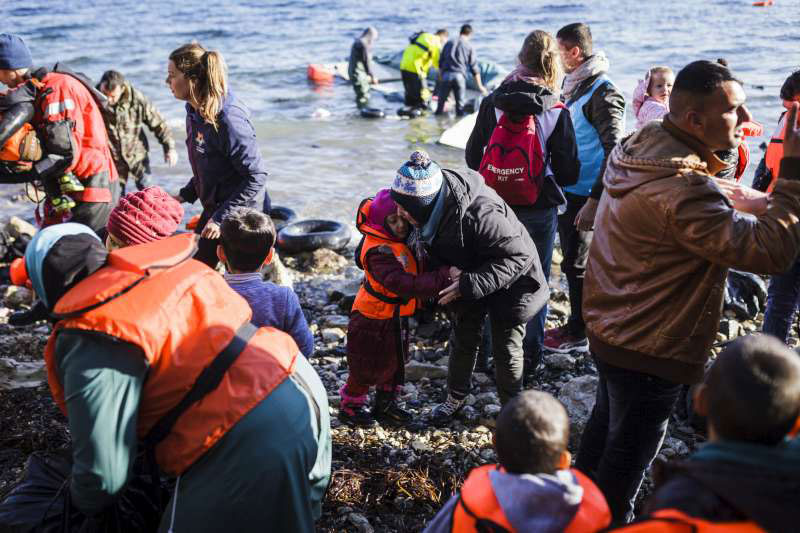
In recent years millions of Muslim refugees — whether fleeing war, economic degradation, or political persecution — are flocking to more liberal countries, especially to the Western European liberal countries.
And many people living in post-totalitarian and Muslim-majority states that are crippled by political, social and economic crises can understand that attraction.
Refugees, asylum seekers, and economic migrants are attracted to countries, that are not only prosperous, but where freedom of choice is respected and the rule of law is honored and upheld.
It is worth noting that prosperous Gulf countries have not only kept their distance from their disaffected brothers in faith, but they are not considered an attractive destination by a majority of these refugees. These countries are exclusivist and have serious problems with the rule of law; systematic discriminatory policies and practices have become a part of their political and social life and culture.
It can also be observed that even after refugees stay a time in Turkey, which is relatively democratic and friendly to the displaced ‘Muslim brothers’, they try to move on to the Western liberal countries. Turkey is only a stopping point. Turkey has serious problems with the rule of law, institutional development, and freedom of expression, and it struggles to provide a dignified standard of living for both its own citizens and its migrant and refugee populations. The same can be said about Lebanon and Jordan, which together with Turkey, host the majority of refugees escaping the Syria’s civil war.
The merits of liberal values and political liberalism should never be presented in a condescending way to people who are the victims of irresponsible political regimes and the targets of an information war. It should also be made clear that liberalism does not equal Godlessness or disorder.
Liberalism has evolved from it’s capitalist roots. Liberal governments have become more socially responsibility and egalitarian in their policies. An emphasis on freedom of choice means they are more religion-friendly. That is why it is only there – in liberal countries –that Muslim refugees can live according to their beliefs and have a dignified standards of living.
In post-totalitarian and Muslim-majority countries, those who want to diminish and restrict freedoms under the banner of ‘traditionalism’ or ‘religious sensitivities’ or ‘national security’ tend to regard their citizens like ‘blind folk’ (if not ‘brainless herds’) who are in constant need of strong hand of ‘overseer’. In this respect, it should be noted that in a number of Muslim-majority states, Islam has becomec incorporated as a political ideology in service of the state and embedded in state apparatus.[2] In short, Islam lost its independence and this phenomenon can be seen as a very serious impediment to understanding the notion of freedom of choice in an Islamic context.
As George Lakoff, professor of cognitive science at the University of California, Berkeley, explains, many of our actions are unconscious and rooted in the models of childrearing and education which we underwent. A great majority of conservative people, including conservative Muslims, prefer the so-called “Strict Father” model (at home and at school) which is punitive and sets clear-cut boundaries.[3] This model is not based on empathy, and is antithetical to the respect for freedom of choice.
Who can claim wholeheartedly that the Prophets, whether it was Prophet Muhammad or Prophet Isa (Jesus), adopted a “Strict Father” model, instead of “Nurturing Parent” when the Quran itself says “(O Prophet) Had you been harsh and hard-hearted, they would surely have scattered away from about you. (Quran, 3:159)”
It is well-established that a child brought up in a family where freedoms are respected will become more responsible, can develop a sound sense of self-confidence and a respect for diversity in family and social life, and will generally be law-abiding. Pluralistic religious interpretations, which are the main antidote to religious extremism and radicalism, can only develop where there is respect for freedom of choice.
To conclude, the respect for freedom of choice, inclusiveness and rule of law can only lead to a reduction in inter-ethnic and inter communal conflicts. It can only improve economic development and a dignified standard of living.
A dynamic society and developed country can emerge only where freedoms are honored and protected, where the state adopts “Nurturant Parent” model – which is a political liberal model.
In general, you rarely hear of bright-minded individuals wanting to live in countries with so-called ‘traditionalist’ or ‘exclusivist’ regimes where freedoms are not respected, the rule of law is absent, and the political regime in charge is worshipped.
FOOTNOTES
[1]see, for example, http://www.hks.harvard.edu/fs/pnorris/Articles/Articles%20published%20in%20journals_files/The_True_Clash_Inglehart_Norris_Foreign_Policy_2003.pdf)
[2] Jocelyne Cesari, The Awakening of Muslim Democracy, NY: Cambridge University Press, 2014, p.114, 275
[3]George Lakoff, Moral Politics, Chicago: The University of Chicago Press, 1996, pp. 4-5, 12-13
Galym Zhussipbek is Assistant Professor of Political Science at Suleyman Demirel University in Almaty, Kazakhstan and a nonresidential research fellow at the Rethink Institute in Washington, DC. His main research interests are European security; security in the post-Soviet region; the economic, social and religious situation in Central Asia; and state-religion relations.
Tags: asylum seekers, economic migrants, freedom of choice, freedom of expression, Galym Zhussipbek, George Lakoff, Gulf Arab states, Islam, Jesus, Jordan, Kazakhstan, Lebanon, liberalism, national security, political liberalism, Prophet Isa, Prophet Muhammad, Quran, rule of law, Syria civil war, Syria refugees, traditionalism, Turkey, University of California Berkeley
Category: Asia, Europe, History and Anthropology, i-Comment, Islamic Theology & Law, Middle East and North Africa, Muslim Life & Culture, Philosophy, Politics & Current Events, Security & Civil Liberties