[ This article was originally published on the ISLAMiCommentary website, which is now only available via the Wayback Machine. Here is a direct link to this article: https://web.archive.org/web/20160311123121/http://islamicommentary.org/2016/03/principles-and-procrastination-over-breakfast-two-brothers-debate-ataturks-legacy/]
by ANAND RAGHURAMAN for ISLAMiCommentary on MARCH 7, 2016
curated and edited by Julie Poucher Harbin, Editor, ISLAMiCommentary
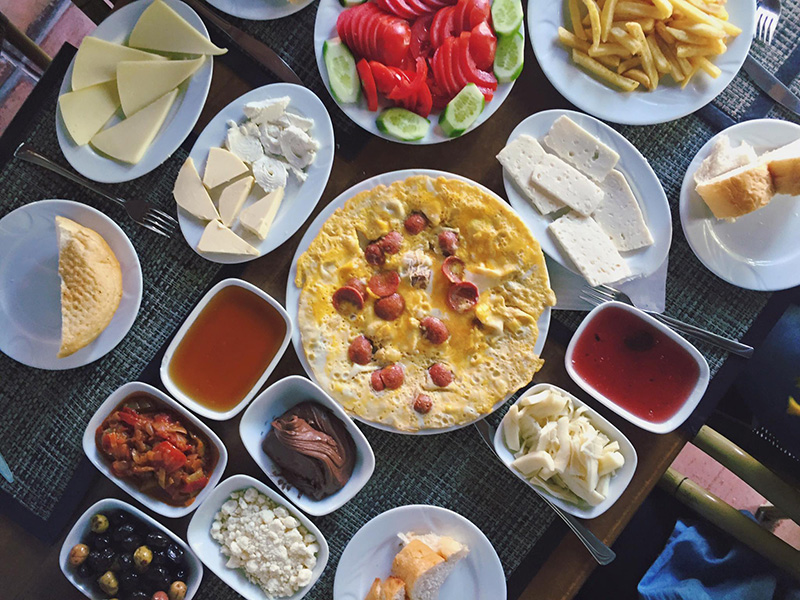
Like most college arguments, the two brothers’ dispute had a familiar parent: procrastination. It was delightfully ironic. Eren and Murat Turan were both eager to avoid preparing for their law school exams; little wonder we were still at the breakfast table at a quarter past two, sipping Turkish tea and spreading Nutella on freshly baked bread. Yet in seeking to escape further study of the ‘Principles of Atatürk,’ Eren and his brother stumbled down a path of conversation that would subject those very principles and their famous proponent to sharp scrutiny. As for me? I sat at the table with ears and eyes open, listening, taking note, and — okay, you caught me —surreptitiously double-dipping bread in the Nutella.
“It’s required?” I asked. Eren laughed at the incredulous expression on my face and proceeded to answer my question. Yes, every student in a Turkish university was required by law to take a yearlong class called “Principles of Atatürk.” The class had one goal: impart the wisdom of the nation’s founder to a new generation. Students were expected to memorize and recite the pillars of Atatürk’s Kemalist ideology, which consisted of a series of lofty ‘-isms’ ranging from ‘republicanism’ and ‘statism’ to ‘secularism’ and ‘nationalism.’ It was all relatively easy but mind-numbingly boring — hence the procrastination.
“Can you believe we have to take this class?” Eren punctuated the question with a derisive snort. “All we do is memorize and forget: no critical thought, no intellectual inquiry, and no debate. “And moreover”— (one of his go-to transitions) — “why should I be forced to take a class on Atatürk’s principles?”
It was an intriguing question. At what point did mandatory civic education turn into ideological propaganda — or was there any difference between the two? I was about to interject but stopped short when I glanced at Murat. He looked pensive and critical; I could tell he was silently drafting arguments in response, waiting as Eren continued:
“Do you realize that we know very little about Atatürk? We don’t know his background or his heritage; we don’t know where he was during many parts of his life. He spent time in Palestine, Israel, and several other countries. What was he doing? Whom did he meet? Shouldn’t we know these things? Would you trust such a person, let alone appoint him the father of your country? Would you require students to memorize his principles or put up his picture in every room of a government building? I don’t think so. It’s fascism! It’s nonsense!”
Eren paused for a second to catch his breath and his younger brother seized the opening with a simple retort: “I disagree with everything he just said.”
I couldn’t help but crack a smile. What a line! Murat swiveled to face me as Eren recoiled in faint surprise. I leaned forward to hear his case.
He opened with three points. First — the “gaps” in the historical record. Nothing more than conspiracy he countered. And in any case, why harp on them? Atatürk was a soldier. He fought battles, came to power, and created the Turkish Republic after the chaos of war. No one knew he would be famous from birth! Demanding to know minute details about his background and his every interaction in a foreign country? This was unreasonable. “Moreover,” he said with a sly wink, it was impossible.
Second — the Atatürk pictures. Almost self-evident. “It’s done out of respect, Eren! If it was Erdoğan or another president, then yes…Maybe that would be problematic. But Atatürk? The father of the nation? Come on! He deserves that respect.”
Third — the class: ‘Principles of Atatürk.’ Okay, it was boring. No argument there. “But how else should Turks learn them? The principles are important.”
“You know the Ottoman Empire?” Murat asked. I nodded. “The Ottoman Empire collapsed because it was made up of different people, different cultures, and different religions. Atatürk knew this and he saw the need for a Turkish nation with a common identity. He made this country and his principles are what keep us united today. Do you follow?”
I did.
“Diversity is good, yes. You need to have individuals who disagree and criticize, yes. But, you know? At some point you have to say, OK, we accept this. You need to have something that unites the people, something that brings them together. That’s what these principles do.”
All throughout Murat’s soliloquy, Eren was chomping at the bit. “Listen Murat, I can accept everything you’ve said about the Ottomans, minorities, and different cultures as being true. I know we have these problems. But what I reject is your next step — this idea that we should just blindly follow Atatürk’s principles for the sake of unity. What kind of unity is that?”
Eren’s question floated over the table as Murat paused to take a sip of his tea. He would respond, of course; but from here, my memory of the exchange that followed grows blurry and any attempt to recreate it would be to engage in — how did the late Justice Scalia put it? Jiggery-Pokery?
In any case, that’s probably for the best. As I slinked away to the edge of the battleground, the conversation morphed as English and Turkish twisted together until the familiar “I’s” and “yous” gave way. I was now witness to a full-on Turkish debate.
With the shift in language, the exchange grew faster, disjointed, and more frenetic. Or perhaps that was simply my perception. Equipped with shaky pidgin-Turkish, I could only catch the occasional English cognates — Türkiye, problem, parti — and I struggled to keep up with the substance of the debate. What I did catch, however, was its spirit.
Every time Murat or Eren introduced a new salvo or rebuttal, they prefaced their point with ‘Ağabey’ and ‘Canim,’ or in English, ‘big brother’ and ‘my dear.’ I was surprised to hear it and was deeply touched. Even in the heat of fierce argument, politics and pugilism were still couched in the personal. And yet, this was a different type of personal. It wasn’t the name-calling, the rudeness, or the Trumpian slander that has routinely spoiled many Thanksgiving dinners. Instead, this was a genuine appeal that evoked the Shakespearean courtesy of another age — ‘what say you, good sir?’ It was a recognition of the fact that despite their differences, Eren and Murat were indissolubly linked: Ağabey and Canım.
That is not to say that decorum resolved the brothers’ differences and ended the dispute with hugs all around. In truth, reality trumped romance; our table remained divided; and while Eren, Murat, and I eventually sat in tired silence, the debate raged on in our minds.
Thinking about the exchange, I couldn’t help but feel like I was part of something remarkable, even vaguely dangerous. As Eren reminded me, Turkey’s loosely defined ‘insult laws’ were originally established to protect Ataturk’s legacy. Violations of these laws still carry stiff consequences: “You think the Gollum memes were bad? I could be jailed for saying any of these things in public.” All criticism of Atatürk — “not to mention President Erdoğan,” Murat added — had to be veiled or limited to private spaces within the home.
Still, I sensed a timeless quality in our conversation, as if the questions and counterarguments regarding Atatürk’s principles were all longstanding, familiar guests at the Turkish breakfast table. Ignore our fraternal foils and the particular plot points and you find a larger story that’s always rumbling in the Turkish background, constantly being revisited, retold, and revived.
I am convinced that these debates, in fact, are Atatürk’s lasting legacy. They reveal the cracks in the nation he founded but also the quality of those who would shape its future, and here Eren and Murat — Ağabey and Canım — are living proof of this proposition. Curious and critical, divided yet determined, the two brothers make for engaging and intelligent characters. But of course, Eren and Murat aren’t just characters; they are students and scholars in their own right. The ideas they put forward, test, and scrutinize — be it Atatürk’s founding principles or Erdoğan’s present power — are all worthy of debate.
Nevertheless, both Eren and Murat insist that ideas alone will not shift Turkey’s divided narrative. What matters, they say, what elevates a tale above its simple structure, is the telling, the process. And on this front, my friends give me cause for optimism. What I saw at the breakfast table was a future where two brothers can argue passionately but struggle honestly to bridge stark differences. Their story may still take twists and turns; their country may go forward, backward, and even sideways in the years to come. But as long as there remains a place at the breakfast table, there will be three friends and two brothers committed to searching, striving, and of course, snacking.
The names of the Turkish brothers have been changed to protect their identities.
Anand K. Raghuraman is a Fulbright ETA Fellow currently working in Afyonkarahisar, Turkey. (The views expressed are his own, and do not necessarily reflect the views of the Fulbright Program or any of its affiliates, partners, or associations.)
Raghuraman graduated summa cum laude from Duke University in 2015 with a BA in Political Science and a minor in Economics, focusing on American foreign policy and international diplomacy. While at Duke, he co-chaired the undergraduate council of the Duke Program in American Grand Strategy and served as Vice-President of the Alexander Hamilton Society. He has also interned at the State Department, the Atlantic Council, and three NGOs in Kashmir and Cairo. Following the completion of his Fulbright year, he hopes to move to South India to pursue his passion for Indian history, philosophy, and foreign policy. Find him on Twitter at @akraghuraman23.
———-
ISLAMiCommentary is a public scholarship forum that engages scholars, journalists, policymakers, advocates and artists in their fields of expertise. It is a key component of the Transcultural Islam Project; an initiative managed out of the Duke Islamic Studies Center in partnership with the Carolina Center for the Study of the Middle East and Muslim Civilizations (UNC-Chapel Hill). This article was made possible (in part) by a grant from Carnegie Corporation of New York. The statements made and views expressed are solely the responsibility of the author(s).
Other web sites and print publications may re-publish this article as long as there is source attribution (author and ISLAMiCommentary) and a link back to ISLAMiCommentary.
Category: Eurasia, History and Anthropology, i-Comment, Law, Middle East and North Africa, Philosophy, Politics & Current Events