[ This article was originally published on the TIRN website, which is now only available via the Wayback Machine. Here is a direct link to this article: https://web.archive.org/web/20141028211344/http://tirnscholars.org/2014/08/19/dispatches-from-india-the-practice-performance-and-politics-of-sufi-shrines-in-south-asia-and-beyond/. The article, in full below, includes commentary by Prof. Carl Ernst from his attendance at a Sufism workshop in India and his subsequent lecture tour in India, which he shared with TIRN.]
by Carl Ernst, for TIRN, on August 19, 2014
curated and edited by Julie Poucher Harbin, Editor, TIRN (& ISLAMiCommentary)

NOTE from Julie Poucher Harbin, Editor, TIRN: UNC-Chapel Hill Islamic Studies Professor Carl Ernst was in India this summer as principal academic organizer of an international *workshop on “Practice, Performance, and Politics of Sufi Shrines in South Asia and Beyond,” held August 1-4, 2014 in Ellora-Khuldabad, Maharashtra State. Dr. Ernst has shared with TIRN the following write-up (below) on this workshop by Prof. Philip Lutgendorf (President of the American Institute of Indian Studies), as well as details on a series of lectures Ernst delivered at Indian universities subsequent to the workshop.
AIIS (American Institute of Indian Studies) and Five Centers Join for “Sufi Shrines” Workshop by Philip Lutgendorf
On August 1-4 2014, fourteen scholars from eight countries met near Aurangabad, Maharashtra, in a workshop sponsored by six American Overseas Research Centers (AORCs), organized and hosted by AIIS. The theme of the workshop, “The Practice, Performance, and Politics of Sufi Shrines in South Asia and Beyond,” was collaboratively conceived by four South Asian AORCs (the American Institute of Bangladesh Studies, American Institute of Pakistan Studies, and American Institute of Sri Lanka Studies, together with AIIS), and its proposal was written by Carl Ernst, noted Islamic studies scholar at UNC Chapel Hill. The Centers provided modest seed money from their Council of American Overseas Research Centers programming budgets, which was then supplemented by a generous grant from the Cultural Affairs Section of the US Embassy in Delhi, whose Cultural Counselor, David Mees, took enthusiastic interest in the workshop, eventually attending it in its entirety.
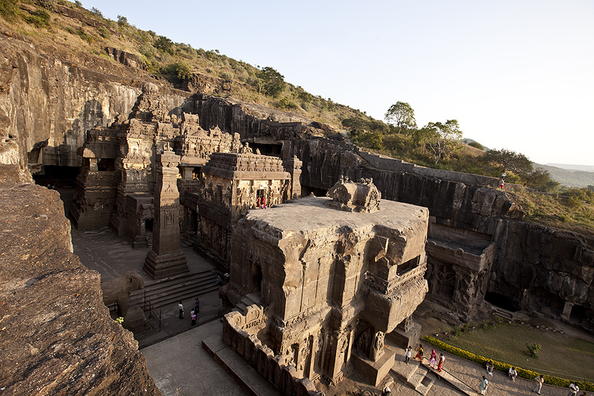
In planning the workshop and inviting presenters, Prof. Ernst was assisted by two other organizing committee members, Dennis McGilvray (University of Colorado, Boulder) and Scott Kugle (Emory University). Participants included scholars from Bangladesh, India, Pakistan, and Sri Lanka, as well as five South Asia specialists based in the US and Canada. A welcome comparative perspective was offered by scholars from Morocco and Senegal, whose participation was sponsored by two other AORCs, the American Institute of Maghrib Studies and the West African Research Association. Conceived as an intimate workshop for the exchange of new research, the event was held at the small Hotel Kailas, a group of cottages set in a garden and located near the entrance to the Ellora Caves, one of India’s UNESCO World Heritage Sites, and the workshop schedule offered time for attendees to visit its extraordinary Buddhist, Hindu, and Jain rock-cut shrines created between the sixth and twelfth centuries. (As a generous gesture, the Archaeological Survey of India waived the foreigner’s admission fee for all workshop participants during the four days.)
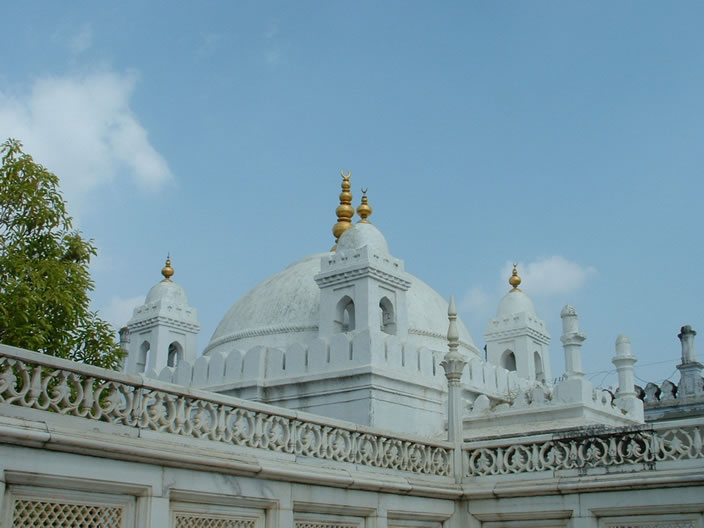
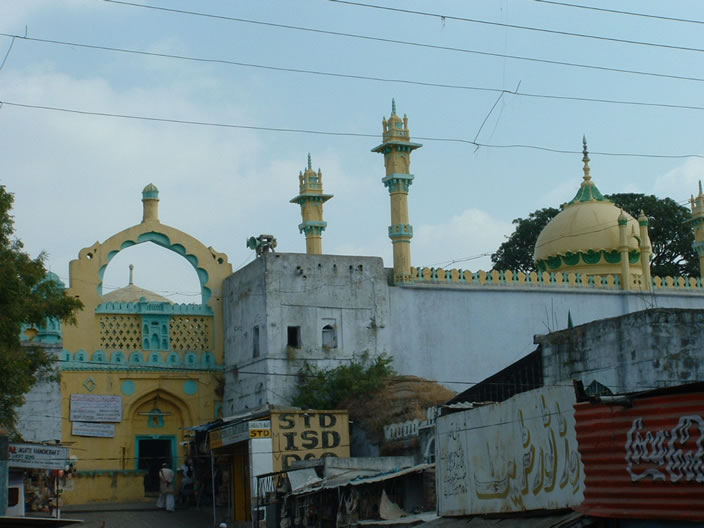
But equally important, the ridge into which these shrines are carved is topped by hundreds of Sufi tombs, hospices, and mosques that constitute Khuldabad, also known as the “valley of the saints,” for the reputedly fourteen hundred Sufis who came here in the early fourteenth century. Their shrines represent a number of spiritual lineages, but particularly document the spread of the Chishtis, India’s most influential order, into the Deccan and South.
Since the history of the Khuldabad Sufis was the subject of a book by Prof. Ernst (Eternal Garden: Mysticism, History, and Politics at a South Asian Sufi Center, 1992), an August 3rd tour of some of its holiest shrines, guided by Ernst (who enjoys the deep respect of local dargah committees and shrine keepers), was an additional highlight of the workshop, as was a late-night and high-energy qawwali performance in the shrine of Zaynuddin Shirazi (d. 1369 AD) by the famed Warsi Brothers Party from Hyderabad, arranged by Prof. Kugle, who is currently conducting research on this Sufi musical genre. The fact that recent monsoon showers had turned the usually arid Deccan landscape verdant green (Islam’s color of life) and made Ellora’s streams and waterfalls flow, contributed to an atmosphere that, participants agreed, was not just intellectually stimulating, but aesthetically and emotionally rich.
Although several presentations invoked Sufism’s rich history and multiple contributions to South Asian and African cultures, the majority had a contemporary focus and drew attention to the often contested nature of Sufi authority and sacred sites, which, despite enduring popularity and patronage, have recently come under attack both by advocates of a puritanical, “reformist Islam” and by firebrand activists of other religious traditions—such as the Bodha Bala Sena (“Buddhist Strength Army”) in Sri Lanka, whose extremist monks preach hatred of Muslims and seek to demolish shrines and mosques that they claim were built on Buddhist sites. Another recurring theme was of the varied roles of women—at times, either comparatively empowered or disenfranchised—in the Islamic teaching and practice of both Sufis and their critics. A generous schedule that allotted fifty-minute blocks of time to each presenter (with 25 minutes each for presentation and then discussion) as well as ample opportunities to interact over tea and coffee breaks and family-style buffet meals, encouraged rich and stimulating exchange, and participants and organizers are now considering a possible publication of workshop-generated essays.
The AIIS thanks its collaborating AORCs and the US Embassy for their financial support, the Archeological Survey of India for its courtesy to participants, and the tomb-shrines of Burhan ud-Din Gharib and Zaynuddin Shirazi in Khuldabad for their generous hospitality. All participants expressed their warm thanks to the Director-General, Purnima Mehta, and her staff in Delhi, to Elise Auerbach at AIIS Chicago, and to Mr. Anil Inamdar of the AIIS Pune office, for excellent advance planning, assistance with visas and travel, and thoughtful arrangements for the workshop. Mrs. Surekha Shah, owner and manager of Hotel Kailas, and her staff provided good service, delicious meals, and homely and heartwarming Indian hospitality.
—
NOTE from Julie Poucher Harbin, Editor, TIRN: Following on the workshop, Dr. Ernst embarked on a lecture tour arranged by the Public Affairs Division of the US Embassy, giving lectures at seven Indian universities and cultural centers:
• “Relevance of Sufism in Modern South Asia.” India Islamic Cultural Center, New Delhi
• “’The West and Islam?’ Rethinking Orientalism and Occidentalism.” School of Islamic Studies, B.S. Abdur Rahman University, Chennai
• “Sufism, Islam, and Globalization in the Contemporary World.” JBAS Centre for Islamic Studies, University of Madras, Chennai
• “Issues in the Study of Sufi Shrines.” Department of Sociology, Pondicherry University, Pondicherry
This trip allowed him to renew contact with scholars and research associates whom he had met more than 30 years ago while doing research in northern India and in the Deccan. He also signed a Memorandum of Understanding with the School of Islamic Studies, B.S. Abdur Rahman University, on behalf of UNC’s Carolina Center for the Study of the Middle East and Muslim Civilizations, to facilitate academic exchange and collaboration in the field of Islamic studies.
Ernst’s talks at the Indian universities were based on a talk he gave in 2009 on “Sufism, Islam, and Globalization in the Contemporary World: Methodological Reflections on a Changing Field of Study.”
Here is the beginning of that talk:
(Carl Ernst) Sufism is often referred to as the mystical dimension of Islam; I prefer to describe it as a teaching of ethical and spiritual ideals, which has been historically embodied in lineages of teachers who held prominent positions in Muslim societies.1 It was formerly understood in Orientalist scholarship as a spiritual movement that reached its apogee during the medieval period of Islamic history, with its crowning achievement being the brilliant literary productions in Arabic and Persian that became the classics of the Sufi tradition. This “golden age” theory of Sufism, shared equally by modern reformist Muslim critics of Sufism, entailed as its corollary the inevitable degeneration of Sufism in more recent times. The study of Sufism also tended to privilege the “classical” sources in Arabic and Persian over the “folk” manifestations of Sufism in Turkish, Urdu, and other languages (the word “classic” has been imported into Persian and Urdu as klasik, while the Arabic word turath, or “heritage,” serves the same purpose). It has only recently become possible to begin to locate this conceit in the historical conditions of modernity, in which academic discourse on Sufism and Islam forms part of a process involving European colonialism, the rise of Salafi reformism and fundamentalism, and secular modernism.2
In a recent study, Bruce Lawrence and I have challenged the “golden age and decline” historiography of Sufism, which seems to be the result of a deep collusion between Orientalists and fundamentalists.3 In particular, we have pointed to the realization among Sufi masters of the Chishti order that the ongoing challenges of each age must be met anew with spiritual resources and responses suitable to current needs. Read the entire paper/talk here (scroll down a couple pages to access)
—
For more on Ernst and Sufism see this Q & A for Sufi Journal (Winter 2014) published ahead of the workshop: [Wayback Machine link here: https://web.archive.org/web/20140823175442/http://www.unc.edu/~cernst/pdf/SufiJournal.pdf]
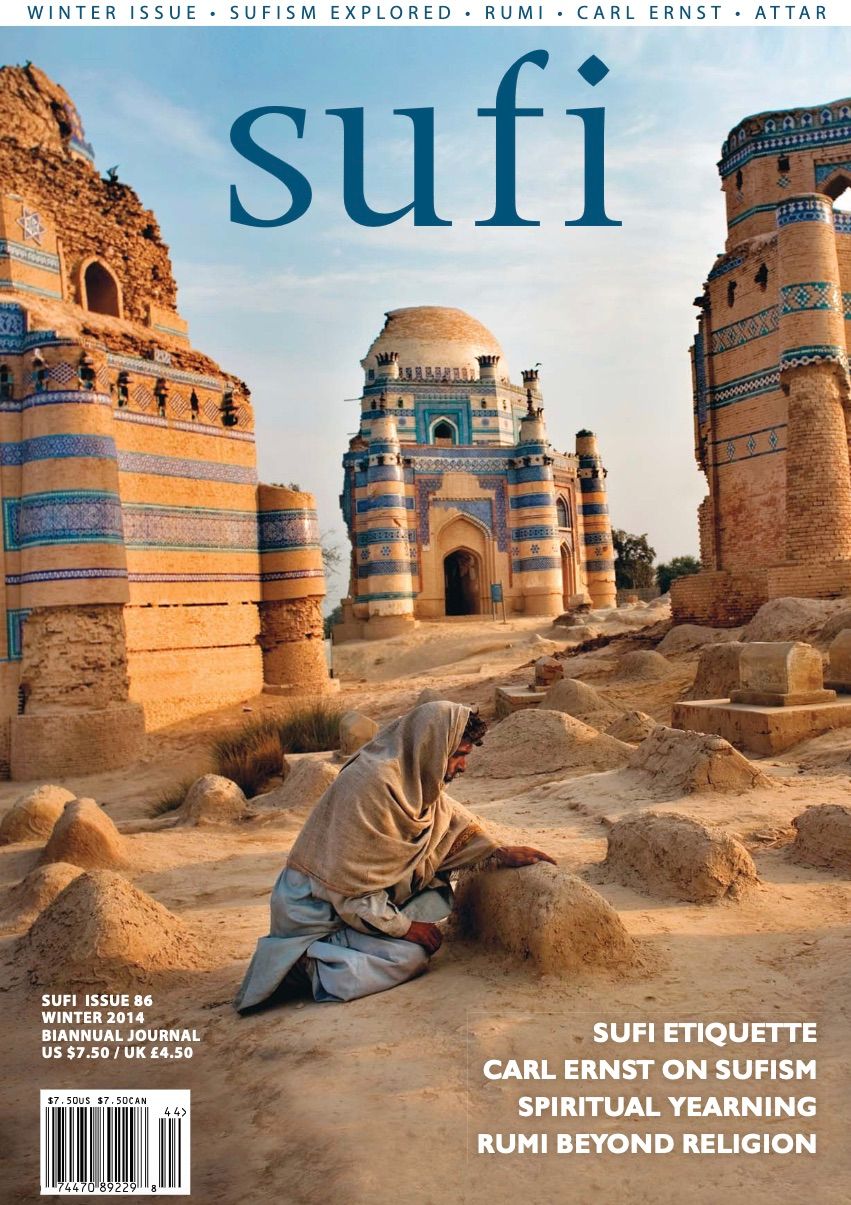
[EXCERPT from Sufi journal] Sufism: History, Politics and Culture — A Conversation with Carl Ernst (Interviewed by Llewellyn Smith)]
Sufism is a mystical path based on universal truths that transcend culture, politics and Sufism is a mystical paths based on universal truths that transcend culture, politics, and history. At the same time, the trends and practices of Sufism, like those of any spiritual tradition, have been shaped by historical, political and cultural contexts. In this regard Sufi communities in the contemporary world can be seen as dynamic movements whose expressions embrace and are intimately influenced by the cultures of the peoples attracted to these teachings.
No one is better suited to explore these ideas than Carl Ernst, one of the world’s leading scholars of Islamic Studies and Contemporary Sufism. As the William R. Kenan, Jr., Distinguished Professor, Ernst co-directs the Carolina Center for the Study of the Middle East and Muslim Civilizations at the University of North Carolina.
Our conversation in Raleigh-Durham considered questions such as what Rumi might say today, what Ibn Arabi never said, and legacies of European racism that affected how both were understood in the West. We discussed the historical impact of political movements on Sufi communities and the influence of expanding technologies, especially the emergence of print, on the spread of Sufism in the world.
We also examined political and religious forces that have affected Sufism and will continue to threaten it in the future, including the fundamentalist threat to Sufi shrines and mass pilgrimages to these sites all over Asia.
Professor Ernst is the lead academic advisor for an international conference, “Practice and Performance of Sufi Shrines in South Asia and Beyond,” that opens in Aurangabad, India in August, 2014. The focus is the central role of Sufi shrines in Southeast Asia, North Africa,West Africa and other regions.
Much has been made of the need for religious literacy, to know more about the faith and beliefs of others. In your encounters, are you ever dismayed by the pervasive lack of religious literacy? Well, absolutely. The study of religion is an extremely important field in the United States; it’s one of the key ways we deal with diversity. I feel my professional activity is designed to encourage the notion that you can deeply understand another person’s religious or spiritual trajectory without having to join in. We have to retrain academics to write in a less specialized way, to reach a wider, popular readership. And that’s one of my goals. Research surveys tell us the group most knowledgeable about religion in America are atheists. The least knowledge- able are Catholics and mainline Christians. Mormons know a lot about other religions and minority groups. But a lot of people don’t know really basic information about Muslims, for example, the fact that Muslims accept Jesus as a prophet and revere Mary and worship the same God as Abraham, Isaac, and Jacob did.
That’s extraordinary—I’m still reeling at what you just said about atheists! No, atheists seem to know a lot. [laughs] I think they probably feel somewhat threatened and feel the need to be aware—people in America say one of the most important qualities in a presidential candidate is their faith in God. Can you imagine an atheist running for President in the US?
No—I don’t think we’re there yet, not even close. Let’s talk for a moment about the spread and influence of Sufism to- day—In terms of the lived practice, what’s different now? Many people don’t have access to a teacher or master. Has direct access to a master continued to be the central transmission for Sufism in these communities? Well, this is really an interesting point. This direct teaching used to happen much more through personal networks, sometimes overlap- ping with family and kin structures and so forth, or simply through pilgrimages to shrines, but events like the shift from handwritten manuscript to the printed book changed things. In Europe, for instance, the printing press and circulation of books made it possible for the average person, or at least a lot of people, to gain new personal access to the Bible. Until then they’d always had it through the authority of the Church.
Are you saying the same thing happened with Sufism? That’s right. Print hit the Middle East and Asia in the 19th century. Until then, these were manuscript cultures. Partly through missionaries and through colonial administrations, printing came to India, the Middle East and Southeast Asia. And Sufi communities were very interested, partly because of the prominence of Sufism in the literatures of the Persian and Arabic world, where many Sufi writings were considered classics, and were soon published and distributed as books. Imagine that previous to that time, a particular work of Ibn Arabi—the great metaphysical author from Andaluz in the 13th century—might have existed in only a hundred hand-copied manuscripts in the entire world. Suddenly there are 500 copies printed, all available in a corner bookshop in Cairo. Just show up with the price in your pocket and take one home. You didn’t have to have access to the royal library.
And suddenly one didn’t require special permission from the shaikh to connect with those teachings or access them. That’s right. And by late 19th-early 20th century in North Africa and India, Sufi groups began publishing their own periodicals with letter columns and the travel schedule of the shaikh.
Then audio recording came along. Remember that prior to around 1900, the only way you could hear music was if the musician was right there. The advent of sound recordings changed everything. For instance in India, what we know as qawwali music, a very popular musical performance related to the Chishti Sufi order, became available on long-playing records. Later you get Nusrat Fateh Ali Khan, the great Pakistani singer, who recorded over 100 CDs, even fusion albums with Peter Gabriel, things like that. And so Sufi music arose to become a world music phenomenon, with a new audience beyond its traditional listeners.
Now we’re seeing the spread of Sufi websites. Some Sufi groups in India put up a very basic, simple website about their shrine, about the history of their order; others have a very interactive presence, with messages, updates, and downloadable audio talks and videos. There are even interesting discussions among one group on whether people can be initiated via email [laughs]. And that’s all I’ll say about that.
FULL Q & A [Wayback Machine link to the article and journal PDF here: https://web.archive.org/web/20140823175442/http://www.unc.edu/~cernst/pdf/SufiJournal.pdf]
-----------------------------------------------------------------------
*Workshop participants and their presentation titles:
• Golam Dastagir (University of Toronto, Canada, and Jahangirnagar University, Bangladesh), “Controversies over Forms and Practices Centered at Sufi Shrines in Bangladesh: Sifting the ‘Pure’ from the Traditional Folk Islamic Tradition”
• Carl W. Ernst (University of North Carolina, Chapel Hill, USA), “The Localization of Spirituality: Critical Themes and Issues Relating to Sufi Shrines”
• Kashshaf Ghani (Nalanda University, Bihar, India), Discussant
• Farzana Haniffa (University of Colombo, Sri Lanka), “Maintaining Difference: Varied Orientations to Religious Practices among Middle-Class Muslim Women in Urban Sri Lanka”
• Aditya Kapoor (University of Hyderabad, India), “Beyond Discourses and identities: Ambivalence, Contestation, and Accommodation in a Sufi Shrine”
• Frank Korom (Boston University, USA), Discussant
• Scott Kugle (Emory University, USA), “Spirituality of Qawwali: Lyrics and Ritual in Dargah Music”
• Penda Mbow (Université Cheikh Anta Diop, Dakar, Senegal), “The Tomb of the Saint: A Place of Pilgrimage and Commemoration for Muslims in West Africa”
• Dennis McGilvray (University of Colorado, Boulder, USA), “Daftar Jailani: A Sufi Shrine in Sri Lanka Confronting the Threat of Militant Buddhism”
• Afsar Mohammad (University of Texas, Austin, USA), “Mapping a ‘Classical’ Pilgrim Network: Urban Muslims Search for a ‘True Sufism’”
• Atia Nizami (co-written with Mumtaz Khan, Jamia Millia University, Delhi, India), “The Role of Mythologization in the Sacredscape of Ajmer Sharif: A Geographical Interpretation”
• Rukhsana Qamber and Rubina Qamber (Quaid-i-Azam University, Islamabad, Pakistan), “Seeking Solace at the Shrine”
• Hassan Rachik (University Hassan II, Casablanca, Morocco), “Saint Shrines, Ideology, and Public Policy in Morocco”