a Scholar’s Notebook feature
[ This article was originally published on the ISLAMiCommentary website, which is now only available via the Wayback Machine. Here is a direct link to this article: https://web.archive.org/web/20170213223204/https://islamicommentary.org/2016/04/the-last-scholar-cheikh-moussa-kamara-and-the-condemnation-of-jihad-by-the-sword/index.html ]
by MBAYE LO for ISLAMiCommentary on APRIL 19, 2016
curated and edited by Julie Poucher Harbin, Editor, ISLAMiCommentary
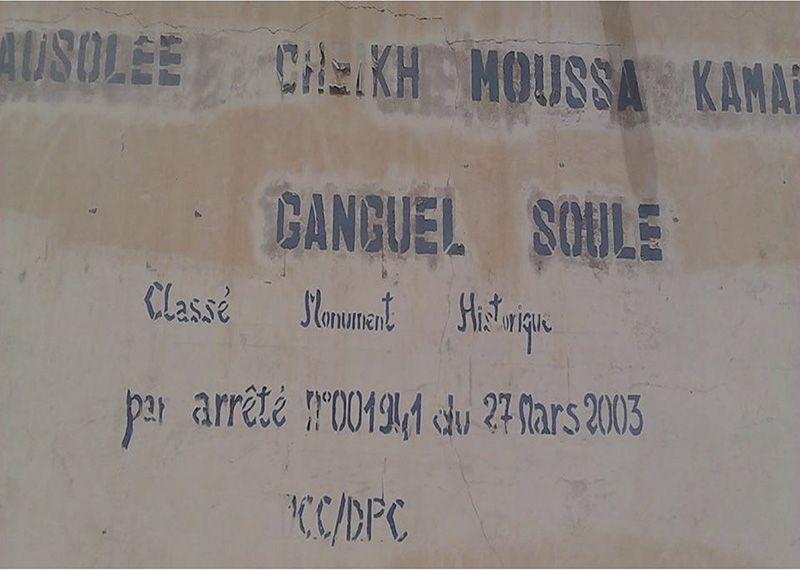
After 15 hours of traveling by buses, taxis and horse-drawn carriages, I finally arrived at a border village on the bank of the river that divides Senegal and Mauritania. The village of Ganguel Soulé is located in Fuuta Toro, a West African region of cultural influence, learning and resilience. This is the land that produced the family of *Cheikh Usman dan Fodio, the 18th century leader of Nigeria’s Islamic revival movement and the founder the Sokoto Caliphate in Northern Nigeria. (henceforth the French spelling of Sheikh – Cheikh – will be used)
From this land also came Abdoul Kader Kane (d.1807), founder of the Almamate dynasty that sought to put an end to the Atlantic slave trade by imposing martial control of European ships passing through their territories. Cheikh el-Hadji Omar Tall, the last leader of the jihad movements against the French West Africa Federation project in 1850s also hailed from here. Fuuta Toro is also likely to be the birthplace of Omar Ibn Said, the Muslim American slave whose Arabic autobiography serves as a valuable sourcebook for antebellum black writing and history.
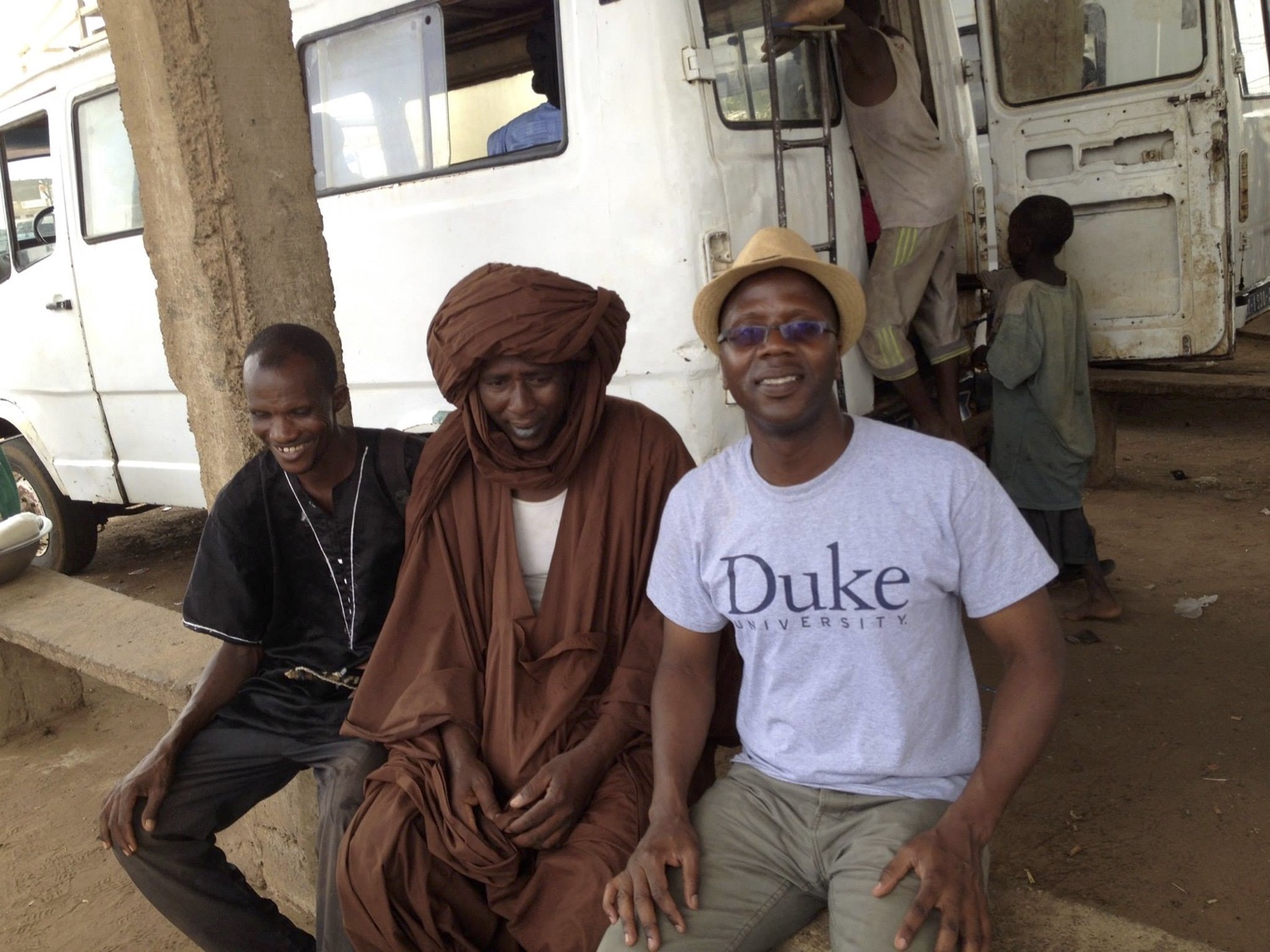
My visit here had both an academic and personal purpose. My mother’s side of the family is from Fuuta, and it was never clear to us growing-up why my ancestral great-great-grandfather left this region of Fuuta Toro in the early nineteenth century to move to the most western region known as Kajoor. Most aspects of family oral history talk about the devastation caused by Kane’s resistance against the trans-Atlantic Slave Trade. However, these issues are considered long-gone memories that people are neither interested nor comfortable remembering. Only a few Senegalese academics, for example Ibrahima Seck, are spending their lives looking at the local and cross-continental intricacies of the trans-Atlantic Slave Trade.
My host, Cernoo Kamara, wasn’t interested in yesterday’s questions either. He is a marabou (a sufi religious leader) who has become accustomed to silence, and people around him are also used to him speaking only in time of extreme need.
“Welcome home,” he murmured when his personal driver picked me up at the bank of the river. (“Birds also go home when is dark-out there,” were his last few words as we parted later that night.)
“This is a house of service: reading and writing,” he told me early the next day as he walked me through the compound of his esteemed grandfather Cheikh Moussa Kamara. There were books, clusters of old papers, and manuscripts everywhere. Kids from the neighborhood were up at dawn rehearsing the sacred text at the compound’s Quranic school before breakfast and regular schooling.
Cheikh Moussa Kamara: ‘The Last Scholar’
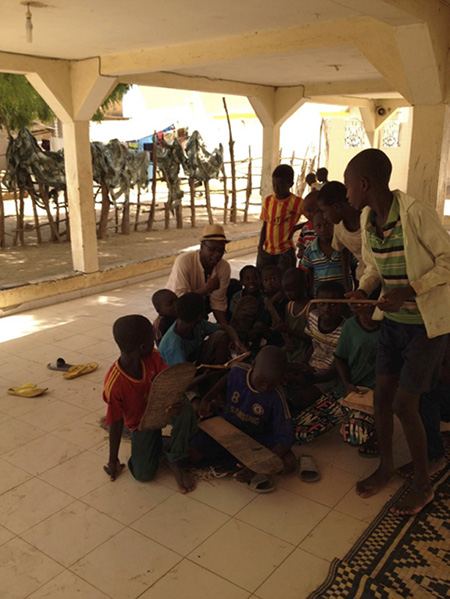
Cheikh Moussa Kamara is still widely known in this West African region as the last modibo (scholar). Cernoo Kamara is the sitting caliph of the Kamara’s Wird (order).
Between the land of Fuuta Toro and the land of Timbuktu, which lies nearly 900 miles East, no scholar can hold a candle to the late Cheikh Moussa, considered an “autodidactic scholar” according to Moroccan-French scholar Said Bousbina.
The French Africanist Jean Schmitz, who spent nearly three decades editing one of Cheikh Moussa’s books on the history of black people, characterized him as “ahead of his time” and as a saint, “who believed in disconnecting Islam from politics.” Distinguished University of Michigan professor David Robinson observed that since the founding of the Institut Fondamental d’Afrique Noire (IFAN) at Cheikh Anta Diop University in Senegal in 1936, people have been “constantly talking of the Senegalese scholar and his work.”
The prolific Arabist professor Amar Samb depicted him as the last standing scholar; the man who condemned jihad by the sword.
In 1976 Professor Samb translated Cheikh Moussa’s manuscript on jihad into French under the title of Condamnation de la Guerre Sainte. (Condemnation of Holy War). This, however, was a faulty translation of the title, because the word ‘condemnation’ does not augur comfortably with Sunni Muslim scholars. In fact, Cheikh Moussa did not use the word ‘condemn’ at all in the book’s title.
Recently the Kuwait based al-Babtain Foundation has been inviting scholars to edit Cheikh Moussa’s numerous manuscripts. The group has so far published only one volume, which covers 871 pages of his 1700-page history book from the Flowers of Gardens in the History of Black Peoples.
This is his masterpiece. In it he demonstrates a systematic knowledge of the region and a methodological approach to writing. His analysis includes critiques of earlier Arabic sources on Africa. For example, he points out how the social historian Ibn Khaldun’s prejudice against blacks tainted his ability to judge them objectively and contributed to his rant against blacks as the only race that accepts slavery.
Cheikh Moussa’s towering works, little known in academia, include al-Haqq al-Moubine (The Clarified Truth), Awn al-Latif fi Jawab Ahmad al-Sharif, (Relief of the Most Gracious on Ahmad Sharif), Ashha al-‘ulum wa at-yab al-Khabar, (Best News on the life of Sheikh el-Hadj Omar Fuuti), Hiwaru al-Madhahim, (Dialogue between Sufi Orders), al-Majami’i al-Nafis (The Inclusive, Precious Book), Tanqiya al-AfHam (the Purification of Comprehension).
During the inauguration of the Cathedral of African Memory of Dakar, Senegal in 1935, Cheikh Moussa was the representative and spokesperson of the Marabou (Muslim religious leaders) class of French West Africa, and called for the unity of Jews, Christians and Muslims, whom he called People of the Book. His People of the Book Thesis was then expanded into a major book manuscript entitled, Kada al-Ittifaaq,’ (They Are Nearly United/ One: Islam and Christianity). His broad body of work encompasses African history and civilizations, ethno-anthology of West Africans, tribal heritage of the Fulani people, traditional medicines, and poetry written in Arabic and Fulani.
Cheikh Moussa’s book Aktharu al-Raghibeen Fee al Jihad Ba’had al-Nabiyyeen Mimman Yakhtarouna al-Dhuhur wa Milk al ‘Ibaad, La Youbaluna bi-man halaka Fi Jihadihim Min al-‘’Ibaad is a long book title that I have translated as “The Wanna-be Jihadists, who are Mostly Interested in Jihad, Choosing Appearance and Ownership of [God’s] slaves, Do not Care About People who Perished in their Jihad.” This book is one of his major works, but largely unknown and inaccessible to scholars. It constitutes his original objection to the validity of jihad (by the sword).
Arguments Against Jihad by the Sword OR the Problem with “Wanna-be Jihadists”
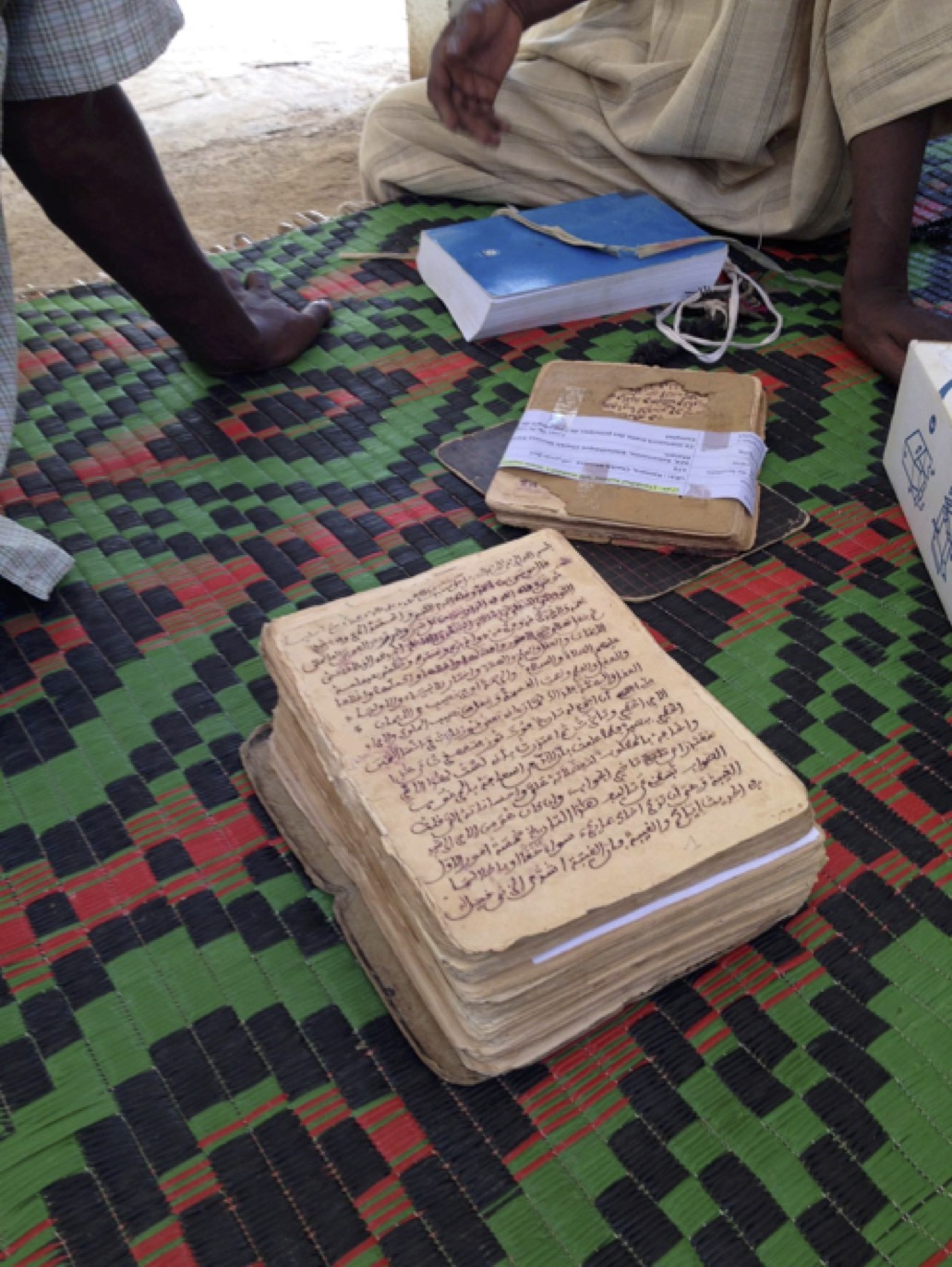
In the summer of 2015, I found and purchased an edited published version of this particular manuscript at Mohammed V University in Rabat, Morocco. The editors of this first publication are Khadim Mbacke from (IFAN) at Cheikh Anta Diop University in Senegal, and Ahmed Chokri (Institut des Edudes Africaines at Mohammed V). The editors acknowledged dropping the last chapter of the book for reasons of irregularity and consistency in the content. But after so many years of reading the work of Cheikh Moussa and knowing the translation errors associated with this manuscript, I couldn’t resist my desire to know the contents of this chapter.
I believe in the sanctity of the original content of manuscripts: they should be published as they are. Editors’ personal views belong in the preface, introduction or as a footnotes. This is the least they can do to honor and respect the deceased author. And there is an established tradition for this practice in the Arabic discipline of which Cheikh Moussa was a leader.
My host Cernoo Kamara graciously loaned me an old version of Aktharu al-Raghibeen Fee al Jihad and asked me to keep it during my stay and return it before I leave. I immediately started comparing the two copies — the old manuscript and the edited version.
In a world that is increasingly challenged by jihadi groups, I had come here to learn the extent of Cheikh Moussa’s message on jihad. Religious ideologies can only be effectively addressed through religion-based arguments, and a substantial argument against jihad by the sword can be found within the context of Muslim traditional scholarship. In fact, there is a rich, engaging and well-developed Muslim scholarship against jihad by the sword or holy war.
Cheikh Moussa is one of three prominent Muslim scholars in the 20th century that have stood against holy war. The other two are Cheikh Mahmoud Mohammed Taha of Sudan and Cheikh Ali Abd Al Razzaq of Egypt.
The Egyptian judge Ali Abderraziq’s 1925 book titled al–Islam wa USul al-Hukm (Islam and the Principles of Governance) considers the concept of Islamic Khilafah (caliphate) a partially political phenomenon produced by theologians and not necessarily related to the original message of Islam.
Abderraziq writes that Islam is a universal faith left to man’s ijtihad and reasoning, whereby the concept of establishing a caliphate is politics related to the rights and duty of the state. Therefore, Islam and politics are not exclusively connected and Muslims should strive for a governance based on civilian code. He further argues that there is a traditional connection made between the practice of jihad and the institution of Khilafah; Khilafah as a political institution is often maintained through the practice of jihad. Thus, Cheikh Ali observes, “there is no needs for us to maintain Khilafah, not for our religious needs and nor for our subsistence living.”
Ustaadh Muhammad Mahmoud Taha’s work presents another example of a Muslim scholar’s interpretation of jihad. His major corpus, Al-Risalah al Thaniyah Min al- -Islam (The Second Message of Islam), published in 1967, embodies his divergent worldviews on Islam and the applicability of Sharia and practice of jihad. He never rejected the fundamentals of Islam, but re-arranged its teachings into stages and epochs. In part 5 of the Book, he makes a set of ‘unorthodox’ postulations that drastically set him apart from the practice and convictions of political Islam. Most importantly, Taha argues, “Jihad [jihad by the sword] is not one of the fundamentals of Islam.” He links his dismissal of jihad to the question of freedom in Islam. Freedom of choice is original in the messages of Islam, and jihad, he writes, contradicts this core value.
Ustaadh Taha depicts Muslim scholars who advocate the practice of jihad by the sword to be a defensive war as mistaken, and that their version is more reflective of their reactionary attitude toward Orientalism than of a true understanding of Islam. He notes that, there are two messages of Islam: the sword in the First Message of Islam was “used to curtail the abuse of freedom,” but as we move to the Second Message of Islam, jihad by the sword like many other aspects of the present Islamic Shari’a is not part of “the original principles or objectives of Islam.”
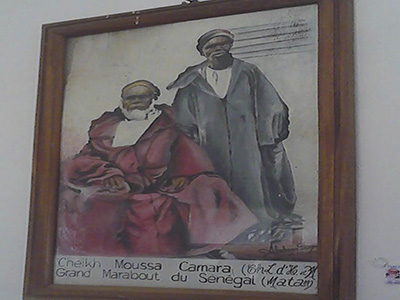
Cheikh Moussa stated this even earlier; in 1924. His main argument, in his writings, is a total rejection of the validity of a jihad by the sword claimed in the name of Islam. He examines the prophetic meanings of jihad by the sword and the danger in engaging in its practices beyond the time of the Prophet. Cheikh Moussa perceived calls for waging jihad by the sword as inherently political rather than religious. Therefore, any call for jihad within a political context can only be self-serving and power-hungry, a pretense of dominance.
Completed around 1924, the book is divided into eight chapters, in addition to the introduction. Knowing how risky it would be to condemn jihad outright — the ulama community would never accept that — Cheikh Moussa upholds the existence of jihad as an spiritual struggle, but draws his argument against jihad by the sword, from three sets of intertwined evidence: Quranic verses, the Prophetic Tradition, and accepted Sunni Muslim scholarship. This triangulation of evidence reflects vigorous scholarship and erudition, but also maintains a strict adherence to wit and the flourishes of his personality.
The first chapter is about Cheikh Moussa’s peace-oriented spirit, rational thinking and personal refusal to join any call for jihad by the sword. He starts the chapter with the following statement: “I have noticed that many scholars of Fuuta Toro and other areas have fallen in love with waging jihad [by the sword], which has became nowadays a mere Fitnah (rebellion, strife and social upheavals). It is not a jihad in which dying is happiness and martyrdom.” He notes that it is strange that the people of knowledge are calling for the waging of jihad as the only solution worthy of pursuing. To this point, he notes, “upon a request of some of my acquaintances, who are known with scholarship and authority that I support them in their jihad. I did not accept their call due to my ascetic life choice, not by pretense, but due to my indifference in this world and my lack of interest in political leadership.” He noted that we should not obey these scholars who have ordered us to “fight the infidels,” for they are not prophets of Allah.
One of the book’s strongest arguments against jihad by the sword is expressed in chapter three. In this chapter Cheikh Moussa declares that, “among the strongest prohibition of waging jihad is the fear of killing innocent Muslims.” This has been a classic argument against Fitnah in Islam, a topic that is widely discussed in both legal and historical scholarship. Cheikh Moussa thereby demonstrates a great awareness and deep understanding of Muslim tradition. To support this point, he draws on Muslim history, and specifically on the earlier days of the conflict between the companions of the Prophet. He uses examples about what is known in Islamic history as the Great fitnah (the specific conflict among companions of Prophet Muhammad after his death), the adverse effects of armed conflict, as well as the fact that all victims were Muslims and that no reasonable explanation was advanced or could even be accepted for their death.
This argument is also supported by his systematic cataloguing of prophetic hadith that discourages the taking of a human life or the killing of another Muslim. Within this historical discussion of the prohibition of taking human life, Cheikh Moussa uses a few chapters to revisit the practices of jihad by the sword during his time. He denounces the political rationale behind jihad, citing references and using precedent cases to dismiss its necessity as a means of settling political conflict. He cites about 30 references from classical to modern Islamic sources.
The core framework adopted by Cheikh Moussa in his invalidation of jihad involves his belief in separating politics from religion. He notes that “a State cannot be erected solely on the [qualities] of religion and piety, but rather on politics, wit, trick and intimidation.” He offers a critical reading of Muslim history as stemming from binary conflicts between the good, pious but not effective leaders on one hand, and the villainous, successful rulers on another.
Cheikh Moussa postulates that the success of non-religious, non-pious Muslim leaders in politics is part and parcel of Muslim tradition, and in so doing makes a case for the non-religious base of governance.
He cites the example of the difference between Muawiya ibn Abi Sufyan (602-680), founder of the Umayyad dynasty and Ali Ibn Abi Talib (600-661), the nephew of the Prophet and the fourth Caliph. Both were good Muslims; one was religious while the other was not. Both are accepted in Muslim tradition as contributing to the rise and expansion of Islam. But one was more successful in assuming power and expanding Muslim rule, not because of his Islamic piety but because of his political acumen. Cheikh Moussa expands this argument to relate to events and political development in his time and the late 19th century struggle against French colonial projects. His main point is that Muslims were the primary victims of all jihadi movements that only brought anarchy, famine and subsequently contributed to the rise of the colonial project.
The rising French empire had to spend much military capital and intellectual power to pacify resilience emanating from this West African region following the Berlin Conference of 1884/85, which launched the Scramble for Africa among the European powers. The French ruled over the largest colonial territories with Muslim subjects, including West and North Africa and the Middle East. What became known as French West Africa became a testing ground for new ways of controlling France’s colonial subjects.
France’s leading experts on Islam and Arabic were sent there to be military commanders, administrators and governors. The renowned linguist Henri Gaden was the governor of Mauritania. One of France’s leading orientalists, professor Maurice Delafosse (1870-1926), was responsible for civilian matters of French West Africa (AOF) in the early days of World War I.
In his personal autobiography, Tabshir al-Khaif al-Hayran (Herald to the Startled, Anxious), Cheikh Moussa discusses how French orientalists such as governor Gaden and professor Delafosse often asked him to share his writings and manuscripts with them. In a letter that Cheikh Moussa included in his autobiography above, governor Gaden, promised him that his writing on the history and anthropology would be published in France’s prestigious publications or distributed in Arabic to a wider audience.[2]
Spiritual Struggle vs. Holy War
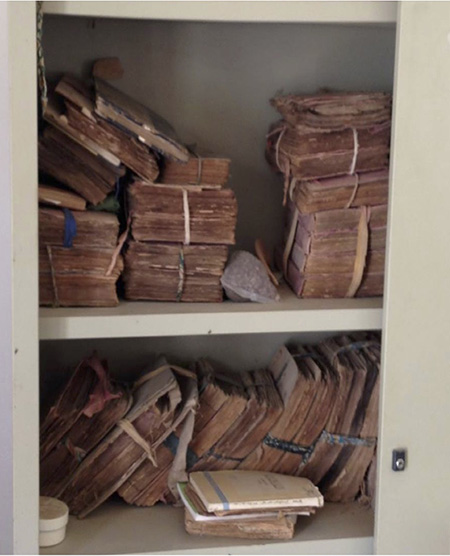
Cheikh Moussa’s entire book — the one I journeyed to Fuuta Toro to read its missing chapter — represents a major contribution to our conceptualization and understanding of both the political context of jihad by the sword and the broader framework through which it could be discredited — in keeping with Islam’s message of peace. In the first part, he offers a theoretical framework to his overall argument that jihad by the sword was a prophetic political tradition that should end with the time of the Prophet himself, and any other attempts to wage it in the present are political and self-serving acts committed “in the name of Islam.” This understanding is by two observations: the devastation of waging jihad by the sword on Muslims themselves, and conclusions by traditional Islamic scholars about the illegitimacy of waging jihad.
As I headed back to Dakar after staying with Cernoo Kamara a few days, many questions remained unsettled: How can Sayyid Qutb (1906-66), the intellectual founder of militant Islam, upset all this rich traditions of Muslim scholarship, and hold the world hostage to his radical version of jihad, even in death? How was Bin Laden, a man with no published works, able to shape the trajectory of jihad since the end of the cold war?
And probing even deeper, why is it that jihadi groups such as Ansaruddin in Mali with their allies of Al-Qaeda in the Islamic Maghreb, embraced the legacy of Bin Laden over the legacy of the “last scholar” and subsequently decided to set-up an Islamic Caliphate in this region between Fuuta and Timbuktu?
My only answer so far lies in an African proverb: “until the lions have their own (griot) historians, tales of hunting will always glorify the hunter.”
It seems the erudition of Ali Abderraziq, Mahmood Taha and Cheikh Moussa have been rendered ineligible by the polemics of modern political discourse, while the ‘agitation’ by Qutb and Bin Laden was amplified by those same forces.
Ali Abderraziq was tried by al-Azhar’s Senior Scholars Committee. Under the control of Sultan Fouad Ahmed Pasha, a self-designated heir of the Ottoman caliphates, the committee dismissed Abderraziq’s argument characterizing it as antithetical to the Prophetic tradition. He was stripped of his graduate degree and his job, and his book was confiscated. The Islamist regime of President Ja’far Numeiry of Sudan executed Ustaadh Mahmoud Taha on the grounds of apostasy in 1985. And while Cheikh Moussa himself didn’t meet the fate of these other two scholars, his last published book has remained remote from the discourse of jihad due to an incorrect French translation of its title that popularized it as a condemnation of holy war. [3]
As I concluded, after reading the missing chapter, the same reasoning that caused the mis-translation of the book title was the reasoning behind leaving out this chapter. The editors wanted to highlight the seriousness of the political discourse of jihad by the sword by dissociating it from any cheerful discussion of day-to-day jihad (struggle) and compassion, which is the contents of the last chapter.
Cheikh Moussa had a different mindset: he added the chapter to the book after 1926 in order to convey the stories of his humanity, spiritual jihad and unbounded compassion. His concept of jihad is about the struggle for the soul and for humanity, and certainly not by the sword. The chapter talks about his social relationships, spiritual journey and even his friendship and correspondences with French scholars such as Maurice Delafosse. To this late scholar who died in 1926, Cheikh Moussa repeatedly pronounces, “May Allah Have Mercy on his Soul.”
###
Mbaye Bashir Lo teaches at Duke University. He is currently a visiting scholar at l’Institut d’études de l’Islam et des sociétés du monde musulman (IISMM) & Institut des Mondes Africains (IMAF) at EHESS, Paris.
[2] Lessons learned by the French from ‘pacifying’ the West African region were applied to other Muslim subjects of the French empire. For instance, Gen. Henri Gouraud — to whom France credits with ending the late 19th century Jihadi movements in the Sahel region — was re-assigned to ‘pacify’ Western Morocco on the eve of World War I. Following the War, Gen. Gouraud became the representative of the French colonial project in the Middle East. He was responsible for implementing the 1916 Sykes-Picot Agreement, which stripped the fading Ottoman Empire of its possessions in the Arab world. He became the effective ruler of his newly crafted territories — the nation-states of both Lebanon and Syria. During a visit to Lebanon in 2012, in fact, I had attended a Friday sermon at Al-Husseini mosque in southern Beirut in which the imam mentioned how Gen. Gouraud desecrated the tomb of sultan Salahuddin al-ayoubi (1137-1193). Salahuddin was a widely admired military commander, who defeated the French Crusader assault at the battle of Hattin in 1187. According to the imam’s story, after defeating the resisting Arab armies, Gen. Gouraud stepped over the tomb of Salahuddin declaring that, “We have returned, Salahuddin: this is a victory of the Cross over the Crescent.” This quotation is widely cited by militant Islamists and in scholarly publications when describing acts of Western hegemony over Muslims.
[3] These words have meaning in Muslim jurisprudence, as one doesn’t condemn but invalidate. Moussa never used the word condemn.
———-
ISLAMiCommentary is a public scholarship forum that engages scholars, journalists, policymakers, advocates and artists in their fields of expertise. It is a key component of the Transcultural Islam Project; an initiative managed out of the Duke Islamic Studies Center in partnership with the Carolina Center for the Study of the Middle East and Muslim Civilizations (UNC-Chapel Hill). This article was made possible (in part) by a grant from Carnegie Corporation of New York. The statements made and views expressed are solely the responsibility of the author(s).
Other web sites and print publications may re-publish this article as long as there is source attribution (author and ISLAMiCommentary) and a link back to ISLAMiCommentary.
Tags: Abdoul Kader Kane, Africa Muslims, African Sheikh Usman dan Fodio, Ahmed Chokri, al-Babtain Foundation, Al-Qaeda in the Islamic Maghreb (AQIM), Ali Ibn Abi Talib, Ansar al-Dine, Berlin Conference of 1884, Cernoo Kamara, Cheikh Ali Abd Al Razzaq, Cheikh Mahmoud Mohammed Taha, Cheikh Moussa Kamara, David Robinson, Egypt, EHESS, France, French West Africa, Fulani, Fuuta Toro, hadith, Henri Gaden, holy war, Ibrahima Seck, ijtihad, interfaith, Islamic Caliphate, Islamic jurisprudence, Islamic law, Jean Schmitz, jihad, jihad by the sword, Khadim Mbacke, Kuwait, Mali, Marabou, Maurice Delafosse, Mauritania, Mbaye Lo, Mohammad V University, Morocco, Muawiya ibn Abi Sufyan, Nigeria, Omar Ibn Said, orientalism, Osama bin Laden, President Ja’far Numeiry, Prophet Mohammed, Quran, Said Bousbina, Sayyid Qutb, Senegal, Sharia, Sudan, Sultan Fouad Ahmed Pasha, Sunni Islam, Timbuktu, trans-Atlantic slave trade, Umayyad dynasty, Université Cheikh Anta Diop in Dakar, University of Michigan
Category: History and Anthropology, i-Comment, Islamic Theology & Law, Philosophy, Politics & Current Events, Religion, Security & Civil Liberties, Sub-Saharan, East, and West Africa