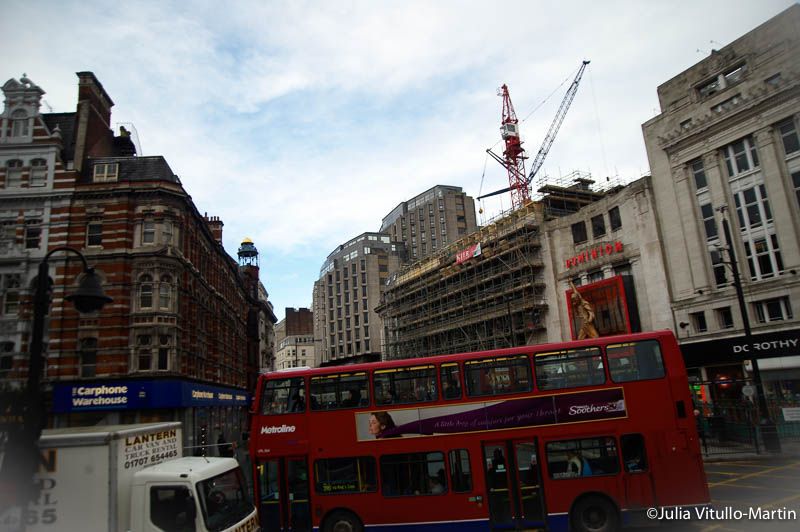
WHEN Michael Bloomberg talks about congestion pricing for New York, he refers to London and the success that city has had with the program. Indeed, he’s based his pilot on the London plan. Should the mayor be permitted his pilot? Absolutely. He just has to monitor it very carefully, casting a skeptical eye on all assertions of success until he’s sure the details are right.
Why is that? Because it’s not entirely clear that the London plan works as advertised.
The mayor accepts official British claims that since February 2003, when London began charging cars ($10 then, $16 now) to come into the central commercial district, traffic delays have dropped by 30 percent and road speeds have increased by 19 percent. More than $360 million has been invested in transit improvements and expansion resulting in, among other things, a 30 percent increase in bus ridership during rush hours. And, according to the mayor, the feared drop in retail spending didn’t materialize.
In other words, data from London show that congestion pricing reduced car traffic and encouraged more people to walk, bike or take public trains, buses and ferries. But that data cover only February 2003 through December 2005. Analysis from last year won’t be released until June, at the earliest. And to the naked eye, traffic congestion seems awfully close to being back to what it was before congestion pricing went into effect.
Angie Bray, a Conservative member of the London Assembly, says that her analysis of data provided by Transport for London, the agency that runs the city’s transit system, shows that traffic speeds have improved very little, and that congestion is still bad.
And it’s not just politicians who have their doubts about how effective the system has been. Taxi and limousine drivers say that congestion has increased. In January, while stuck in a traffic jam that filled the Victoria Embankment as far as the eye could see, my car-service driver, a lifelong Londoner, commented to me: “This is how it used to be most of the time. And it’s getting that way again.”
Transport officials concede the problem when pressed. Malcolm Murray-Clark, the agency’s director of congestion charging, said in March that traffic seemed to increase in late 2005, though he said it remains about 8 percent less than what it was before 2003. He argues that the increase is not because of any failure in congestion charging but rather unprecedented work on the city’s water and sewer systems. According to Mr. Murray-Clark, many roads are obstructed or closed.
Transport for London’s Web site acknowledges “increasing delays for traffic inside and outside the charging zone.” Now that the pricing zone has been expanded westward into the Kensington and Chelsea neighborhoods, some Londoners fear that congestion will worsen in these fairly quiet areas. New congestion may come from the 60,000 or so car owners living in there, all of whom, under London’s system, get a 90 percent discount on the charge when they enter the zone. This discount is essentially a residential permit, a device many politicians in New York are advocating. But if the point is to discourage traffic as much as possible, discounts and permits will undercut the intent.
London’s old data show that, at least until January 2006, half of car occupants who stopped driving into central London switched to public transportation and the use of bicycles and scooters increased by 40 percent. Would New York get similar results? Maybe. One of the virtues of the New York plan is that, like Ken Livingstone, the mayor of London, Mr. Bloomberg promises to correct some local transit deficits before introducing his pilot, most notably by providing express bus service and other transportation upgrades to the 22 neighborhoods that are under-served by public transit and that also have a high concentration of Manhattan-bound drivers.
But one London issue that has gone unscrutinized in New York’s public conversation on congestion pricing is the problem of boundaries. Transport for London doesn’t post congestion data on alternative routes to central London, but some Londoners say the problem is serious. Parking lots have sprung up outside the ring, enraging many local residents. Worse, long lines of cars form in the evening just before 6 p.m., when the charge disappears. As Ms. Bray said, “When you draw an arbitrary line around an area, you run the risk that any traffic that wishes to avoid the charge will just drive someplace else.”
Mayor Bloomberg has suggested a northern boundary in Manhattan at 86th Street. What does that mean for the already busy neighborhoods north of 86th Street? If London is our guide, expect more congestion and more parking lots in those areas.
Julia Vitullo-Martin is a senior fellow at the Manhattan Institute.