
In a stunning claim on Monday, President Trump said his administration was “shocked” that Iran has responded to his attacks by launching missiles and drones at neighboring Gulf Arab monarchies that are closely allied with the United States.
“They hit Saudi Arabia, Qatar, the UAE, Kuwait,” Trump told reporters, his tone one of astonishment. “Nobody expected that. We were shocked. They fought back!”
Trump’s remarks only added to the dense fog that now obscures his administration’s official planning for the Iran military operation both before and after it started late last month.
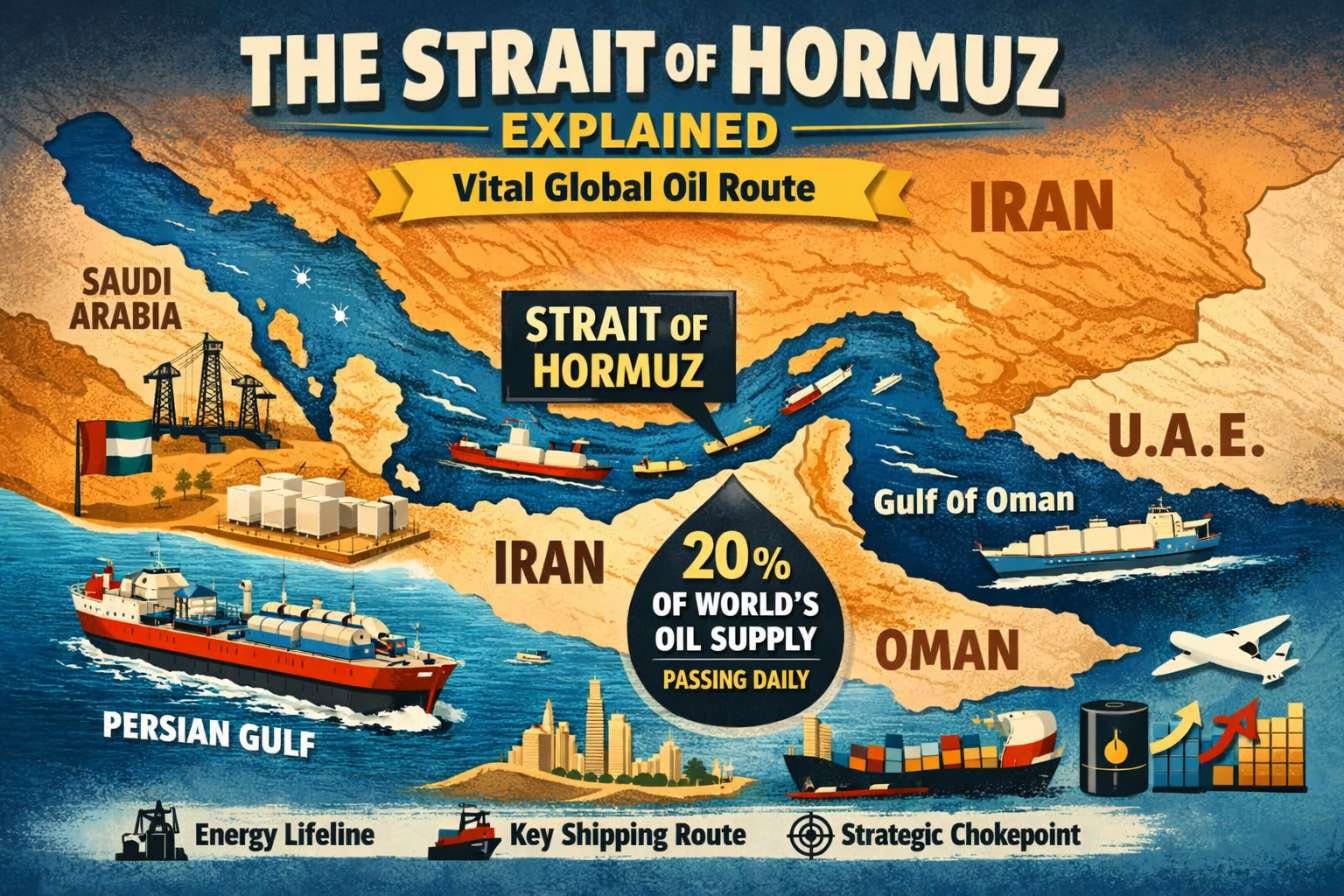
Last Friday, CNN reported that both the Pentagon and National Security Council had significantly underestimated Iran’s willingness to close the Strait of Hormuz, the narrow shipping channel at the mouth of the Persian Gulf that controls the flow of a fifth of the world’s energy supplies, in response to US military strikes.
The next day, however, The Wall Street Journal said Gen. Dan Caine, chairman of the Joint Chiefs of Staff and Trump’s top military adviser, had repeatedly warned the president before the war began that Iran could retaliate by closing the strait, using naval mines, missiles and drones. The paper said Trump decided to move ahead with the operation anyway, convinced Tehran would surrender before closing the strait, and if necessary the U.S. Navy could reopen the waterway. That looked like Caine’s allies were just making sure blame for Trump’s miscalculation didn’t land on him.
All that is beside the point now as the war grinds on into its third week with no end in sight. In their public remarks, Trump and Defense Secretary Pete Hegseth continue to stress that U.S. forces enjoy an overwhelming advantage over Iran’s regular military and its Islamic Revolutionary Guard Corps on the battlefield, noting that U.S and Israeli airstrikes so far have destroyed 90 percent of Iran’s ballistic missile launchers and drones.
In the runup to the war, many feared Iran’s vast arsenal of short- and intermediate-range ballistic missiles would do grave damage to America’s allies, in particular Israel, and to U.S. bases across the Middle East. But that hasn’t happened.
“Compared to what we were concerned they would be able to do, which was to volley-fire hundreds of missiles at a time, the damage has been relatively minor,” retired Army Gen. Frank McKenzie told CBS Sunday Morning. The Gulf Arabs states and Israel, armed with U.S.-supplied and domestically manufactured air defenses, have shot down the vast majority of incoming missiles and drones.
But Iran isn’t fighting the same war that Trump and Hegseth are waging. Tehran’s leaders, long aware that their forces are no match for the U.S. military on the battlefield, are waging asymmetric warfare, much like past insurgents—from the Viet Cong, to Iraqi militants to the Taliban, all of whom wore down their vastly militarily superior American foe.
In the war on Iran, the regime will count its mere survival as a victory. It’s “a government that welcomes being in a war and thinks it can win a war by not losing,” Jon Alterman, director of the Middle East program at the Center for Strategic and International Studies, a Washington, D.C. think tank, said on the Mar. 6 SpyTalk podcast.
So for the near—and possibly distant future—Iran’s tactical approach is to continue the missile and drone salvoes that have locked up the Strait of Hormuz, severely depleted the air defense munitions of Washington’s regional allies, jacked up the price of oil to more than $100 per barrel, and ruptured global energy supplies. Strategically, Iran is counting on the resulting economic hardship to foment enough global political pressure on Trump to end the war.
The Iranian regime is “behaving like an insurgency, not as a great power,” Beth Sanner, a former deputy director for National Intelligence, told Sasha Ingber’s HUMINT podcast. Sanner added that Trump’s key assumption going into this war — “that we were going to win this war because we had overwhelming military force,” so far isn’t translating into Iran’s defeat as quickly as Trump had assumed — if at all. Meanwhile, U.S. intelligence is telling Trump that “Iran’s regime likely will remain in place for now, weakened but more hard-line, with the powerful Islamic Revolutionary Guard Corps security forces exerting greater control,” according to a Monday report in The Washington Post.
In the Gulf Arab states, Tehran’s asymmetric strategy is all too evident at the ports, airports, and oil installations that have been hit by Iranian missiles and drones, shattering the region’s tourism industries and reputations for safety and stability. In Israel, there are signs of attrition, too, with military officials acknowledging that Iran’s daily missile and drone attacks have depleted the military’s stores of interceptors to critically low levels.
Choke Point
But the strategy’s highest profile target is the Strait of Hormuz. where Iran’s reliance on sea mines and cheap drones, has allowed it to impose major economic costs on the global economy.
“President Trump famously says, ‘You don’t have any cards,’ and he thinks that these weaker players, like Iran, don’t have cards,” Sanner said. “But what we’re discovering is that when you are fighting an asymmetrical battle, other countries — smaller, weaker — if they’re creative and they think like insurgents, they have cards. And right now, Iran has the global economy as its hostage.”
In his remarks to reporters Monday, Trump called on China, allied Asian nations and NATO members to send their warships to the Persian Gulf to help the U.S. Navy break Iran’s blockade of the Hormuz Strait and restore the free flow of shipping through the waterway. British Prime Minister Keith Starmer had actually offered Trump two aircraft carriers to aid in the campaign back on Mar. 6, but the president turned him down, evidently miffed that the U.K. had otherwise not backed the war and saying it would be over before the warships arrived on station anyway. So far, no other NATO country has agreed to Trump’s demand to help open the Hormuz Straits.
Nathalie Tocci, an international relations professor at Johns Hopkins’ School of Advanced International Studies in Bologna, Italy, says European leaders feel no obligation to help Trump wage a war he never discussed with them beforehand and which they don’t support. Speaking to the PBS News Hour Monday, she said trust between NATO countries and Washington collapsed after Trump paused U.S. military aid to Ukraine and threatened to use force to seize Greenland from Denmark, a NATO member.
“The NATO countries have no more appetite for what Trump is selling,” she said. ###

