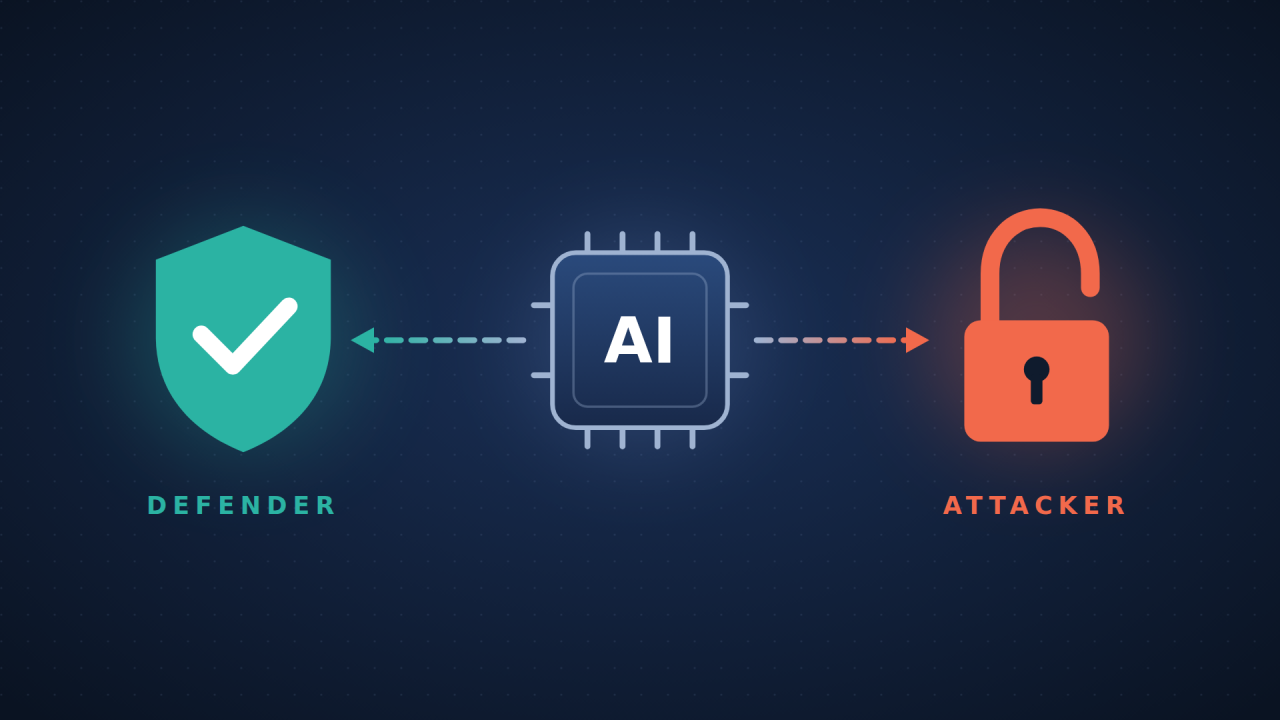
Most security tools cut both ways. A port scanner will map your network as readily as it maps someone else's, and penetration testing frameworks exist because defenders need to see their systems the way an attacker would. Over the years the industry has worked out some ground rules for dealing with it: coordinated disclosure, license checks on offensive tools, and red teams that work under signed contracts.
I think many product marketers in cybersecurity carry around a quiet concern about how the things we help sell could be misused. While it's something we're used to, AI has turned up the volume considerably, putting pressure on industry norms. A model that reads code well enough to spot a vulnerability for a defender can spot the same flaw for an attacker, and a model that writes a convincing phishing simulation for awareness training can write a convincing phishing email for a criminal. The outcome is determined by who is using the tool and what the vendor does to control access.
In 2025, Google's Big Sleep AI agent found an SQLite vulnerability that attackers were already aware of and were preparing to exploit. The flaw was patched before it could be used. In May 2026, Google's Threat Intelligence Group reported the attacker's version of the same capability: a criminal group using a zero-day exploit that Google believes was developed with AI assistance to bypass two-factor authentication in a popular open-source administration tool. Incidents like that leave security vendor product marketers and go-to-market teams with responsibilities most software sellers rarely have to consider.
What Changes for Marketers
Security buyers want to know exactly what a product detects, how it finds weaknesses, and how quickly, and good marketers have learned to answer those questions in detail. That habit could become a liability once the product includes AI-driven offensive features like automated exploit validation, attack path generation, or autonomous pen testing. A thorough demo or a deep technical blog post could end up serving as a how-to guide for the wrong audience. Research, product, and marketing teams should agree before launch on how much technical detail to make public.
The same caution applies to who can get their hands on the product. Free trials, community editions, and self-serve sign-ups are standard ways to shorten a sales cycle. When a tool can generate working exploits or run social engineering at scale, however, self-serve access means the vendor has little idea who is using it or what for. Some vendors now put offensive features behind customer verification, scoped authorization, or delivery as a managed service. That extra step slows the buyer journey, and GTM teams will need to account for it in their conversion targets and sales cycle forecasts.
The way vendors talk about attackers needs the same care. "AI-powered attacks" has become a fixture of security messaging, and that's fair, since attackers are using AI for phishing, reconnaissance, and churning out malware variants. Vague warnings still wear down credibility with practitioners, who are good at separating hype from reality. A warning about AI-enabled threats is more convincing when it points to documented incidents or published threat research, and buyers tend to remember which vendors overstated the danger.
Vendors also need to look at their own model supply chain, since more security products now run on third-party foundation models whose providers set their own usage policies, and some of those policies restrict offensive security work. A roadmap that depends on capabilities a provider might later limit is a risk, and the sales team should know about it before committing features to a customer.
Where to Start
Vendors must still talk openly about what their AI can do, because defenders need these tools and attackers are already putting AI to work. The vendors that earn trust will take a safety-first approach. They'll build dual-use into the product definition and the messaging, and handle it as carefully as they handle compliance claims.
Most of this starts with small changes to the launch process. A dual-use review belongs on the checklist for any feature that finds, validates, or exploits weaknesses. Access criteria for offensive capabilities should be defined up front and explained to buyers early. Every threat claim should trace back to a source a practitioner would accept, and sales should be briefed on any model provider policies that affect the product.
Security product marketing has always required a "no fluff" approach and more restraint than most other B2B categories. The audience is technical and skeptical, and easily spots hype. AI adds a new wrinkle. When a vendor shows what its AI can do, attackers learn what's now possible. Marketers who plan for this in their positioning and launch process will maintain the credibility that security buyers reward.