Many of us aren’t sleeping properly, are drinking too much, and can hardly remember what our life was like pre-lockdown. We wake each morning in the new normal to check our notifications with a roiling unease, peeking at our phones through parted fingers. What now? What else?
Yet amid the fear and anxiety a clarifying mood has emerged. Now that everything is upended we are forced to evaluate what and who we love, what brings us joy and what drains the absolute life from us. We are in this thing for a long time, and we are analysing the makeup of our days like never before.
Which brings me to work. Dial back the news cycle six months and experts were wringing their hands over the problem of workplace burnout. Sure the economy was sluggish even then, but our worker bee engines were in overdrive: we were “multitasking”, “actioning emails” and “reverting back” en masse. We were busy – so busy – and when we weren’t busy being busy, we were busy worried about the emotional and societal impact of so much busyness. The World Health Organisation even went so far as to classify burnout as an “occupational phenomenon”.
Now we exist in the Covid-19 time zone and things have shifted. While there are doubtless cohorts of employees working harder than ever – for example frontline health workers, journalists covering breaking news, supermarket staff – those of us fortunate to still be in paid work are facing manageable inboxes for the first time in decades.
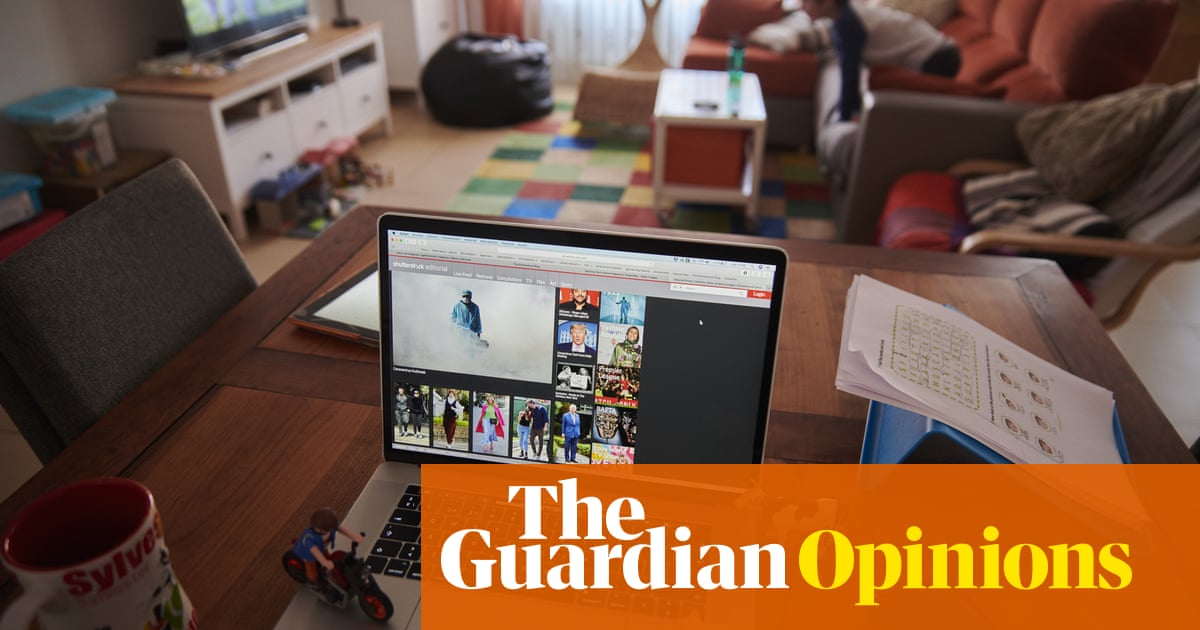
A number of experts I have interviewed over the past few weeks for various stories have expressed a deep, almost guilty, relief at the forced simplicity of work life despite the many complications of working from home. There is no plane to catch to an industry conference hosted by a peak body that no one has heard of, or pointless stand-up meetings to be roped into while wondering how many missed netball matches make you a bad parent. There is messiness now for sure: kids, partners, dogs underfoot, but that is the stuff of life, and for once our work is elbowing its way into our days rather than the other way around.
Now that the chief executive’s emails from every business in the nation have dropped off, I am left with an inbox reminiscent of the early years of Microsoft Outlook: a few Nigerian scams, a couple from my parents’ joint Hotmail account, and a small number of important work ones.
This is not to suggest that the way we work now is ideal – what with our cats, dogs, partners and children popping up in our Zoom calls – but that the collapse of work life as we know it may mark the start of a new approach, a rethink. And at the risk of sounding like a PowerPoint presentation, it gives us an opportunity to reshape our relationship to work and its inflexible clock-in, clock-out model and ethos of hyper-productivity.
Perhaps one of the insights from the abrupt rise in unemployment over the past few weeks has been that we need jobs rather than careers now more than ever. That when it comes down to it, people need stable work and real flexibility to survive challenging times, rather than corporate leadership camps or roving global thought leaders to give us pep talks about the entrepreneurial mindset.
By changing how we work, we change how we relate to each other and ourselves. Now that we can no longer direct our ambition towards the next big thing on our iCal, we have the time to ask ourselves: what is truly worth pursuing? Startup culture, in particular, suggested that if we toiled relentlessly, woke at 4am and networked 24/7, we could conquer the world. If that clearly doesn’t matter now, what else is worth working hard for?
At the very least, here is hoping the pandemic spells the end of the developed world’s myopic focus on getting ahead, of growth for growth’s sake. Let it mark the death of our deification of work, of checking emails at 11pm, of Silicon Valley garble and its slavish obsession with disruption.
Let me never hear the phrase “eat, sleep, work, repeat” again or chance upon those inspirational hustle quotes on Instagram imploring women to “lean in” and connect with their #girlboss.
Now that we are all working from home in our pyjamas let’s drop the soul-destroying pretence of robotic efficiency and find the humanity in what we do.
• Johanna Leggatt is a Melbourne-based journalist
America faces an epic choice ...
... in the coming months, and the results will define the country for a generation. These are perilous times. Over the last four years, much of what the Guardian holds dear has been threatened – democracy, civility, truth.
The country is at a crossroads. The Supreme Court hangs in the balance – and with it, the future of abortion and voting rights, healthcare, climate policy and much more. Science is in a battle with conjecture and instinct to determine policy in the middle of a pandemic. At the same time, the US is reckoning with centuries of racial injustice – as the White House stokes division along racial lines. At a time like this, an independent news organization that fights for truth and holds power to account is not just optional. It is essential.
Like many news organizations, the Guardian has been significantly impacted by the pandemic. We rely to an ever greater extent on our readers, both for the moral force to continue doing journalism at a time like this and for the financial strength to facilitate that reporting.
We believe every one of us deserves equal access to fact-based news and analysis. We’ve decided to keep Guardian journalism free for all readers, regardless of where they live or what they can afford to pay. This is made possible thanks to the support we receive from readers across America in all 50 states.
As our business model comes under even greater pressure, we’d love your help so that we can carry on our essential work. If you can, support the Guardian from as little as $1 – and it only takes a minute. Thank you.