You are so lucky. Deep in stage four lockdown, you hear yourself saying it in your head, to your partner, to your dog on the daily walk. Others say it back to you too, in the Melbourne Zoom rooms that have replaced lost human connection.
“How are you going?” you ask your close friends.
“It’s hard. But we are lucky. Luckier than most.” Bad luck is everywhere and yet everyone you know tells you they are lucky. Luckier than most.
But you are lucky. You are healthy, Covid-free and have a diversified income stream. You are a freelancer with superannuation. Seven years of self-employment has turned you into a crazed financial prepper, and now that the end times are here, you have transitioned from paranoid to well prepared. Still, you check your bank balance daily, making sure the money is still there, half expecting the pandemic to wipe away all of your hard work. Why should you be spared?
Friends call and text you from interstate, well-meaning and solicitous: How are you??? It feels as if they are sending out feelers from a distant planet, making contact from Mars. Call me if you need to talk. You don’t feel entitled to complain about the unending dread in your heart, the way you miss your friends, the way you miss brunch. These are the problems of people without real problems so you text them back something innocuous, something safe. You say you are lucky.
Another day, another 11am press conference. As the case numbers remain stubbornly high throughout August, you start to look for people to blame. You compose responses to idiotic tweets and Facebook rants. Your world suddenly feels full of other angry Melburnians also looking for someone to blame. “Seriously?” you type in response to one comment. “I totally disagree …” you begin, in reply to another. Every day, you write comments on social media posts and then you back space and delete them all.
One day you listen to your favourite podcast, This Jungian Life, and the analysts speak about the psychological importance of “holding the tension” of opposing positions, of avoiding dualistic thinking and convenient conclusions, and you think, “Yes, this is it, this is what is necessary”. But you also think: no one is capable of doing that right now. You long for the pleasure of sinking into absolutism, of swapping complexity for moral certainty. You understand why people unquestioningly “Stand with Dan”, and why others insist this virus is a hoax. To be certain of something, no matter how scant the evidence, is to defeat these uncertain times. It is to win when no one is winning.
Your work continues (so lucky!) but your small daily tasks feel monumental, as if you are climbing a mountain rather than merely sending an email. Your inbox is suddenly full of chancers, people promising quick ways of making money on dodgy platforms, while others from dubious-sounding “companies” hope to commission your writing services at a drastically reduced rate – people desperate enough to hope that you’re desperate enough.
Your quarterly business activity statement is due and you cannot make sense of the numbers. You usually enjoy work admin, but you fear running a GST report right now may just be the thing that does you in. You enter some numbers and it turns out they are incorrect: you owe the tax office $286,000.
And still the lockdown grinds on. Every book in the world has been read, every podcast has been downloaded, every Ottolenghi dish has been attempted, including that one with the entire roasted cauliflower. At night you dream of your former life as a breezy traveller: piazzas in Italy, crowds in Delhi, the glorious energy of other places. You read a lot of Philip Larkin and you see portents of the current calamity buried in his poems. There are two lines from Afternoons that preoccupy you: “Something is pushing them / to the side of their own lives.”
Getting through the day without picking fights involves strategic and careful planning, of marshalling inner resources, of meditation apps and more alcohol than you would like to admit. You used to do this living thing rather effortlessly. What happened?
You start taking vitamin D tablets to counteract the lack of sunlight. You follow your dog around the house, moving your laptop into sunny spots, chasing the low northern light of winter.
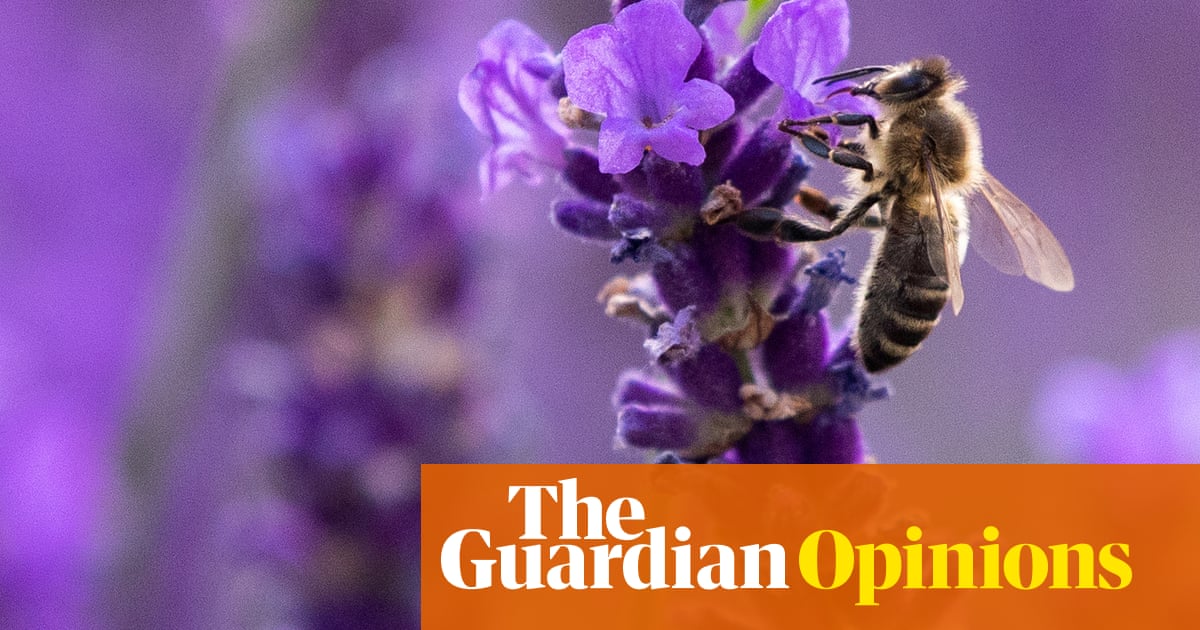
Spring comes early, and you tell yourself it has nothing to do with climate change. The first bee lands on your lavender bush. It feels like a miracle, a blessing. You drag your partner to the front garden, but you can’t find the bee again, it has taken off. “Look, it was here.” You make him wait until the bee returns.
Then another good thing happens. You take a socially distanced walk with a friend who lives around the corner. You are both wearing masks, but when you see her you think you might die of happiness. She is well and she is the same.
Now it’s September and the cases are dropping and you talk about what you will do “afterwards”. There are plans to rent a house in the Otways, to visit each other’s houses again. Plans to make plans.
You walk home alone, towards the setting sun. You can still feel what it felt like to walk at a distance next to her: filled up, loved and hopeful.
• Johanna Leggatt is a Melbourne-based journalist
America faces an epic choice ...
... in the coming months, and the results will define the country for a generation. These are perilous times. Over the last four years, much of what the Guardian holds dear has been threatened – democracy, civility, truth.
The country is at a crossroads. The Supreme Court hangs in the balance – and with it, the future of abortion and voting rights, healthcare, climate policy and much more. Science is in a battle with conjecture and instinct to determine policy in the middle of a pandemic. At the same time, the US is reckoning with centuries of racial injustice – as the White House stokes division along racial lines. At a time like this, an independent news organization that fights for truth and holds power to account is not just optional. It is essential.
Like many news organizations, the Guardian has been significantly impacted by the pandemic. We rely to an ever greater extent on our readers, both for the moral force to continue doing journalism at a time like this and for the financial strength to facilitate that reporting.
We believe every one of us deserves equal access to fact-based news and analysis. We’ve decided to keep Guardian journalism free for all readers, regardless of where they live or what they can afford to pay. This is made possible thanks to the support we receive from readers across America in all 50 states.
As our business model comes under even greater pressure, we’d love your help so that we can carry on our essential work. If you can, support the Guardian from as little as $1 – and it only takes a minute. Thank you.