Australia’s pandemic story – the tale we tell ourselves to get through Covid-19 – has changed.
We had all but beaten the virus by shutting down the economy and paying the price in considerable job losses. While those long weeks of lockdown felt desperate and interminable – what with the indecorous brawling over toilet paper and the home isolation – we were starting to see an endpoint, the stirrings of a future that was not shadowed by Covid-19.
Next up, surely, would be trips to New Zealand, hugging friends, and finally the vaccine breakthrough that would restore the world as it was.
Medical experts warned us about a second wave, pointing to examples of small peaks in other countries with similar case levels, but as we gradually reopened our doors to our businesses and our homes, we hewed to this story of good fortune. It could have been so much worse. We were so lucky.
We are lucky, of course, to be weathering the pandemic in a country with Australia’s well-equipped healthcare system, and we are, by all accounts, still tracking remarkably well in terms of mounting global deaths and cases. Yet, the sobering reality of daily life in a pandemic – the seesawing between freedom and restriction, connection and isolation – is increasingly clear.
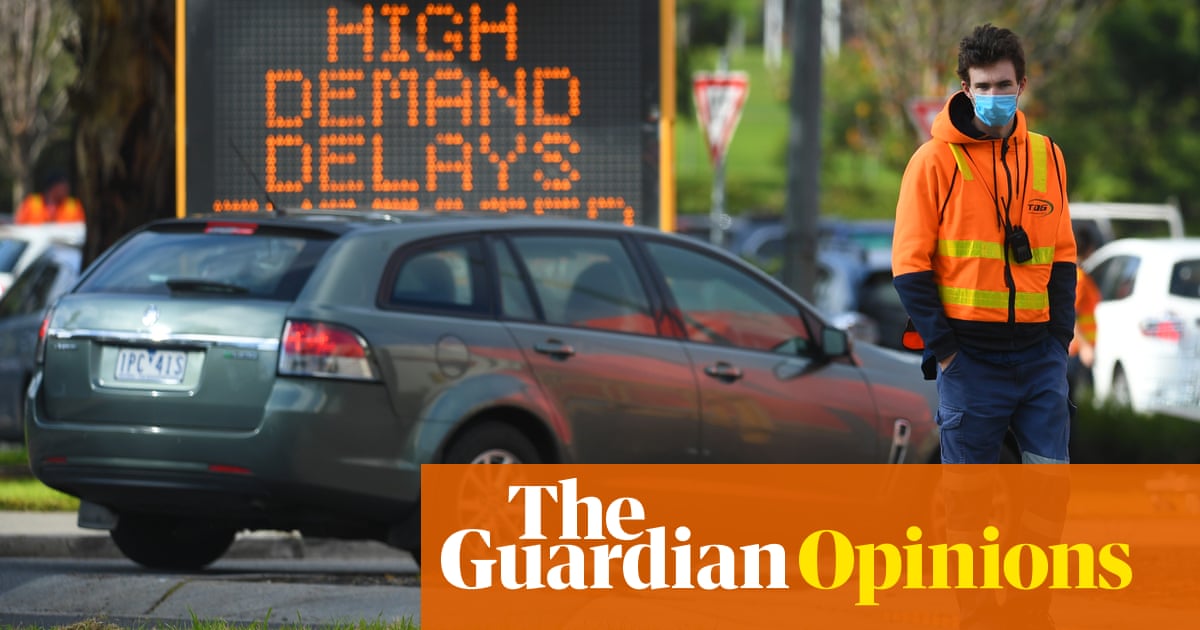
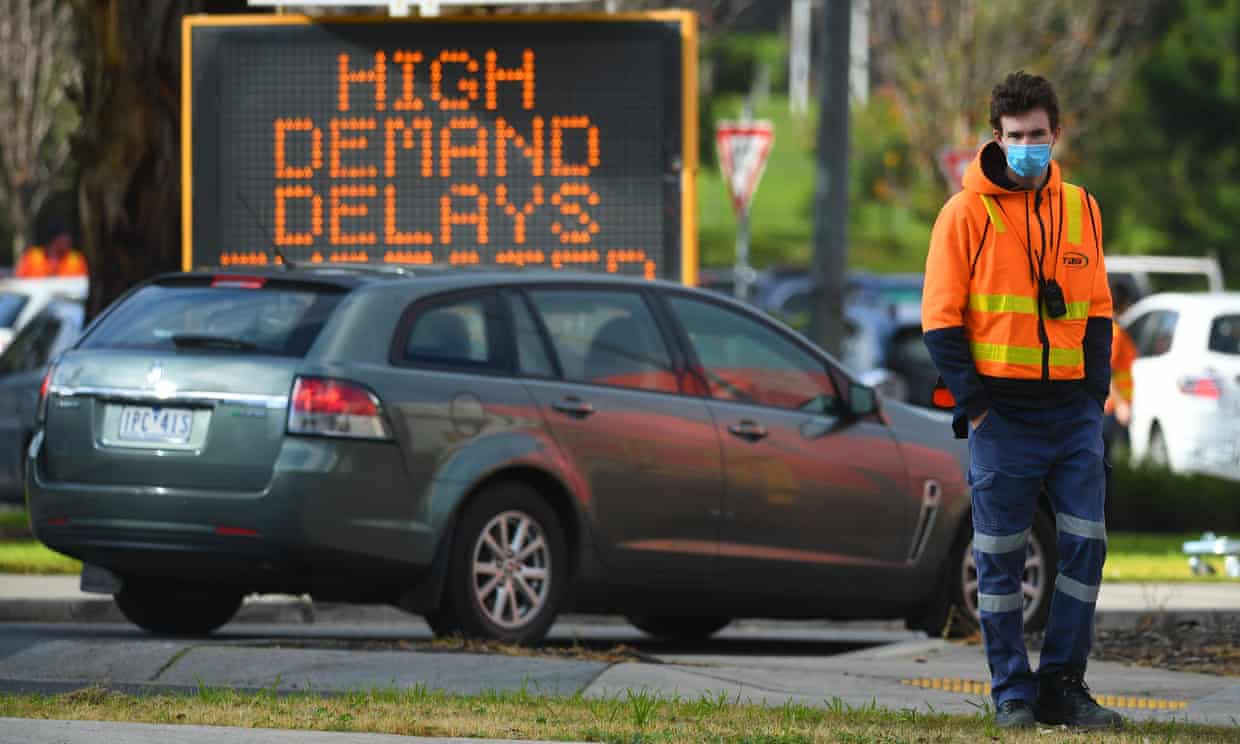
Melburnians have felt this intensely over the past week, as a rise in cases of community transmission prompted premier Daniel Andrews to reimpose restrictions on family and outdoor gatherings, and announce a widespread testing blitz in hotspot suburbs assisted by Australian defence force personnel.
Panic buying returned to some Melbourne stores, forcing CEOs of both major supermarkets to write yet another group email explaining to customers that they will have to – yet again – limit the purchase of essentials to stop grown adults from stockpiling.
Victoria is the proverbial canary in the coalmine at the moment, and as the past week has shown, it only takes a small amount of community transmission for the government to hit pause on our lives, just when we were starting to enjoy a degree of freedom again.
It is clear now that the new normal, the one we are all desperate to define, is resistant to categorisation.
What we can say for certain is that we will be inconvenienced in a number of ways for an indeterminate amount of time in many parts of our life.
There is speculation that large employers will require employees to queue for temperature checks and lifts if and when they return to the office. Retailers are asking people to wait in line to enter stores when maximum capacity is reached. People in Melbourne’s CBD now queue to enter the tiny holes in the wall where the city’s best coffee emerges from.
Eating out has become a well-choreographed event, arranged into 90-minute sessions and requiring contact details on arrival. Gyms, too, quite reasonably, require strict adherence to group fitness etiquette and hand sanitisation.
This is likely to be OK for a little while, but frustration will set in as the economy continues to contract and life fails to return to normal. How will Australians handle the feeling of being monumentally inconvenienced at a time when the colour has been bleached from our lives, and big plans no longer shimmer on the horizon?
After all, we cannot gather in groups with friends and family to find comfort in the unifying experience of shared inconvenience, or vent about the ignominy of being stuck in a hot-spot.
I have enormous faith in Australians when an expansive effort is needed against all odds, but I wonder how exemplary our conduct will be when our lifestyle, practically a modern obsession, is what is at stake.
If incidents of road rage are any indication, we are not especially patient either. Anyone who has accidentally cut someone off on an Australian road and watched the offended driver’s rage unfold in operatic disgust in the rear-view mirror, would be well aware of our intolerance for altered schedules or minor delays.
Perhaps Australians are allergic to inconvenience because we are used to so many comforts, of things being a certain way.
We can make sacrifices if the reward is in sight, but with this pandemic there is no moment to arrive at, no clearly marked point in the future in which we formally rejoice the end.
We may have a vaccine in a couple of years, but we may not. We may be able to travel interstate to see our elderly parents later this year, or we may not.
We are making sacrifices to prevent something from happening rather than the much more satisfying experience of pitching in together to bring about something new.
It’s an important demand, a necessary test, but a tough one nevertheless.
• Johanna Leggatt is a Melbourne-based journalist
America faces an epic choice ...
... in the coming months, and the results will define the country for a generation. These are perilous times. Over the last four years, much of what the Guardian holds dear has been threatened – democracy, civility, truth.
The country is at a crossroads. The Supreme Court hangs in the balance – and with it, the future of abortion and voting rights, healthcare, climate policy and much more. Science is in a battle with conjecture and instinct to determine policy in the middle of a pandemic. At the same time, the US is reckoning with centuries of racial injustice – as the White House stokes division along racial lines. At a time like this, an independent news organization that fights for truth and holds power to account is not just optional. It is essential.
Like many news organizations, the Guardian has been significantly impacted by the pandemic. We rely to an ever greater extent on our readers, both for the moral force to continue doing journalism at a time like this and for the financial strength to facilitate that reporting.
We believe every one of us deserves equal access to fact-based news and analysis. We’ve decided to keep Guardian journalism free for all readers, regardless of where they live or what they can afford to pay. This is made possible thanks to the support we receive from readers across America in all 50 states.
As our business model comes under even greater pressure, we’d love your help so that we can carry on our essential work. If you can, support the Guardian from as little as $1 – and it only takes a minute. Thank you.
