Dubbed the most influential philosopher alive, Peter Singer is loved and loathed for his controversial views. Now he wants us to give away a lot of our money. Jo Baker reports

For a man who sparks volcanic public debate wherever he goes, Peter Singer comes across as remarkably mild mannered.
"I do cause some controversy, but there are also misunderstandings," acknowledges the renowned moral philosopher, softly, as we plumb a few of the inaccuracies that have tainted the public reaction to his work. Although dubbed by The New Yorker magazine as "the most influential philosopher alive", Singer, known also as a bioethicist and activist, has been maligned during his career for tolerance or support, from a moral standpoint, of euthanasia, abortion, the rights of animals over some humans, infanticide and forms of bestiality - not to mention his calling "the whole edifice of Judaeo-Christian morality" terminally ill. And these charges have now swollen to include the belittling of wealthy philanthropists. This is a serious charge-sheet indeed.
An academic, with appointments at the University of Melbourne, in Australia, and Princeton University, in the United States, the Australian visited the University of Hong Kong recently to publicise his new book on the ethics of giving charitably, parts of which have also managed to cause indignant emissions from the public. The Most Good You Can Do is a challenge to the affluent (and not so affluent) people around the world who might consider themselves to be "good". In it he argues that many of us, if we were truly good, could afford to give about a third of our income to charity.
Yet as a proponent of the "effective altruism" movement, certain good deeds and charities rank much higher in Singer's book than others - which is where the belittling comes in. In an interview earlier this year, the philosopher criticised the donation of US$100 million by an American tycoon for the renovation of a concert hall at New York's Lincoln Centre for the Performing Arts, which would later be named after the philanthropist. Singer pointed out that just US$100 can restore the sight of a blind person. The basic needs of people around the world must take priority, he said. "Then help people listen to concerts in beautiful concert halls." In certain circles, hackles were raised.
But Singer has supported his moral argument with another one. Effective giving is not only the hallmark of an ethical person, he says, but a happy one, too.
"I think a lot of people do want to find more fulfilment, do something that is more worthwhile than just displaying their wealth," he says, having noted that, according to studies, a sense of wellbeing is not increased by wealth accumulated beyond about US$75,000. In a city that is home to 732,000 millionaires, and in which around one in five children lives below the poverty line, this in itself is a racy statement.

Australia, to a family of Austrian Jews that had been decimated by the Nazi genocide. This legacy prompted his preoccupation with ethics and morality, he says, although less so an investigation of them as a philosopher (which was more because he "liked to have a good argument").
Told by his father that he would never earn a living as a philosopher, Singer nevertheless rejected law in favour of philosophy, and after taking bachelor's and master's degrees in Melbourne, he won a scholarship to Oxford University, in Britain.
It was there, as a postgraduate student and a lecturer, that he developed and refined his adherence to utilitarianism - the view that the greatest happiness for the greatest number is the measure of right and wrong - and set about popularising and applying this perspective in modern society. He developed a knack for presenting compelling - though not always pleasant - arguments in both academic circles and the public eye.
"If you are utilitarian you work on the basis that we should minimise suffering and maximise happiness," says Singer. "Obviously, a lot of other people think that you must minimise suffering, too, but they may believe, for example, that there are moral rules that you shouldn't break, that there are independent principles like justice and equality, which weigh independently of whether they reduce suffering or produce wellbeing.
"Utilitarians don't think this - they think these things are desirable when they are a means to an end."
Singer's views have seen him confronted by baying mobs, receive reams of hate mail, likened to Hitler's deputy and described as "the most dangerous man on Earth" by his most vehement critics, including The Wall Street Journal and disability rights activists. And yet his starting point, he says, is compassion.
"The topics I want to influence the public on are ones where I think there's a great deal of unnecessary suffering that could be prevented, if only we did a few things differently - things within the ability of individuals to do in their own lives and that don't require government [intervention]," he says, in his soft-spoken manner.
It was in 1975 that the philosopher began to prove his father wrong by publishing Animal Liberation, which gained considerable public attention. In the book, he argues that the suffering of animals is comparable to human suffering, and that because some animals are smarter than young children and severely impaired adults, they should be given greater consideration. It became a founding text of the world-wide animal-rights movement.
"I'd say we don't really know enough about how we compare the tragedy of a family losing a child with the suffering of chickens confined for a year in a crowded space [where they] can't stretch their wings," he said in an interview with The Wall Street Journal.
At the root of Animal Liberation - and Singer's theories on euthanasia and abortion, among other issues - is the belief that the welfare and value of beings should be measured by their capacity to have self-aware experiences and hold preferences, rather than a supposed innate right. Singer has argued, for example, that the life of a chimpanzee or an elephant is of more value than the life of a severely impaired human.
"I don't think that if you're a member of the species Homo sapien, your life is more precious than if you're a member of any other species, irrespective of other capacities or abilities," clarifies the philosopher. It similarly makes no sense, he has argued, that while there are more differences between a great ape and an oyster, compared with those between a human and a great ape, the former two are lumped together as "animals" while we are "human". He famously challenged this boundary further in 2001, when he suggested that "mutually satisfying activities" of a sexual nature between humans and animals should not necessarily be opposed.
Similarly, Singer argues that fetuses and newborns lack the essential characteristics of personhood, including self-awareness, which means that the killing of either can never be equivalent to killing an aware being that wants to go on living.
"I think it's reasonable to say that compassion, empathy and concern for others underlie my ethical position. I think the most vehement critics of my views of the sanctity of life are people who come from a religious foundation, usually a conservative Christian foundation, and think that all human life is sacred in the way that non-human animals can't be."
In 2012, when the philosopher became a Companion of the Order of Australia, the nation's highest honour, the response was predictably split, and predictably fiery. On one side were those who consider Singer an advocate of genocide. On the other were those, such as the leader of Australia's Greens party, Christine Milne, who applauded "his global reputation for challenging people to reconsider their views on ethical behaviour, animal welfare and the human condition".
For some, the philosopher's latest focus on charitable giving may be no less confronting than his previous topics of inquiry. This is particularly so in a city that is famous both for its wealthy tycoons and its impoverished rubbish collectors aged well into their 70s and 80s. Singer remains optimistic.

"Obviously, there's great wealth in this city now," he says. "When countries are struggling to establish themselves at a certain level of economic security, philanthropy is less prominent, but once they get to that point, then people who made a lot of money start to ask themselves, 'What am I going to do with this, what am I doing it for?' They sort of realise that the ninth Ferrari doesn't make any difference to their happiness.
"It's questionable whether the first did.
"That's something that, if you haven't had money, is exciting for a while and gives you some kind of status, but I think a lot of people tire of it."
Singer points to the rise of effective altruism as a movement, which has been influenced by a small core of moral philosophers including himself, and grown fast in the past few years. Now, more than ever, believes Singer, people are transforming their lives to have the biggest impact on changing the world for the better, whether through donations, lifestyles or the careers they choose.
"In the US, you find people who made a lot of money quite early in life, much before they thought they would, through IT stuff, start-ups, working for hedge funds. So they're thinking, 'I'm 25, I've already got tens of millions, what am I going to do with the rest of my life?' Somebody said to me, 'I could travel the world and stay in luxury hotels for years, but after that, what?'"
Singer believes that the difference between the conventional forms of giving charitably and this new movement lies in information technology. We now live with considerable awareness and data about the inequalities of our world. Where it was once difficult to feel certain that donations would be well spent, now a reliable group of independent organisations investigate, calculate and then rate charities for the impact of their work. This has shown that some charities are hundreds, or even thousands, of times more effective than others.
"There are excellent websites that you can now go to, to find organisations to donate to," he says, mentioning Give Well, which was set up by a group of donors employed full-time in the hedge-fund industry, and The Life You Can Save, which Singer himself set up.
In a 2013 TED Talk, viewed more than a million times online, Singer underscored his controversial style with images of two-year-old Wang Yue, who was run over by a van in Foshan, Guangdong province, and later died of her injuries, having been ignored by passers-by as she lay on the ground.
"How many of you said to yourselves, 'I would not have done that; I would have stopped to help'?" he asked, as the majority of his audience raised their hands. Then he gave the statistic that in 2011, 6.9 million children aged under five died from preventable, poverty-related diseases, according to the United Nations Children's Fund. Now that we can be connected within seconds to organisations that can save them, he argued, the location or the nationality of these 19,000 per day makes them no different, morally, to a child you pass in the street.
Singer applauds the clear rise in effective philanthropy among the millionaires and billionaires of the start-up and tech era. Warren Buffett, and Bill and Melinda Gates have saved 5.8 million lives and improved the health of many millions more, he says, with no one - not even renowned American philanthropists Andrew Carnegie and John D. Rockefeller - having come close to any one of them in impact. Yet Singer is more focused on the hundreds of thousands of others who are making the change.
At a Hong Kong International Literary Festival talk last month in Wan Chai, Singer spoke of Australian academic Toby Ord, who, on a modest salary, calculated that he could give enough throughout his career to cure 80,000 people of blindness in developing countries and still have enough left for a good standard of living. Ord later founded Giving What We Can, an organisation that unites people who want to do the same. The organisation now has more than 1,000 members and has pledged more than US$350 million to "evidence-based global poverty interventions". Singer spoke of those who have saved numerous lives by making simple sacrifices - forgoing a new car, a holiday or even bottled water in countries where tap water is safe. And he spoke of Matt Wage, a Princeton philosophy graduate who decided the best thing he could do was not to go into development and aid, but to work in finance - which he currently does in Hong Kong - and give a six-figure sum each year to effective charities.
"Because, if you earn a lot of money, you can give away a lot of money, and if you're successful in that career, you could give enough to an aid organisation that it could employ, let's say, five aid workers in developing countries," says Singer, explaining why that would be so much more beneficial than volunteering yourself.
The philosopher has largely lived by his own moral code. He has been a vegetarian for 45 years and, for the past four decades, has donated to charity between 10 per cent and 33 per cent of his income, and aims to eventually reach 50 per cent. As a father of four, he remembers bringing up his children to inquire in a similar manner.
"[Their upbringing] can't have been too bad because we're still a close family," he says. "Sure, we talked about ethical issues; there was a bit of a … philosophy for children movement, which prepares educational materials for primary-school-age kids, and I remember reading them with my children. I think we did a couple of classes in their primary school."
His wife, he says, has been supportive of many of his choices - although she did suggest, on his turning vegetarian, that he start cooking a little more.
More serious has been Singer's grapple with issues surrounding his mother, who died of Alzheimer's disease - a condition that largely robs its victims of the qualities, such as self-awareness and autonomy, by which the philosopher measures a life's value. Singer did support her financially while she was ill and has admitted that the decision to end a person's life feels "different" when that life belongs to someone close, which resulted in charges of hypocrisy. Yet other family members, including Singer's sister, shared the decision-making and care, and, he says, with difficulty, his mother would probably have died six months earlier than she did had he been in sole charge.
Yet what comes through most clearly, overriding the Australian's zeal as an activist and his knack for hitting the human heart where it hurts, is the distinctive and too-rare calm of someone who is at peace with his place in the world. When he dies, he says, his tombstone will make for a modest read.
"It would say something like, 'He did what he could to make the world a better place'," he says, after some thought. "You know, I don't see myself as somebody who's transforming the whole world, I see myself as part of a long tradition that dates back to Socrates, that has always been trying to make the world a more human, more compassionate place.
"If I've helped a little bit to move things forward, that's enough."
Brittany Porter said she went through a Muslim marriage ritual with Kelantan Sultan Muhammad V, thinking it was an engagement ceremony

When American recording artist Brittany Porter met Sultan Muhammad V, ruler of the Malaysian state of Kelantan, she thought their fairy tale romance led to an engagement. A year later, she discovered that the Islamic nikah ceremony was in fact a religious marriage, a revelation that came only after the country’s former monarch had cut off contact.
“In April 2024, we went on our first trip together to Oman. I thought we got engaged there, because in my culture the big ceremony is a wedding which we planned for January 2025. So I was confused. In Oman they brought an imam out and I did the whole conversion, but he didn’t teach me all that much about Islam,” said the California native, who is now releasing music inspired by her break-up.
Porter, 30, said that she only recently learned that a nikah constitutes a legally binding marriage under Islamic law. The aspiring pop singer has since broken her silence on her relationship with Muhammad V, who previously reigned as King of Malaysia from 2016 until his abdication in 2019, when he resumed duties as the ruler of the religiously conservative Kelantan province.
“We met in January 2024 in New York, introduced by mutual friends on a night out. We had this instant chemistry and good banter,” she said, describing his intelligence and “cute” British accent as an immediate draw. “We were just friends at first, but we started talking every day and the next thing you know …”

The pair embarked on a whirlwind romance, with Porter and her friends being treated to opulent holidays in the Middle East and Thailand as well as lavish gifts of clothes, handbags and jewellery set with blue diamonds to “match [my] eyes”.
“He flew me and my friends all around the world. He was so generous, the nicest hotels, giving my friends the best treatment, experiences and gifts. He loves hotels, he probably spent millions on them for our trips,” Porter told This Week in Asia.
Upon their return to Malaysia, she was referred to as “Che Puan”, a courtesy title for non-royal women who marry senior royalty. There, she was told she had to change her dressing and demeanour to what she describes as “pretty much perfect all the time”.
Shopping sprees soon became a point of contention, with the couple having arguments over her expenses as well as mismatched timetables.
“All the clothes I brought with me were obviously not right for Malaysia. We went on shopping trips to get new clothes, but then he’d complain about how much I spent even though we’d spent lots more before. It felt like he was upset about something else and used this as an excuse. He would spend nights awake, turning off his phones in the daytime.”
The pair’s relationship became strained following Porter’s miscarriage last July, and the former monarch ceased contact with her last October.
“I freaked out and flew to Malaysia from LA, found out he was in Singapore, and flew to Singapore. He was staying on the top floor of the Four Seasons and the front desk wouldn’t let me up. I climbed the stairwell, which wasn’t my best moment. He wouldn’t answer his door so I got a room there and kept texting asking if he wanted to talk. In the middle of the night he just got on a plane and left. His butler texted me, apologising.”

Porter claims that Muhammad V eventually contacted one of her friends to convey that the relationship was over, describing the pair as “separated”.
“I’ve gone from thinking I was a fiancée to realising I was married to now being separated. I learned about the Islamic divorce method of talak and checked old texts to see if he had talak-ed me, but there’s nothing along those lines,” said Porter, who has since taken to social media to demand clarity ahead of her album launch.
Need for closure
Her tell-all posts include screenshots of text messages as well as pictures of upscale boutiques, Chanel and Louis Vuitton shopping bags, high-end watches, a private jet interior and footage of a caged pride of lions at the royal residence.
“I never received any kind of closure and accountability. I deserve a proper divorce, a proper apology.”
Her posts have attracted the attention of hundreds of Malaysian netizens, some critical and others supportive.
“You should handle this matter personally,” posted one user, while another said: “This is why Kelantan always looks bad in people’s eyes.”
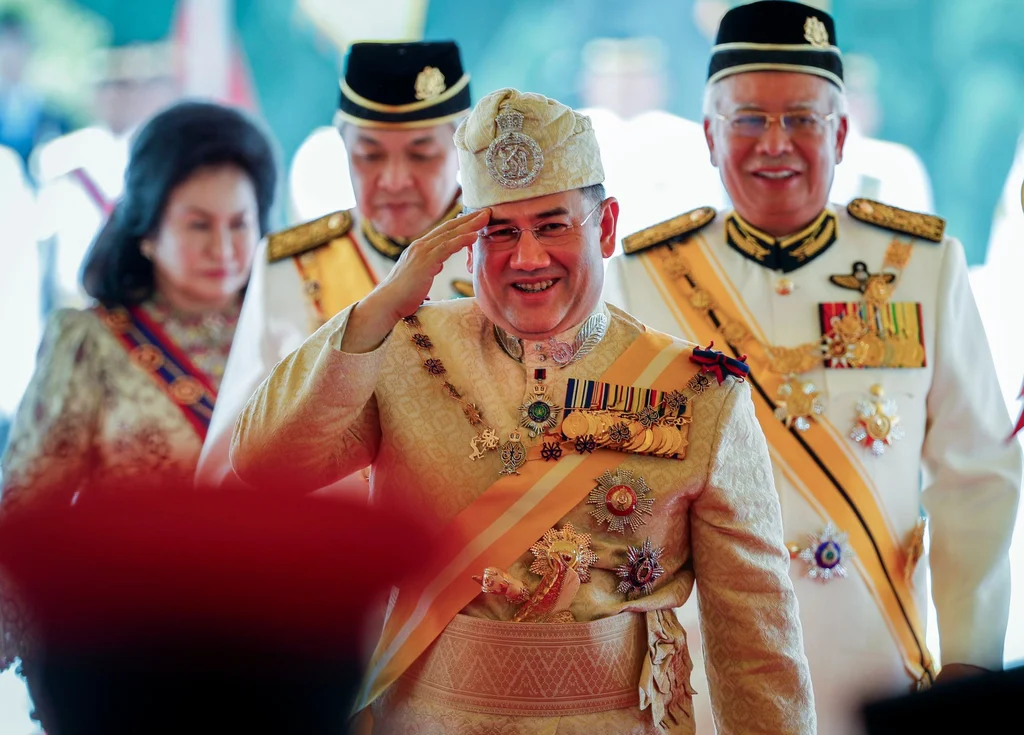
Kelantan is the second poorest state in Malaysia, grappling with slower economic development and low household income compared to other provinces, as well as almost yearly flash flooding. The government has announced several infrastructure and poverty alleviation measures to address these gaps.
“People online have been telling me eye-opening things. Learning about the realities of Kelantan really disappointed me. It’s been tough to wrap my head around the fact that some people don’t even have basic necessities, because I’ve seen the way their ruler lives. That money should be spent on the people. I feel guilty being a part of that,” Porter said.
Porter also said she was shocked to see a recent social media post congratulating Sultan Muhammad V and his wife, Sultanah Nur Diana Petra, on 15 years of marriage.
“He told me they were not on speaking terms, that it was over and she wasn’t in the picture. If I had known I was going to be a second wife, I don’t know if I would have accepted that.”
This is the second time in recent years the Kelantan Palace has been thrown into the spotlight due to the sultan’s marriage woes.
In 2019, the Oxford-educated Muhammad V abdicated as Malaysia’s king, the first such occurrence in the nation’s history.
This came after reports he had married 27-year-old Oksana Voevodina, a Russian model and beauty queen. Oksana, who also goes by the name Rihana Petra following her conversion to Islam, is currently based in London with her son, Tengku Ismail Leon Petra.
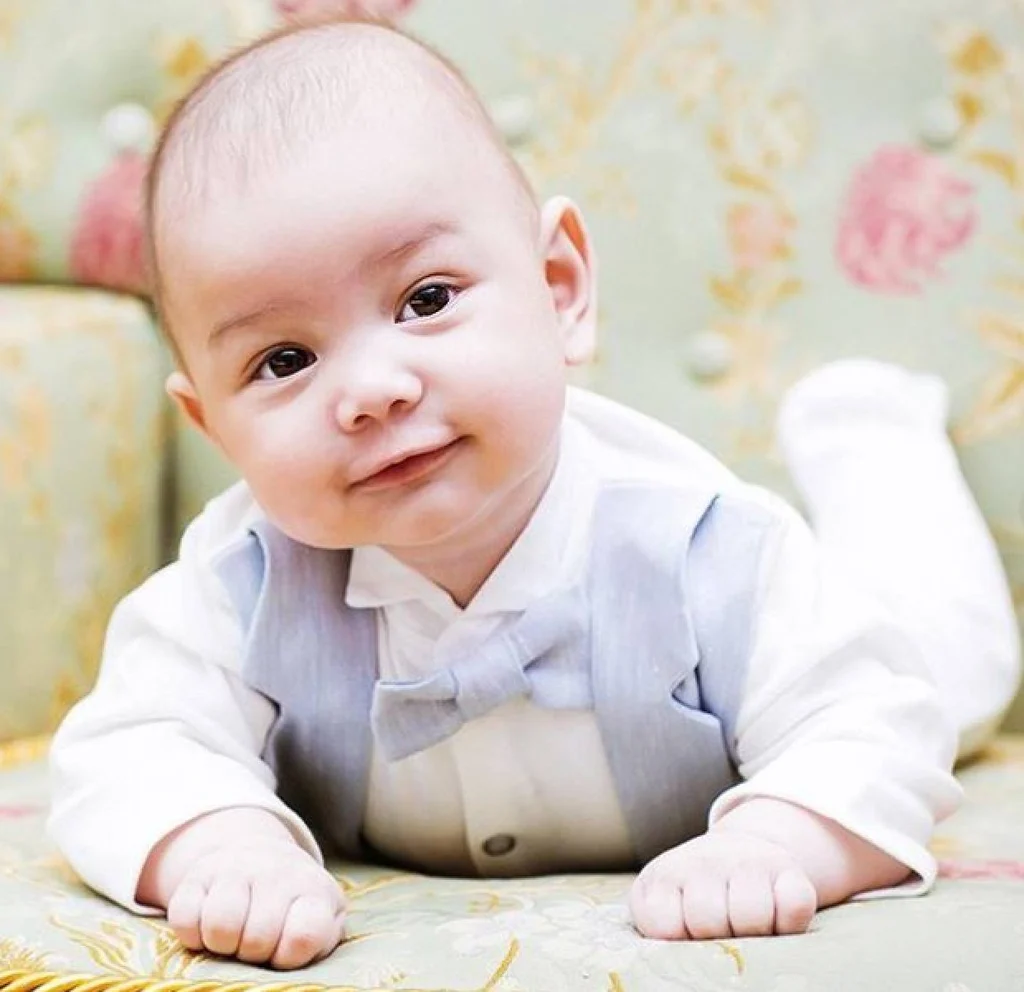
Porter, who said she was not in contact with Oksana, also posted images of text messages allegedly from Muhammad V detailing his alimony and child support payments to Oksana for Leon, now six.
Following the breakdown of the relationship, Porter spent several months in the UK, “doing therapy and writing a lot about my feelings”. She has since returned to public life and is pursuing a music career under the stage name Brook Lynn, releasing two singles this year and a full album next January.
“The album is about falling in love and destruction. I’ve learned I will never give my power away to a man ever again. I hope I can be a light for anyone else going through something similar to stand up for themselves and pursue their purpose.”
The Kelantan Palace has not responded to any of Porter’s statements.
Malaysia, a parliamentary democracy, possesses a unique constitutional monarchy system. Nine sultans – symbolic guardians of Islam, each overseeing a different state – take turns to be king for five-year stints. The office of the king is funded by taxpayers while each state ruler is also provided with a yearly allocation, the amount of which is not made public.
Unlike neighbouring Thailand, Malaysia does not have strict laws against insulting royalty, but colonial-era sedition laws and other repressive legislation have been used against critics of the monarchy in the past.
In 2018, a veteran journalist was investigated under the Sedition Act after revealing that the government spent 256.9 million ringgit (US$61.4 million) in 16 months on the king’s expenses during Muhammad V’s tenure.