Doctor Who has been on TV long enough to transition through so many evolutions of the medium and survived in spite of some shoddy archiving techniques in the process. So much of what remains of the show鈥檚 earliest years is, of course, still in black and white鈥攁nd while the BBC itself has made attempts to colorize Who鈥檚 history, one fan is taking it into his own hands.
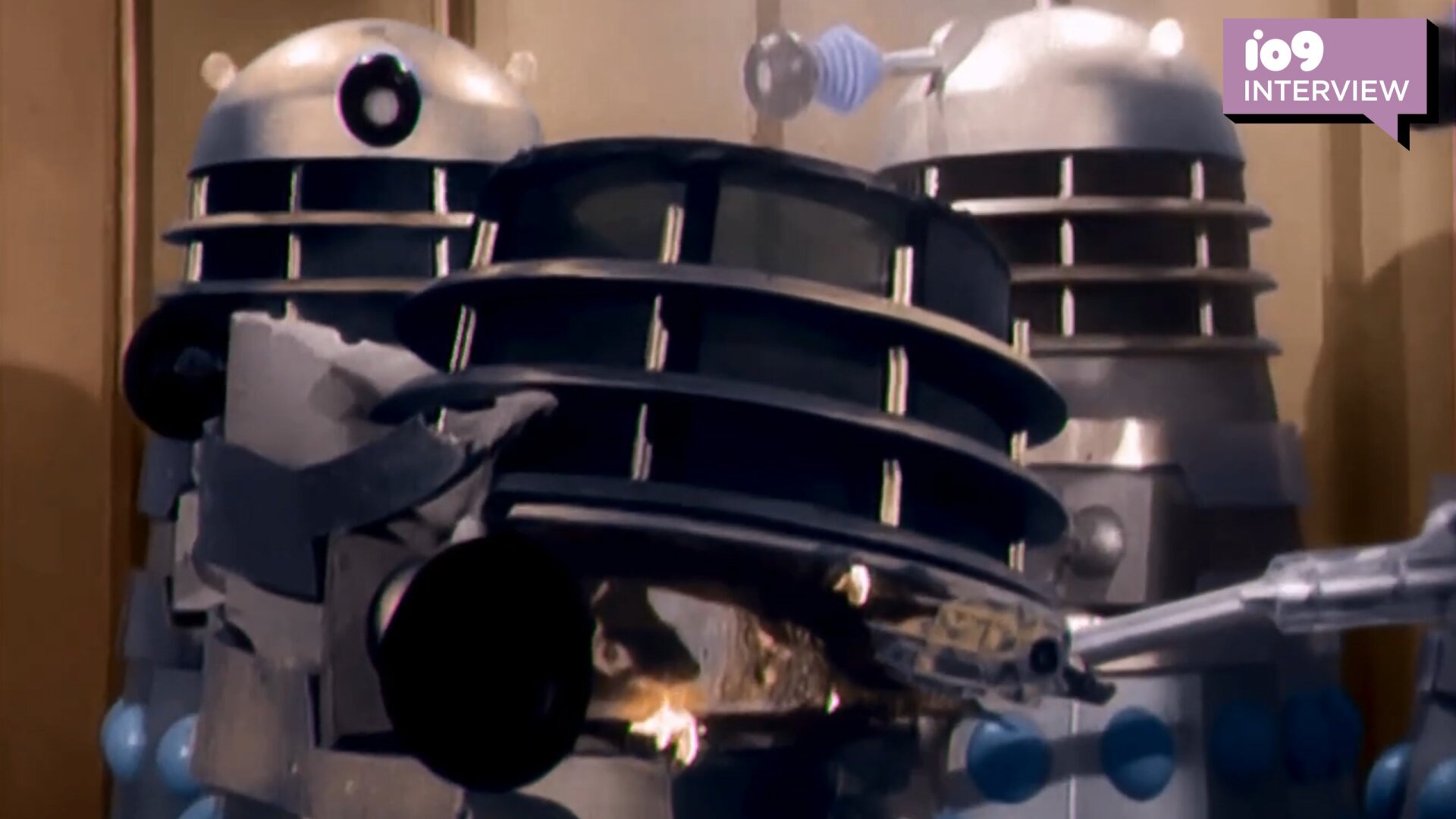
Rich Tipple is a producer, director, and colorizer who鈥檚 both a Who fan and someone who鈥檚 worked with the BBC on home releases of the classic show. In the run-up to this year鈥檚 58th anniversary of Doctor Who鈥檚 debut (November 23, 1963), he鈥檚 turned his professional career into a bit of a fandom hobby, taking clips from the sci-fi series鈥� earliest era and trying to faithfully recreate them in full color. 鈥淚 got into Doctor Who during the 鈥榳ilderness years.鈥� I was too young to really remember McCoy, but by the time of the [Paul McGann-starring] TV movie I was a huge fan! I鈥檝e got my dad to thank,鈥� Tipple told io9 over email. 鈥淥ne day in HMV [Ed鈥檚 note: That鈥檚 a video/music store called His Master鈥檚 Voice] he picked up a double-VHS set of 鈥楾he Dalek Invasion of Earth.鈥� We watched it together the following day and I was hooked. I loved this mysterious time traveler, and Daleks coming out of the Thames… magic! I had nightmares about Daleks and Robomen for weeks afterwards. My mother was so angry at dad鈥攂ut we kept sneaking off to watch it!鈥�/p>
Tipple鈥檚 fascination with classic Who might not be so typical of fans who have grown up with the modern iteration of the show for the past 16 years. Audiences used to the flashy CG, action pacing, and visuals of modern Doctor Who can find revisiting the show鈥檚 past a daunting prospect, especially when it comes to the earliest Doctors like William Hartnell or Patrick Troughton, who also have the extra hurdle to face in their stories being in black-and-white.
鈥淚 kept meeting younger Doctor Who fans that wouldn鈥檛 give the 鈥�s era a go. I found this difficult to process because for me it鈥檚 the golden age of the show. Some people just don鈥檛 connect with black and white鈥攕o I thought I鈥檇 do something about it,鈥� Tipple added, explaining why he started colorizing clips from the series. 鈥淎s soon as you add color something magical happens. A clip you鈥檝e seen a hundred times before suddenly feels new. It鈥檚 like watching something for the first time. It breathes new life into something familiar. Sometimes when you鈥檙e in the middle of things it鈥檚 hard to see the wood through the trees. Perhaps I鈥檝e spent eight hours coloring a bronze button on the Doctor鈥檚 coat… when I zoom out and watch everything back I鈥檓 like, 鈥榟ey, that works!鈥� It鈥檚 time consuming but that鈥檚 what makes it rewarding!鈥�/p>
Tipple鈥檚 passion for restoring classic Doctor Who is something he鈥檚 been able to spin into part of his career as well, helping the BBC鈥檚 home release of Doctor Who season eight鈥擩on Pertwee鈥檚 second season as the third incarnation of the Doctor. Although it wasn鈥檛 quite Tipple鈥檚 usual colorization work, building on original black-and-white material (Doctor Who debuted in color in 1970’s season seven, when Pertwee joined the series), it was still a chance to work on one of his favorite shows. 鈥淚t was a huge honor to be involved in the season eight Blu-ray release. The BBC were encountering some issues with the color on a 1971 Jon Pertwee story called 鈥楾he D忙mons.鈥� It鈥檚 a story that has had all manner of ingenious color recovery thrown at it, So I was building on top of some excellent color work but some scenes still required manual intervention. I worked with Gav Rymill, Anthony Lamb and Kieran Highman, so a real team effort! The whole process was amazing. I kept pinching myself. To use my colourisation skills to help restore 鈥楾he D忙mons鈥� to how it looked when originally broadcast was thrilling.鈥�/p>
But beyond his chance to work on the show officially, Tipple has started sharing his passion for restoring Doctor Who online by painstakingly working on bringing clips from classic stories like 鈥淭he Dalek Invasion of Earth鈥� and others to life in color. Even working as just a single fan, it鈥檚 an arduous process. 鈥淵ou always start a colorization by looking for source material. Are there any behind the scenes color photos of the sets? Were any props reused during the color era? This stuff is vital as it allows you to pick the correct colors out,鈥� Tipple said of the process. Being faithful to the original is just one step, but given Doctor Who鈥檚 shaky archival history in its earliest days, proof of costume colors or set decoration isn鈥檛 always going to be easy to find.
鈥淥f course you鈥檒l never get a reference for everything and you do have to use some artistic license. It鈥檚 important to be creative, and use a pallet that works tonally. The 1960s was a vivid, technicolor decade and I like that reflected in my work,鈥� Tipple continued. 鈥淭here鈥檚 an age-old debate about the TARDIS console too. It was painted green so that it would appear white on a monochrome television set. So at this point do you go with the authentic color of the prop, or go with what the production team wanted to achieve? I don鈥檛 think there鈥檚 a wrong answer but I鈥檝e definitely favoured a subtle green coloring.鈥�/p>
Tipple sees his work, fan project or not, as something the BBC鈥檚 slowly been getting into lockstep with in recent years as it seeks to recover as much of Doctor Who鈥檚 lost early history as possible. It鈥檚 a way to celebrate the earliest era of a sci-fi legend, breathe new life into it for younger audiences, and preserve it as it was imagined to be seen by its cast and creators all those years ago. 鈥淚 think as a community [Doctor Who fans] are so well looked after. I can鈥檛 think of another franchise, bar possibly Monty Python, that gets half the love and energy that Doctor Who releases get. The people that put this stuff together really care about the show. They go above and beyond. Even now, nearly 60 years since the first episode, people are still unearthing new information,鈥� Tipple reflected. 鈥淚t鈥檚 incredible. Some things are lost, and some will never come back, but the fans are keeping it alive. It鈥檚 brilliant to see the BBC animating things like 鈥�a href="https://gizmodo.com/doctor-whos-long-lost-evil-of-the-daleks-has-been-anima-1847210737">Evil of the Daleks鈥� and 鈥�a href="https://gizmodo.com/doctor-whos-least-threatening-dalek-knockoff-returns-in-1847680645">Galaxy Four,鈥� two stories I never thought I鈥檇 have on my DVD shelf!鈥�/p>
As the BBC works to restore鈥攁nd where it can鈥檛, re-animate鈥攃lassic stories lost to time (and space!), Tipple remains hopeful as a fan that there鈥檚 still more joy to be found in revisiting the series鈥� earliest days like this. 鈥淭he future for the classic Doctor Who range is in safe hands and as a fan, I鈥檓 excited to see what the future brings. We鈥檝e cleaned up old prints, we鈥檝e restored the sound, we鈥檝e vidfired the picture… as technology improves perhaps we鈥檒l see Hartnell in HD! Maybe we鈥檒l get the whole 1960s era in colour鈥攚ho knows! Even today we鈥檙e seeing things that 10 years ago I wouldn鈥檛 have thought possible, so we really can鈥檛 rule anything out.鈥�/p>
You can see more of Tipple鈥檚 restoration and colorization work on his Twitter account.
Wondering where our RSS feed went? You can pick the new up one here.