
Donald Trump won West Virginia by nearly 42 points in 2016 after promising to stop President Barack Obama’s alleged “war on coal” and bring back the declining coal industry after “a lot of years of horrible abuse.”
To the shock of almost no one, Trump was unable turn back time, reverse climate change or manufacture demand. The real shock is that because of a deal coalescing in Congress, West Virginia – its identity tied so tightly and sometimes so tragically to coal mining – now could be on the verge of a post-coal energy future.
“I really do think this is a watershed. I see this as a chance for us to stay an energy state,” said Coalfield Development founder and CEO Brandon Dennison, whose group in Huntington, West Virginia, creates businesses in green sectors and uses them to put people to work.
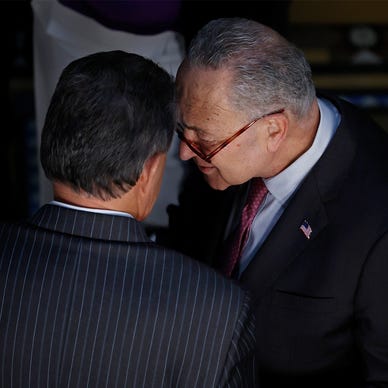
The reason for his optimism, Dennison told me, is the Democratic energy, tax and health care agreement that Senate Majority Leader Chuck Schumer and Senate energy committee chair Joe Manchin suddenly announced last week. If it passes both chambers, and that’s always an if until it happens, it could be a turning point not just for West Virginia but also for America and the world.
Now is the time for a climate change deal
The deal would make what Senate Democrats call “the single biggest climate investment in U.S. history,” an assessment shared by other analysts. Roughly $370 billion would be invested in “energy security and climate change” over 10 years. The climate provisions could produce by 2030 a 40% reduction in U.S. carbon emissions, a major contributor to climate change, and spur global action. Some of the money would support fossil fuels during the transition to clean energy.