Tariffs could lead to price increases for consumers, so here's what you need to know.

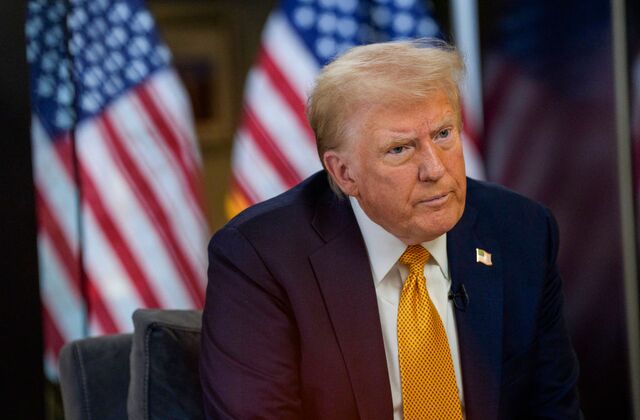
President-elect Donald Trump has reiterated plans to implement more tariffs when he is back in the White House.
Key Takeaways
- President-elect Donald Trump says he'll enact tariffs as soon as he gets into office.
- The proposed tariffs target the top suppliers of U.S. imported goods, among others.
- Many experts suspect the tariffs will lead to price increases for consumers.
- You may want to take advantage of pre-tariff pricing on imported items like smartphones, TVs, computers, appliances and clothing.
President-elect Donald Trump has continuously emphasized his plans to enact new tariffs on imported goods.
With just more than a month until he takes office, these proposals have become a top concern for many Americans and U.S. companies. Retail giants like Walmart and Best Buy, for example, have already indicated that such tariffs could lead to price increases for customers.
"There is a quasi-consensus that Trump tariffs risk feeding inflation through increased production costs for imported goods," Jean-Baptiste Wautier, a financial and global economic policy leader at Wautier Family Office, said in an email.
Here's a closer look at the proposed tariffs, their potential impacts and what you may want to buy sooner rather than later.
Trump's Proposed Tariffs
Trump enacted new tariffs during his last term and has consistently reiterated plans to implement more this time around.
On Nov. 25, the president-elect wrote the following in a post on Truth Social, "On January 20th, as one of my many first Executive Orders, I will sign all necessary documents to charge Mexico and Canada a 25% tariff on ALL products coming into the United States, and its ridiculous open borders. This Tariff will remain in effect until such time as drugs, in particular Fentanyl, and all illegal aliens stop this invasion of our country!"
He also mentioned adding a 10% additional tariff on all imports from China until they stop sending drugs to the U.S. and 100% tariffs on BRICS countries if they try to move away from the U.S. dollar.
George Calhoun, a professor of quantitative finance and the director of the Hanlon Financial Systems Center at the Stevens Institute of Technology, points out that Trump's tariff proposals appear to be a bargaining tool instead of being implemented as a matter of principle.
"If it’s a bargaining tactic, then we enter into true game theory – and the question of actual impact depends on how we forecast the players’ moves and countermoves. Whether tariffs end up being imposed, and at what level, will be much more uncertain," Calhoun says.
Top U.S. Imported Goods That Could See Price Hikes
If Trump's proposed tariffs do go into effect, companies importing goods into the U.S. from impacted countries will face higher costs. To offset the expenses, they may need to make adjustments, such as seeking alternative suppliers or increasing prices for customers.
And since China, Mexico and Canada are being targeted – the top three suppliers of U.S. imports – the potential impacts could be both significant and far-reaching.
Top Consumer Goods Imported Into the U.S. in 2024
When considering which goods and companies would be most heavily impacted, the following categories represent the top consumer products imported into the U.S. in 2024, year-to-date:
Top Goods Imported Into the U.S. in 2024
Beyond consumer goods, here are the top 10 imported goods overall in 2024, year-to-date:
To gauge the potential financial impact of tariffs, the National Retail Federation (NRF) studied the impact of a universal 10% to 20% tariff on imports and a 60% to 100% tariff on imports from China across different product categories. The results showed the following increases in consumer spending per year that the tariffs are in effect:
- Apparel: Up to a $24 billion increase
- Toys: Up to a $14.2 billion increase
- Furniture: Up to a $13.1 billion increase
- Household appliances: Up to a $10.9 billion increase
- Footwear: Up to a $10.7 billion increase
- Travel goods: Up to a $3.9 billion increase
- Total: Up to a $78 billion increase
The tariffs could affect companies across all these categories and more, impacting millions of consumers. However, an important question is if they will go into and stay in effect.
"Tariffs are easy threats to make and to unmake. This means they lend themselves to transactional bargaining processes," Calhoun says.
He says the impact will differ from one target country to another. For example, Canada and Mexico will likely be able to avoid implementation by accommodating stronger border control requests, but it may be more difficult for China.
"China does not have as much freedom of movement as many people might assume," Calhoun says. But he predicts China will find a way to accommodate the requests.
Planning Your Purchases Before Upcoming Tariffs
If new tariffs do go into effect, you can potentially benefit by making strategic purchases before price increases hit the market – and you may have a bit of time to do so.
"Although consumers may feel like they need to purchase foreign-made items like clothing, footwear, electronics, home appliances, household items and furniture ahead of Trump taking office on Jan. 20, 2025, the reality is that even with the promise of tariffs being enacted on day one, they probably won’t affect the prices of goods already in the U.S. – in stores and in inventory," Michael Ashley Schulman, a partner and chief investment officer at Running Point Capital Advisors, said in an email.
Schulman said any potential jump in retail prices may not be seen until a month or several months out from actual tariff enactment.
As for larger purchases like cars or homes, the best next move varies.
"Some U.S. car manufacturers produce locally, so the relative price of their models compared to Chinese imports, for example, will become more attractive. If you consider buying imported cars, you might either anticipate your purchase or look at U.S. alternatives," Wautier said.
He added that if inflation starts picking up after tariffs go into effect, interest rateswill too.
"Not only will they stop decreasing, but they could also go up for mortgages, so people might consider moving faster if they were buying a new home," Wautier said.