
Already have an account? Sign in
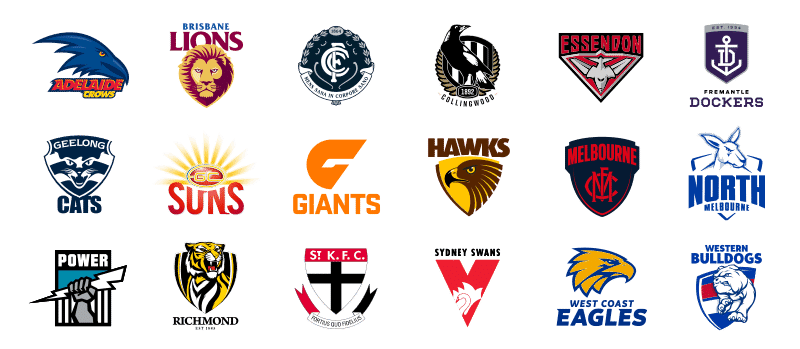
The mighty Blues! Up the Pies! Carn the Tigers! AFL nicknames are as well-known as official footy club names – but where did the footy monikers come from?

Note: this article has previously been published by Large Almond Latte.
Okay, so full disclosure: I don’t really ‘footy’.
Thanks for reading Japes' Place! Subscribe for free to receive new posts and support my work.
In childhood, I technically went for the Blues because my late dad did, but when pressed, I thought the captain was Anthony Koutoufides – in 2015.
I converted to the Cats, my partner’s religion, when I got married, as I was basically trapped in a never ending cycle of hearing about football, watching football, and going to the football. Personally, my main interests in footy lie around white powder scandals on Kmart plates, and the Brownlow Red Carpet.
That said, I do find the idea of the nicknames, or monikers, interesting. Why the Cats? Why do the ‘Blues’ wear navy? It’s time to fight out why we cheer on the mighty Blues, Up the Pies and Carn the Cats.
AFL team nicknames - origins
FYI: For this list, we’ll be focusing on when teams joined the official AFL League (previously known as the VFL) that are still operating as Clubs in the present season.
Adelaide Crows
The Adelaide Crows Football Club started flapping their official AFL wings in 1991.
Their colours of navy, red and yellow are apparently a nod to the South Australian flag featuring the same hues, while origin stories on the ‘crow’ are mixed (note: apparently not for stealing shiny things).
Some trace it back to the chosen moniker for the at the time, up-and-coming Port Adelaide team that wouldn’t ‘get off the ground’ until 1997.
Brisbane Lions
The team that previously operated as Fitzroy and the Brisbane Bears officially became the Brisbane Lions in 1996.
Becoming the ‘Lions’ was to represent being strong, with a previous slogan attributing the team as ‘kings of the jungle’, although Simba is yet to make an appearance.
Carlton Blues
One of the AFL’s oldest teams joining in 1896, the team referred to simply as the ‘Blues’ or ‘Navy Blues’ comes from the uniform (not their perpetual feeling during the last 20 years…) where navy was added in 1871.
This was apparently from a suggestion by T.S Marshall, known as the ‘Godfather of the Game’, who played in founding matches and was a player, captain, committee member and vice president of the Club.
Collingwood Magpies
The Pies are a founding team, with their colours of black and white made to match the native Australian magpie bird, which is also where they get their name.
Some stories suggest this was taken from the large among of magpies that nested in the suburb of Collingwood during swooping season, while others state it could be an homage to ‘magpie’ suites at Pentridge prison (matching the supporters?..) – hence the black and white stripes.
Essendon Bombers
Also a founding team sometimes referred to as ‘The Dons,’ the 16-time premiership winners apparently got their Bombers nickname way back in the 1940s.
The team’s former home ground was close to the Essendon Aerodrome that was used by military aircraft at the time, and so the name ‘Bombers’ was born, even making it into their catchy theme song where the ‘Bombers fly up, up!’
Fremantle Dockers
Western Australia has entered the chat. Following on from the West Coast Eagles, ‘Freo’ came into the AFL in 1994 representing the city of Fremantle.
The colours of purple, white, red, and green have a few meanings – that of traditional port colours, as well as the large Italian community of Fremantle (unsure if pasta is the official team meal).
As a primary port city, the ‘Dockers’ is a nod to the ship docks and wharfies in the area.
Geelong Cats
As the second team to join the League, Geelong are one of the oldest football clubs on Earth.
The colours of navy and white are a nod to blue water and white seagulls in the bay, while the nickname ‘Cats’ has been around since 1923.
It goes back to a local cartoonist, who after a string of losses, stated that the Club would need a ‘black cat,’ to bring its luck back – perhaps the Otways Panther said to roam the area at night?
Gold Coast Suns
While the name here seems obvious due to the sunny nature of Queensland, the newish Club has only been kicking around in the AFL since 2011.
Launching in 2010, the team also launched an accompanying theme song, Suns of the Gold Coast Sky, keeping in tune with the formal title, nickname, and lucky residents of the sunshine state.
Greater Western Sydney Giants
Not to be confused with the New York team with the same nickname, GWS, GW, the GIANTS or simply ‘The Giants’ team came on board in 2012.
Representing the west Sydney region as well as Canberra, the Giants name may have coincided with the original slogan to ‘Stand Tall’, and current motto to ‘Think Big. Live Big. Play Big.’
Hawthorn Hawks
An abbreviation of the suburb of Hawthorn, the team joined in 1902, one of the oldest founding members. While the original colours of blue and gold were taken by a rival team, the brown and gold which they are now famous (despite its connotations with certain bodily functions…) for were voted in.
The ‘Hawks’ moniker heads back to 1943, when then-coach Roy Cazaly said they were now the Hawks, “ready to fight hard and carry the ball away with pace and dash to the goal.”
Melbourne Demons
When did the Redlegs become the Dees?
As the oldest professional football club in the world, forming in 1859, it’s fair to say the team has had its share of changes over the years.
The colours of red and blue came about by accident, after Club members adorned some red socks and blue knickerbockers from England, becoming colloquially known as the ‘Redlegs.’ They then kept the colours as more teams joined the league.
The feared moniker is said to come from former coach Frank Hughes, who told the team to “lift your heads and play like demons.”
North Melbourne Kangaroos
Debuting in the now-AFL in 1925, the North Melbourne ‘Roos’ or ‘Kangas’ were previously known as the ‘Shinboners.’
It goes all the way back to 1954, when then-president Phonse Tobin allegedly decided the team needed a more Aussie nickname – and what’s more quintessentially Australian than a kangaroo?
Port Adelaide Power
The powerful nickname had a few changes from the Club’s original iteration. While founded in South Australia 1870 as the Magpies, the team only entered the AFL in 1997, where of course, that title (and the colours) was already taken.
Feeling that no new animal could replaced the beloved bird, the new name and colours of silver and teal were launched at the Adelaide Entertainment Centre to the blaring sound of Midnight Oil’s The Power and the Passion.
Richmond Tigers
While the Tigers originally wore blue with a yellow and black cap, the blue was ditched for the tiger-esque outfit to match their cricket team of the same name in 1915. Apparently in 1921, a superfan called out, “Eat ‘em alive, Tigers!” and the team from Tigerland was born.
St Kilda Saints
The nickname is an abbreviation of the area of St Kilda, while their catchy tune is adapted from the original recording of When the Saints Go Marching In.
Another one of the game’s founding Clubs, the colours are a combination of two former teams that made the modern team – the red and white of South Yarra, mixed with the black and white of then-St Kilda, then provided them with the now-famous stripes of red, white, and black.
Sydney Swans
Becoming the Sydney Swans after previously being known as South Melbourne in 1983, the name is a nod to all the Western Australian players who joined the team in the 1930s, with swans being the official emblem of the state. So… South Melbourne, Western Australia and Sydney represent!
West Coast Eagles
West Coast are relatively new, only entering the AFL scene in 1986. A team created to represent the country’s western supporters, the Wedge-tailed eagle is a popular species found throughout the state, so the name may be an homage to the killer species who feast on their prey.
Western Bulldogs
After a few name changes after the areas of Footscray in and Fitzroy, the team became officially known as the Western Bulldogs in 1996.
The nickname is said to go back to 1920 (when they were known as Footscray), where a flag with a bulldog on top of the team colours was presented to then-Club president. Since then, it took on a life of its own – in stamps, merchandise, and even a real-life bulldog mascot who comes to each game.
Enjoy the game! I’ll be watching the football concert and enjoying a pie.
Thanks for reading Japes' Place! Subscribe for free to receive new posts and support my work.