One wrong word or action and the world can turn its back on you. But Jessica Taylor Yates asks – is trial by media the new justice, or does the punishment not fit the crime?

A caveat: Please note, for the purposes of the below, when I refer to ‘cancel culture’, I'm not talking about actual crimes, or ongoing hate speech. Like P Diddy, get out of here. We are talking about matters deemed by some to be socially unacceptable– not criminally.
Have you got a secret shame that could get you cancelled?
If we learnt anything from The Good Place, it’s that eventually, even the mighty will fall.
Perhaps you used to call people ‘gay’ as a slur in high school, and now you work as a social worker and you’re terrified one lone YouTube upload could ruin it all.
Or maybe you laughed ignorantly when someone black-faced at a 21st, but if it came out, your social circle would crumble.
You might lose sleep about that 2008 Facebook photo where you wore an Indian headdress to a festival years before handing out YES pamphlets for The Voice.
All of these prior activities, we now know, are shit. But should you be ‘cancelled’ as a human being because of them?
If you were bad then, does that mean you should pay for it now?
In my opinion (note: not a fact), ‘cancelling’ has got to be one of the worst additions to culture since low-rise jeans made an attempted comeback. While any of the above occurrences would not be tolerated in a lot of progressive society, it’s important to remember that we are currently the most globally informed and connected generation to have ever lived.
While at one point in time, the above ‘indiscretions’ may have been (incorrectly) deemed socially acceptable, as we have learned, grown and evolved, we have realised that we can, and should, do better.
I can think of a handful of things I did that I’m not proud of during my youth, although there was certainly no malicious intent at the time, just blind ignorance from a lack of information. I’m not excusing, but I am explaining, because the time period
I climbed Uluru on a school camp. I previously found people dressing up as the Jackson 5 on Hey Hey It’s Saturday funny. Everything when I was a teen was ‘gay’. But I simply had no knowledge that actually – these actions were not funny. They weren’t cool. They upset people, and they’re not really okay. In 2024, I’m lucky to have access to information where I know that now, and would not repeat the above again. But the question is– should I be ‘cancelled’ because of these things that happened over 20 years ago, even if they unintentionally caused offense? Should I lose my job, my relationship, my family, my friends, my social standing?
But wait. Isn’t cancel culture just actually making people take accountability?
To some, perhaps I should. We all have individual limits of behaviour we find forgivable or not. And for those who do redeem themselves from these behaviours, like no longer using the word gay as a slur and condoning those who still do; not engaging with black face and acknowledging the error in judgement; now respecting Indigenous culture – a lot of the time, should be given the redemption arc if they regret the behaviour and would not repeat it. But with cancel culture, that’s it. One wrong move, even if it was some 20 years ago, and you’re done, it seems… forever.
The overall idea of 'cancel culture' is really worrying. It's an extreme form of censorship masquerading as 'accountability', and it seeks to chastise anyone whose opinions don't align with that of the status quo, branding those who may disagree instantly extremist and uneducated for a difference of opinion. Unfortunately, all that does, is inevitably turn many people exactly that way, because there, they feel accepted, causing even more divide. Because honestly? Refusing to accept apologies, regrets and redemption for certain issues is not the hot take some might think it is.
What is cancel culture?
In an open letter published by Harper's Magazine July 2020 issue, 153 writers and intellectuals who signed defined it as 'an intolerance of opposing views, a vogue for public shaming and ostracism, and the tendency to dissolve complex policy issues in a blinding moral certainty.'
Basically, a person, usually in the public sphere, does or says something that is deemed offensive by a small or large amount of people. Public backlash ensues, and even if there is an apology (which by now is par the course), there are calls, usually through a social media bandwagon, for the person to be 'cancelled' – that is, as stated in Vox, to 'effectively end their career or revoke their cultural cachet, whether through boycotts of their work or disciplinary action from an employer'.
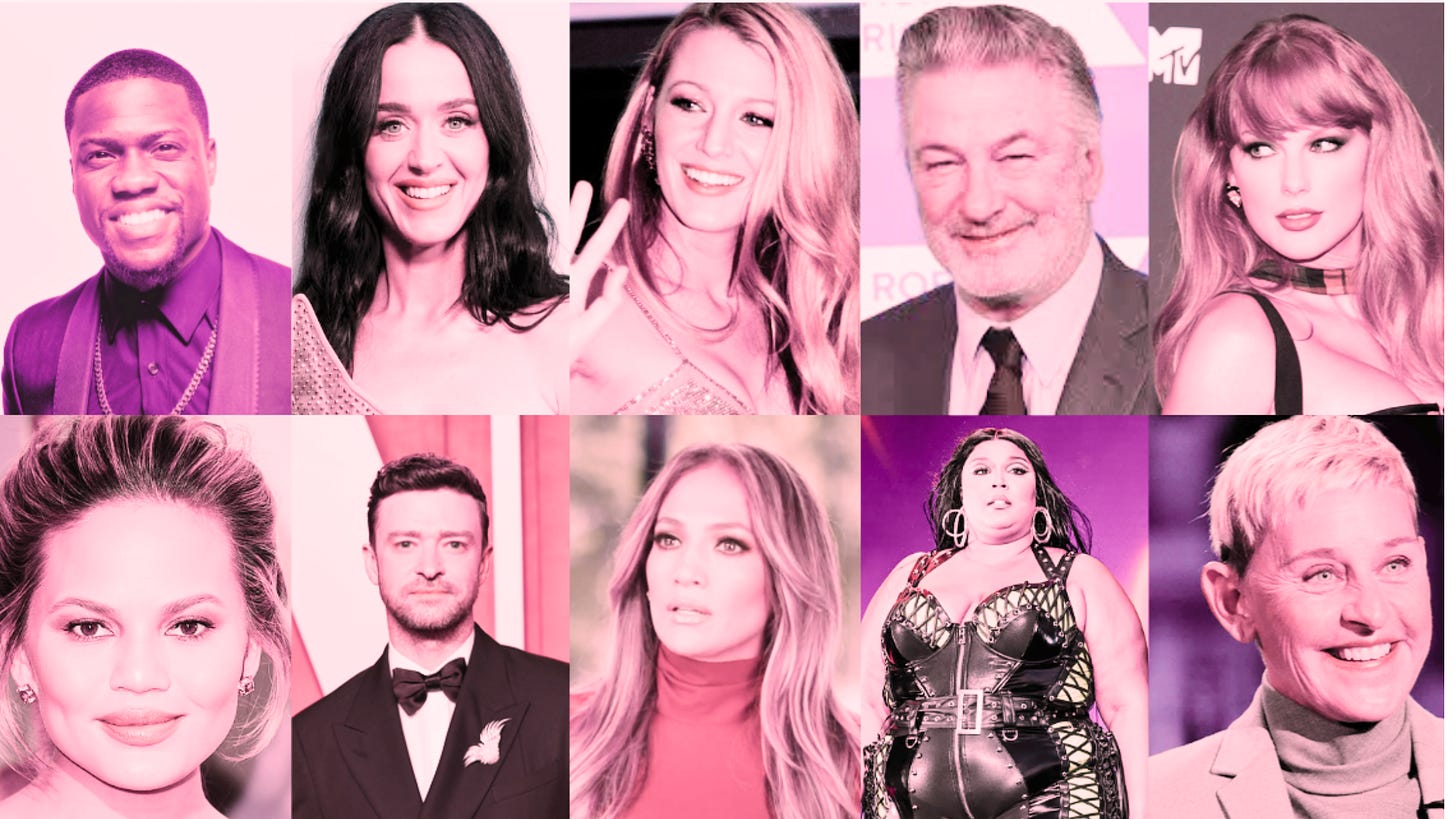
We have seen this affect many celebrities over the years. Kevin Hart lost hosting the Oscars because of a 20-year-old tweet. Chappell Roan lost followers because she didn’t endorse a US presidential nominee. Angelina Jolie was sent vitriol for wishing peace to the Middle East.
The thing is, like with most celebrity culture, the phenomenon has edged its way to us regular people, too. In a piece for reason.com, Steven Greenhut argued that 'the result is self-censorship [and] a narrowing of the public discussion... many of us think twice before posting a legitimate message—not because the post is offensive per se, but because of the possible repercussions... We're allowing negation by society's... most easily offended members'.
I mean, he has a point. Think about it – do you have certain people in your life you hold your tongue with more than others, or hold off on posting or sharing something because you’re nervous how it might make you appear in terms of your social or progressive identity? People have always done this to a degree, of course – no-one’s looking to talk about Sex Education with their mother-in-law or their Saturday night bender with their boss – but it’s bigger than that. It’s hiding opinions with friends and family that people used to discuss over diner parties out of fear of being cancelled.
“I don’t agree with what you say, but I will defend to the death your right to say it” – Evelyn Beatrice Hall*
People are allowed to have different opinions, even if they piss you off. These days, simply not aligning yourself with the next big 'cancellation' or 'outrage' makes you abhorrent, dumb, entitled, or a hate monger – and this is coming from a formally self-described female, greeny, lefty, hippie feminist who is pro-choice, for gay rights, the Yes vote, peace and love, and believes Black Lives Matter.
I have friends and family who vote differently to me, think differently about political situations and individuals, and whose views don't align with my own. We probably secretly think the other is an idiot for their views areas we don’t align on, sure. But I don't write them off as a human being because their opinions on matters that don’t overly affect humanity aren't the same as mine. To be honest, the very notion of 'cancelling' someone because they simply don't agree with you is at the least, childish and arrogant in the belief that your opinion is 'correct', and at the worst, a little fascist to have someone cancelled simply because their opinion differs from yours.
Thanks for reading Japes' Place! Subscribe for free to receive new posts and support my work.
Should some people be cancelled though?
Now, don't get me wrong – again, this isn’t condoning of hate speech or legitimate crime. That’s different (again– to me and me alone!)
I myself can get into loud arguments about domestic politics, the Middle East, coronavirus, religion and feminism with people I still love. I suppose it’s because the difference is in opinion. These are not arguments about facts. To me, outside a crime, the line is drawn at people who have detrimental elitist belief systems – ageist, sexist, racist, classist, bigoted, against a sexual orientation. That’s my line – but again, that is just my opinion. Personally, I find Kanye West reprehensible, and believe he promotes hate speech and misogyny. If you go to his concert, I probably won’t say have a great night, but I also won’t say your support of him means you hate Jews, women, the black working class and me, and loudly rant that your boss should fire you and your wife should leave you because of your support.
Does the redemption arc still exist in the trial by media era?
People are also allowed to have gone through times they're not proud of, redeem, repent and move forward. That's pretty much the point of being released from jail or rehab, of apologising, and of every Hollywood redemption movie, like, ever. News outlets like Buzzfeed will write articles with 'explosive' allegations on someone like Ellen DeGeneres, and news outlets pick stories like this up and seem hell-bent on destroying the person, even if apologies have been made and the allegations or so-called indiscretions are somehow minimal in the grand scheme of things.
These days, if you’re a public figure in the crosshairs of a cancellation, you’re on trial by twitter (ugh, okay, X) and media alike, without real investigations or deliberations actually being found. And yes, it can be argues that the news is in the public interest, which I agree with somewhat. But I don't agree with the level of abuse and the one-sidedness with which some of these stories have unfolded, or the way in which lives have gotten ruined over ‘indiscretions’ that were either done by genuine mistake, were many years ago and are now regretted, or are completely unfounded and just hearsay.
And for those who do redeem themselves from these behaviours, like no longer using the word gay as a slur and condoning those who still do; not engaging with black face and acknowledging the error in judgement; now respecting Indigenous culture – a lot of the time, should be given the redemption arc if they regret the behaviour and would not repeat it.
But with cancel culture, that’s it. One wrong move, even if it was some 20 years ago, and you’re done, it seems… forever.
Jury, what say you?
So, when I feel like it (note: definitely not over-committing to doing this regularly) I’ll be doing some deep diving into some of these ‘cancelled’ public figures, and it will be up to you, the jury, to vote and decide: should they stay cancelled, or are they worthy of redemption?
Up first in your next issue: Ellen DeGeneres.
*This quote has at times been attributed to both Evelyn Beatrice Hall and Voltaire.
**Note: This is adapted from a former article on LAL Media from August 2020 then titled: Reasons We Love Ellen And Hate Cancel Culture
Like what you read? Would love if you could give a like and share with those who will enjoy!