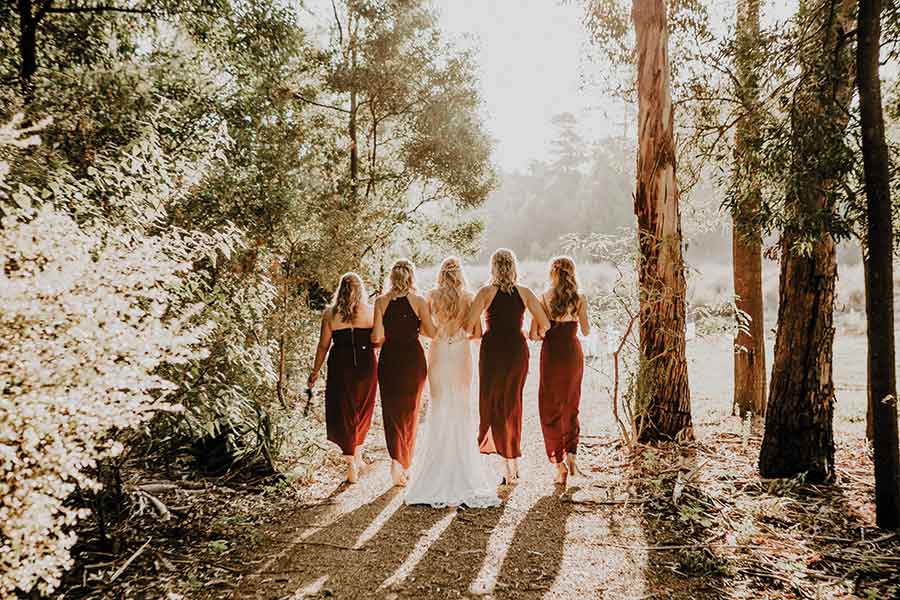
Should the bride pay for the bridesmaid dresses? Are 'thank you' notes compulsory? What's a bonbonniere? Here are the do's and don’ts for a 21st century wedding.
There are few events more engrained with time-honoured tradition than weddings. While they are still happy celebrations, more and more couples are looking to ditch the traditions and stereotypes for a more 21st century celebration.
But don't be fooled - some traditions are more out of politeness than party. So be wary which wedding staples you ditch.
Is there a polite way to say 'no children'? Should you send thank you cards for people who didn't get you a gift? Is a gift registry rude?
After spending years spent planning weddings and events, we chat with Beth Allen, Conference and Events Manager at the RACV City Club, about the best way to make sure your wedding is still uniquely ‘you’ – but done with diplomacy.
Your wedding etiquette questions, answered
Do I have to invite plus one?
While this can largely depend on the couple or budget requirements, “I would say no,” says Allen – with some caveats.
“Definitely decide with your partner how you will tackle the guest list and how far that will reach,” she says.
Whether it's a smaller, budget-friendly, micro-wedding, there's restrictions in place, or it’s your cousin’s husband’s sister’s new partner of two weeks that you have never met, you can probably get away with saying no. The same goes for work colleagues, who would be able to socialise together, or exterior family or friends.
You may be met with some backlash, but at the end of the day, it is your event – just try to make sure everyone coming has at least one or two other people there they know so they don’t feel too out of place.
Do I have to accommodate dietary requirements?
This is one rule that should definitely be met, says Allen. Dietary requirements are important, and can greatly affect an individual’s health and well-being.
“It’s important you take care of your guests,” says Allen. “Your caterer should work with you to help with their dietary needs.”
Do I need a wedding planner?
While it may be nice, having a wedding planner may not be in the realm of everyone’s budget. If you have chosen a larger or formal venue, the venue will normally have a dedicated events manager to assist with the running of your wedding.
That said, Allen also advises nominating a person, such as a Maid of Honour, to be the 'point of call.'
“This way, if little things come up, you don’t need to be across them all. Leave it in the hands of someone your trust, focus on what you want to do and enjoy the day.”
Do I have to play music everyone likes?
While this can be a fun and inclusive way to involve your guests, "it isn’t necessary," says Allen. If you are really looking for a dance floor that lights up, get a band or DJ that plays a party mix of tried and tested songs that are guaranteed to get the party started.
But dont forsake your individuality - if you don't like ABBA, it's not a 'must'.
Do I have to pay for everything for the wedding party?
"The people in your wedding party can be tricky,” says Allen, “as you (and they) may have varying expectations on what is and isn’t paid for.”
She advises that the most important thing is to keep your wedding party informed of what you will and won’t be covering.
If you are looking to enforce a dress code – for example, all your groomsmen in an expensive suit from a particular brand, or you want all your bridesmaids to have their hair and make-up done a particular way - the polite thing would be “to provide more than one option with the budget,” says Allen. “You should compromise if you want them to pay.”
If you are asking for certain tasks from your wedding party – planning a bachelorette night, making a speech, organising the cars – the polite thing to do is to thank them in your speeches, and gift them all with a thoughtful card and small token of your appreciation.