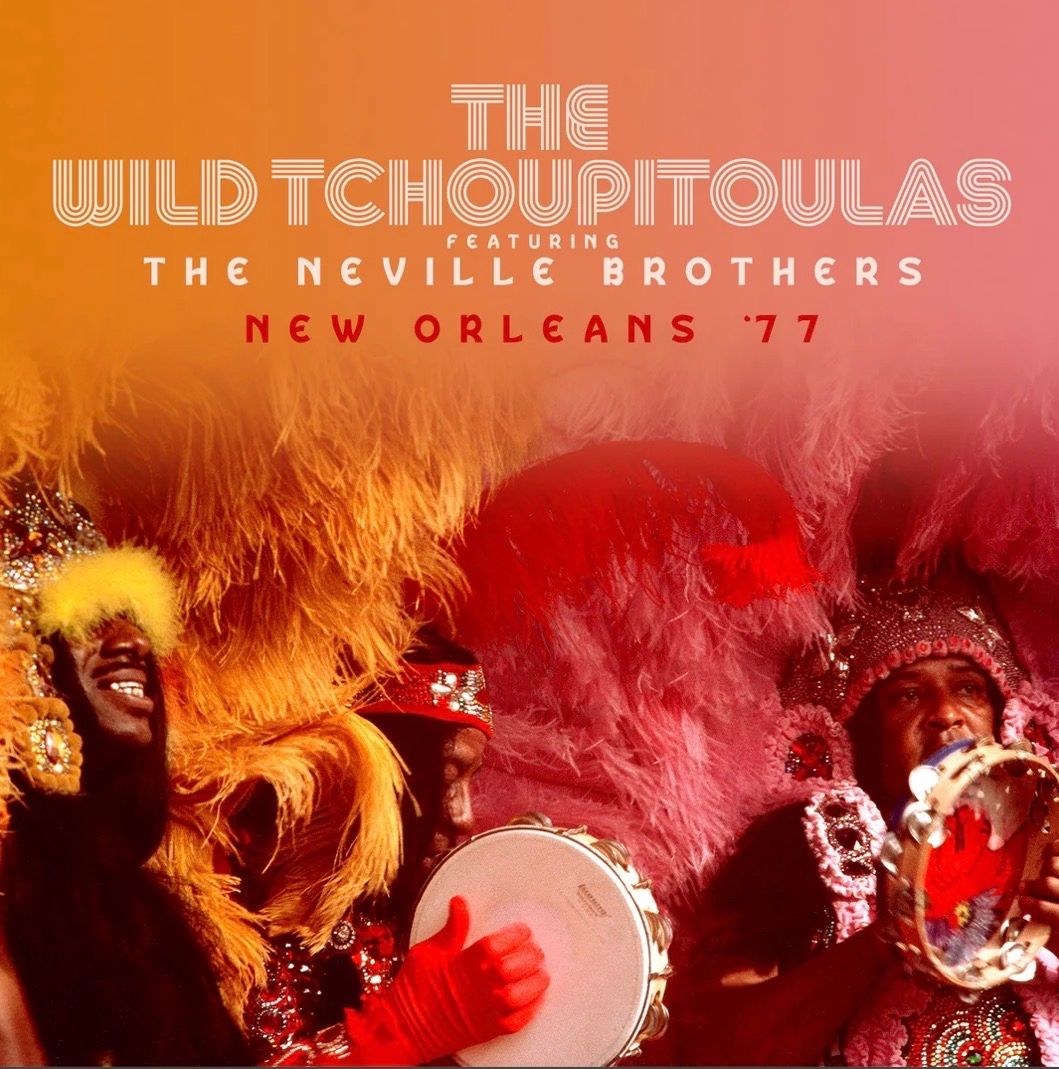
At one point in Les Blank’s 1978 documentary “Always for Pleasure,” footage of the Wild Tchoupitoulas Mardi Gras Indians hitting the streets of New Orleans on Mardi Gras day gives way to the tribe’s George “Big Chief Jolly” Landry performing onstage at Jazz Fest in 1977. Resplendent in a pink suit of satin and feathers and flanked by fellow Indians in beaded suits of gold and blue, the Big Chief closes his eyes for the first verses of a lilting calypso-funk hybrid, singing a refrain in his husky baritone as if entranced.
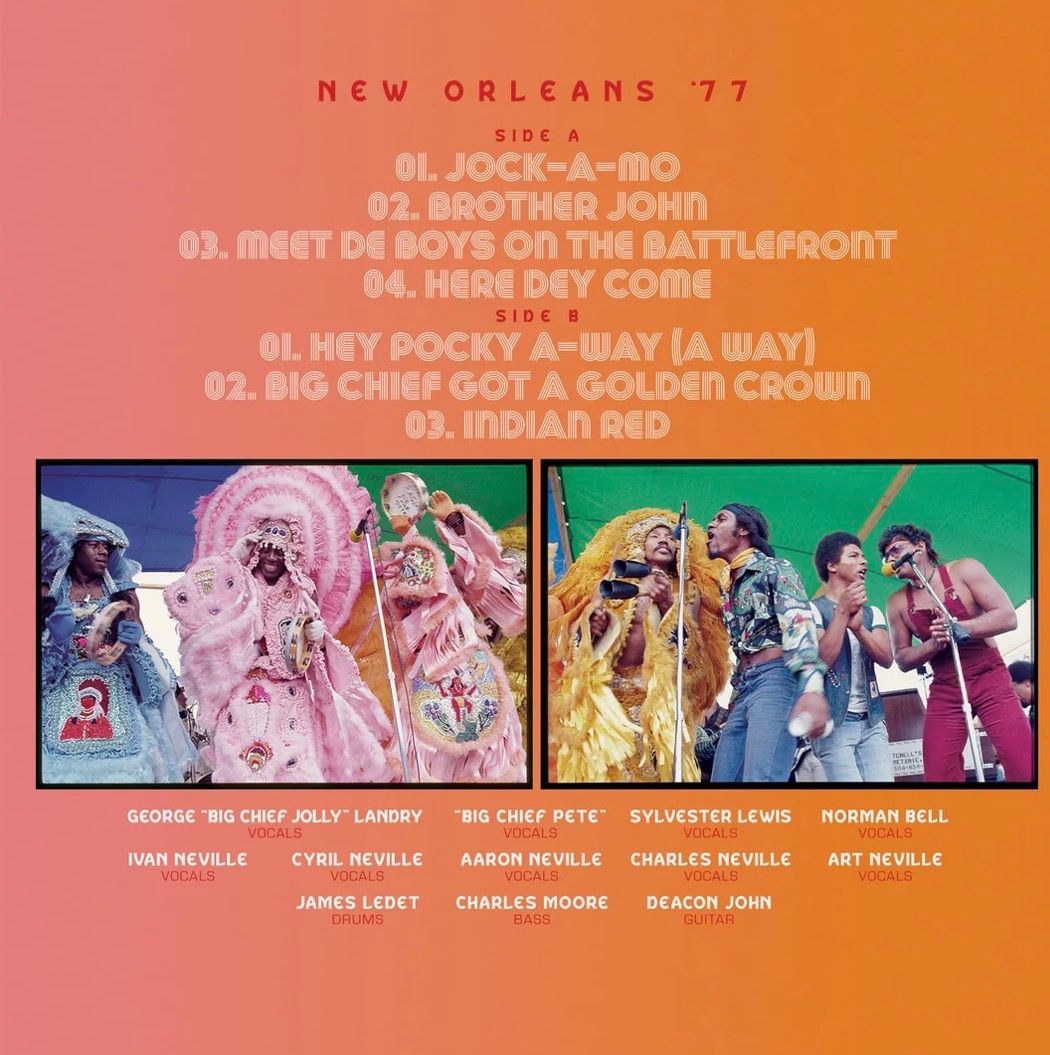
It’s “Meet de Boys on de Battlefront,” from The Wild Tchoupitoulas, the landmark album he recorded in 1976 with members of his tribe, his four musically gifted nephews – the keyboardist Art, saxophonist Charles, singer Aaron and singer and percussionist Cyril – plus the Meters. The nephews, along with Aaron’s teenage son Ivan, are all onstage in the clip, backing their Uncle Jolly and the Wild Tchoupitoulas. Together, they form a phalanx of Nevilles harmonizing their voices, decorating rhythms on cowbells and beer cans and defying laws of musical gravity at an upright piano.
“Here come de Indians, let ‘em through” Jolly sings. He cracks a smile and opens his eyes as the funk somehow gets even more loose, even more fluid, even more raw.
For nearly half a century, that “Always For Pleasure” scene was among the only live recordings of the Wild Tchoupitoulas performing music from their seminal album, a mix of Caribbean-inspired rhythms, traditional Mardi Gras Indian music and deep New Orleans funk that’s since been inducted into the Library of Congress’ National Recording Registry.
The music in that scene has long been a point of fascination and curiosity for Tipitina’s Record Club producers Rob Mercurio and Ben Ellman. If just five minutes of the Wild Tchoupitoulas’ set that day was this intense, they wondered, how much deeper did the band dig in as the performance continued? Was it possible Blank had recorded any more audio?
In 2024, they reached out to the late filmmaker’s son, Harrod Blank, on the off-chance he could help them find out.
“He called back a few days later,” says Mercurio, “And said, ‘You’re not gonna believe this, but I have the whole show.’”
Recorded late in the afternoon on Sunday, April 17, 1977, and now presented on TRC’s The Wild Tchoupitoulas featuring the Neville Brothers: New Orleans ‘77, the entire live performance is just as loose and fluid as what they’d heard in the film – full of slow-rolling climaxes and combinations of melodic motifs that only this group in this setting could have created. It’s a mix of positive energies coalescing into a musical celebration of strength and courage and artistry that pays homage to New Orleans’ Black Masking Indian traditions with room for creative improvisation. It’s also an aural peek at the family and community bonds that helped shape some of New Orleans’ most defining and foundational music.
The Wild Tchoupitoulas garnered wide critical acclaim and is often cited as the Neville Brothers’ first album, since it marked the first time all four siblings ever recorded together and later inspired the brothers to form their own band. From that perspective, this album is almost a missing link between The Wild Tchoupitoulas and the Neville Brothers’ eponymous debut album in ‘78. The songs gel differently here; the music feels organic. Outside the confines of a recording studio, you can hear everything from the percussion to the lush vocal harmonies to the rhythm section stoking a fire in Big Chief Jolly’s forward-marching lilt.
“Everything about that was a golden experience. The rehearsals, the show, the fact that we had Big Chief Pete onstage with us," recalls Cyril Neville, noting that a last-minute substitution added Percy “Big Chief” Lewis of the Black Eagles, one of the oldest Uptown Mardi Gras Indian tribes, to the group that day.
"I got to witness how much love and respect the other chiefs had for my uncle," he adds.
That love and respect was more than matched by the feelings Cyril and his siblings had for Jolly, their late mother’s brother. Growing up on Valence Street in the 1950s and ‘60s, Jolly was a friend and mentor to the young musicians when they were kids, especially after their father’s untimely death in 1967. When their mother Amelia Landry Neville died suddenly in 1975, Jolly stepped in to help fill the “enormous void” left in the family, as Charles would later write in the group memoir, The Brothers. According to Charles, Amelia's last words to Jolly included a request that he keep her “boys together." His Wild Tchoupitoulas recording project was a key step in that direction.
Looking back in 2024, Cyril describes Jolly as “the life of the party” – a man who sang, could play a mean blues on the piano and whose nickname reflected his personality. “To me and to my brothers, he was larger than life,” Cyril explains. “He was like a folk hero, not just in our family but in our whole entire neighborhood.”
Jolly, who identified as Choctaw, was deeply involved in the city’s unique Indian traditions of sewing elaborate suits, creating and sustaining the Indians’ percussive, call-and-response music and, as a Big Chief, serving as a leader and mentor in the neighborhood throughout the year. Those traditions also flowed through his music and the music he made with his nephews.
As for that day at Jazz Fest, “We weren’t the only Indians out there,” Cyril adds, noting Big Chief Bo Dollis and the Wild Magnolias recorded “Handa Wanda,” followed by their eponymous 1974 album two years before Jolly corralled his nephews to help him record The Wild Tchoupitoulas at Sea-Saint. But with the festival having moved to the Fairgrounds, there was room – physically and figuratively – for the burgeoning Indian funk sound to find a wider audience.
The Wild Tchoupitoulas’ musical arm appeared on the festival bill in 1976 as well, but in an earlier slot on a different stage. This time around, they played second-to-last on the same stage Aaron Neville opened earlier in the day – early shades of the First Family of Funk title that would soon be bestowed on the Nevilles.
Today, Aaron’s son Ivan Neville holds a central spot in the family’s musical royalty standing, but that day in April 1977, he was still a senior in high school – wearing his “Class of ‘77” graduation T-shirt onstage. Asked if he knew he’d sing backup with his dad before the gig, Ivan laughs, admitting he was “just along for the ride.”
He’d started playing music professionally by then, though, sometimes with his dad and Uncle Jolly, who lived on the other side of their Valence Street shotgun.
“I knew all the songs from that whole year prior, when they were making that record,” says Ivan. “I was just there that day and there was no way I was gonna not be up there with them. Nobody told me to leave when I was standing around the mic, so I started singing backup – me and Cyril and my dad. It wasn’t like some big production back then. It was pretty loose.”
Ivan was one of multiple components of a band he recalls being "pieced together” just for that day. At Jazz Fest, the band also included drummer James Ledet, then a member of the group Ivan led at the time, and another pair of brothers, guitarist Deacon John and bassist Charles Moore.
According to Cyril, the Wild Tchoupitoulas had performed music from the album on the road and at home by then, but the festival gig that day may was the biggest audience the group had played for in New Orleans.
“It was a very special time,” he muses. “The most special part about it to me was that there were three generations of our family onstage at one time – and that continued. The jazz and heritage festival became like a family reunion for us.”
The Neville Brothers would launch their historic tenure as performers at the New Orleans Jazz and Heritage Festival in 1978. Two years later, they’d take over the closing set for Professor Longhair, ending the festival nearly every year until 2012.
Big Chief Jolly’s health began to fail within a few years of this album’s recording. According to the Nevilles’ biography, lung cancer destroyed Jolly’s singing ability just as the Neville Brothers' career as a group took off. When Jolly died in 1980, the Nevilles focused on building a musical future together.
“Being involved with my uncle and being involved with the Indians helped me maneuver through drugs and a bunch other stuff, helped me rise above that,” Cyril says. “Music and culture was the life preserver, the magic carpet that helped me fly above a lot of the obstacles that society had set up for us.”
Today, the Wild Tchoupitoulas remain active in New Orleans’ 13th Ward, tirelessly sewing their majestic, beaded works of art each year and proudly continuing the music traditions they inherited from Big Chief Jolly and the generations of Black Masking Indians that came before him.
-Jennifer Odell, New Orleans 2025