From Offbeat's 2023 Jazz Fest Bible
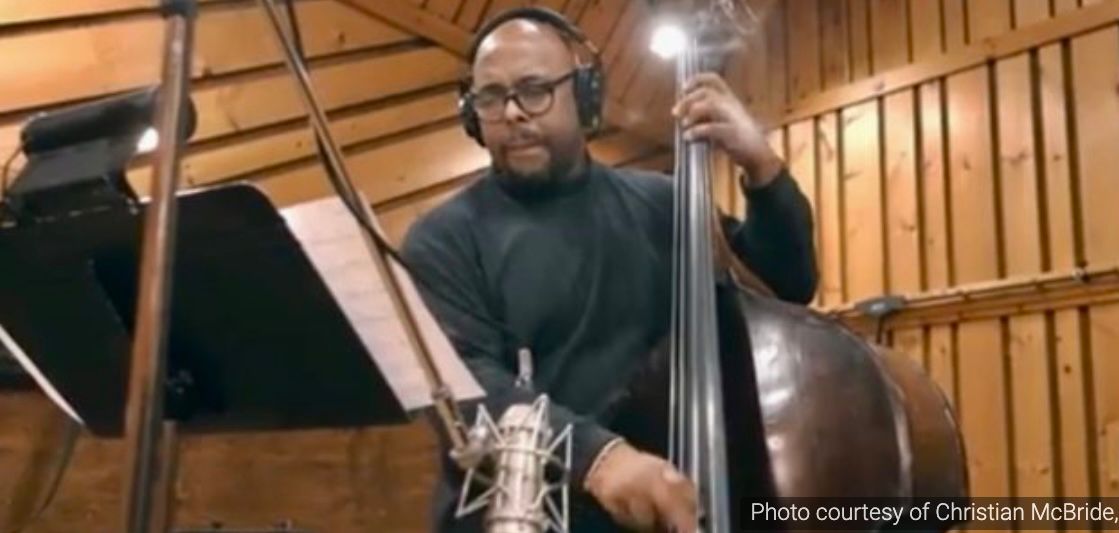
In 2015, Christian McBride was ready for a new adventure. With two Grammy Awards under his belt (he’s now at nine and counting), the prolific, Philadelphia-born bassist was already leading multiple bands when he conceived the project that would become the New Jawn.
“My trio with pianist Christian Sands and drummer Ulysses Owens, Jr., established such a strong personality and following, I decided that instead of having another trio playing that same type of music, I would do a 180-degree turn and have a group with no chords and playing music that was structurally looser,” McBride recalls. “So, in December 2015, the New Jawn was officially born.”
The band’s name riffs on the New Thing—a period of mid-1960s jazz characterized by increasingly avant-garde, borderline free-jazz subversions of hard bop concepts and constructs—then adds the beloved Philly slang term “jawn,” a noun-replacer that’s generally reserved for cases where said noun defies definition because it’s extraordinary, fresh or unique. McBride’s New Jawn, which performs in the Jazz Tent on Friday, May 5 at 5:45 p.m., is all of the above.
Featuring trumpeter Josh Evans, saxophonist and bass clarinetist Marcus Strickland, and drummer Nasheet Waits alongside McBride, the group has consistently ushered in some of McBride’s most daring work, first on their eponymous 2018 debut and now, also on the 2023’s thrill seeker of an album, Prime. With no chordal instruments in the mix, there’s an extra level of liberation built into each player’s framework, yet even their uber-free excursions tend to maintain steady anchors to post-bop—and to one another.
“Taking risks was the basis of forming this band. [In 2015] I knew few risk-takers as musically skilled as Nasheet, Marcus and Josh,” says McBride. “After seven years, I would surely hope that we know each other well enough to know each other’s musical tendencies and push each other beyond them.”
While the New Jawn pays homage to New Thing-era jazz visionaries like Ornette Coleman and Sonny Rollins—Prime features compositions by both alongside original tunes by each member of the band—the innovative quartet has also created its own dynamic language. That seems to allow them even more freedom in their experimentations with the boundaries of form and style, giving each musician an audible network of support even when a song’s form, for example, has been flipped on its head.
Waits, who McBride calls “the creative center of the New Jawn,” often delves into thunderous, dense playing that simultaneously pitches the music into free territory while keeping the horns grounded. When it happens on the propulsive, all-hands-on-deck bookends of frenetic fury that open and close McBride’s “Head Bedlam,” it makes the funk groove holding down the piece’s center feel even more like a heartbeat.
“Wherever he goes, the band goes,” McBride says of the drummer. In addition to his work on the bandstand (and as a radio show host, teacher, big bandleader and more), McBride’s many hats include another role that ties him to Jazz Fest. In 2016, the bassist took over curating duties for George Wein at the Newport Jazz Festival. Not unlike his work with the New Jawn and other groups, McBride’s choices as an artistic director underscore his respect for music’s history and his interest in helping it evolve forward.
“George made it very clear, ‘While I want you to continue musical diversity, keep my festival a jazz festival,’” McBride says when asked about his role in relation to Wein’s legacy. “I’m proud to help bring younger faces to the festival to discover this music known as jazz.”