Talking Points
New research reveals how social behaviour influences genetic selection in farmed fish. The study, published in the journal Heredity, was led by Gabriel Rovere at Aarhus University in Denmark and examines the impact of social interactions on phenotypic variability among fish raised in large groups.
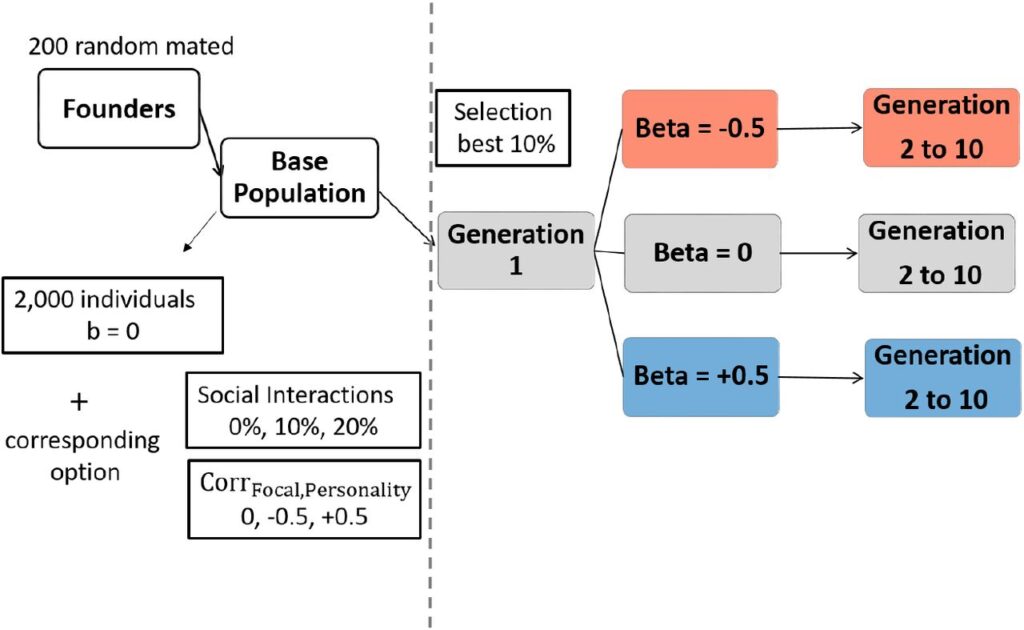
- The study simulated a breeding program with 2,000 candidates from 1,000 families.
- Findings indicate that mass selection alters genetic means of personality traits based on genetic correlations.
- Group selection does not enhance phenotypic variability and requires multiple groups for similar genetic gains.
This research is significant as it provides insights into breeding strategies that can optimize fish farming practices while considering the implications of social behaviour on genetic diversity.
Researchers have found new evidence to show how social behaviour can affect genetic selection in farmed fish.
The study, titled “Modeling breeding programs considering social behavior in large groups of farmed fish,” was published in the Genetics Society journal, Heredity.
Lead author, Gabriel Rovere, conducted the study at the Centre of Quantitative Genetics and Genomics at Aarhus University in Denmark. Rovere et al. wrote that in scenarios where animals are raised in large groups, the increased social interaction led to greater phenotypic variability in the trait of interest.
Researchers used simulated data to assess the effect of different selection methods under different social environments: competitive, neutral, or collaborative. The breeding scheme was based on a simulated a fish breeding program with 2,000 selection candidates from 1,000 families formed by a partial mating design of 100 males and 100 females.
The results showed under mass selection, the genetic means of personality traits change, and these changes depend on the strength and direction of genetic correlations between the focal and personality traits. Group selection, by contrast, will not increase phenotypic variability, the study said, though it yields lower genetic gains for the focal trait than mass selection.
To achieve similar genetic gain under group selection, many groups with few families are needed. Phenotypic variability of the target trait and genetic means of the personality traits remain constant under group selection. However, researchers acknowledged this strategy increases the rate of inbreeding per generation, but in a similar amount across the different group designs.